


3 months 1 week ago
When they have really learned to love their neighbours as themselves, they will be allowed to love themselves as their neighbours.
▼
Source
source
Letter XIV

2 months 2 weeks ago
For no one's authority ought to rank so high as to set a value on his words and terms even though nothing clear and determinate lies behind them.
▼
Source
source
Paragraph 1

4 months 1 week ago
Old age realizes the dreams of youth: look at Dean Swift; in his youth he built an asylum for the insane, in his old age he was himself an inmate.

3 months 2 weeks ago
The law of nature teaches me to speak in my own defence: With respect to this charge of bribery I am as innocent as any man born on St. Innocents Day. I never had a bribe or reward in my eye or thought when pronouncing judgment or order. I am ready to make an oblation of myself to the King.
▼
Source
source
(17 April 1621) Quoted by Baron John Campbell (1818), J. Murray in "The Lives of the Lord Chancellors and Keepers of the Great Seal of England"

1 month 3 weeks ago
He was a man born into a world dominated by scientific materialism. His objection to this materialism was not merely intellectual, or even egotistical (the feeling 'If the world is wholly material, then I can't be very important'). It was the feeling that man is cut off from his inner powers by this superficial attitude.
▼
Source
source
p. 166
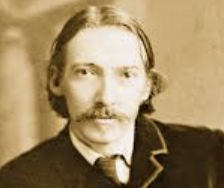
1 month 3 days ago
A man, Mr. Scrymgeour, may fall into a thousand perplexities, but if his heart be upright and his intelligence unclouded, he will issue from them all without dishonour.
▼
Source
source
The Rajah's Diamond, Story of the House with the Green Blinds.

3 months 6 days ago
Our aim as scientists is objective truth; more truth, more interesting truth, more intelligible truth. We cannot reasonably aim at certainty. Once we realize that human knowledge is fallible, we realize also that we can never be completely certain that we have not made a mistake.



2 months 4 days ago
To Live signifies to believe and hope - to lie and to lie to oneself.

3 months 1 week ago
Psychologists have hitherto failed to realize that imagination is a necessary ingredient of perception itself.
▼
Source
source
A 120

3 months 1 week ago
Single-mindedness is all very well in cows or baboons; in an animal claiming to belong to the same species as Shakespeare it is simply disgraceful.
▼
Source
source
Do What You Will, 1929
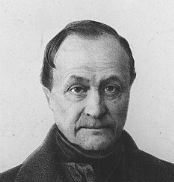
2 months 1 week ago
Mathematical Analysis is... the true rational basis of the whole system of our positive knowledge.
▼
Source
source
Bk. 1, chap. 1; as cited in: Robert Edouard Moritz. Memorabilia mathematica; or, The philomath's quotation-book, (1914), p. 224
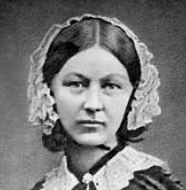
1 month 2 weeks ago
What the horrors of war are, no one can imagine - they are not wounds and blood and fever, spotted and low, or dysentery, chronic and acute, cold and heat and famine - they are intoxication, drunken brutality, demoralization and disorder on the part of the inferior, jealousies, meanness, indifference, selfish brutality on the part of the superior.
▼
Source
source
Letter (5 May 1855), published in Florence Nightingale : An Introduction to Her Life and Family (2001), edited by Lynn McDonald, p. 141

4 months 1 week ago
Hope is the dream of a waking man.

3 months 2 weeks ago
All passions that suffer themselves to be relished and digested are but moderate.
▼
Source
source
Ch. 2. Of Sorrow, tr. Cotton, rev. W. Hazlitt, 1842

3 months 1 week ago
Fools admire everything in an author of reputation.

3 months 1 week ago
People seem good while they are oppressed, but they only wish to become oppressors in their turn: life is nothing but a competition to be the criminal rather than the victim.
▼
Source
source
Letter to Ottoline Morrell, 17 December, 1920
1 month 3 days ago
Youth is wholly experimental.
▼
Source
source
Letter to a Young Gentleman Scribner's Magazine (September 1888).

3 months 1 week ago
Life consists with wildness. The most alive is the wildest. Not yet subdued to man, its presence refreshes him.
2 months 4 days ago
No one has the audacity to exclaim: "I don't want to do anything!" - we are more indulgent with a murderer than with a mind emancipated from actions.

2 days ago
There is an unquestionable relationship between economic development and liberal democracy, which one can observe simply by looking around the world. But the exact nature of that relationship is more complicated than it first appeared, and is not adequately explained by any of the theories presented up to this point. The logic of modern natural science and the industrialization process it fosters does not point in a single direction in the sphere of politics, as it does in the sphere of economics. Liberal democracy is compatible with industrial maturity, and is preferred by the citizens of many industrially advanced states, but there does not appear to be a necessary connection between the two. The Mechanism underlying our directional history leads equally well to a bureaucratic-authoritarian future as to a liberal one. We will therefore have to look elsewhere in trying to understand the current crisis of authoritarianism and the worldwide democratic revolution.
▼
Source
source
p. 125

3 months 2 days ago
The man described for us, whom we are invited to free, is already in himself the effect of a subjection much more profound than himself. A 'soul' inhabits him and brings him to existence...the soul is the effect and instrument of political anatomy; the soul is the prison of the body.
3 months 1 week ago
Essentially, this war...is a great race-conflict, a conflict of Teuton and Slav, in which certain other nations, England, France and Belgium, have been led into cooperation with the Slav. ... The conflict of Germany and Russia has been produced not by this or that diplomatic incident, but by primitive passions expressing themselves in the temper of the two races.
▼
Source
source
War: The Offspring of Fear (1914), quoted in Ray Monk, Bertrand Russell: The Spirit of Solitude, 1872-1921 (1996), p. 373
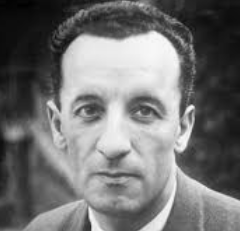
1 month 4 weeks ago
The philosopher will ask himself ... if the criticism we are now suggesting is not the philosophy which presses to the limit that criticism of false gods which Christianity has introduced into our history.
▼
Source
source
p. 47
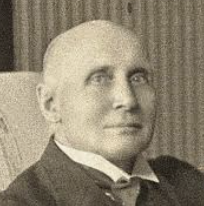
1 month 3 weeks ago
Our minds are finite, and yet even in these circumstances of finitude we are surrounded by possibilities that are infinite, and the purpose of human life is to grasp as much as we can out of the infinitude.
▼
Source
source
Ch. 21, June 28, 1941.
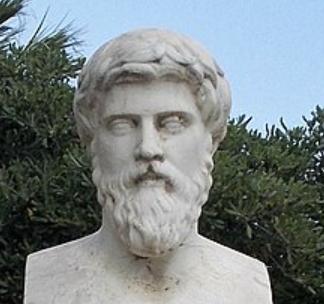
2 months 3 weeks ago
Authority and place demonstrate and try the tempers of men, by moving every passion and discovering every frailty.
▼
Source
source
Comparison of Demosthenes and Cicero 3 (Tr. Dryden and Clough)
2 months 4 days ago
One cannot live without motives. I have no motives left, and I am living.
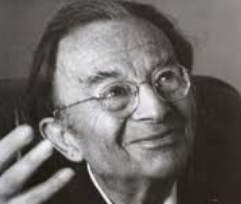
1 month 2 weeks ago
To speak of love is not "preaching," for the simple reason that it means to speak of the ultimate and real need of every human being. That this need has been obscured does not mean it does not exist. To analyze the nature of love is to discover its general absence today and to criticize the social conditions which are responsible for this absence. To have faith in the possibility of love as a social and not only exceptional-individual phenomenon, is a rational faith based on the insight into the very nature of man.

2 months 1 week ago
These principles it is necessary strictly to attend to, because they will serve much to explain the whole course both of government and real property, wherever the German nations obtained a settlement; the whole of their government depending for the most part upon two principles in our nature,-ambition, that makes one man desirous, at any hazard or expense, of taking the lead amongst others; and admiration, which makes others equally desirous of following him from the mere pleasure of admiration, and a sort of secondary ambition, one of the most universal passions among men. These two principles, strong both of them in our nature, create a voluntary inequality and dependence.
▼
Source
source
An Essay towards an Abridgment of English History (1757-c. 1763), quoted in The Works of the Right Honourable Edmund Burke, Vol. VI (1856), p. 282
3 months 1 week ago
Life is bristling with thorns, and I know no other remedy than to cultivate one's garden.
▼
Source
source
Letter to Pierre-Joseph Luneau de Boisjermain (21 October 1769), from Oeuvres Complètes de Voltaire: Correspondance [Garnier frères, Paris, 1882], vol. XIV, letter # 7692 (p. 478)

3 months 1 week ago
What strength belongs to every plant and animal in nature. The tree or the brook has no duplicity, no pretentiousness, no show. It is, with all its might and main, what it is, and makes one and the same impression and effect at all times. All the thoughts of a turtle are turtles, and of a rabbit, rabbits. But a man is broken and dissipated by the giddiness of his will; he does not throw himself into his judgments; his genius leads him one way but 't is likely his trade or politics in quite another.
▼
Source
source
"The Natural History of Intellect", p. 46

3 days ago
Multitude is a class concept. ... Class is determined by class struggle. There are, of course, in infinite number of ways that humans can be grouped into classes - hair color, blood type, and so forth - but the classes that matter are those defined by the lines of collective struggle. Race is just as much a political concept as economic class is in this regard. ... Class is a political concept, in short, in that a class is and can only be a collectivity that struggles in common.
▼
Source
source
104
3 months 1 week ago
"Optimism," said Cacambo, "What is that?" "Alas!" replied Candide, "It is the obstinacy of maintaining that everything is best when it is worst!
1 month 3 days ago
I shall doubtless outlive some troublesome desires; but I am in no hurry about that; nor, when the time comes, shall I plume myself on the immunity just in the same way, I do not greatly pride myself on having outlived my belief in the fairy tales of Socialism. Old people have faults of their own; they tend to become cowardly, niggardly, and suspicious. Whether from the growth of experience or the decline of animal heat, I see that age leads to these and certain other faults; and it follows, of course, that while in one sense I hope I am journeying towards the truth, in another I am indubitably posting towards these forms and sources of error.
▼
Source
source
Crabbed Age and Youth.
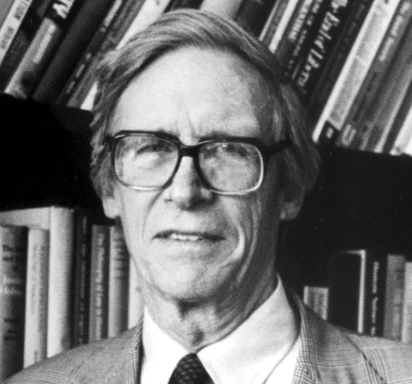
3 months 6 days ago
Essentially the fault lies in the fact that the democratic political process is at best regulated rivalry; it does not even in theory have the desirable properties that price theory ascribes to truly competitive markets.
▼
Source
source
Chapter IV, Section 36, p. 226
1 month 5 days ago
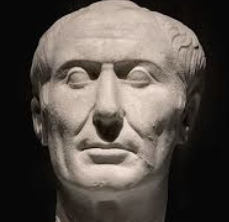
The judge is condemned when the guilty is absolved.
▼
Source
source
Maxim 407 Adopted by the original Edinburgh Review magazine as its motto.
3 months 1 week ago
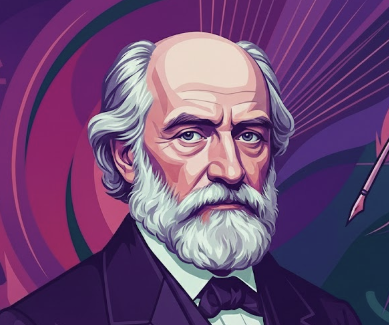
Two Chinamen visiting Europe went to the theatre for the first time. One of them occupied himself with trying to understand the theatrical machinery, which he succeeded in doing. The other, despite his ignorance of the language, sought to unravel the meaning of the play. The former is like the astronomer, the latter the philosopher.
▼
Source
source
Vol. 2 "On Various Subjects" as translated in Essays and Aphorisms (1970), as translated by R. J. Hollingdale

2 days ago
I can die when I wish to: that is my elixir of life.
▼
Source
source
The Republic.
2 months 4 days ago
"What is truth?" is a fundamental question. But what is it compared to "How to endure life?" And even this one pales beside the next: "How to endure oneself?" - That is the crucial question in which no one is in a position to give us an answer.

3 months 2 weeks ago
The whole title by which you possess your property, is not a title of nature but of a human institution.

2 months 1 week ago
The created World is but a small Parenthesis in Eternity.
▼
Source
source
Part III, Section XXIX
2 months 3 weeks ago
A prating barber asked Archelaus how he would be trimmed. He answered, "In silence."
▼
Source
source
33 Archelaus
4 months 1 week ago
Even Plato assumes that the genuinely perfect condition of man means no sex distinction (and how strange this is for people like Feuerbach who are so occupied with affirming sex-differentiation, regarding which they would do best to appeal to paganism). He assumes that originally there was only the masculine (and when there is no thought of femininity, sex-distinction is undifferentiated), but through degeneration and corruption the feminine appeared. He assumes that base and cowardly men became women in death, but he still gives them hope of being elevated again to masculinity. He thinks that in the perfect life the masculine, as originally, will be the only sex, that is, that sex-distinction is a matter of indifference. So it is in Plato, and this, the idea of the state notwithstanding, was the culmination of his philosophy. How much more so, then, the Christian view.
3 days ago
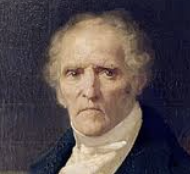
The familial union presents as well a mixture of inconvenient ages and characters that inhibit conversation. Morality engenders a frigid atmosphere, as in all places where it reigns.
▼
Source
source
Oeuvres completetes de Charles Fourier
1 month 4 weeks ago
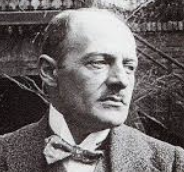
To its very core, the mind of ressentiment man is filled with envy, the impulse to detract, malice, and secret vindictiveness. These affects have become fixed attitudes, detached from all determinate objects. Independently of his will, this man's attention will be instinctively drawn by all events which can set these affects in motion. The ressentiment attitude even plays a role in the formation of perceptions, expectations, and memories. It automatically selects those aspects of experience which can justify the factual application of this pattern of feeling.
▼
Source
source
L. Coser, trans. (1973), p. 74
2 months 4 days ago
We must suffer to the end, to the moment when we stop believing in suffering.
2 months 4 days ago
The only subversive mind is the one that questions the obligation to exist; all the others, the anarchist at the top of the list, compromise with the established order.
3 months 6 days ago
Ideal legislators do not vote their interests.
▼
Source
source
Chapter V, Section 43, p. 284

3 months 1 week ago
In England, and in all Roman Catholic countries, the lottery of the church is in reality much more advantageous than is necessary.
▼
Source
source
Chapter X, Part II, p. 155.
2 months 4 days ago
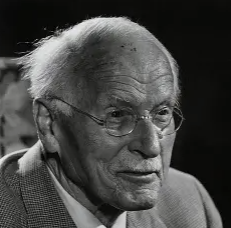
When animus and anima meet, the animus draws his sword of power and the anima ejects her poison of illusion and seduction. The outcome need not always be negative, since the two are equally likely to fall in love (a special instance of love at first sight).
▼
Source
source
Aion (1951). CW 9, Part II: P.338.30
CivilSimian.com created by AxiomaticPanic, CivilSimian, Kalokagathia