

2 months 2 weeks ago
American life is a powerful solvent. As it stamps the immigrant, almost before he can speak English, with an unmistakable muscular tension, cheery self-confidence and habitual challenge in the voice and eyes, so it seems to neutralize every intellectual element, however tough and alien it may be, and to fuse it in the native good-will, complacency, thoughtlessness, and optimism.
▼
Source
source
"The Academic Environment" p. 47 (Hathi Trust)


2 months 1 week ago
The heart, oddly enough, seems to be the essential organ concerned. When we are in a hurry or doing something we dislike, we clench the heart, exactly like clenching a fist, and nothing can get in. When we are filled with a sense of multiplicity and excitement we somehow 'open' the heart and allow reality to flow in. But in that state we only need to entertain the shadow of some unpleasant thought for it to close again. And human beings are so naturally prone to mistrust that it is hard to maintain the openness for very long. Children on the other hand find it easy to slip into states of wonder and delight when the heart finally opens so wide that the whole world seems magical. the 'trick' of the peak experience lies in this ability to relax out of our usual defensive posture and to 'open the heart'.
▼
Source
source
p. 360

2 months 1 week ago
If a young girl is being forced into a brothel she will not talk about her rights. In such a situation the word would sound ludicrously inadequate.
▼
Source
source
p. 63

3 months 3 days ago
Animals and plants are living effects of Nature; this Nature ... is none other than God in things... Diverse living things represent diverse divinities and diverse powers, which, besides the absolute being they possess, obtain the being communicated to all things according to their capacity and measure. Whence all of God is in all things (although not totally, but in some more abundantly and in others less) ... Think thus, of the sun in the crocus, in the narcissus, in the heliotrope, in the rooster, in the lion.... To the extent that one communicates with Nature, so one ascends to Divinity through Nature.
▼
Source
source
As translated by Arthur Imerti

3 months 3 weeks ago
What seem our worst prayers may really be, in God's eyes, our best. Those, I mean, which are least supported by devotional feeling. For these may come from a deeper level than feeling. God sometimes seems to speak to us most intimately when he catches us, as it were, off our guard.

2 months 3 weeks ago
...out of the tomb of the murdered Monarchy in France, has arisen a vast, tremendous, unformed spectre, in a far more terrific guise than any which ever yet have overpowered the imagination and subdued the fortitude of man.
▼
Source
source
p. 7
1 week 5 days ago
Government spending cannot create additional jobs. If the government provides the funds required by taxing the citizens or by borrowing from the public, it abolishes on the one hand as many jobs as it creates on the other. If government spending is financed by borrowing from the commercial banks, it means credit expansion and inflation. If in the course of such an inflation the rise in commodity prices exceeds the rise in nominal wage rates, unemployment will drop. But what makes unemployment shrink is precisely the fact that real wage rates are falling.
1 week 4 days ago
If you could be alarmed into the semblance of modesty, you would charm everybody; but remember my joke against you about the Moon and the Solar System;-"Damn the solar system! bad light - planets too distant - pestered with comets - feeble contriviance; - could make a better with great ease."
▼
Source
source
Vol. II, letter to Lord Jeffrey (1806), p. 23 Discussed in David A. Kent, D. R. Ewen, "Romantic Parodies, 1797-1831", The Review of English Studies, New Series, Vol. 44, No. 175, (1993), pp. 430-432
2 months 3 weeks ago
Tyrants seldom want pretexts.

2 months 1 week ago
Today's mic-hogging, fast-talking, contentious young (and old) lefties continue to hawk little books and pamphlets on revolution, always with choice words or documents from Marx, Mao, even Malcolm. But I've never seen a broadside with "A Black Feminist Statement or even the writings of Angela Davis or June Jordan or Barbara Omolade or Flo Kennedy or Audre Lorde or bell hooks or Michelle Wallace, at least not from the groups who call themselves leftist. These women's collective wisdom has provided the richest insights into American radicalism's most fundamental questions: How can we build a multiracial movement? Who are the working class and what do they desire? How do we resolve the Negro Question and the Woman Question? What is freedom?
▼
Source
source
Robin Kelley Freedom Dreams

4 months 4 days ago
I know well what I am fleeing from but not what I am in search of.
▼
Source
source
Book III, Ch. 9
1 month 5 days ago
The existence of the mind-independent environment beyond one's world-simulation is a theoretical inference, not an empirical observation.
▼
Source
source
Postscript to review of Michael Lockwood's Mind, Brain and the Quantum, BLTC Research, Dec. 2016

3 months 3 weeks ago
I... believe in the rationalist tradition of a commonwealth of learning, and in the urgent need to preserve this tradition.
2 months 2 weeks ago
The role of philosophy might be said to be to extend and deepen the self-awareness of mankind.
▼
Source
source
Ch. 9, p. 137

2 months 3 weeks ago
Glory - once achieved, what is it worth?

2 months 1 week ago
In the most secret chamber of the spirit of him who believes himself convinced that death puts an end to his personal consciousness, his memory, for ever, and all unknown to him perhaps, there lurks a shadow, a vague shadow, a shadow of uncertainty, and while he says within himself, "Well, let us live this life that passes away, for there is no other!" the silence of this secret chamber speaks to him and murmurs, "Who knows!... " These voices are like the humming of a mosquito when the south-west wind roars through the trees in the wood; we cannot distinguish this faint humming, yet nevertheless, merged in the clamor of the storm, it reaches the ear.

3 months 3 weeks ago
What interest, zest, or excitement can there be in achieving the right way, unless we are enabled to feel that the wrong way is also a possible and a natural way, - nay, more, a menacing and an imminent way? And what sense can there be in condemning ourselves for taking the wrong way, unless we need have done nothing of the sort, unless the right way was open to us as well? I cannot understand the willingness to act, no matter how we feel, without the belief that acts are really good and bad.
▼
Source
source
The Dilemma of Determinism, 1884

1 month 3 weeks ago
The audience, as ground, shapes and controls the work of art.
▼
Source
source
p. 48

3 months 3 weeks ago
There are some simple maxims [...] which I think might be commanded to writers of expository prose. First: never use a long word if a short word will do. Second: if you want to make a statement with a great many qualifications, put some of the qualifications in separate sentences. Third: do not let the beginning of your sentence lead the reader to an expectation which is contradicted by the end.
▼
Source
source
"How I Write", The Writer, September 1954
2 months 3 weeks ago
Mankind will never be, in an eminent degree, virtuous and happy till each man shall possess that portion of distinction and no more, to which he is entitled by his personal merits. The dissolution of aristocracy is equally the interest of the oppressor and the oppressed. The one will be delivered from the listlessness of tyranny, and the other from the brutalizing operation of servitude.
▼
Source
source
Book V, Chapter 11, "Moral Effects of Aristocracy"
2 months 3 weeks ago
The Leaders have ever since gone...to propagate the principles of French Levelling and confusion, by which no house is safe from its Servants, and no Officer from his Soldiers, and no State or constitution from conspiracy and insurrection. I will not enter into the baseness and depravity of the System they adopt; but one thing I will remark, that its great Object is not, (as they pretend to delude worthy people to their Ruin) the destruction of all absolute Monarchies, but totally to root out that thing called an Aristocrate or Noblemen and Gentleman.
▼
Source
source
Letter to Lord Fitzwilliam (21 November 1791), quoted in Alfred Cobban and Robert A. Smith (eds.), The Correspondence of Edmund Burke, Volume VI: July 1789-December 1791 (1967), p. 451
6 days ago
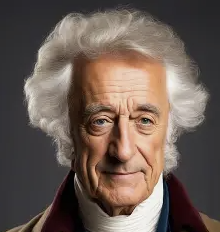
Were I to pray for a taste which should stand me in stead under every variety of circumstances, and be a source of happiness and cheerfulness to me during life, and a shield against its ills, however things might go amiss and the world frown upon me, it would be a taste for reading... Give a man this taste, and the means of gratifying it, and you can hardly fail of making him a happy man; unless, indeed, you put into his hands a most perverse selection of books. You place him in contact with the best society in every period of history,-with the wisest, the wittiest, the tenderest, the bravest, and the purest characters who have adorned humanity. You make him a denizen of all nations, a contemporary of all ages. The world has been created for him.
▼
Source
source
Address on the opening of the Eton Library (1833) as quoted in A History of Inventions, Discoveries and Origins (1846) by John Beckmann, Tr. William Johnston, Vol. 1, frontispiece.

3 months 3 weeks ago
I believe that political power also exercises itself through the mediation of a certain number of institutions that seem to have nothing in common with political power, that have the appearance of being independent, but are not.
▼
Source
source
Debate with Noam Chomsky, École Supérieure de Technologie à Eindhoven, November 1971

3 months 4 weeks ago
Space is employed as the type even of the concept of time itself, representing it by a line, and its limits - moments - by points. Time, on the other had, approaches more to a universal and rational concept, comprising under its relations all things whatsoever, to wit, space itself, and besides, those accidents which are not comprehended in the relations of space, such as the thoughts of the soul. Again, time, besides this, though it certainly does not dictate the laws of reason, yet constitutes the principal conditions tinder favor of which the mind compares its notions according to the laws of reason. Thus, I cannot judge what is impossible except by predicating a and not-a of the same subject at the same time.

3 months 3 weeks ago
There is a physical relation between physical things. But it is different with commodities.
▼
Source
source
Vol. I, Ch. 1, Section 4, pg. 83.

3 months 3 weeks ago
We will not go to Heaven,Goetz, and even if we both entered it, we would not have eyes to see each other, nor hands to touch each other. Up there, God gets all the attention.... We can only love on this earth and against God.
▼
Source
source
Acts 8 & 9
4 months 1 week ago
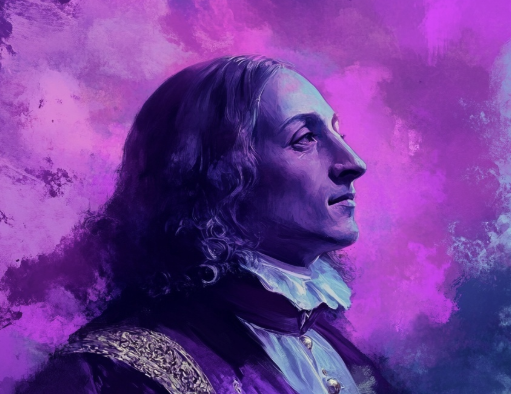
Do not mistake yourself by believing that your being has something in it more exalted than that of others.

8 months 2 days ago
Precisely as an enigma, the symptom, so to speak, announces its dissolution through interpretation: the aim of psychoanalysis is to re-establish the broken network of communication by allowing the patient to verbalize the meaning of his symptom: through this verbalization the symptom is automatically dissolved. This, then is the basic point: in its very construction, the symptom implies the field of the big Other as consistent, complete, because its very function is an appeal to the Other which contains its meaning.

2 months 2 weeks ago
Beauty as we feel it is something indescribable: what it is or what it means can never be said.
▼
Source
source
Pt. IV, Expression; § 67: "Conclusion.", p. 267


3 months 4 weeks ago
All men would then be necessarily equal, if they were without needs. It is the poverty connected with our species which subordinates one man to another. It is not inequality which is the real misfortune, it is dependence.
▼
Source
source
"Equality", 1764

2 months ago
I wish we could derive the rest of the phenomena of nature by the same kind of reasoning from mechanical principles; for I am induced by many reasons to suspect that they may all depend upon certain forces by which the particles of bodies, by some causes hitherto unknown, are either mutually impelled towards each other, and cohere in regular figures, or are repelled and recede from each other; which forces being unknown, philosophers have hitherto attempted the search of nature in vain; but I hope the principles here laid down will afford some light either to that or some truer method of philosophy.
▼
Source
source
Preface

4 months 3 weeks ago
"I conclude that all is well," says Oedipus, and that remark is sacred. It echoes in the wild and limited universe of man. It teaches that all is not, has not been, exhausted. It drives out of this world a god who had come into it with dissatisfaction and a preference for futile suffering. It makes of fate a human matter, which must be settled among men.

3 months 3 weeks ago
It is a great art to saunter.
▼
Source
source
April 26, 1841

2 months 2 weeks ago
For he must rule as king until God has put all enemies under his feet. And the last enemy, death, is to be brought to nothing.
▼
Source
source
Paul of Tarsus, 1 Corinthians 15: 25-26, NWT
3 months 3 weeks ago
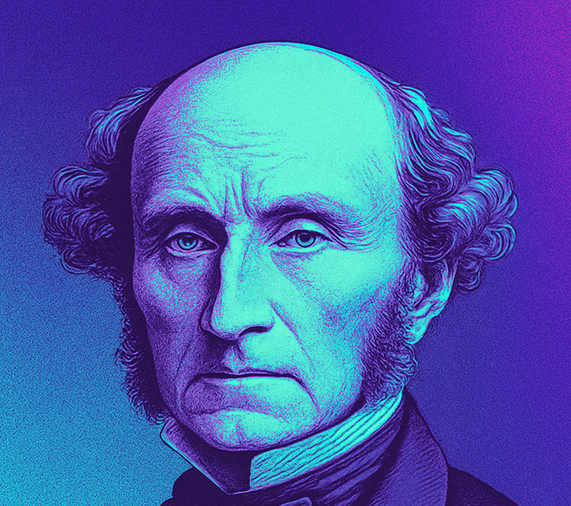
It is better to be a human being dissatisfied than a pig satisfied; better to be Socrates dissatisfied than a fool satisfied. And if the fool, or the pig, are of a different opinion, it is because they only know their own side of the question. The other party to the comparison knows both sides.
▼
Source
source
Ch. 2

1 month 3 days ago
Humans kill one another - and in some cases themselves - for many reasons, but none is more human than the attempt to make sense of their lives. More than the loss of life, they fear loss of meaning.
▼
Source
source
In the Puppet Theatre: Roof Gardens, Feathers and Human Sacrifice (p. 87)

2 weeks 3 days ago
Every candid eye, I think, will read the Koran far otherwise than so. It is the confused ferment of a great rude human soul; rude, untutored, that cannot even read; but fervent, earnest, struggling vehemently to utter itself in words. With a kind of breathless intensity he strives to utter himself; the thoughts crowd on him pell-mell: for very multitude of things to say, he can get nothing said. The meaning that is in him shapes itself into no form of composition, is stated in no sequence, method, or coherence;-they are not shaped at all, these thoughts of his; flung out unshaped, as they struggle and tumble there, in their chaotic inarticulate state.

3 months 1 week ago
A blow from your friend is better than a kiss from your enemy.
▼
Source
source
As quoted in Geary's Guide to the World's Great Aphorists (2007) by James Geary, p. 118
2 months 3 weeks ago
One hardly saves a world without ruling it.

3 months 1 day ago
There is no good father who would want to resemble our Heavenly Father.
▼
Source
source
No. 51

4 months 1 week ago
Never accept compliments or criticism from someone you wouldn't take advice from.
3 months 2 weeks ago
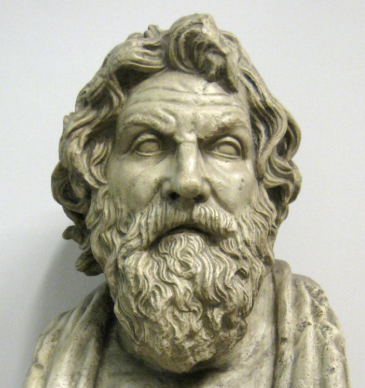
Virtue is the same for a man and for a woman.
▼
Source
source
§ 5
3 months 3 weeks ago
The political, ethical, social, philosophical problem of our day is not to try to liberate the individual from the state and from the state's institutions but to liberate us both from the state and from the type of individualization which is linked to the state. We have to promote new forms of subjectivity through the refusal of this kind of individuality which has been imposed on us for several centuries.
▼
Source
source
p. 785

2 months 3 weeks ago
Opinion is ultimately determined by the feelings, and not by the intellect.
▼
Source
source
Pt. IV, Ch. 30 : General Considerations
2 months 5 days ago
Organizations and institutions permit stable expectations to be formed by each member of the group as to the behavior of the other members under specified conditions.
▼
Source
source
p. 100.
CivilSimian.com created by AxiomaticPanic, CivilSimian, Kalokagathia