


3 months 4 weeks ago
To hold a pen is to be at war.
▼
Source
source
Letter to Jeanne-Grâce Bosc du Bouchet, comtesse d'Argental (4 October 1748)

3 months 3 weeks ago
Again, defenders of utility often find themselves called upon to reply to such objections as this-that there is not time, previous to action, for calculating and weighing the effects of any line of conduct on the general happiness. This is exactly as if any one were to say that it is impossible to guide our conduct by Christianity, because there is not time, on every occasion on which anything has to be done, to read through the Old and New Testaments. The answer to the objection is, that there has been ample time, namely, the whole past duration of the human species. During all that time mankind have been learning by experience the tendencies of actions.
▼
Source
source
Ch. 2
4 months 1 week ago
Whilst in speaking of human things, we say that it is necessary to know them before we can love them...the saints on the contrary say in speaking of divine things that it is necessary to love them in order to know them, and that we only enter truth through charity.

3 months 3 weeks ago
The activity of to-day and the assurance of to-morrow.
▼
Source
source
p. 215
1 month ago
It goes without saying that any persons may attempt to unite kindred spirits, but, whatever their hopes and longings, none have the right to impose their vision of unity upon the rest.
▼
Source
source
Ch. 10 : A Framework for Utopia; The Framework as Utopian Common Ground, p. 325
1 week 5 days ago
What matters the party to me? I shall find enough anyhow who unite with me without swearing allegiance to my flag.
▼
Source
source
Dover 2005, p. 236

1 month 3 weeks ago
By surpassing writing, we have regained our wholeness, not on a national or cultural but cosmic plane.

2 months 3 weeks ago
All my life, I have lived with the feeling that I have been kept from my true place. If the expression "metaphysical exile" had no meaning, my existence alone would afford it one.
2 months 2 weeks ago
Machiavelli is the complete contrary of a machiavellian, since he describes the tricks of power and "gives the whole show away." The seducer and the politician, who live in the dialectic and have a feeling and instinct for it, try their best to keep it hidden.
▼
Source
source
p. 59
2 months 2 weeks ago
When men and women agree, it is only in their conclusions; their reasons are always different.
▼
Source
source
Ch. VI: Free Society
1 month 4 weeks ago
Seduction is the world's elementary dynamic... All this has changed significantly for us, at least in appearance. For what has happened to good and evil? Seduction hurls them against one another, and unites them beyond meaning, in a paroxysm [sudden outbreak of emotion] of intensity and charm.
▼
Source
source
(p. 59)
2 weeks 2 days ago
As we find a place in the economic world the rebellion of youth subsides; we disapprove of earthquakes when our feet are on the earth. We forget then the radicalism then in a gentle liberalism - which is radicalism softened with the consciousness of a bank account.
▼
Source
source
Ch. 3 : On Middle Age

1 week 4 days ago
You must lay aside the burdens of the mind; until you do this, no place will satisfy you.
2 months 2 weeks ago
Time, and Industry, produce everyday new knowledge.
▼
Source
source
The Second Part, Chapter 30, p. 176

4 months ago
China has been long one of the richest, that is, one of the most fertile, best cultivated, most industrious, and most populous countries in the world. It seems, however, to have been long stationary. Marco Polo, who visited it more than five hundred years ago, describes its cultivation, industry, and populousness, almost in the same terms in which they are described by travellers in the present times.
▼
Source
source
Chapter VIII, p. 86.
1 week ago
The only originality I claim is that for me this truth goes hand in hand with the intellectual certainty that the human spirit is capable of creating in our time a new mentality, an ethical mentality. Inspired by this certainty, I too proclaim this truth in the hope that my testimony may help to prevent its rejection as an admirable sentiment but a practical impossibility. Many a truth has lain unnoticed for a long time, ignored simply because no one perceived its potential for becoming reality.
2 months 6 days ago
As the few adepts in such things well know, universal morality is to be found in little everyday penny-events just as much as in great ones. There is so much goodness and ingenuity in a raindrop that an apothecary wouldn't let it go for less than half-a-crown.
▼
Source
source
B 33

3 months 3 weeks ago
To save the world requires faith and courage: faith in reason, and courage to proclaim what reason shows to be true.
3 months 3 weeks ago
We cannot overstate our debt to the Past, but the moment has the supreme claim. The Past is for us; but the sole terms on which it can become ours are its subordination to the Present. Only an inventor knows how to borrow, and every man is or should be an inventor. We must not tamper with the organic motion of the soul.
▼
Source
source
Quotation and Originality
1 month 3 weeks ago
It's obvious that in an intelligent educated audience such as this university, I stress this university. Who saw fit to give them accreditation? At Randolph-Macon Woman's College, (23 October 2006) Broadcasted by C-SPAN2

4 months 4 weeks ago
The modern scientific counterpart to belief in God is the belief in the universe as an organism: this disgusts me. This is to make what is quite rare and extremely derivative, the organic, which we perceive only on the surface of the earth, into something essential, universal, and eternal! This is still an anthropomorphizing of nature!

4 months 3 weeks ago
Miniaturization doesn't actually make sense unless you miniaturize the very atoms of which matter is composed. Otherwise a tiny brain in a man the size of an insect, composed of normal atoms, is composed of too few atoms for the miniaturized man to be any more intelligent than the ant. Also, miniaturizing atoms is impossible according to the rules of quantum mechanics.
1 month 3 weeks ago
Speech is a mirror of the soul; as a man speaks, so is he.
▼
Source
source
Maxim 1073


2 months 3 weeks ago
They had no temples, but they had a real living and uninterrupted sense of oneness with the whole of the universe; they had no creed, but they had a certain knowledge that when their earthly joy had reached the limits of earthly nature, then there would come for them, for the living and for the dead, a still greater fullness of contact with the whole of the universe. They looked forward to that moment with joy, but without haste, not pining for it, but seeming to have a foretaste of it in their hearts, of which they talked to one another.

3 months 3 weeks ago
Do not allow your dreams of a beautiful world to lure you away from the claims of men who suffer here and now. Our fellow men have a claim to our help; no generation must be sacrificed for the sake of future generations, for the sake of an ideal of happiness that may never be realised.

4 months 3 weeks ago
The next thing you can learn from the woman who was a sinner, something she herself understood, is that with regard to finding forgiveness she is able to do nothing at all.
1 month 3 weeks ago
They pass peaceful lives who ignore mine and thine.
▼
Source
source
Maxim 790
1 week ago
But what we've got going wrong is we've got a kind of bifurcation [in cultural development]:You take your classified telephone directory, and open up "Churches", and have a ruler in your hand. And you will find that the longest space is occupied by authoritarian, Bible-banging churches. And these people are barbarians, who take the written word of the Bible literally. Because they need terribly, they have a personal need, for something to depend on. ... The government realizes that there is a very large number of people like that; and therefore, to keep their votes, they have to pander to those kind of people. And these are the boys who never grew up; they always need Papa. ... The trouble is that the boys who need Papa, are violent. They have the guns. And they are the types of people who like to be soldiers, policemen-tough guys. And therefore they have a great deal of power.
▼
Source
source
Interviewed on Les Hixon's show "In The Spirit" on WBAI New York
2 months 1 week ago
Deniers do not get their views just from simple mistakes about language and truth. Rather, they believe that there is something to worry about in important areas of our thought and in traditional interpretations of those areas; they sense that it has something to do with truth; and (no doubt driven by the familiar desire to say something at once hugely general, deeply important, and reassuringly simple) they extend their worry to the notion of truth itself.
▼
Source
source
p. 6
2 months 3 weeks ago
We are so lonely in life that we must ask ourselves if the loneliness of dying is not a symbol of our human existence.

3 months 3 weeks ago
For the world to become philosophic amounts to philosophy's becoming world-order reality; and it means that philosophy, at the same time that it is realized, disappears.

4 months 1 week ago
The first-beginnings of things cannot be seen by the eyes.
▼
Source
source
Book I, line 268 (tr. Munro)
1 month 3 weeks ago
The old land is still the true love, the others are but pleasant infidelities.
▼
Source
source
Pt. I, ch. IV
1 month 3 weeks ago
Every one excels in something in which another fails.
▼
Source
source
Maxim 17
2 months 3 weeks ago
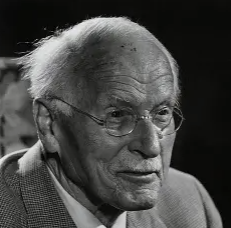
The woman who fights against her father still has the possibility of leading an instinctive, feminine existence, because she rejects only what is alien to her. But when she fights against the mother she may, at the risk of injury to her instincts, attain to greater consciousness, because in repudiating the mother she repudiates all that is obscure, instinctive, ambiguous, and unconscious in her own nature.
▼
Source
source
"Psychological Aspects of the Mother Archetype" (1939). In CW 9, Part I: The Archetypes and the Collective Unconscious. P. 186
1 week 4 days ago
For this reason those who are tossed about at sea, who proceed uphill and downhill over toilsome crags and heights, who go on campaigns that bring the greatest danger, are heroes and front-rank fighters; but persons who live in rotten luxury and ease while others toil, are mere turtle-doves safe only because men despise them.
2 months 1 week ago
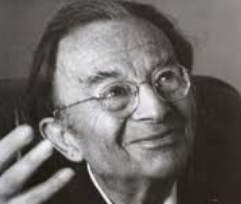
People have committed suicide because of their failure to realize the passions for love, power, fame, revenge. Cases of suicide because of a lack of sexual satisfaction are virtually nonexistent.
▼
Source
source
p. 30
3 months 2 weeks ago
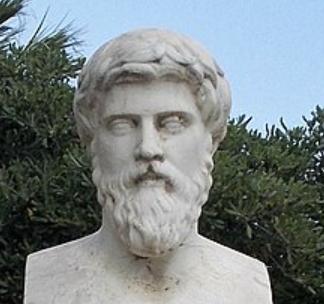
"Young men," said Cæsar, "hear an old man to whom old men hearkened when he was young."
▼
Source
source
Cæsar Augustus
2 months 2 weeks ago
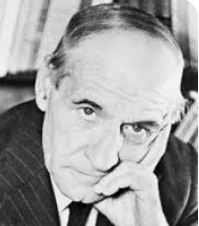
Even to-day, in spite of some signs which are making a tiny breach in that sturdy faith, even to-day, there are few men who doubt that motorcars will in five years' time be more comfortable and cheaper than to-day. They believe in this as they believe that the sun will rise in the morning. The metaphor is an exact one. For, in fact, the common man, finding himself in a world so excellent, technically and socially, believes that it has been produced by nature, and never thinks of the personal efforts of highly-endowed individuals which the creation of this new world presupposed. Still less will he admit the notion that all these facilities still require the support of certain difficult human virtues, the least failure of which would cause the rapid disappearance of the whole magnificent edifice.... These traits together make up the well-known psychology of the spoilt child. Chap.
▼
Source
source
VI: The Dissection Of The Mass-Man Begins
1 month 2 weeks ago
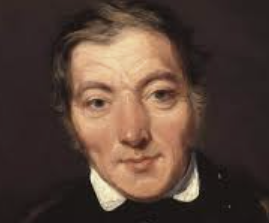
The end of government is to make the governed and the governors happy. That government then is thebest, which in practice produces the greatest happiness to the greatest number; including those who govern, and those who obey.
▼
Source
source
Essay Fourth, The Principles of the Former Essays Applied to Government
3 weeks ago
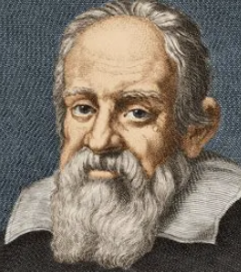
My purpose is to set forth a very new science dealing with a very ancient subject. There is, in nature, perhaps nothing older than motion, concerning which the books written by philosophers are neither few nor small; nevertheless I have discovered by experiment some properties of it which are worth knowing and which have not hitherto been either observed or demonstrated. Some superficial observations have been made, as, for instance, that the free motion [naturalem motum] of a heavy falling body is continuously accelerated; but to just what extent this acceleration occurs has not yet been announced; for so far as I know, no one has yet pointed out that the distances traversed, during equal intervals of time, by a body falling from rest, stand to one another in the same ratio as the odd numbers beginning with unity.
▼
Source
source
Author, Third Day. Change of Position
2 months 3 weeks ago
That higher and "complete" man is begotten by the "unknown" father and born from Wisdom, and it is he who, in the figure of the puer aeternus-"vultu mutabilis albus et ater"-represents our totality, which transcends consciousness. It was this boy into whom Faust had to change, abandoning his inflated onesidedness which saw the devil only outside. Christ's "Except ye become as little children" is a prefiguration of this, for in them the opposites lie close together; but what is meant is the boy who is born from the maturity of the adult man, and not the unconscious child we would like to remain.
▼
Source
source
Answer to Job, R. Hull, trans. (1984), pp. 157-158

2 months 3 weeks ago
The most obvious division of society is into rich and poor; and it is no less obvious, that the number of the former bear a great disproportion to those of the latter. The whole business of the poor is to administer to the idleness, folly, and luxury of the rich; and that of the rich, in return, is to find the best methods of confirming the slavery and increasing the burdens of the poor. In a state of nature, it is an invariable law, that a man's acquisitions are in proportion to his labours. In a state of artificial society, it is a law as constant and as invariable, that those who labour most enjoy the fewest things; and that those who labour not at all have the greatest number of enjoyments. A constitution of things this, strange and ridiculous beyond expression! We scarce believe a thing when we are told it, which we actually see before our eyes every day without being in the least surprised.
1 week ago
One sees that all explicit opposites are implicit allies-correlative in the sense that they "gowith" each other and cannot exist apart. This, rather than any miasmic absorption of differences into acontinuum of ultimate goo, is the metaphysical unity underlying the world. For this unity is not mere one-ness as opposed to multiplicity, since these two terms are themselves polar. The unity, or inseparability, of one and many is therefore referred to in Vedanta philosophy as "nonduality" (advaita) to distinguish it from simple uniformity.
▼
Source
source
p. 107-108

3 months 3 weeks ago
Man is condemned to be free; because once thrown into the world, he is responsible for everything he does.
3 months 3 weeks ago
The sublime is excited in me by the great stoical doctrine, Obey thyself.
▼
Source
source
p. 14
3 months 1 day ago
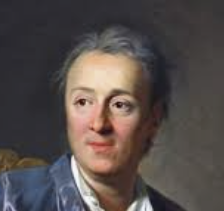
To attempt the destruction of our passions is the height of folly. What a noble aim is that of the zealot who tortures himself like a madman in order to desire nothing, love nothing, feel nothing, and who, if he succeeded, would end up a complete monster!
▼
Source
source
Ch. 5, as quoted in Selected Writings (1966) edited by Lester G. Crocker

4 months 3 weeks ago
He discovered the cruel paradox by which we always deceive ourselves twice about the people we love — first to their advantage, then to their disadvantage.
1 week 4 days ago
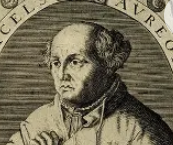
We should become angels and not devils, that's why we have been created and born into the world. Therefore be and stick to what God has chosen you for.
CivilSimian.com created by AxiomaticPanic, CivilSimian, Kalokagathia