


3 months 3 weeks ago
No particular results then, so far, but only an attitude of orientation, is what the pragmatic method means. The attitude of looking away from first things, principles, 'categories,' supposed necessities; and of looking towards last things, fruits, consequences, facts.
▼
Source
source
Lecture II, What Pragmatism Means
1 month 1 week ago
The foundation of morality is to have done, once and for all, with lying; to give up pretending to believe that for which there is no evidence, and repeating unintelligible propositions about things beyond the possibilities of knowledge.
▼
Source
source
Science and Morals
3 months 3 weeks ago
This is a long book, not only in pages.
▼
Source
source
Preface, pg. viii
1 month 4 days ago
When Bernard Marx tells the Savage he will try to secure permission for him and his mother to visit the Other Place, John is initially pleased and excited. Echoing Miranda in The Tempest, he exclaims: "O brave new world that has such people in it." Heavy irony. Like innocent Miranda, he is eager to embrace a way of life he neither knows nor understands. And of course he comes unstuck. Yet if we swallow such fancy literary conceits, then ultimately the joke is on us. It is only funny in the sense there are "jokes" about Auschwitz. For it is Huxley who neither knows nor understands the glory of what lies ahead. A utopian society in which we are sublimely happy will be far better than we can presently imagine, not worse. And it is we, trapped in the emotional squalor of late-Darwinian antiquity, who neither know nor understand the lives of the god-like super-beings we are destined to become. "Brave New World? A Defence of Paradise-Engineering", BLTC Research, 1998

3 months 2 weeks ago
Anytime two human beings find genuine pleasure, joy, and love, the stars smile and the universe is enriched. Yet as long as that pleasure, joy, and love is still predicated on myths of black sexuality, the more fundamental challenge of humane interaction remains unmet.
▼
Source
source
(p85)
3 months 4 weeks ago
The history of mankind can be seen, in the large, as the realization of Nature's secret plan to bring forth a perfectly constituted state as the only condition in which the capacities of mankind can be fully developed, and also bring forth that external relation among states which is perfectly adequate to this end.
▼
Source
source
Eighth Thesis

3 months 4 weeks ago
Nothing appears more surprising to those, who consider human affairs with a philosophical eye, than the easiness with which the many are governed by the few; and the implicit submission, with which men resign their own sentiments and passions to those of their rulers. When we enquire by what means this wonder is effected, we shall find, that, as Force is always on the side of the governed, the governors have nothing to support them but opinion. It is therefore, on opinion only that government is founded; and this maxim extends to the most despotic and most military governments, as well as to the most free and most popular.
▼
Source
source
Part I, Essay 4: Of The First Principles of Government

1 month 3 weeks ago
Art is a human activity having for its purpose the transmission to others of the highest and best feelings to which men have risen.
▼
Source
source
Ch. 8
2 months 3 weeks ago
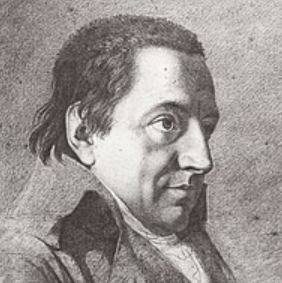
He who must still exhort himself, and be exhorted, to will the good, has as yet no firm and ever-ready will, but wills a will anew every time he needs it. But he who has such a stable will, wills what he wills for ever, and cannot under any circumstances will otherwise than he always wills. For him freedom of the will is destroyed and swallowed up in necessity.
▼
Source
source
General Nature of New Eduction p 21

3 months 3 weeks ago
It is so characteristic, that just when the mechanics of reproduction are so vastly improved, there are fewer and fewer people who know how the music should be played.
▼
Source
source
p. 96

2 months 3 weeks ago
Third, these general ideas are not mere words, nor do they consist in this, that certain concrete facts will every time happen under certain descriptions of conditions; but they are just as much, or rather far more, living realities than the feelings themselves out of which they are concreted. And to say that mental phenomenon are governed by law does not mean merely that they are describable by a general formula; but that there is a living idea, a conscious continuum of feeling which pervades them, and to which they are docile.

1 week 3 days ago
Imagine that nature is saying to us: "Those things of which you complain are the same for all. I cannot give anything easier to any man, but whoever wishes will make things easier for himself." In what way? By equanimity. You must suffer pain, and thirst, and hunger, and old age too, if a longer stay among men shall be granted you; you must be sick, and you must suffer loss and death.

3 months 3 weeks ago
Subject matters in general do not exist. There are no subject matters; no branches of learning-or, rather, of inquiry: there are only problems, and the urge to solve them.
2 months 3 weeks ago
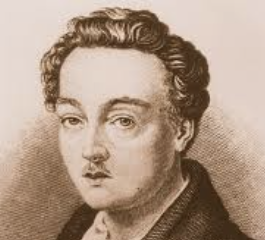
Government must be a transparent garment which tightly clings to the people's body.
▼
Source
source
Act I.
1 month 1 week ago
Perhaps the most valuable result of all education is the ability to make yourself do the thing you have to do, when it ought to be done, whether you like it or not; it is the first lesson that ought to be learned; and, however early a man's training begins, it is probably the last lesson that he learns thoroughly.
▼
Source
source
Technical Education

3 months 3 weeks ago
Nature is too thin a screen; the glory of the One breaks in everywhere.
▼
Source
source
p. 182

4 months 2 weeks ago
When we have intelligence resulting from sincerity, this condition is to be ascribed to nature; when we have sincerity resulting from intelligence, this condition is to be ascribed to instruction. But given the sincerity, and there shall be the intelligence; given the intelligence, and there shall be the sincerity.
3 months 2 weeks ago
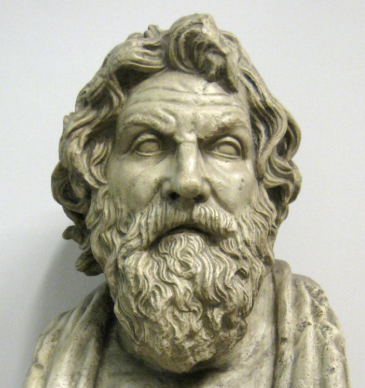
Virtue is the same for a man and for a woman.
▼
Source
source
§ 5
2 weeks 5 days ago
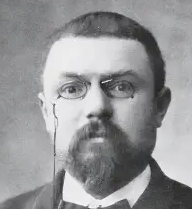
But, one will say, if raw experience can not legitimatize reasoning by recurrence, is it so of experiment aided by induction? We see successively that a theorem is true of the number 1, of the number 2, of the number 3 and so on; the law is evident, we say, and it has the same warranty as every physical law based on observations, whose number is very great but limited. But there is an essential difference. Induction applied to the physical sciences is always uncertain, because it rests on the belief in a general order of the universe, an order outside of us. Mathematical induction, that is, demonstration by recurrence, on the contrary, imposes itself necessarily, because it is only the affirmation of a property of the mind itself.
▼
Source
source
Ch. I. (1905) Tr. George Bruce Halstead
2 months 3 weeks ago
There never comes a point where a theory can be said to be true. The most that one can claim for any theory is that it has shared the successes of all its rivals and that it has passed at least one test which they have failed.
▼
Source
source
Philosophy in the Twentieth Century (1982) p. 133.

3 months 2 weeks ago
To sum up all these steps, each of which is very lengthy and complex, we will have put the game of truth back in the network of constraints and dominations. Truth, I should say rather, the system of truth and falsity, will have revealed the face it turned away from us for so long and which is that of its violence.
▼
Source
source
p. 4

4 months 3 weeks ago
A character is never the author who created him. It is quite likely, however, that an author may be all his characters simultaneously.

4 months 4 weeks ago
What! the inventors of ancient civilisations, the first makers of tools and tape lines, the first builders of vehicles, ships, and houses, the first observers of the laws of the heavens and the multiplication tables is it contended that they were entirely different from the inventors and observers of our own time, and superior to them? And that the first slow steps forward were of a value which has not been equalled by the discoveries we have made with all our travels and circumnavigations of the earth?
3 days ago
Within a nominally Christian world, chivalry upheld without any substantial alterations an Aryan ethics in the following things: (1) upholding the ideal of the hero rather than the saint, and of the conqueror rather than of the martyr; (2) regarding faithfulness and honor, rather than caritas and humbleness, as the highest virtues; (3) regarding cowardice and dishonor, rather than sin, as the worst possible evil; (4) ignoring or hardly putting into practice the evangelical precepts of not opposing evil and not retaliating against offenses, but rather, methodically punishing unfairness and evil; (5) excluding from its ranks those who followed the Christian precept 'Thou Shalt Not Kill' to the letter; and (6) refusing to love one's enemy and instead fighting him and being magnanimous only after defeating him.
3 months 3 weeks ago
Greater intelligence, wealth and opportunity, for example, allow a person to achieve ends he could not rationally contemplate otherwise.
▼
Source
source
Chapter II, Section 15, pg. 93

4 months 1 week ago
Charity is no substitute for justice withheld.
▼
Source
source
As quoted in Majority of One (1957) by Sydney J. Harris, p. 283
2 months 3 weeks ago
Women are systematically degraded by receiving the trivial attentions which men think it manly to pay to the sex, when, in fact, men are insultingly supporting their own superiority.
▼
Source
source
Ch. 4
2 months 2 weeks ago
The sin of pride may be a small or a great thing in someone's life, and hurt vanity a passing pinprick or a self-destroying or even murderous obsession. Possibly, more people kill themselves and others out of hurt vanity than out of envy, jealousy, malice or desire for revenge.
▼
Source
source
The Philosopher's Pupil (1983) p. 76.
4 months 3 weeks ago
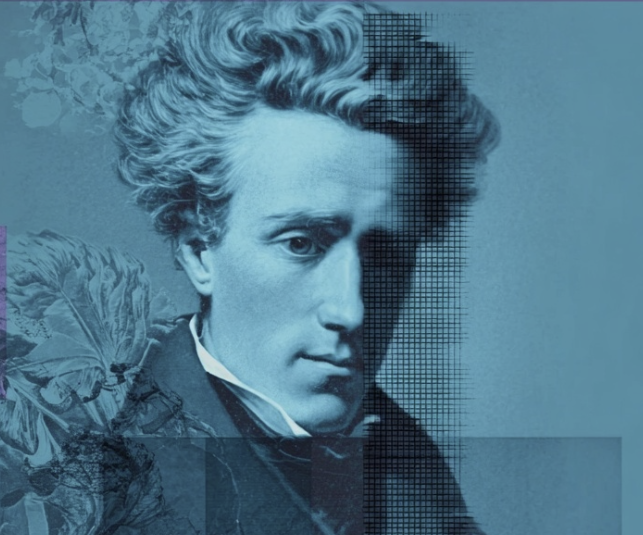
Above all do not forget your duty to love yourself; do not permit the fact that you have been set apart from life in a way, been prevented from participating actively in it, and that you are superflous in the obtruse eyes of a busy world, above all, do not permit this to deprive you of your idea of yourself, as if your life, if lived in inwardness, did not have just as much meaning and worth as that of any human being in the eyes of all-wise Governance, and considerably more than the busy, busiest haste of busy-ness - busy with wasting life and losing itself.
2 months 3 weeks ago
Political Freedom without economic equality is a pretense, a fraud, a lie; and the workers want no lying.
▼
Source
source
The Red Association

3 months 4 weeks ago
It is unjust that the whole of society should contribute towards an expence of which the benefit is confined to a part of the society.
▼
Source
source
Chapter I, Part IV, Conclusion, p. 881.
3 months ago
How old the world is! I walk between two eternities... What is my fleeting existence in comparison with that decaying rock, that valley digging its channel ever deeper, that forest that is tottering and those great masses above my head about to fall? I see the marble of tombs crumbling into dust; and yet I don't want to die!
▼
Source
source
Salon of 1767 (1798), Oeuvres esthétiques
1 month 3 weeks ago
For us, with the rule of right and wrong given us by Christ, there is nothing for which we have no standard. And there is no greatness where there is not simplicity, goodness, and truth.
▼
Source
source
Bk. XIV, ch. 18
2 months 2 weeks ago
In its relation to the reality of daily life, the high culture of the past was many things-opposition and adornment, outcry and resignation. But it was also the appearance of the realm of freedom: the refusal to behave.
▼
Source
source
p. 71

3 months 3 weeks ago
Wherever one finds oneself inclined to bitterness, it is a sign of emotional failure: a larger heart, and a greater self-restraint, would put a calm autumnal sadness in the place of the instinctive outcry of pain.
▼
Source
source
The Collected Papers of Bertrand Russell: Contemplation and Action, 1902-1914, ed. Richard A. Rempel, Andrew Brink and Margaret Moran (Routledge, 1993

2 months 3 weeks ago
To dream of an enterprise of demolition that would spare none of the traces of the original Big Bang.
3 months 3 weeks ago
A teacher who can show good, or indeed astounding results while he is teaching, is still not on that account a good teacher, for it may be that, while his pupils are under his immediate influence, he raises them to a level which is not natural to them, without developing their own capacities for work at this level, so that they immediately decline again once the teacher leaves the schoolroom.
▼
Source
source
p. 43e
1 month 3 weeks ago
It is sometimes expedient to forget who we are.
▼
Source
source
Maxim 233
2 months 1 week ago
A precise language awaits a completed metaphysics.
1 month 2 weeks ago
There is simply too much to think about. It is hopeless - too many kinds of special preparation are required. In electronics, in economics, in social analysis, in history, in psychology, in international politics, most of us are, given the oceanic proliferating complexity of things, paralyzed by the very suggestion that we assume responsibility for so much. This is what makes packaged opinion so attractive.
▼
Source
source
There Is Simply Too Much to Think About (1992), pp. 173-174
2 months 3 weeks ago
What to think of other people? I ask myself this question each time I make a new acquaintance. So strange does it seem to me that we exist, and that we consent to exist.

2 weeks 2 days ago
Our grand business undoubtedly is, not to see what lies dimly at a distance, but to do what lies clearly at hand.
2 weeks 5 days ago
Point set topology is a disease from which the human race will soon recover.
▼
Source
source
Quoted in D MacHale, Comic Sections
4 months 3 days ago
The demands of a free populace, too, are very seldom harmful to liberty, for they are due either to the populace being oppressed or to the suspicious that it is going to be oppressed... and, should these impressions be false, a remedy is provided in the public platform on which some man of standing can get up, appeal to the crowd, and show that it is mistaken. And though, as Tully remarks, the populace may be ignorant, it is capable of grasping the truth and readily yields when a man, worthy of confidence, lays the truth before it.
▼
Source
source
Book 1, Ch. 4 (as translated by LJ Walker and B Crick)
2 months 3 weeks ago
There is no one whose death I have not longed for, at one moment or another.

3 months 3 weeks ago
The real point at issue always is Turkey in Europe - the great peninsula to the south of the Save and Danube. This splendid territory [the Balkans] has the misfortune to be inhabited by a conglomerate of different races and nationalities, of which it is hard to say which is the least fit for progress and civilization. Slavonians, Greeks, Wallachians, Arnauts, twelve millions of men, are all held in submission by one million of Turks, and up to a recent period, it appeared doubtful whether, of all these different races, the Turks were not the most competent to hold the supremacy which, in such a mixed population, could not but accrue to one of these nationalities.
▼
Source
source
The Russian Menace to Europe, From Karl Marx and Frederick Engels, edited by Paul Blackstock and Bert Hoselitz, and published by George Allen and Unwin, London, 1953

1 month 3 weeks ago
Language does for intelligence what the wheel does for the feet and the body. It enables them to move from thing to thing with greater ease and speed and ever less involvement.
▼
Source
source
(p. 113)

3 months 3 weeks ago
All those to whom I looked up, were of opinion that the pleasure of sympathy with human beings, and the feelings which made the good of others, and especially of mankind on a large scale, the object of existence, were the greatest and surest sources of happiness. Of the truth of this I was convinced, but to know that a feeling would make me happy if I had it, did not give me the feeling.
▼
Source
source
(p. 138)
3 months 3 weeks ago
If there is anything in the world that can really be called a man's property, it is surely that which is the result of his mental activity.
▼
Source
source
Unverified attribution noted in Respectfully Quoted: A Dictionary of Quotations (1993), ed. Suzy Platt, Library of Congress, p. 227
3 months 2 weeks ago
Oh. Marx's love for Shakespeare! It is well known. Chris Hani shared the same passion. I have just learned this and I like the idea. Even though Marx more often quotes Timon of Athens, the Manifesto seems to evoke or convoke, right from the start, the first coming of the silent ghost, the apparition of the spirit that does not answer, on those ramparts of Elsinore which is then the old Europe.
▼
Source
source
Injunctions of Marx
CivilSimian.com created by AxiomaticPanic, CivilSimian, Kalokagathia