

1 month 3 weeks ago
The remedy for loneliness is human fellowship, the warmth of real, live, flesh-and-blood companions and loved-ones; not prating in a vacuum to an imaginary friend for whose existence there is no vestige of serious evidence. Even an AI robot is better than that. At least ChatGPT exists, really talks back at you, will actually hold a friendly conversation. But talk to the imaginary friend which is God (Allah, Virgin Mary, Lord Krishna, Thor, Zeus, Mithras, name yours) and the only reply you'll get is conjured within your own imagination. You'll be talking to yourself, which is really rather sad, and hardly an antidote to loneliness. No Satisfying Alternative to Religion? Try Reality.
▼
Source
source
23-Apr-25
4 days ago
I think he who knows himself will know accurately, not the opinion of others about him, but what he is in reality... he ought to discover within himself what is right for him to do and not learn it from without...
▼
Source
source
Oration to the Cynic Heracleios
1 month 4 weeks ago
The best and safest method of philosophizing seems to be, first to enquire diligently into the properties of things, and to establish these properties by experiment, and then to proceed more slowly to hypothesis for the explanation of them. For hypotheses should be employed only in explaining the properties of things, but not assumed in determining them, unless so far as they may furnish experiments.
▼
Source
source
Letter to Ignatius Pardies (1672) Philosophical Transactions of the Royal Society (Feb. 1671/2) as quoted by William L. Harper
4 months 1 week ago
The propositions which are true and evident must of necessity be employed even by those who contradict them.
▼
Source
source
Book II, ch. 20, 1

3 months 4 weeks ago
The necessaries of life occasion the great expense of the poor. They find it difficult to get food, and the greater part of their little revenue is spent in getting it. The luxuries and vanities of life occasion the principal expense of the rich, and a magnificent house embellishes and sets off to the best advantage all the other luxuries and vanities which they possess. A tax upon house-rents, therefore, would in general fall heaviest upon the rich; and in this sort of inequality there would not, perhaps, be anything very unreasonable. It is not very unreasonable that the rich should contribute to the public expense, not only in proportion to their revenue, but something more than in that proportion.
▼
Source
source
Chapter II, Part II, Article I, p. 911.

3 months 3 weeks ago
Virtue supposes liberty, as the carrying of a burden supposes active force. Under coercion there is no virtue, and without virtue there is no religion. Make a slave of me, and I shall be no better for it. Even the sovereign has no right to use coercion to lead men to religion, which by its nature supposes choice and liberty. My thought is no more subject to authority than is sickness or health.
▼
Source
source
"Canon Law: Ecclesiastical Ministry", 1771
2 months 2 weeks ago
And because the condition of Man, (as hath been declared in the precedent Chapter) is a condition of Warre of every one against everyone; in which case every one is governed by his own Reason; and there is nothing he can make use of, that may not be a help unto him, in preserving his life against his enemyes; It followeth, that in such a condition, every man has a Right to every thing; even to one anothers body.
▼
Source
source
The First Part, Chapter 14, p. 64

2 months 3 weeks ago
Everything is nothing, including the consciousness of nothing.

2 months 3 weeks ago
Who consciously throws himself into the water or onto the knife?
▼
Source
source
Part 2, Chapter ?

2 months 1 week ago
Passion, intellect, moral activity - these three have never been satisfied in a woman. In this cold and oppressive conventional atmosphere, they cannot be satisfied. To say more on this subject would be to enter into the whole history of society, of the present state of civilisation.

1 week 3 days ago
I do not trust my eyes to tell me what a man is: I have a better and more trustworthy light by which I can distinguish what is true from what is false: let the mind find out what is good for the mind.
▼
Source
source
De Vita Beata (On the Happy Life): cap. 2, line 2 Alternate translation: I do not distinguish by the eye, but by the mind, which is the proper judge of the man. (translator unknown).
3 months 3 weeks ago
Justice is happiness according to virtue.
▼
Source
source
Chapter V, Section 48, p. 310

2 months 1 week ago
Just as eunuchs will never know aesthetics as applied to the selection of beautiful women, so neither will pure rationalists ever know ethics, nor will they ever succeed in defining happiness, for happiness is a thing that is lived and felt, not a thing that is reasoned or defined.
1 month 2 weeks ago
The gallery in which the reporters sit has become a fourth estate of the realm.
▼
Source
source
Hallam', The Edinburgh Review (September 1828), quoted in T. B. Macaulay, Critical and Historical Essays Contributed to The Edinburgh Review, Vol. I (1843), p. 210
2 months 4 days ago
We distinguish diagrammatic from sentential paper-and-pencil representations of information by developing alternative models of information-processing systems that are informationally equivalent and that can be characterized as sentential or diagrammatic. Sentential representations are sequential, like the propositions in a text. Diagrammatic representations are indexed by location in a plane. Diagrammatic representations also typically display information that is only implicit in sentential representations and that therefore has to be computed, sometimes at great cost, to make it explicit for use. We then contrast the computational efficiency of these representations for solving several.illustrative problems in mathematics and physics.
▼
Source
source
p. 65
2 months 3 weeks ago
Even those who have renounced Christianity and attack it, in their inmost being still follow the Christian ideal, for hitherto neither their subtlety nor the ardor of their hearts has been able to create a higher ideal of man and of virtue than the ideal given by Christ.
2 months 3 weeks ago
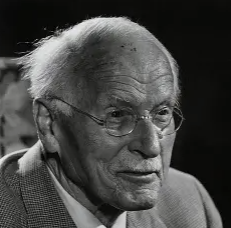
For it all depends on how we look at things, and not on how they are in themselves. The least of things with a meaning is worth more in life than the greatest of things without it.
▼
Source
source
p. 67
3 months 1 week ago
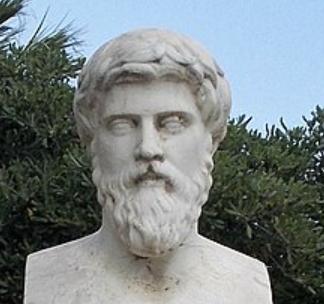
A soldier told Pelopidas, "We are fallen among the enemies." Said he, "How are we fallen among them more than they among us?"
▼
Source
source
63 Pelopidas

1 month 3 weeks ago
If Mormonism is able to endure, unmodified, until it reaches the third and fourth generation, it is destined to become the greatest power the world has ever known.
▼
Source
source
This quote originates in Thomas J. Yates, "Count Tolstoi and the 'American Religion' ", Improvement Era (February 1939)
2 months 3 weeks ago
The most interesting aspect of suffering is the sufferer's belief in its absoluteness. He believes he has a monopoly on suffering. I think that I alone suffer, that I alone have the right to suffer, although I also realize that there are modalities of suffering more terrible than mine, pieces of flesh falling from the bones, the body crumbling under one's very eyes, monstrous, criminal , shameful sufferings. One asks oneself, How can this be, and if it be, how can one still speak of finality and other such old wives' tales? Suffering moves me so much that I lose all my courage. I lose heart because I do not understand why there is suffering in the world.
▼
Source
source
in essay: the monopoly of suffering

3 months 3 weeks ago
If anyone would like to acquire humility, I can, I think, tell him the first step. The first step is to realise that one is proud. And a biggish step, too. At least, nothing whatever can be done before it. If you think you are not conceited, it means you are very conceited indeed.
▼
Source
source
Book III, Chapter 8, "The Great Sin"
3 days ago
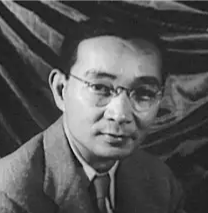
I am here to speak on freedom of speech. It is a great topic, and I am going to make my speech as free as possible. But you know that this cannot be done, for when anyone announces that he is going to speak his mind freely, everyone is frightened. This shows that there is no such thing as true freedom of speech. No one can afford to let his neighbors know what he is thinking about them. Society can exist only on the basis that there is some amount of polished lying and that no one says exactly what he thinks.
▼
Source
source
"Of Freedom of Speech", lecture given in China

4 months 3 weeks ago
Of course, I had to own that he was right; I didn't feel much regret for what I'd done. Still, to my mind, he overdid it, and I'd have liked to have a chance of explaining to him, in a quite friendly, almost affectionate way, that I have never been able to really regret anything in all my life. I've always been far too much absorbed in the present moment, or the immediate future, to think back.

2 weeks 4 days ago
The social contract between all people around the world only has one requirement: Don't kill. From there it's those who don't agree, those that agree but have some reactive justification, and those that agree and don't kill.

3 months 2 days ago
The universe comprises all being in a totality; for nothing that exists is outside or beyond infinite being, as the latter has no outside or beyond.
1 month 3 weeks ago
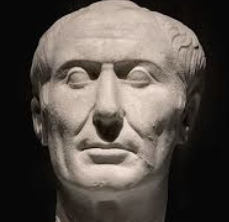
Either be silent or say something better than silence.
▼
Source
source
Maxim 960
6 days ago
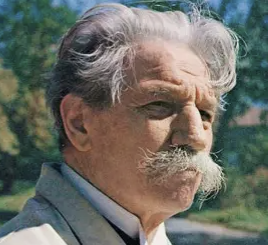
The restoration of our world-view can come only as a result of inexorably truth-loving and recklessly courageous thought. Such thinking alone is mature enough to learn by experience how the rational, when it thinks itself out to a conclusion, passes necessarily over into the non-rational. World- and life-affirmation and ethics are non-rational. They are not justified by any corresponding knowledge of the nature of the world, but are the disposition in which, through the inner compulsion of our will-to-live, we determine our relation to the world. What the activity of this disposition of ours means in the evolution of the world, we do not know. Nor can we regulate this activity from outside; we must leave entirely to each individual its shaping and its extension. From every point of view, then, world- and life-affirmation and ethics are non-rational, and we must have the courage to admit it.

3 months 3 weeks ago
The reason that I call my doctrine logical atomism is because the atoms that I wish to arrive at as the sort of last residue in analysis are logical atoms and not physical atoms. Some of them will be what I call "particulars" - such things as little patches of color or sounds, momentary things - and some of them will be predicates or relations and so on.

3 months 4 weeks ago
I have entered on an enterprise which is without precedent, and will have no imitator. I propose to show my fellows a man as nature made him, and this man shall be myself.
2 weeks 5 days ago
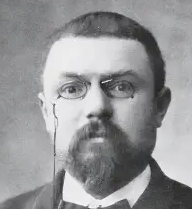
It is because simplicity and vastness are both beautiful that we seek by preference simple facts and vast facts; that we take delight, now in following the giant courses of the stars, now in scrutinizing the microscope that prodigious smallness which is also a vastness, and now in seeking in geological ages the traces of a past that attracts us because of its remoteness.
▼
Source
source
Part I. Ch. 1 : The Selection of Facts, p. 23
3 months 3 weeks ago
The moral things I wish to say to future generations is very simple. I should say love is wise hatred is foolish. In this world which is getting more and more closely interconnected, we have to learn to tolerate each other. We have to learn to put up with the fact that some people say things that we don't like. We can only live together in that way, and if we are to live together and not die together we must learn the kind of charity and kind of tolerance which is absolutely vital to the continuation of human life on this planet.
4 weeks 1 day ago
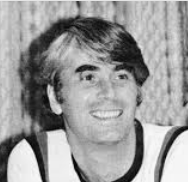
Our main conclusions about the state are that a minimal state, limited, to the narrow functions of protection against force, theft, fraud, enforcement of contracts, and so on, is justified, but any more extensive state will violate persons' rights not to be forced to do certain things, and is unjustified; and that the minimal state is inspiring as well as right.
▼
Source
source
Preface, p. ix
2 months 2 weeks ago
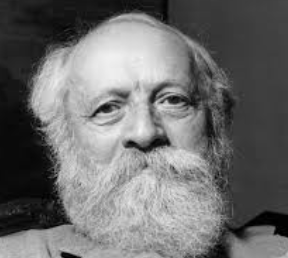
It is the highest service to submit the evil impulse to God through the power of love.
▼
Source
source
p. 45
1 week 3 days ago
My master Attalus used to say: "Evil herself drinks the largest portion of her own poison." The poison which serpents carry for the destruction of others, and secrete without harm to themselves, is not like this poison; for this sort is ruinous to the possessor.
▼
Source
source
Line 22
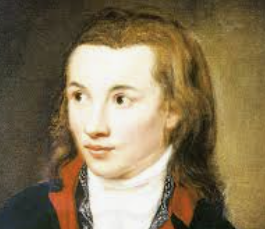
2 months 3 weeks ago
There is, properly speaking, no Misfortune in the world. Happiness and Misfortune stand in continual balance. Every Misfortune is, as it were, the obstruction of a stream, which, after overcoming this obstruction, but bursts through with the greater force.
4 months 1 week ago
I do not speak here of divine truths... because they are infinitely superior to nature: God alone can place them in the soul... I know that he has desired that they should enter from the heart into the mind, and not from the mind into the heart, to humiliate that proud power of reasoning that pretends to the right to be the judge of the things that the will chooses; and to cure this infirm will which is wholly corrupted by its filthy attachments.

3 months 3 weeks ago
One who believes, as I do, that the free intellect is the chief engine of human progress, cannot but be fundamentally opposed to Bolshevism, as much as to the Church of Rome.
▼
Source
source
Part I, Ch. 9: International Policy
3 months 3 weeks ago
The husband who decides to surprise his wife is often very much surprised himself.
▼
Source
source
La Femme Qui a Raison, Act 1, scene 2, 1759

2 months 2 weeks ago
With men this is impossible; but with God all things are possible.
▼
Source
source
19:26 (KJV)

2 months 1 week ago
Revolutionary feminism embraces men who are able to change, who are capable of responding mutually in a subject-to-subject encounter where desire and fulfillment are in no way linked to coercive subjugation. This feminist vision of the sexual imaginary is the space few men seem able to enter.

3 months 3 weeks ago
I saw a moving sight the other morning before breakfast in a little hotel where I slept in the dusty fields. The young man of the house shot a little wolf called coyote in the early morning. The little heroic animal lay on the ground, with his big furry ears, and his clean white teeth, and his little cheerful body, but his little brave life was gone. It made me think how brave all living things are. Here little coyote was, without any clothes or house or books or anything, with nothing to pay his way with, and risking his life so cheerfully - and losing it - just to see if he could pick up a meal near the hotel. He was doing his coyote-business like a hero, and you must do your boy-business, and I my man-business bravely, too, or else we won't be worth as much as a little coyote.
▼
Source
source
28-Aug-89

4 months 3 days ago
It happens as with cages: the birds without despair to get in, and those within despair of getting out.
▼
Source
source
Book III, Ch. 5. Upon some Verses of Virgil

2 months 1 week ago
Station, power, wealth-how inadequate they have proved! How useless and insecure!

3 months 1 day ago
They that endeavour to abolish vice destroy also virtue, for contraries, though they destroy one another, are yet the life of one another.
▼
Source
source
Section 4
6 days ago
We do not have a complete and satisfying knowledge of the world. We are reduced to the simple conclusion that everywhere in the world there is life like ourselves and that all life is shrouded in mystery. A true acquaintance with the world consists in being filled with a sense of the mystery of existence and life. This mystery becomes only more mysterious with every advance in scientific research. To be filled with the mystery of life is like that which is called in the language of mysticism the "wise ignorance," an ignorance which is nonetheless knowledge of the essential.
▼
Source
source
p. 304


2 weeks 2 days ago
If we read History with any degree of thoughtfulness, we shall find that checks and balances of Profit and Loss have never been the grand agents with men, that they have never been roused into deep, thorough, all-pervading efforts by any computable prospect of Profit and Loss, for any visible, finite object; but always for some invisible and infinite one.
1 week 3 days ago
When I hear any man talk of an unalterable law, the only effect it produces upon me is to convince me that he is an unalterable fool.
▼
Source
source
Peter Plymley's Letters (1808), Letter IV

3 months 3 weeks ago
I believe that one of the things Christianity says is that sound doctrines are all useless. That you have to change your life. (Or the direction of your life.)
▼
Source
source
p. 53e
CivilSimian.com created by AxiomaticPanic, CivilSimian, Kalokagathia