

4 months 2 weeks ago
Nothing is more common than good things: the point in question is only to discriminate them; and it is certain that they are all natural and within our reach and even known to all mankind.

4 months 1 week ago
In youth it is the outward aspect of things that most engages us; while in age, thought or reflection is the predominating quality of the mind. Hence, youth is the time for poetry, and age is more inclined to philosophy. In practical affairs it is the same: a man shapes his resolutions in youth more by the impression that the outward world makes upon him; whereas, when he is old, it is thought that determines his actions.

3 months 2 days ago
He detested objective truths, the burden of argument, sustained reasoning. He disliked demonstrating, he wanted to convince no one. Others are a dialectician's invention.

4 months 1 week ago
Owing to the identification of religion with virtue, together with the fact that the most religious men are not the most intelligent, a religious education gives courage to the stupid to resist the authority of educated men, as has happened, for example, where the teaching of evolution has been made illegal. So far as I can remember, there is not one word in the Gospels in praise of intelligence; and in this respect ministers of religion follow gospel authority more closely than in some others.
▼
Source
source
p. 110
4 months 5 days ago
The suppression of liberty is always likely to be irrational.
▼
Source
source
Chapter IV, Section 33, p. 210
4 months 1 week ago
Reason is a harmonising, controlling force rather than a creative one.
▼
Source
source
Ch. 1: Mysticism and Logic


5 months 1 week ago
A person might fairly doubt also what in the world they mean by the absolute - this that or the other, since, as they would themselves allow, the account of the humanity is one and the same in the absolute man, and in any individual man: for so far as the individual and the absolute man are both man, they will not differ at all: and if so, then the essential good and any particular good will not differ, in so far as both are good. Nor will it do to say that the eternity of the absolute good makes it to be more good; for a white thing which has lasted white ever so long, is no whiter than that which only lasts for a day.

2 months 4 days ago
Until writing was invented, man lived in acoustic space: boundless, directionless, horizonless, in the dark of the mind, in the world of emotion, by primordial intuition, terror. Speech is a social chart of this bog.
▼
Source
source
(p. 48)

4 months 6 days ago
Those who believe that they are exclusively in the right are generally those who achieve something.
▼
Source
source
"Note on Dogma"


3 months 1 week ago
To be nameless in worthy deeds exceeds an infamous history.But the iniquity of oblivion blindly scattereth her poppy, and deals with the memory of men without distinction to merit of perpetuity. Who can but pity the founder of the Pyramids? Herostratus lives that burnt the Temple of Diana, he is almost lost that built it.
▼
Source
source
Chapter V
2 months 4 weeks ago
A whole dimension of human activity and passivity has been de-eroticized. The environment from which the individual could obtain pleasure-which he could cathect as gratifying almost as an extended zone of the body-has been rigidly reduced. Consequently, the "universe" of libidinous cathexis is likewise reduced. The effect is a localization and contraction of libido, the reduction of erotic to sexual experience and satisfaction.
▼
Source
source
p. 73
4 months 1 week ago
Two Chinamen visiting Europe went to the theatre for the first time. One of them occupied himself with trying to understand the theatrical machinery, which he succeeded in doing. The other, despite his ignorance of the language, sought to unravel the meaning of the play. The former is like the astronomer, the latter the philosopher.
▼
Source
source
Vol. 2 "On Various Subjects" as translated in Essays and Aphorisms (1970), as translated by R. J. Hollingdale

1 month 3 weeks ago
How do we remember the parts of our histories we'd rather forget?
▼
Source
source
Repression and revision are always options.

4 months 3 weeks ago
The superior man loves his soul; the inferior man loves his property.
3 weeks ago
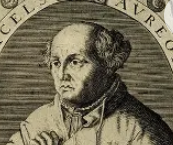
We have Divine Wisdom in the mortal body.Whatever does harm to the body, ruins the House of the Eternal.
4 days ago
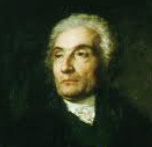
To know the nature of man, the most direct and wisest way undoubtedly is to know what he has always been. Since when can theories be opposed to facts? History is experimental politics; this is the best or rather the only good politics.
▼
Source
source
p. 21

3 weeks 6 days ago
I knew Robert Burns, and I knew my father. Yet were you to ask me which had the greater natural faculty, I might perhaps actually pause before replying. Burns had an infinitely wider education, my father a far wholesomer. Besides, the one was a man of musical utterance; the other wholly a man of action, with speech subservient thereto. Never, of all the men I have seen, has one come personally in my way in whom the endowment from nature and the arena from fortune were so utterly out of all proportion. I have said this often, and partly know it. As a man of speculation - had culture ever unfolded him - he must have gone wild and desperate as Burns; hut he was a man of conduct, and work keeps all right. What strange shapable creatures we are!

4 months 1 week ago
This world is but canvas to our imaginations.
1 month 4 weeks ago
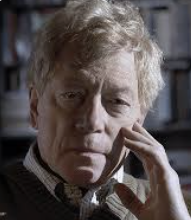
Burke emphasized that the new forms of politics, which hope to organize society around the rational pursuit of liberty, equality, fraternity, or their modernist equivalents, are actually forms of militant irrationality.
▼
Source
source
Why I became a conservative, The New Criterion
3 weeks 6 days ago
I suggest that scientific knowledge, though logically more articulate and far more complex, is of this sort. The books and teachers from whom it is acquired present concrete examples together with a multitude of theoretical generalizations. Both are essential carriers of knowledge, and it is therefore Pickwickian to seek a methodological criterion that supposes the scientist can specify in advance whether each imaginable instance fits or would falsify his theory.
▼
Source
source
"Logic of Discovery or Psychology of Research?", Criticism and the growth of knowledge edited by Imre Lakatos and Alan Musgrave

4 months 2 weeks ago
Why dost thou not retire like a guest sated with the banquet of life, and with calm mind embrace, thou fool, a rest that knows no care?
▼
Source
source
Book III, lines 938-939 (tr. Bailey)

2 months 2 weeks ago
No matter how honest scientists think they are, they are still influenced by various unconscious assumptions that prevent them from attaining true objectivity. Expressed in a sentence, Fort's principle goes something like this: People with a psychological need to believe in marvels are no more prejudiced and gullible than people with a psychological need not to believe in marvels.
▼
Source
source
p. 125

4 months 5 days ago
To be ignorant of the past is to remain a child.
▼
Source
source
Cicero
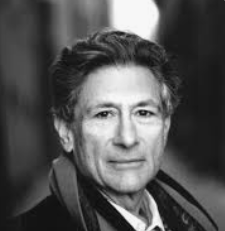
2 months 2 weeks ago
Where cruelty and injustice are concerned, hopelessness is submission, which I believe is immoral.
▼
Source
source
quoted in "Internal Exile" by Pankaj Mishra in The New Yorker, 2021
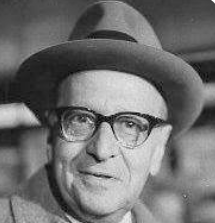
2 months 3 weeks ago
Whoever desires to live among men has to obey their laws-this is what the secular morality of Western civilization comes down to. ... Rationality in the form of such obedience swallows up everything, even the freedom to think.
▼
Source
source
p. 29.
4 months 1 week ago
Reading the morning newspaper is the realist's morning prayer. One orients one's attitude toward the world either by God or by what the world is. The former gives as much security as the latter, in that one knows how one stands.
▼
Source
source
Miscellaneous writings of G.W.F. Hegel, translation by Jon Bartley Stewart, Northwestern University Press, 2002, page 247.

4 months 1 week ago
Let us not forget what befits our present state in the pursuit of vain fancies. Mankind has its place in the sequence of things; childhood has its place in the sequence of human life; the man must be treated as a man and the child as a child. Give each his place, and keep him there. Control human passions according to man's nature; that is all we can do for his welfare. The rest depends on external forces, which are beyond our control.
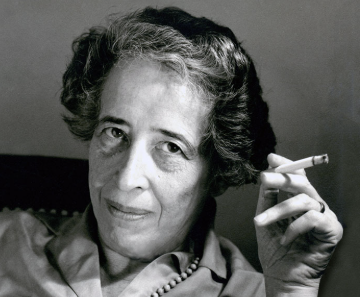
4 months 5 days ago
Before mass leaders seize the power to fit reality to their lies, their propaganda is marked by its extreme contempt for facts as such, for in their opinion fact depends entirely on the power of man who can fabricate it.
▼
Source
source
On "alternate facts"
4 months 5 days ago
Bold ideas, unjustified anticipations, and speculative thought, are our only means for interpreting nature: our only organon, our only instrument, for grasping her. And we must hazard them to win our prize. Those among us who are unwilling to expose their ideas to the hazard of refutation do not take part in the scientific game.
▼
Source
source
Ch. 10 "Corroboration, or How a Theory Stands up to Tests", section 85: The Path of Science, p. 280.

2 months 3 weeks ago
Love is not consolation, it is light.
▼
Source
source
As quoted in Simone Weil (1954) by Eric Walter Frederick Tomlin, p. 47
3 months 3 days ago
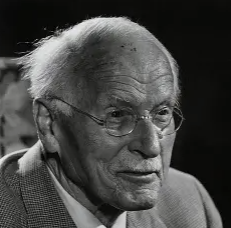
Emotion is the chief source of all becoming-conscious. There can be no transforming of darkness into light and of apathy into movement without emotion.
▼
Source
source
Psychological Aspects of the Mother Archetype

2 months 4 weeks ago
One who seeks will find, and for one who knocks it will be opened.

5 months 3 days ago
It is the failing of a certain literature to believe that life is tragic because it is wretched. Life can be magnificent and overwhelming that is its whole tragedy. Without beauty, love, or danger it would be almost easy to live. And M. Sartre's hero does not perhaps give us the real meaning of his anguish when he insists on those aspects of man he finds repugnant, instead of basing his reasons for despair on certain of man's signs of greatness. The realization that life is absurd cannot be an end, but only a beginning. This is a truth nearly all great minds have taken as their starting point. It is not this discovery that is interesting, but the consequences and rules of action drawn from it.

6 days ago
The greatest service which can be rendered any country is to add an useful plant to its culture; especially, a bread grain; next in value to bread is oil.
▼
Source
source
Thomas Jefferson, In Memoir, Correspondence, and Miscellanies from the Papers of T. Jefferson (1829), Vol. 1, 144
4 months 1 week ago
Free in this world as the birds in the air, disengaged from every kind of chains, those who have practiced the Yoga gather in Brahmin the certain fruit of their works. Depend upon it; rude and careless as I am, I would fain practice the yoga faithfully. This Yogi, absorbed in contemplation, contributes in his degree to creation; he breathes a divine perfume, he heard wonderful things. Divine forms traverse him without tearing him and he goes, he acts as animating original matter. To some extent, and at rare intervals, even I am a Yogi.
▼
Source
source
Letter to H. G. O. Blake, November 20, 1849
4 days ago
Man cannot be wicked without being evil, nor evil without being degraded, nor degraded without being punished, nor punished without being guilty. In short ... there is nothing so intrinsically plausible as the theory of original sin.
▼
Source
source
Second Dialogue, p. 38
3 months 2 days ago
Even when nothing happens, everything seems too much for me. What can be said, then, in the presence of an event, any event?

3 months 1 week ago
We are taught to believe that a desire of domineering over our countrymen is love to our country; and those who hate civil war abet rebellion, and that the amiable and conciliatory virtues of lenity, moderation, and tenderness to the privileges of those who depend on this kingdom are a sort of treason to the state. It is impossible that we should remain long in a situation, which breeds such notions and dispositions, without some great alteration in the national character.
2 months 2 weeks ago
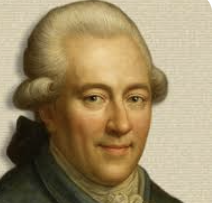
He who says he hates every kind of flattery, and says it in earnest, certainly does not yet know every kind of flattery.
▼
Source
source
K 41
4 months 6 days ago
All gods are homemade, and it is we who pull their strings, and so, give them the power to pull ours Vijaya in Island.
▼
Source
source
1962
3 weeks 1 day ago
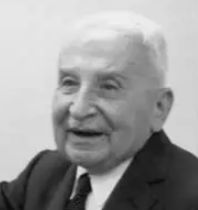
For the time being, the ominous peril of the communist parties in the West lies in their stand on foreign affairs. The distinctive mark of all present-day communist parties is their devotion to the aggressive foreign policy of the Soviets. Whenever they must choose between Russia and their own country, they do not hesitate to prefer Russia. Their principle is: Right or wrong, my Russia. They strictly obey all orders issued from Moscow. When Russia was an ally of Hitler, the French communists sabotaged their own country's war effort and the American communists passionately opposed President Roosevelt's plans to aid England and France in their struggle against the Nazis.
2 weeks 3 days ago
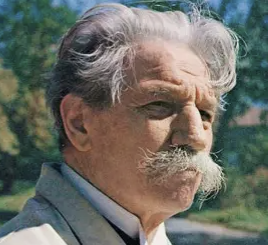
Ethics, too, are nothing but reverence for life. That is what gives me the fundamental principle of morality, namely, that good consists in maintaining, promoting, and enhancing life, and that destroying, injuring, and limiting life are evil.
3 weeks 6 days ago
Money is miraculous. What miraculous facilities has it yielded, will it yield us; but also what never-imagined confusions, obscurations has it brought in; down almost to total extinction of the moral-sense in large masses of mankind!
2 months 3 weeks ago
If the subjectivist view hold true, thinking cannot be of any help in determining the desirability of any goal in itself. The acceptability of ideals, the criteria for our actions and beliefs, the leading principles of ethics and politics, all our ultimate decisions are made to depend upon factors other than reason. They are supposed to be matters of choice and predilection, and it has become meaningless to speak of truth in making practical, moral or esthetic decisions.
▼
Source
source
pp. 7-8.
2 months 4 weeks ago
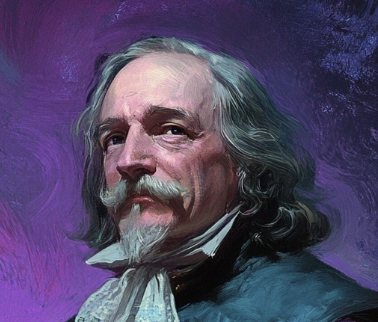
And the Science of them, is the true and onely Moral Philosophy. For Moral Philosophy is nothing else but the Science of what is Good, and Evill, in the conversation, and Society of mankind. Good, and Evill, are names that signify our Appetites, and Aversions; which in different tempers, customes, and doctrines of men, are different.
▼
Source
source
The First Part, Chapter 15, p. 79
1 week ago
I hold the brimming wineglass and relive the toils of my grandfathers and great-grandfathers. The sweat of my labor runs down like a fountain from my tall, intoxicated brow. I am a sack filled with meat and bones, blood, sweat, and tears, desires and visions.

4 months 6 days ago
In England women are still occasionally used instead of horses for hauling canal boats, because the labour required to produce horses and machines is an accurately known quantity, while that required to maintain the women of the surplus population is below all calculation.
▼
Source
source
Vol. I, Ch. 15, Section 2, pg. 430.
CivilSimian.com created by AxiomaticPanic, CivilSimian, Kalokagathia