

3 months 3 weeks ago
Because people have no thoughts to deal in, they deal cards, and try and win one another's money. Idiots!

2 months 3 weeks ago
Through a wise and salutary neglect [of the colonies], a generous nature has been suffered to take her own way to perfection; when I reflect upon these effects, when I see how profitable they have been to us, I feel all the pride of power sink and all presumption in the wisdom of human contrivances melt and die away within me. My vigour relents. I pardon something to the spirit of liberty.

2 months 6 days ago
The family uses people, not for what they are, nor for what they are intended to be, but for what it wants them for - its own uses. It thinks of them not as what God has made them, but as the something which it has arranged that they shall be.
2 months 2 weeks ago
A pair of statements may be taken conjunctively or disjunctively; for example, "It lightens and it thunders," is conjunctive, "It lightens or it thunders" is disjunctive. Each such individual act of connecting a pair of statements is a new monad for the mathematician.
▼
Source
source
p. 268

3 months 6 days ago
None but God is wise.
▼
Source
source
As quoted in The Diegesis (1829) by Robert Taylor, p. 219

2 months 3 weeks ago
The source of our actions resides in an unconscious propensity to regard ourselves as the center, the cause, and the conclusion of time. Our reflexes and our pride transform into a planet the parcel of flesh and consciousness we are. If we had the right sense of our position in the world, if to compare were inseparable from to live, the revelation of our infinitesimal presence would crush us. But to live is to blind ourselves to our own dimensions. . . .

3 months 3 weeks ago
It is Christ Himself, not the Bible, who is the true Word of God. The Bible, read in the right spirit and with the guidance of good teachers, will bring us to Him.
▼
Source
source
Letter (8 November 1952); published in Letters of C. S. Lewis (1966), p. 247
2 months 3 weeks ago
Public life is a situation of power and energy; he trespasses against his duty who sleeps upon his watch, as well as he that goes over to the enemy.

4 months 3 weeks ago
Neither perception nor true opinion, nor reason or explanation combined with true opinion could be knowledge. Then our art of midwifery declare to us that all the offspring that have been born are mere wind-eggs and not worth rearing and if you remain barren, you will be less harsh and gentler to your associates, for you will have the wisdom not to think you know that which you do not know.

2 months 1 week ago
With the conception that the Revolution was only a means of securing political power, it was inevitable that all revolutionary values should be subordinated to the needs of the Socialist State; indeed, exploited to further the security of the newly acquired governmental power.

3 months 3 weeks ago
None but a coward dares to boast that he has never known fear.
▼
Source
source
Attributed to Russell in M. Kumar Dictionary of Quotations, p. 76, but actually said by Marshal Lannes, according to The London Literary Gazette and Journal of Belles Lettres, Arts, Sciences (1824), p. 664
3 months 3 weeks ago
Only the skilled can judge the skilfulness, but that is not the same as judging the value of the result.
▼
Source
source
A Preface to Paradise Lost (1942), Chapter 2: "Is Criticism Possible?"

2 months 4 weeks ago
The last thing abandoned by a party is its phraseology, because among political parties, as elsewhere, the vulgar make the language, and the vulgar abandon more easily the ideas that have been instilled into it than the words that it has learnt. France Before The Consulate, Chapter I: "How the Republic was ready to accept a master", in Memoir, Letters, and Remains, Vol I (1862), p. 266 Variant translation: The last thing a political party gives up is its vocabulary. This is because, in party politics as in other matters, it is the crowd who dictates the language, and the crowd relinquishes the ideas it has been given more readily than the words it has learned.
▼
Source
source
As quoted in The Viking book of Aphorisms : A Personal Selection (1962) by W. H. Auden, and Louis Kronenberger, p. 306. Variant translation: The last thing that a party abandons is its language.

4 months 2 days ago
I am entirely of the opinion that the papacy is the Antichrist. But if anyone wants to add the Turk, then the Pope is the spirit of the Antichrist, and the Turk is the flesh of the Antichrist. They help each other in their murderous work. The latter slaughters bodily and by the sword, the former spiritually and by doctrine.
▼
Source
source
330
2 weeks 4 days ago
All laws are... deduced from experiment; but to enunciate them, a special language is needful... ordinary language is too poor...This... is one reason why the physicist can not do without mathematics; it furnishes him the only language he can speak. And a well-made language is no indifferent thing;...the analyst, who pursues a purely esthetic aim, helps create, just by that, a language more fit to satisfy the physicist....law springs from experiment, but not immediately. Experiment is individual, the law deduced from it is general; experiment is only approximate, the law is precise...In a word, to get the law from experiment, it is necessary to generalize... But how generalize? ...in this choice what shall guide us?It can only be analogy. ...What has taught us to know the true profound analogies, those the eyes do not see but reason divines?It is the mathematical spirit, which disdains matter to cling only to pure form.
2 months 3 weeks ago
I believe in the salvation of humanity, in the future of cyanide . . .
2 months 3 weeks ago
The advantage of meditating upon life and death is being able to say anything at all about them.
1 month 3 weeks ago
Never did Christ utter a single word attesting to a personal resurrection and a life beyond the grave.
▼
Source
source
My Religion (1884), Ch. 8

3 months 2 weeks ago
The aspects of things that are most important for us are hidden because of their simplicity and familiarity. (One is unable to notice something - because it is always before one's eyes.) The real foundations of his enquiry do not strike a man at all. Unless that fact has at some time struck him. - And this means: we fail to be struck by what, once seen, is most striking and most powerful.
▼
Source
source
§ 129
2 months 3 weeks ago
I hate tyranny, at least I think I do; but I hate it most of all where most are concerned in it. The tyranny of a multitude is a multiplied tyranny. If, as society is constituted in these large countries of France and England, full of unequal property, I must make my choice (which God avert!) between the despotism of a single person, or of the many, my election is made. As much injustice and tyranny has been practised in a few months by a French democracy, as in all the arbitrary monarchies in Europe in the forty years of my observation.
▼
Source
source
Letter to Captain Thomas Mercer (26 February 1790), quoted in Alfred Cobban and Robert A. Smith (eds.), The Correspondence of Edmund Burke, Volume VI: July 1789-December 1791 (1967), p. 96
4 months 2 days ago
But the Jews are so hardened that they listen to nothing; though overcome by testimonies they yield not an inch. It is a pernicious race, oppressing all men by their usury and rapine. If they give a prince or magistrate a thousand florins, they extort twenty thousand from the subjects in payment. We must ever keep on guard against them.
▼
Source
source
863
1 month 3 weeks ago
Wealth brings a heavy purse; poverty, a light spirit.
▼
Source
source
p. 88
2 months 1 week ago
The STATE IDEA, the authoritarian principle, has been proven bankrupt by the experience of the Russian Revolution. If I were to sum up my whole argument in one sentence I should say: The inherent tendency of the State is to concentrate, to narrow, and monopolize all social activities; the nature of revolution is, on the contrary, to grow, to broaden, and disseminate itself in ever-wider circles. In other words, the State is institutional and static; revolution is fluent, dynamic. These two tendencies are incompatible and mutually destructive. The State idea killed the Russian Revolution and it must have the same result in all other revolutions, unless the libertarian idea prevail.

1 week 2 days ago
Thus no fortune, no external circumstance, can shut off the wise man from action. For the very thing which engages his attention prevents him from attending to other things. He is ready for either outcome: if it brings goods, he controls them; if evils, he conquers them.
3 days ago
To fight on "the path of God" has been characterized as "medieval" fanaticism; conversely, it has been characterized as a most sacred cause to fight for "patriotic" and "nationalistic" ideals and for other myths that in our contemporary era have eventually been unmasked and shown to be the instruments of irrational, materialistic, and destructive forces... Soldiers went to the front to experience war as something else, namely, as a crisis that all too often did not turn out to be an authentic and heroic transfiguration of the personality, but rather the regression of the individual to a plane of savage instincts, "reflexes," and reactions that retain very little of the human...

2 months 2 weeks ago
The man old in days will not hesitate to ask a small child seven days old about the place of life, and he will live. For many who are first will become last, and they will become one and the same.

1 month 1 day ago
Today those who peer into the future want only relief from anxiety. Unable to face the prospect that the cycles of war will continue, they are desperate to find a pattern of improvement in history. It is only natural that believers in reason, lacking any deeper faith and too feeble to tolerate doubt, should turn to the sorcery of numbers. Happily there are some who are ready to assist them. Just as the Elizabethan magus transcribed tables shown to him by angels, the modern scientific scryer deciphers numerical auguries of angels hidden in ourselves.
▼
Source
source
In the Puppet Theatre: Dark mirrors, Hidden Angels and an Algorithmic Prayer-Wheel (p. 99)
2 months 4 weeks ago
If there ever are great revolutions there, they will be caused by the presence of the blacks upon American soil. That is to say, it will not be the equality of social conditions but rather their inequality which may give rise thereto.
▼
Source
source
Book Three, Chapter XXI.
2 months 2 weeks ago
Every great advance in science has issued from a new audacity of imagination.
▼
Source
source
The Quest for Certainty (1929), Ch. XI
2 months 3 weeks ago
Hegel ... proceeds abstractly from the pre-existence of the intellect. ... He does not appeal to the intellect within us.
▼
Source
source
Z. Hanfi, trans., in The Fiery Brook (1972), p. 68

2 weeks 1 day ago
Every pitifulest whipster that walks within a skin has had his head filled with the notion that he is, shall be, or by all human and divine laws ought to be, 'happy.' His wishes, the pitifulest whipster's, are to be fulfilled for him; his days, the pitifulest whipster's, are to flow on in an ever-gentle current of enjoyment, impossible even for the gods. The prophets preach to us, Thou shalt be happy; thou shalt love pleasant things, and find them. The people clamor, Why have we not found pleasant things? ...God's Laws are become a Greatest Happiness Principle. There is no religion; there is no God; man has lost his soul.
▼
Source
source
Bk. III, ch. 4.

4 months 3 weeks ago
The person who is going to preach ought to live in the Christian thoughts and ideas: they ought to be his daily life. If so, this is the view of Christianity, then you, too, will have eloquence enough and precisely that which is needed when you speak extemporaneously without specific preparation. However, it is fallacious eloquence if someone, without otherwise occupying himself with, without living in these thoughts, once in a while sits down and laboriously collects such thoughts, perhaps in the field of literature, and then works them into a well-composed discourse, which is then committed to memory and delivered superbly, with respect both to voice and diction and gestures.

4 months 3 weeks ago
This heart within me I can feel, and I judge that it exists. This world I can touch, and I likewise judge that it exists. There ends all my knowledge, and the rest is construction. For if I try to seize this self of which I feel sure, if I try to define and to summarize it, it is nothing but water slipping through my fingers. I can sketch one by one all the aspects it is able to assume, all those likewise that have been attributed to it, this upbringing, this origin, this ardor or these silences, this nobility or this vileness. But aspects cannot be added up. This very heart which is mine will forever remain indefinable to me. Between the certainty I have of my existence and the content I try to give to that assurance, the gap will never be filled. Forever I shall be a stranger to myself.
4 months 2 days ago
A theologian is born by living, nay dying and being damned, not by thinking, reading, or speculating.
▼
Source
source
352
2 months 3 weeks ago
I am myself deeply convinced that imagination is the basis of a sound reason. It is by dint of feeling, and of putting ourselves in fancy into the place of other men, that we can learn how we ought to treat them, and be moved to treat them as we ought. Man, to express the thing in familiar language, is a complex being, made up of a head and a heart. So far as we are employed in heaping up facts and in reasoning upon them merely, we are a species of machine; it is our impulses and our sentiments, that are the glory of our nature.
▼
Source
source
Of Religion (1818), quoted in Political and Philosophical Writings of William Godwin, Volume 7: Religious Writings, ed. Mark Philp
2 months 3 weeks ago
The more you are a victim of contradictory impulses, the less you know which to yield to. To lack character - precisely that and nothing more.
3 months 3 weeks ago
Choose your parents wisely.
▼
Source
source
On the recipe for longevity; Collected Papers of Bertrand Russell, Vol. 29, 2012
1 month 1 week ago
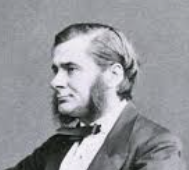
The language of the chalk is not hard to learn, not nearly so hard as Latin, if you only want to get at the broad features of the story it has to tell; and I propose that we now set to work to spell that story out together.
3 months 3 weeks ago
The Spirit of the Age wishes to allow argument and not to allow argument. ... If anyone argues with them they say that he is rationalizing his own desires, and therefore need not be answered. But if anyone listens to them they will then argue themselves to show that their own doctrines are true. ... You must ask them whether any reasoning is valid or not. If they say no, then their own doctrines, being reached by reasoning, fall to the ground. If they say yes, then they will have to examine your arguments and refute them on their merits: for if some reasoning is valid, for all they know, your bit of reasoning may be one of the valid bits.'
▼
Source
source
Pilgrim's Regress 63
3 months 3 weeks ago
Ever since the war began, I have felt that I could no longer go on being a pacifist, but I have hesitated to say so, because of the responsibility involved. If I were young enough to fight myself, I should do so, but it is more difficult to urge others. Now, however, I feel that I ought to announce that I have changed my mind.
▼
Source
source
Letter to Kingsley Martin (June 1940), quoted in Kingsley Martin, Editor: A Second Volume of Autobiography, 1931-45 (1968), p. 207
2 months 2 weeks ago
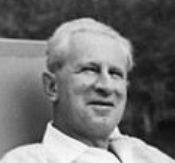
The Superego, in censoring the unconscious and in implanting conscience, also censors the censor.
▼
Source
source
p. 76

3 months 3 weeks ago
O tenderly the haughty day Fills his blue urn with fire; One morn is in the mighty heaven, And one in our desire.
▼
Source
source
Ode, st. 1
1 week 2 days ago
Meanwhile, hold fast to this thought, and grip it close: yield not to adversity; trust not to prosperity; keep before your eyes the full scope of Fortune's power, as if she would surely do whatever is in her power to do.
3 months 3 weeks ago
It is normal to hate what we fear, and it happens frequently, though not always, that we fear what we hate. I think it may be taken as the rule among primitive men, that they both fear and hate whatever is unfamiliar. They have their own herd, originally a very small one. And within one herd, all are friends, unless there is some special ground of enmity. Other herds are potential or actual enemies; a single member of one of them who strays by accident will be killed. An alien herd as a whole will be avoided or fought according to circumstances. It is this primitive mechanism which still controls our instinctive reaction to foreign nations. The completely untravelled person will view all foreigners as the savage regards a member of another herd. But the man who has travelled, or who has studied international politics, will have discovered that, if his herd is to prosper, it must, to some degree, become amalgamated with other herds.
2 months 2 weeks ago
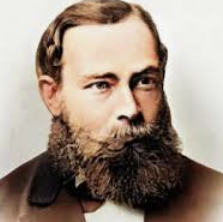
A judgment, for me is not the mere grasping of a thought, but the admission of its truth.
▼
Source
source
Gottlob Frege (1892). On Sense and Reference, note 7.
2 months 3 weeks ago
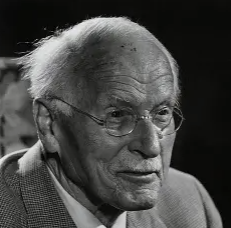
For lack of empirical data I have neither knowledge nor understanding of such forms of being, which are commonly called spiritual. ...Nevertheless, we have good reason to suppose that behind this veil there exists the uncomprehended absolute object which affects and influences us-and to suppose it even, or particularly, in the case of psychic phenomena about which no verifiable statements can be made.
▼
Source
source
p.351

3 months 4 weeks ago
If slavery, barbarism and desolation are to be called peace, men can have no worse misfortune. No doubt there are usually more and sharper quarrels between parents and children, than between masters and slaves ; yet it advances not the art of household management to change a father's right into a right of property, and count children but as slaves. Slavery, then, and not peace, is furthered by handing the whole authority to one man.
▼
Source
source
Ch. 6, On Monarchy

2 months 1 week ago
The everyday world demands our attention, and prevents us from sinking into ourselves. As a romantic, I have always resented this: I like to sink into myself. The problems and anxieties of living make it difficult. Well, now I had an anxiety that referred to something inside of me, and it reminded me that my inner world was just as real and important as the world around me.
▼
Source
source
p. 39
2 months 2 weeks ago
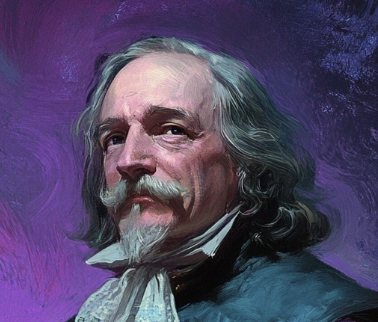
And when all the world is overcharged with Inhabitants, then the last remedy of all is Warre, which provideth for every man, by Victory or Death.
▼
Source
source
The Second Part, Chapter 30, p. 181
3 months 3 weeks ago
The blazing evidence of immortality is our dissatisfaction with any other solution.
▼
Source
source
July 1855
CivilSimian.com created by AxiomaticPanic, CivilSimian, Kalokagathia