


3 months 1 week ago
Gentlemen, there is a sublime and friendly Destiny by which the human race is guided, - the race never dying, the individual never spared, - to results affecting masses and ages. Men are narrow and selfish, but the Genius or Destiny is not narrow, but beneficent. It is not discovered in their calculated and voluntary activity, but in what befalls, with or without their design. Only what is inevitable interests us, and it turns out that love and good are inevitable, and in the course of things. That Genius has infused itself into nature. It indicates itself by a small excess of good, a small balance in brute facts always favorable to the side of reason.
1 month 3 weeks ago
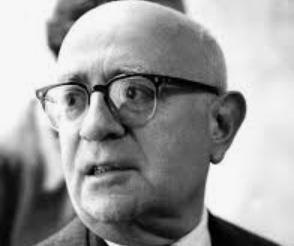
Even the most insensitive hit song enthusiast cannot always escape the feeling that the child with a sweet tooth comes to know in the candy store.
▼
Source
source
p. 290
2 months 3 days ago
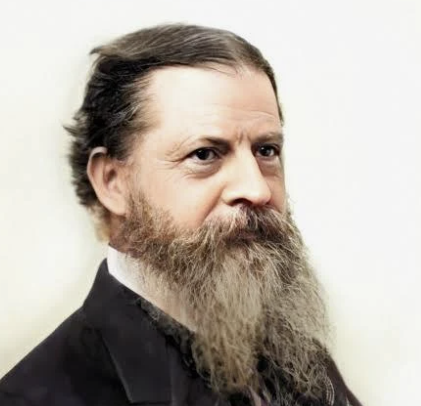
A finite interval of time generally contains an innumerable series of feelings; and when these become welded together in association the result is a general idea.
2 months 3 weeks ago
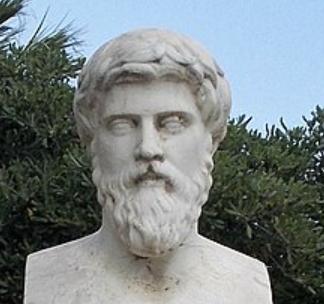
About Pontus there are some creatures of such an extempore being that the whole term of their life is confined within the space of a day; for they are brought forth in the morning, are in the prime of their existence at noon, grow old at night, and then die.

3 months 1 week ago
Heaven and Hell suppose two distinct species of men, the good and the bad; but the greatest part of mankind float betwixt vice and virtue. -- Were one to go round the world with an intention of giving a good supper to the righteous, and a sound drubbing to the wicked, he would frequently be embarrassed in his choice, and would find that the merits and the demerits of most men and women scarcely amount to the value of either.
▼
Source
source
Essay on the Immortality of the Soul
1 month 4 weeks ago
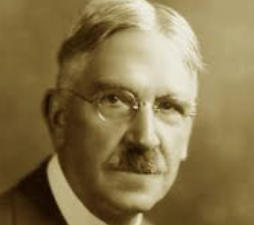
Interest only becomes one-sided and morbid only when it ceases to be frank, and becomes sly and furtive.
▼
Source
source
p. 197

2 months 1 week ago
The Republican form of government is the highest form of government; but because of this it requires the highest type of human nature - a type nowhere at present existing.
▼
Source
source
Vol. 3, Ch. XV, The Americans
3 months 1 week ago
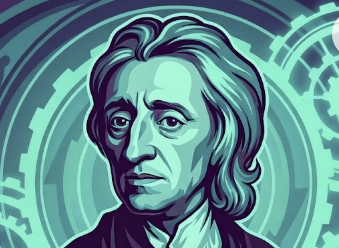
To love truth for truth's sake is the principal part of human perfection in this world, and the seed-plot of all other virtues.
▼
Source
source
Letter to Anthony Collins, 29 October 1703

3 months 1 week ago
Money is a crystal formed of necessity in the course of the exchanges, whereby different products of labour are practically equated to one another and thus by practice converted into commodities.
▼
Source
source
Vol. I, Ch. 2, pg. 99.

3 months 1 week ago
Apart from logical cogency, there is to me something a little odd about the ethical valuations of those who think that an omnipotent, omniscient, and benevolent Deity, after preparing the ground by many millions of years of lifeless nebulae, would consider Himself adequately rewarded by the final emergence of Hitler and Stalin and the H-bomb.
▼
Source
source
Preface
1 month 5 days ago
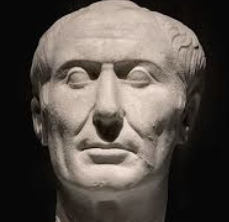
Even when the wound is healed, the scar remains.
▼
Source
source
Maxim 236
2 months 1 week ago
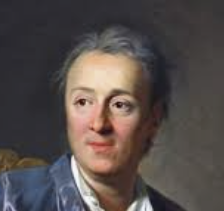
We are constantly railing against the passions; we ascribe to them all of man's afflictions, and we forget that they are also the source of all his pleasures ... But what provokes me is that only their adverse side is considered ... and yet only passions, and great passions, can raise the soul to great things. Without them there is no sublimity, either in morals or in creativity. Art returns to infancy, and virtue becomes small-minded.
▼
Source
source
As translated in Diderot (1977) by Otis Fellows, p. 39
1 month 1 week ago
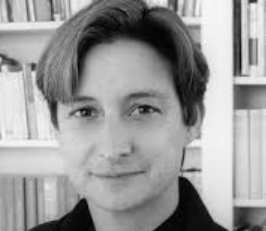
Nonviolence is not an absolute principle, but an open-ended struggle with violence and its countervailing forces.
▼
Source
source
p. 56
3 months 1 week ago
The louder he talked of his honor, the faster we counted our spoons.
▼
Source
source
Worship
4 months 1 week ago
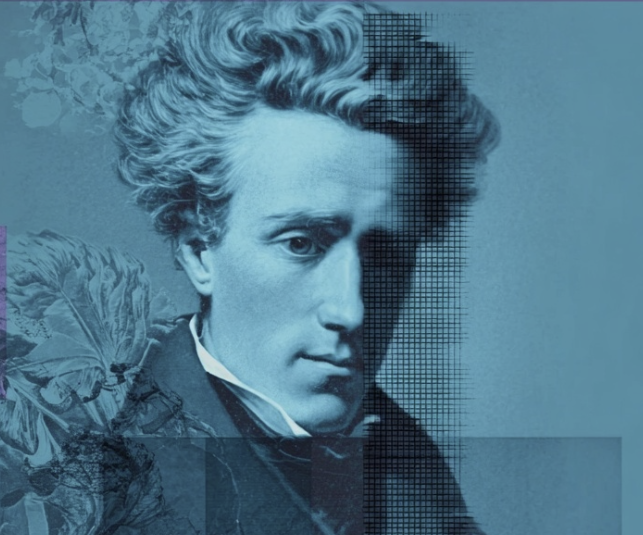
An authorship that began with Either/Or and advanced step by step seeks here its decisive place of rest, at the foot of the altar, where the author, personally most aware of his own imperfections and guilt, certainly does not call himself a truth-witness but only a singular kind of poet and thinker who, without authority, has had nothing new to bring but “has wanted once again to read through, if possible in a more inward way, the original text handed down from the fathers.

1 month 3 weeks ago
The philosophy of the soul of my people appears to me as an expression of an inward tragedy analogous to the tragedy of the soul of Don Quixote, as the expression of conflict between what the world is as scientific reason shows it to be and what we wish that it might be, as our religious faith affirms it to be. And in this philosophy is to be found the explanation of what is usually said about us - namely, that we are fundamentally irreducible to Kultur - or in other words, that we refuse to submit to it. No, Don Quixote does not resign himself either to the world, or to science or logic, or to art or esthetics, or to morality or ethics.

3 months 2 weeks ago
A wise man never loses anything, if he has himself.
▼
Source
source
Ch. 38. Of Solitude, tr. Cotton, rev. W. Hazlitt, 1842
2 weeks ago
Progress in civilization seems possible only in interludes when history is idling.
▼
Source
source
An Old Chaos: The Emperor's Tomb (p. 35)
3 months 2 weeks ago
When I am attacked by gloomy thoughts, nothing helps me so much as running to my books. They quickly absorb me and banish the clouds from my mind.
3 months 3 weeks ago
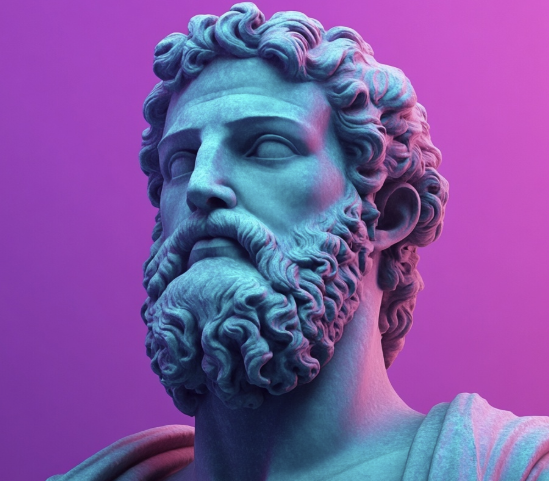
Were I a nightingale, I would act the part of a nightingale; were I a swan, the part of a swan.
▼
Source
source
Book I, ch. 16, 20.
2 months 4 weeks ago
Contemporary intellectuals have given up the Enlightenment assumption that religion, myth, and tradition can be opposed to something ahistorical, something common to all human beings qua human.

2 months 3 days ago
To be is to be cornered.

3 months 1 week ago
For the philosophy which is so important in each of us is not a technical matter; it is our more or less dumb sense of what life honestly and deeply means. It is only partly got from books; it is our individual way of just seeing and feeling the total push and pressure of the cosmos. ...I have heard friends and colleagues try to popularize philosophy... but they soon grew dry, and then technical, and the results were only partially encouraging. So my enterprise is a bold one. The founder of pragmatism... gave... lectures... with that very word in its title,-flashes of brilliant light relieved against Cimmerian darkness! None of us... understood all that he said-yet here I stand making a very similar venture. ...There is... a curious fascination in hearing deep things talked about, even though neither we nor the disputants understand them. We get the problematic thrill, we feel the presence of the vastness.
▼
Source
source
Lecture I, The Present Dilemma in Philosophy

1 month 5 days ago
Environments work us over and remake us. It is man who is the content of and the message of the media, which are extensions of himself. Electronic man must know the effects of the world he has made above all things.
▼
Source
source
(p. 90)

3 months 6 days ago
Genet is a man-failure: he wills the impossible in order to derive from the tragic grandeur of this defeat the assurance that there is something other than the possible.
▼
Source
source
p. 213
2 months 4 weeks ago
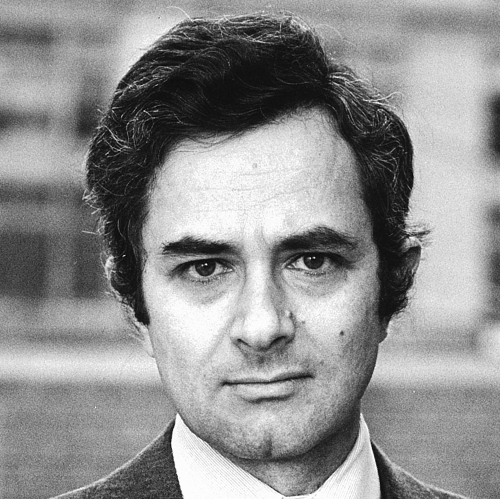
With regard to the rather common general distinction between good and bad sex ..., bad sex is generally better than none at all. This should not be controversial: it seems to hold for other important matters, like food, music, literature, and society. In the end, one must choose from among the available alternatives, whether their availability depends on the environment or on one's own constitution. And the alternatives have to be fairly grim before it becomes rational to opt for nothing.
▼
Source
source
"Sexual Perversion" (1969), p. 52.

3 months 1 week ago
What, in unenlightened societies, colour, race, religion, or in the case of a conquered country, nationality, are to some men, sex is to all women; a peremptory exclusion from almost all honourable occupations, but either such as cannot be fulfilled by others, or such as those others do not think worthy of their acceptance.
▼
Source
source
Ch. 4
3 months 1 week ago
By necessity, by proclivity, and by delight, we all quote.
▼
Source
source
Quotation and Originality
2 months 5 days ago
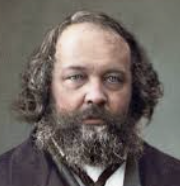
Unity is the great goal toward which humanity moves irresistibly. But it becomes fatal, destructive of the intelligence, the dignity, the well-being of individuals and peoples whenever it is formed without regard to liberty, either by violent means or under the authority of any theological, metaphysical, political, or even economic idea. That patriotism which tends toward unity without regard to liberty is an evil patriotism, always disastrous to the popular and real interests of the country it claims to exalt and serve. Often, without wishing to be so, it is a friend of reaction - an enemy of the revolution, i.e., the emancipation of nations and men.

2 months ago
Not everyone who says to Me, 'Lord, Lord,' shall enter the kingdom of heaven, but he who does the will of My Father in heaven. Many will say to Me in that day, 'Lord, Lord, have we not prophesied in Your name, cast out demons in Your name, and done many wonders in Your name?' And then I will declare to them, 'I never knew you; depart from Me, you who practice lawlessness!'
▼
Source
source
Matthew 7:21-23 (NKJV) (Also Luke 6:24; 13:26, 27)
3 months 2 weeks ago
Rejoice in the things that are present; all else is beyond thee.
1 month 4 weeks ago
Democracy means the belief that humanistic culture should prevail.
▼
Source
source
Democracy and Human Nature, Freedom and Culture
3 months 6 days ago
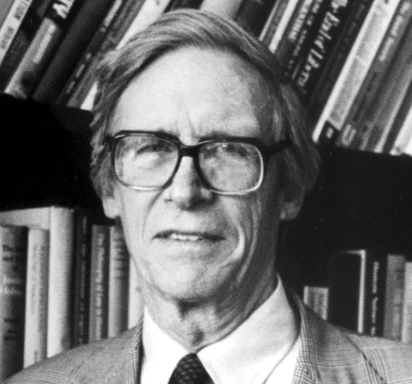
Justice as fairness provides what we want.
▼
Source
source
Chapter III, Section 30, pg. 190
3 months 2 weeks ago
Neither did the dispensation of God vary in the times after our Saviour came into the world; for our Saviour himself did first show His power to subdue ignorance, by His conference with the priests and doctors of the law, before He showed His power to subdue nature by His miracles. And the coming of this Holy Spirit was chiefly figured and expressed in the similitude and gift of tongues, which are but vehicula scientiæ.
1 month 3 days ago
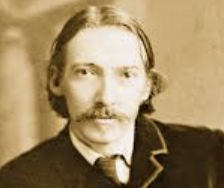
He and his tyrannicide! I am in a mad fury about these explosions. If that is the new world! Damn O'Donovan Rossa; damn him behind and before, above, below, and roundabout; damn, deracinate, and destroy him, root and branch, self and company, world without end. Amen. I write that for sport if you like, but I will pray in earnest, O Lord, if you cannot convert, kindly delete him!
▼
Source
source
Letter to Sidney Colvin, 2 August 1881. Quoted in Terrorism and Literature Chapter 12 - "Parliament Is Burning" by Deaglán Ó Donghaile ISBN 9781316987292
2 months 3 weeks ago
Themistocles being asked whether he would rather be Achilles or Homer, said, "Which would you rather be,-a conqueror in the Olympic games, or the crier that proclaims who are conquerors?"
▼
Source
source
48 Themistocles
4 months 1 week ago
It seems to be my destiny to discourse on truth, insofar as I discover it, in such a way that all possible authority is simultaneously demolished. Since I am incompetent and extremely undependable in men's eyes, I speak the truth and thereby place them in the contradiction from which they can be extricated only by appropriating the truth themselves. A man's personality is matured only when he appropriates the truth, whether it is spoken by Balaam's ass or a sniggering wag or an apostle or an angel.
3 months 2 weeks ago
Do not imagine that it is less an accident by which you find yourself master of the wealth which you possess, than that by which this man found himself king.

4 months 5 days ago
I joke sometimes to the effect that when I approach a part of a book where I must explain something I don't understand, I just type faster and faster and faster. Then, when I get to the part I don't understand, sheer inertia pushes me through. That's not literally true, of course, but there's something to it psychologically.
3 months 1 week ago
The more rational statement is that we feel sorry because we cry, angry because we strike, afraid because we tremble, and not that we cry, strike, or tremble, because we are sorry, angry, or fearful, as the case may be. Without the bodily states following on the perception, the latter would be purely cognitive in form, pale, colorless, destitute of emotional warmth.
▼
Source
source
Ch. 25
4 months 5 days ago
In the world of today can there be peace anywhere until there is peace everywhere?
3 months 1 week ago
From the comparison of theism and idolatry, we may form some other observations, which will also confirm the vulgar observation that the corruption of the best things gives rise to the worst.
▼
Source
source
Part X - With regard to courage or abasement
3 months 1 week ago
For what is modesty but hypocritical humility, by means of which, in a world swelling with vile envy, a man seeks to beg pardon for his excellences and merits from those who have none? For whoever attributes no merit to himself because he really has none is not modest, but merely honest.
▼
Source
source
Vol. I, Ch. III, The World As Representation: Second Aspect

2 months ago
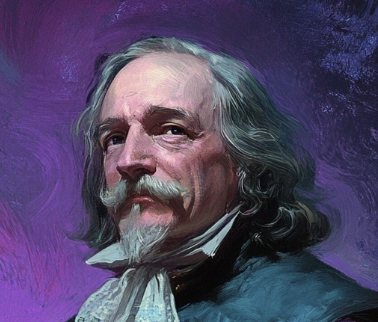
Fact be vertuous, or vicious, as Fortune pleaseth.
▼
Source
source
The Second Part, Chapter 27, p. 153

3 months 6 days ago
Bold ideas, unjustified anticipations, and speculative thought, are our only means for interpreting nature: our only organon, our only instrument, for grasping her. And we must hazard them to win our prize. Those among us who are unwilling to expose their ideas to the hazard of refutation do not take part in the scientific game.
▼
Source
source
Ch. 10 "Corroboration, or How a Theory Stands up to Tests", section 85: The Path of Science, p. 280.
2 months 3 weeks ago
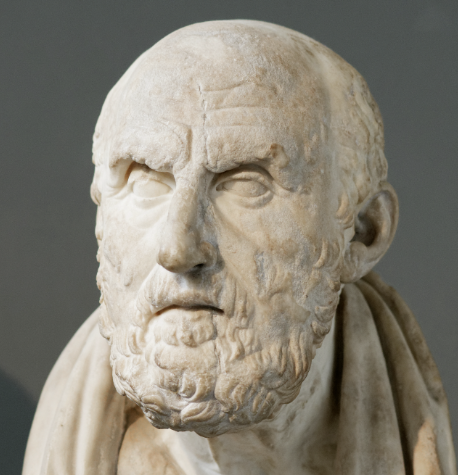
Living virtuously is equal to living in accordance with one's experience of the actual course of nature.
▼
Source
source
As quoted by Diogenes Laërtius, vii. 182.
2 months 5 days ago
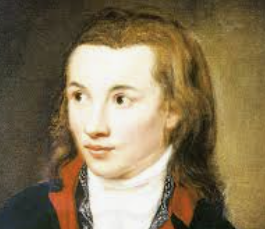
The normal present connects the past and the future through limitation. Contiguity results, crystallization by means of solidification. There also exists, however, a spiritual present that identifies past and future through dissolution, and this mixture is the element, the atmosphere of the poet.
▼
Source
source
Fragment No. 109
1 month 5 days ago
The new media are not bridges between man and nature - they are nature...The new media are not ways of relating us to the old world; they are the real world and they reshape what remains of the old world at will.
▼
Source
source
Media as the New Nature, 1969, p. 14

2 months 3 weeks ago
He who intends to enjoy life should not be busy about many things, and in what he does should not undertake what exceeds his natural capacity. On the contrary, he should have himself so in hand that even when fortune comes his way, and is apparently ready to lead him on to higher things, he should put her aside and not o'erreach his powers. For a being of moderate size is safer than one that bulks too big.
CivilSimian.com created by AxiomaticPanic, CivilSimian, Kalokagathia