

4 months 3 weeks ago
Liars ... when they speak the truth they are not believed.
2 months 2 weeks ago
The entire universe is perfused with signs, if it is not composed exclusively of signs.
▼
Source
source
Quoted in Essays in Zoosemiotics (1990) by Thomas A. Sebeok

3 months 3 weeks ago
I like a church, I like a cowl, I love a prophet of the soul, And on my heart monastic aisles Fall like sweet strains or pensive smiles; Yet not for all his faith can see, Would I that cowled churchman be. Why should the vest on him allure, Which I could not on me endure?
▼
Source
source
The Problem, st. 1
3 months 1 week ago
When one told Plistarchus that a notorious railer spoke well of him, "I 'll lay my life," said he, "somebody hath told him I am dead, for he can speak well of no man living."
▼
Source
source
Of Plistarchus
2 months 2 weeks ago
Hegel's theological discussion repeatedly asks what the true relation is between the individual man and a state that no longer satisfies his capacities but exists rather as an 'estranged' institution from which the active political interest of the citizens has disappeared. Hegel defined this state with almost the same categories as those of eighteenth century liberalism: the state rests on the consent of the individuals, it circumscribes their rights and duties and protects its members from those internal and external dangers that might threaten the perpetuation of the whole.
▼
Source
source
P. 32

3 months ago
There is the world for you. Beauty, true beauty, is intangible. It is in the eye of the beholder. Something that we can lose at any moment, and the more you examine it, the more illusive it becomes. True happiness is virtue, and virtue is predicated on knowledge and righteous conduct.
▼
Source
source
The Alchemy of Happiness

3 months 3 weeks ago
In fact the opposition of instinct and reason is mainly illusory. Instinct, intuition, or insight is what first leads to the beliefs which subsequent reason confirms or confutes; but the confirmation, where it is possible, consists, in the last analysis, of agreement with other beliefs no less instinctive. Reason is a harmonising, controlling force rather than a creative one. Even in the most purely logical realms, it is insight that first arrives at what is new.
▼
Source
source
p. 21
2 months 2 weeks ago
The study of Ethics would, no doubt, be far more simple, and its results far more "systematic," if, for instance, pain were an evil of exactly the same magnitude as pleasure is a good; but we have no reason whatever to assume that the Universe is such that ethical truths must display this kind of symmetry ... .
▼
Source
source
Principia Ethica (1903), ch. VI.
3 months 3 weeks ago
The method of "postulating" what we want has many advantages; they are the same as the advantages of theft over honest toil.
▼
Source
source
Ch. 7: Rational, Real and Complex Numbers
2 months 1 week ago
When I speak of 'negative dialectics' not the least important reason for doing so is my desire to dissociate myself from this fetishization of the positive.
▼
Source
source
p. 18

2 months 2 weeks ago
Suicide is a sudden accomplishment, a lightning-like deliverance: it is nirvana by violence.

2 months 3 weeks ago
Honour is the mysticism of legality.
▼
Source
source
Aphorism 77, of Ideas as translated in The Early Political Writings of the German Romantics (1996) edited by Frederick C. Beiser, p. 131
3 months 3 weeks ago
The philosophy of nature must not be unduly terrestrial; for it, the earth is merely one of the smaller planets of one of the smaller stars of the Milky Way. It would be ridiculous to warp the philosophy of nature in order to bring out results that are pleasing to the tiny parasites of this insignificant planet. Vitalism as a philosophy, and evolutionism, show, in this respect, a lack of sense of proportion and logical relevance. They regard the facts of life, which are personally interesting to us, as having a cosmic significance, not a significance confined to the earth's surface. Optimism and pessimism, as cosmic philosophies, show the same naive humanism; the great world, so far as we know it from the philosophy of nature, is neither good nor bad, and is not concerned to make us happy or unhappy. All such philosophies spring from self-importance and are best corrected by a little astronomy.

2 months 1 week ago
There is no tyranny in the world more hateful than that of ideas. Ideas bring ideophobia, and the consequence is that people begin to persecute their neighbors in the name of ideas. I loathe and detest all labels, and the only label that I could now tolerate would be that of ideoclast or idea breaker.
▼
Source
source
Recalled by Walter Starkie from a conversation he had with Unamuno, as related in the Epilogue of Unamuno.

8 months 2 weeks ago
A common goal...
Issue:
Because of subgrouping, physical separation, different types of genetics and other cultural factors, as well as limited isolation people subjectively deviate from their universal human necessity. They become aware of it when they are exposed to difference regularly.
Solution:
With controlled information delivery, as well as a clear ideological goal like universality, we can clear away the noise of chaos to understand deterministic goals directly.
2 months 2 weeks ago
The more I think about it, the more obvious it becomes to me that the Poles are une nation foutue [a finished nation] who can only continue to serve a purpose until such time as Russia herself becomes caught up into the agrarian revolution. From that moment Poland will have absolutely no raison d'étre any more. The Poles' sole contribution to history has been to indulge in foolish pranks at once valiant and provocative. Nor can a single moment be cited when Poland, even if only by comparison with Russia, has successfully represented progress or done anything of historical significance.
▼
Source
source
Letter to Karl Marx

2 months 3 weeks ago
I go to spread the tidings, I want to spread the tidings - of what? Of the truth, for I have seen it, have seen it with my own eyes, have seen it in all its glory.

3 months 3 weeks ago
Each human reality is at the same time a direct project to metamorphose its own For-itself into an In-itself-For-itself, a project of the appropriation of the world as a totality of being-in-itself, in the form of a fundamental quality. Every human reality is a passion in that it projects losing itself so as to found being and by the same stroke to constitute the In-itself which escapes contingency by being its own foundation, the Ens causa sui, which religions call God. Thus the passion of man is the reverse of that of Christ, for man loses himself as man in order that God may be born. But the idea of God is contradictory and we lose ourselves in vain.
▼
Source
source
Man is a useless passion. Part 4, Chapter 2, III

2 weeks 5 days ago
Just sit back and listen to some of the clamorous grievances against the contemporary global system. Our list does not pretend to be comprehensive, and the partiality of its selections will undoubtedly reveal our own blindnesses, but it should nonetheless give a sense of the range and depth of today's grievances.
▼
Source
source
270
2 months 2 weeks ago
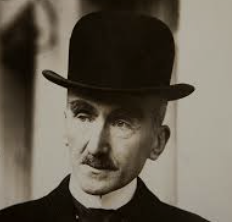
The eyes see only what the mind is prepared to comprehend.
▼
Source
source
Robertson Davies as quoted in The White Bedouin (2007) by George Potter, p. 241
2 months 2 weeks ago
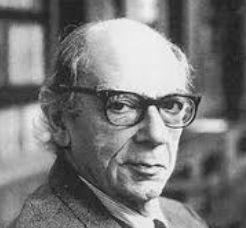
Injustice, poverty, slavery, ignorance - these may be cured by reform or revolution. But men do not live only by fighting evils. They live by positive goals, individual and collective, a vast variety of them, seldom predictable, at times incompatible.

2 months 3 days ago
Cautiousness in judgment is nowadays to be recommended to each and every one: if we gained only one incontestable truth every ten years from each of our philosophical writers the harvest we reaped would be sufficient. ... To grow wiser means to learn to know better and better the faults to which this instrument with which we feel and judge can be subject.
▼
Source
source
A 38
2 months 2 weeks ago
The more we try to wrest ourselves from our ego, the deeper we sink into it.

3 months 3 weeks ago
The mass of men lead lives of quiet desperation. What is called resignation is confirmed desperation.
▼
Source
source
p. 10

3 months 3 weeks ago
A country cannot subsist well without liberty, nor liberty without virtue.
▼
Source
source
As quoted in A Dictionary of Thoughts: Being a Cyclopedia of Laconic Quotations from the Best Authors of the World, Both Ancient and Modern (1908) by Tryon Edwards, p. 301.
3 months 3 weeks ago
Some of your hurts you have cured, And the sharpest you still have survived, But what torments of grief you endured From evils which never arrived!
▼
Source
source
Borrowing From the French

4 months 2 weeks ago
A character is never the author who created him. It is quite likely, however, that an author may be all his characters simultaneously.

1 month ago
If there is anything unique about the human animal it is that it has the ability to grow knowledge at an accelerating rate while being chronically incapable of learning from experience. Science and technology are cumulative, whereas ethics and politics deal with recurring dilemmas. Whatever they are called, torture and slavery are universal evils; but these evils cannot be consigned to the past like redundant theories in science. They return under different names: torture as enhanced interrogation techniques, slavery as human trafficking. Any reduction in universal evils is an advance in civilization. But, unlike scientific knowledge, the restraints of civilized life cannot be stored on a computer disc. They are habits of behaviour, which once broken are hard to mend. Civilization is natural for humans, but so is barbarism.
▼
Source
source
An Old Chaos: Humanism and Flying Saucers (p. 75)
3 months 3 weeks ago
If the single man plant himself indomitably on his instincts, and there abide, the huge world will come round to him. 6. Nature, Addresses and Lectures.
▼
Source
source
The American Scholar

3 months 3 weeks ago
Do not allow your dreams of a beautiful world to lure you away from the claims of men who suffer here and now.
▼
Source
source
p. 485
3 months 3 weeks ago
First, what do we mean by anguish? The existentialist frankly states that man is in anguish. His meaning is as follows-When a man commits himself to anything, fully realizing that he is not only choosing what he will be, but is thereby at the same time a legislator deciding for the whole of mankind-in such a moment a man cannot escape from the sense of complete and profound responsibility.
▼
Source
source
p. 30
4 months 3 weeks ago
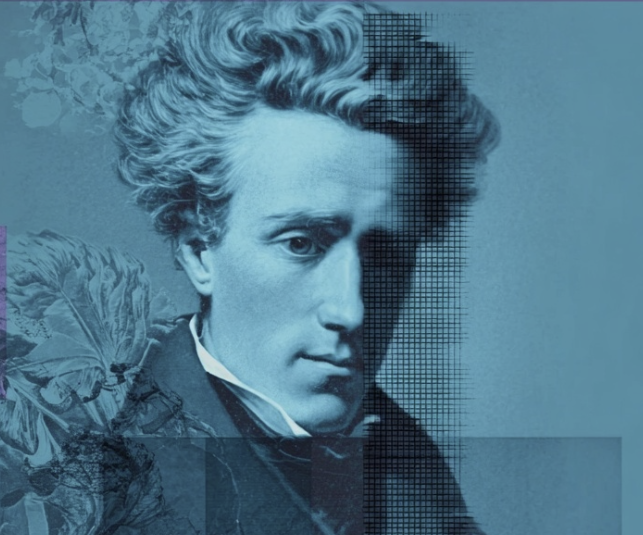
People are scarcely aware that it is a slavery they are creating; they forget this in their zeal to make people free by overthrowing dominions. They are scarcely aware that it is slavery; how could it be possible to be a slave in relation to equals?
3 months 3 weeks ago
Children are all foreigners.
▼
Source
source
September 25, 1839
3 months 3 weeks ago
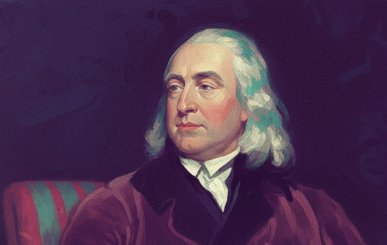
Liberty therefore not being more fit than other words in some of the instances in which it has been used, and not so fit in others, the less the use that is made of it the better. I would no more use the word liberty in my conversation when I could get another that would answer the purpose, than I would brandy in my diet, if my physician did not order me: both cloud the understanding and inflame the passions.
▼
Source
source
Jeremy Bentham, quoted in P. J. Kelly, Utilitarianism and Distributive Justice: Jeremy Bentham and the Civil Law, Oxford, 1990, p. 96

4 months 3 weeks ago
It pays to be obvious, especially if you have a reputation for subtlety.

2 months 3 weeks ago
Well, which is the most rational theory about these ten millions of species? Is it most likely that there have been ten millions of special creations? or is it most likely that, by continual modifications due to change of circumstances, ten millions of varieties have been produced, as varieties are being produced still?
3 months 3 weeks ago
It is said (I do not know with what truth) that a certain Hindu thinker believed the earth to rest upon an elephant. When asked what the elephant rested upon, he replied that it rested upon a tortoise. When asked what the tortoise rested upon, he said, "I am tired of this. Suppose we change the subject." This illustrates the unsatisfactory character of the First-Cause argument.
▼
Source
source
"Is There a God?", 1952

1 month 3 weeks ago
A real mother, who knows the will of God by experience, will prepare her children also to fulfil it. Such a mother will suffer if she sees her child overfed, effeminate, and dressed-up, for she knows that these things will make it difficult for it to fulfil the will of God which she recognizes.
2 months 2 weeks ago
Literary imagination is an aesthetic object offered by a writer to a lover of books.
▼
Source
source
A Retrospective Glance at the Lifework of a Master of Books
3 months 3 weeks ago
Totalitarianism in power invariably replaces all first-rate talents, regardless of their sympathies, with those crackpots and fools whose lack of intelligence and creativity is still the best guarantee of their loyalty.
▼
Source
source
Part 3, Chapter 10
4 months 2 weeks ago
"This is the truth," we say. "You can discuss it as much as you want; we aren't interested. But in a few years there'll be the police who will show you we are right."

2 months 4 weeks ago
They (the emperors) frequently abused their power arbitrarily to deprive their subjects of property or of life: their tyranny was extremely onerous to the few, but it did not reach the greater number; .. But it would seem that if despotism were to be established amongst the democratic nations of our days it might assume a different character; it would be more extensive and more mild, it would degrade men without tormenting them.
▼
Source
source
Book Four, Chapter VI.
4 months 1 week ago
Why, what is weeping and sighing? A judgement. What is misfortune? A judgement. What are strife, disagreement, fault-finding, accusing, impiety, foolishness? They are all judgements.
▼
Source
source
Book III, ch. 3, 18, 19.
2 months 2 weeks ago
When an active individual of sound common sense perceives the sordid state of the world, desire to change it becomes the guiding principle by which he organizes given facts and shapes them into a theory. The methods and categories as well as the transformation of the theory can be understood only in connection with his taking of sides. This, in turn, discloses both his sound common sense and the character of the world. Right thinking depends as much on right willing as right willing on right thinking.
▼
Source
source
p. 162.
3 months 2 weeks ago
Complaints about the social irresponsibility of the intellectual typically concern the intellectual's tendency to marginalize herself, to move out from one community by interior identification of herself with some other community-for example, another country or historical period. ... It is not clear that those who thus marginalize themselves can be criticized for social irresponsibility. One cannot be irresponsible toward a community of which one does not think of oneself as a member. Otherwise runaway slaves and tunnelers under the Berlin Wall would be irresponsible.
▼
Source
source
"Postmodernist bourgeois liberalism," Objectivity, Relativism and Truth (Cambridge: 1991), p. 197
4 months 1 day ago
Whatever can be done another day can be done today.
▼
Source
source
Ch. 20. Of the Force of Imagination (tr. Donald M. Frame)
4 days ago
This dogma had first to be shattered before men could once more go out in quest of the historical Jesus, before they could even grasp the thought of His existence. That the historic Jesus is something different from the Jesus Christ of the doctrine of the Two Natures seems to us now self-evident. We can, at the present day, scarcely imagine the long agony in which the historical view of the life of Jesus came to birth. And even when He was once more recalled to life. He was still, like Lazarus of old, bound hand and foot with grave-clothes - the grave-clothes of the dogma of the Dual Nature.
▼
Source
source
p. 3

2 months 2 weeks ago
The meaning and design of a problem seem not to lie in its solution, but in our working at it incessantly.
▼
Source
source
p. 103

2 months 1 week ago
By committing a crime, a man places himself, of his own accord, outside the chain of eternal obligations which bind every human being to every other one. Punishment alone can weld him back again; fully so, if accompanied by consent on his part; otherwise only partially so. Just as the only way of showing respect for somebody suffering from hunger is to give him something to eat, so the only way of showing respect for somebody who has placed himself outside the law is to reinstate him inside the law by subjecting him to the punishment ordained by law.The need for punishment is not satisfied where, as is generally the case, the penal code is merely a method of exercising pressure through fear.
▼
Source
source
p. 103
CivilSimian.com created by AxiomaticPanic, CivilSimian, Kalokagathia