

3 months 3 weeks ago
The light dove, cleaving the air in her free flight, and feeling its resistance, might imagine that its flight would be still easier in empty space.
▼
Source
source
B 8
2 months 3 weeks ago
There are only Epicureans, either crude or refined; Christ was the most refined.
▼
Source
source
Act I.

3 months 3 weeks ago
A dog cannot relate his autobiography; however eloquently he may bark, he cannot tell you that his parents were honest but poor.
▼
Source
source
Human Knowledge: Its Scope and Limits (1948), part II, chapter 1, p. 74

4 months 3 weeks ago
One common false conclusion is that because someone is truthful and upright towards us he is spreading the truth. Thus the child believes his parents' judgements, the Christian believes the claims of the church's founders. Likewise, people do not want to admit that all those things which men defended with the sacrifice of their lives and happiness in earlier centuries were nothing but errors.
2 days ago
Inasmuch as it is my wish only to compose a hymn of thanksgiving in honour of the god, I have deemed it quite sufficient to discourse to the best of my ability concerning his nature. I do not think I have wasted words to no purpose: the maxim, "Sacrifice to the immortal gods according to thy means," I accept as applying not merely to burnt-offerings, but also to our praises addressed unto the gods. I pray for the third time, in return for this my good intention, the Sun lord of the universe to be propitious to me, and to bestow on me a virtuous life, a more perfect understanding, and a superhuman intellect, and a very easy release from the trammels of life at the time appointed: and after that release, an ascension up to himself, and an abiding place with him, if possible, for all time to come; or if that be too great a recompense for my past life, many and long-continued revolutions around his presence!
1 month 2 weeks ago
Survival machines that can simulate the future are one jump ahead of survival machines that who can only learn of the basis of trial and error. The trouble with overt trial is that it takes time and energy. The trouble with overt error is that it is often fatal. ...The evolution of the capacity to simulate seems to have culminated in subjective consciousness. Why this should have happened is, to me, the most profound mystery facing modern biology.
▼
Source
source
Ch. 4. The Gene machine

2 months 2 weeks ago
Consciousness is nature's nightmare.

4 months 1 day ago
For truth itself does not have the privilege to be employed at any time and in every way; its use, noble as it is, has its circumscriptions and limits.
▼
Source
source
Ch. 13

4 days ago
When a man no longer confuses himself with the definition of himself that others have given him, he is at once universal and unique. He is universal by virtue of the inseparability of his organism from the cosmos. He is unique in that he is just this organism and not any stereotype of role, class, or identity assumed for the convenience of social communication.
▼
Source
source
p. 9
1 month 2 weeks ago
The population of the US is nearly 300 million, including many of the best educated, most talented, most resourceful, humane people on earth. By almost any measure of civilised attainment, from Nobel prize-counts on down, the US leads the world by miles. You would think that a country with such resources, and such a field of talent, would be able to elect a leader of the highest quality. Yet, what has happened? At the end of all the primaries and party caucuses, the speeches and the televised debates, after a year or more of non-stop electioneering bustle, who, out of that entire population of 300 million, emerges at the top of the heap? George Bush.
▼
Source
source
"Bin Laden's victory " The Guardian

3 months 3 weeks ago
Truth, Goodness, Beauty - those celestial thrins,Continually are born; e'en now the Universe,With thousand throats, and eke with greener smiles,Its joy confesses at their recent birth.
▼
Source
source
June 14, 1838

3 months 3 weeks ago
It is arrogance in us to call frankness, fairness and chivalry "masculine" when we see them in a woman; it is arrogance in them, to describe a man's sensitiveness or tact or tenderness as "feminine".
2 months 2 weeks ago
There are ideal series of events which run parallel with the real ones. They rarely coincide. Men and circumstances generally modify the ideal train of events, so that it seems imperfect, and its consequences are equally imperfect. Thus with the Reformation; instead of Protestantism came Lutheranism.
▼
Source
source
Epigraph, "The Mystery Of Marie Rogêt" (1842) by Edgar Allan Poe, adapted from Fragments from German Prose Writers (1841) by Sarah Austin
7 months 4 weeks ago
This is probably the fundamental dimension of 'ideology': ideology is not simply a 'false consciousness', an illusory representation of reality, it is rather this reality itself which is already to be conceived as 'ideological' - 'ideological' is a social reality whose very existence implies the non-knowledge of its participants as to its essence -that is, the social effectivity, the very reproduction of which implies that the individuals 'do not know what they are doing'. 'Ideological is not the false consciousness of a (social) being but this being itself in so far as it is supported by "false consciousness"'. Thus we have finally reached the dimension of the symptom, because one of its possible definitions would also be 'a formation whose very consistency implies a certain non-knowledge on the part of the subject': the subject can 'enjoy his symptom' only in so far as its logic escapes him - the measure of the success of its interpretation is precisely its dissolution.

1 month 2 days ago
Universal Humanism:
1) Preserve Life (end)
Precludes those who think they get to decide who lives and who dies.
2) Avoid and limit suffering (means)
Precludes those who use absurd exceptions to turn their backs on functional rules.

3 months 3 weeks ago
I don't think that there are any sinister persons deliberately trying to rob people of their freedom but I do think, first of all, that there are a number of impersonal forces which are pushing in the direction of less and less freedom. And I also thing there are a number of technological devices which anybody who wishes to use, can use, to accelerate this process of going away from freedom, of imposing control.

3 months 3 weeks ago
Our condition is like that of the poor wolves: if one of the flock wound himself, or so much as limp, the rest eat him up incontinently. That serene Power interposes the check upon the caprices and officiousness of our wills.

2 weeks ago
The three great elements of modern civilization, gunpowder, printing, and the Protestant religion.
▼
Source
source
The State of German Literature (1827).

2 months 6 days ago
An army and navy represents the people's toys.

2 months 6 days ago
In his Experiment in Autobiography (1934), H.G. Wells pointed out that ever since the beginning of life, most creatures have been 'up against it'. Their lives are a drama of struggle against the forces of nature. Yet nowadays you can say to a man: Yes, you earn a living, you support a family, you love and hate, but -- what do you do? His real interest may be in something else -- art, science, literature, philosophy. The bird is a creature of the air, the fish is a creature of the water, and man is a creature of the mind.
▼
Source
source
pp. 346-347
2 months 3 weeks ago
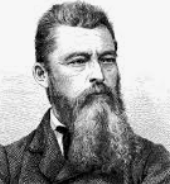
Pantheism makes God into a present, real, and material being; empiricism - to which rationalism also belongs - makes God into an absent, remote, unreal, and negative being. Empiricism does not deny God existence, but denies him all positive determinations, because their content is supposed to be only finite and empirical; the infinite cannot, therefore, be an object for man. But the more determinations I deny to a being, the more do I cut it of[ from myself, and the less power and influence do I concede to it over me, the freer do I make myself of it. The more qualities I possess, the more I am for others, and the greater is the extent of my influence and effects. And the more one is, the more one is known to others. Hence, each negation of an attribute of God is a partial atheism, a sphere of godlessness.
▼
Source
source
Part I, Section 16
4 days ago
To have faith is to trust yourself to the water. When you swim you don't grab hold of the water, because if you do you will sink and drown. Instead you relax, and float.
▼
Source
source
The Essence of Alan Watts
2 months 1 week ago
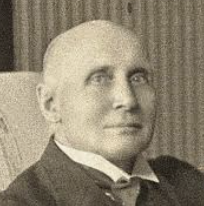
Men can be provincial in time, as well as in place.
▼
Source
source
Preface, p. ix

2 months 4 weeks ago
For the first time in sixty years, the priests, the old aristocracy and the people met in a common sentiment-a feeling of revenge, it is true, and not of affection; but even that is a great thing in politics, where a community of hatred is almost always the foundation of friendships.

3 months 3 weeks ago
The whole mystery of commodities, all the magic and necromancy that surrounds the products of labor as long as they take the form of commodities, vanishes therefore, so soon as we come to other forms of production.
▼
Source
source
Vol. I, ch.1, section 4.
3 months 3 weeks ago
Announced by all the trumpets of the sky Arrives the snow, and, driving o'er the fields, Seems nowhere to alight: the whited air Hides hills and woods, the river and the heaven, And veils the farm-house at the garden's end.
▼
Source
source
The Snow-Storm
1 week 1 day ago
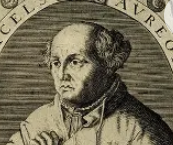
In us there is the Light of Nature, and that Light is God.

2 months 3 weeks ago
It is a proof that the state is not an arbitrary invention, but is established by nature and reason, when we actually find that, in places where men have lived together for a time and have become educated, states are erected, although the people in the one such place know not that the same thing has been done in other places. Each people, which does not live in a condition of nature, but has a government, no matter how constituted, has a right to compel its recognition from all adjoining states.
▼
Source
source
P. 474, 477
3 months 3 weeks ago
We boil at different degrees.
▼
Source
source
Eloquence
2 months 4 weeks ago
In the United States, the majority undertakes to supply a multitude of ready-made opinions for the use of individuals, who are thus relieved from the necessity of forming opinions of their own.
▼
Source
source
Book One, Chapter II.
3 months 3 weeks ago
Drunkenness is temporary suicide.
2 months 1 week ago
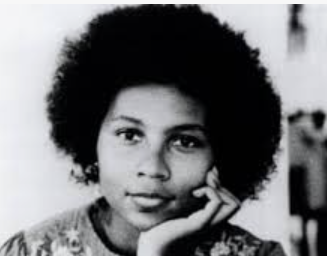
Since we live in a society that promotes faddism and temporary superficial adaptation of different values, we are easily convinced that changes have occurred in arenas where there has been little or no change.

2 months 3 weeks ago
In dreams you sometimes fall from a height, or are stabbed, or beaten, but you never feel pain unless, perhaps, you really bruise yourself against the bedstead, then you feel pain and almost always wake up from it. It was the same in my dream. I did not feel any pain, but it seemed as though with my shot everything within me was shaken and everything was suddenly dimmed, and it grew horribly black around me. I seemed to be blinded, and it benumbed, and I was lying on something hard, stretched on my back; I saw nothing, and could not make the slightest movement.
3 months 3 weeks ago
Religions, which condemn the pleasures of sense, drive men to seek the pleasures of power. Throughout history power has been the vice of the ascetic.
▼
Source
source
The New York Herald-Tribune Magazine, 3/6/1938

2 months 2 weeks ago
It is more blessed to give than to receive.
▼
Source
source
Acts 20:35b
4 months 1 week ago
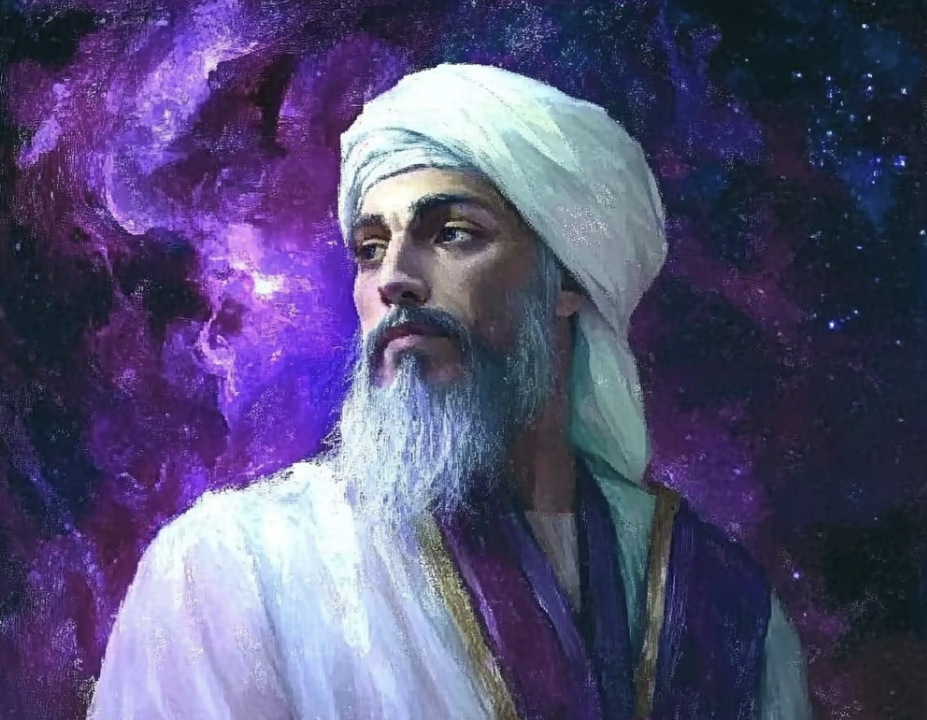
Those who deny the first principle should be flogged or burned until they admit that it is not the same thing to be burned and not burned, or whipped and not whipped.

4 months 2 days ago
The world thought well of my schoolmaster guardian, because he was neither a liar, nor a scamp, nor a gambler; but he was coarse, avaricious, and ignorant; he knew nothing beyond the confused lessons which he taught to his classes. He imagined that in forcing a youth to become a monk he would be offering a sacrifice acceptable to God. He used to boast of the many victims which he devoted annually to Dominic and Francis and Benedict.
▼
Source
source
As quoted in Life and Letters of Erasmus: Lectures Delivered at Oxford 1893-4 (1899) by James Anthony Froude

4 months 3 weeks ago
To succeed, planning alone is insufficient. One must improvise as well.
2 weeks 1 day ago
Carnap made a detailed analysis of Heidegger's statement, "Nothing nihilates," in order to show that it is purely verbal, devoid of empirical meaning. (Incidentally, this is the only sentence from existentialist philosophy the majority of contemporary positivists appear familiar with.)
▼
Source
source
Chapter Eight, Logical Empiricism, p. 187

2 months 3 weeks ago
Never wholly separate in your Mind the merits of any Political Question from the Men who are concerned in it.
▼
Source
source
Letter to Charles-Jean-François Depont (November 1789), quoted in Alfred Cobban and Robert A. Smith (eds.), The Correspondence of Edmund Burke, Volume VI: July 1789-December 1791 (1967), p. 47
1 week 6 days ago
See him, the newborn, dirty but marvelous, ridiculous in actuality, infinite in possibility, capable of that ultimate miracle, growth.
▼
Source
source
Ch. 1 : Our life begins
3 months 3 weeks ago
It is impossible to pursue this nonsense any further.
▼
Source
source
(Bastiat and Carey), p. 813 (last text page, second last line).
2 months 3 days ago
We're tired of trees. We should stop believing in trees, roots, and radicles. They've made us suffer too much. All of arborescent culture is founded on them, from biology to linguistics. Nothing is beautiful or loving or political aside from underground stems and aerial root, adventitious growths and rhizomes.
▼
Source
source
from A Thousand Plateaus: capitalism and schizophrenia, p. 15
2 weeks 1 day ago
For what gives my work its peculiar quality, and what is most remarkable in the present age, is this. Fortune has guided almost all the affairs of the world in one direction and has forced them to incline towards one and the same end; a historian should likewise bring before his readers under one synoptical view the operations by which she has accomplished her general purpose.
2 months 2 weeks ago
All religions so far have been the expression of historical stages of development of individual peoples or groups of peoples. But communism is the stage of historical development which makes all existing religions superfluous and brings about their disappearance.
4 months 6 days ago
It is necessary to show that there is nothing so little known [as the above rules], nothing more difficult to practice, or nothing more useful and universal.
2 months 2 weeks ago
Touch me not; for I am not yet ascended to my Father: but go to my brethren, and say unto them, I ascend unto my Father, and your Father; and to my God, and your God.
▼
Source
source
John 20:17 (KJV)
3 months 3 weeks ago
Wherever Law ends, Tyranny begins.
▼
Source
source
Second Treatise of Government, Sec. 202
CivilSimian.com created by AxiomaticPanic, CivilSimian, Kalokagathia