


3 months 3 weeks ago
I remembered the way out suggested by a great princess when told that the peasants had no bread: "Well, let them eat cake".
▼
Source
source
This passage contains a statement Qu'ils mangent de la brioche that has usually come to be attributed to Marie Antoinette; this was written in 1766, when Marie Antoinette was 10

3 months 2 weeks ago
Truth is a shining goddess, always veiled, always distant, never wholly approachable, but worthy of all the devotion of which the human spirit is capable.
▼
Source
source
Fact and Fiction (1961), Part II, Ch. 10: "University Education", p. 153
3 months 2 weeks ago
If the Communists conquered the world, it would be very unpleasant for a while, but not forever. But if the human race is wiped out, that is the end.
▼
Source
source
Television interview on March 24, 1958, as quoted in The United States in World Affairs (1959), p. 12

3 months 2 weeks ago
In how many churches, by how many prophets, tell me, is man made sensible that he is an infinite Soul; that the earth and heavens are passing into his mind; that he is drinking forever the soul of God?
▼
Source
source
p. 18

1 month 2 weeks ago
Giving alms is only a virtuous deed when you give money that you yourself worked to get.
▼
Source
source
p. 83

2 months 2 weeks ago
But the extraordinary insight which some persons are able to gain of others from indications so slight that it is difficult to ascertain what they are, is certainly rendered more comprehensible by the view here taken.
2 months 2 weeks ago
It was not delight, not wonder that arose among us, it was the peace of heaven. A thousand times have I said it to her and to myself: the most beautiful is also the most sacred. And such was everything in her. Like her singing, even so was her life.
1 month 1 day ago
I mean to lead a simple life, to choose a simple shell I can carry easily - like a hermit crab. But I do not. I find that my frame of life does not foster simplicity. My husband and five children must make their way in the world. The life I have chosen as a wife and mother entrains a whole caravan of complications.

4 months 3 days ago
So it is more useful to watch a man in times of peril, and in adversity to discern what kind of man he is; for then at last words of truth are drawn from the depths of his heart, and the mask is torn off, reality remains.
▼
Source
source
Book III, lines 55-58 (reported in Bartlett's Familiar Quotations)

2 months 1 week ago
All natures, all formed things, all creatures exist in and with one another and will again be resolved into their own roots, because the nature of matter is dissolved into the roots of its nature alone. He who has ears to hear, let him hear.

2 months 1 day ago
It has been said of old, all roads lead to Rome. In paraphrased application to the tendencies of our day, it may truly be said that all roads lead to the great social reconstruction. The economic awakening of the workingman, and his realization of the necessity for concerted industrial action; the tendencies of modern education, especially in their application to the free development of the child; the spirit of growing unrest expressed through, and cultivated by, art and literature, all pave the way to the Open Road.
3 months 3 weeks ago
The foundations on which several duties are built, and the foundations of right and wrong from which they spring, are not perhaps easily to be let into the minds of grown men, not us'd to abstract their thoughts from common received opinions. Much less are children capable of reasonings from remote principles. They cannot conceive the force of long deductions. The reasons that move them must be obvious, and level to their thoughts, and such as may be felt and touched. But yet, if their age, temper, and inclination be consider'd, they will never want such motives as may be sufficient to convince them.
▼
Source
source
Sec. 81
2 months 1 week ago
People will become faint out of fear and expectation of the things coming upon the inhabited earth, for the powers of the heavens will be shaken. And then they will see the Son of man coming in a cloud with power and great glory.
▼
Source
source
21:26-27, NWT

2 months 2 weeks ago
If there was a God of sorrow, he would grow black heavy wings, to soar not for the skies, but for inferno.

4 days ago
Meanwhile, hold fast to this thought, and grip it close: yield not to adversity; trust not to prosperity; keep before your eyes the full scope of Fortune's power, as if she would surely do whatever is in her power to do.
2 months 1 week ago
Even the most elevated psychological understanding is not a loving understanding.

3 months 2 weeks ago
When you have reached your own room, be kind to those who have chosen different doors and to those who are still in the hall. If they are wrong they need your prayers all the more; and if they are your enemies, then you are under orders to pray for them. That is one of the rules common to the whole house.
▼
Source
source
Preface

1 week 3 days ago
The great law of culture is: Let each become all that he was created capable of being.
▼
Source
source
Richter.
1 week 6 days ago
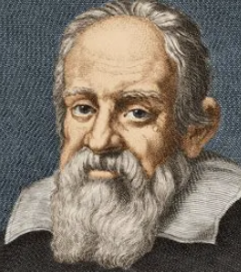
If what we are discussing were a point of law or of the humanities, in which neither true nor false exists, one might trust in subtlety of mind and readiness of tongue and in the greater experience of the writers, and expect him who excelled in those things to make his reasoning most plausible, and one might judge it to be the best. But in the natural sciences, whose conclusions are true and necessary and have nothing to do with human will, one must take care not to place oneself in the defense of error; for here a thousand Demostheneses and a thousand Aristotles would be left in the lurch by every mediocre wit who happened to hit upon the truth for himself. Therefore, Simplicio, give up this idea and this hope of yours that there may be men so much more learned, erudite, and well-read than the rest of us as to be able to make that which is false become true in defiance of nature.
▼
Source
source
Salviati, p. 61

3 months 3 weeks ago
Rejoice in the things that are present; all else is beyond thee.

3 months 2 weeks ago
That virtue we appreciate is as much ours as another's. We see so much only as we possess.
▼
Source
source
June 22, 1839

2 months 2 weeks ago
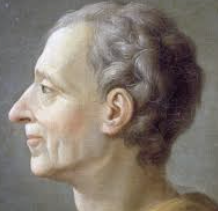
Through a wise and salutary neglect [of the colonies], a generous nature has been suffered to take her own way to perfection; when I reflect upon these effects, when I see how profitable they have been to us, I feel all the pride of power sink and all presumption in the wisdom of human contrivances melt and die away within me. My vigour relents. I pardon something to the spirit of liberty.
2 months 5 days ago
You have to study a great deal to know a little.
▼
Source
source
I
2 months 2 weeks ago
The idea does not belong to the soul; it is the soul that belongs to the idea.
▼
Source
source
Vol. I, par. 216
1 month 2 weeks ago
At the approach of danger there are always two voices that speak with equal force in the heart of man: one very reasonably tells the man to consider the nature of the danger and the means of avoiding it; the other even more reasonable says that it is too painful and harassing to think of the danger, since it is not a man's power to provide for everything and escape from the general march of events; and that it is therefore better to turn aside from the painful subject till it has come, and to think of what is pleasant. In solitude a man generally yields to the first voice; in society to the second.
▼
Source
source
Bk. X, ch. 17

3 months 3 weeks ago
If a man makes the press utter atrocious things he becomes as answerable for them as if he had uttered them by word of mouth. Mr. Jefferson has said in his inaugural speech, that "error of opinion might be tolerated, when reason was left free to combat it." This is sound philosophy in cases of error. But there is a difference between error and licentiousness.
▼
Source
source
Liberty of the Press, 1806

2 months 3 weeks ago
When we consider the being and substance of that universe in which we are immutably set, we shall discover that neither we ourselves nor any substance doth suffer death; for nothing is in fact diminished in its substance, but all things, wandering through infinite space, undergo change of aspect.
▼
Source
source
Introductory Epistle
1 week 4 days ago
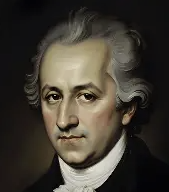
In limitations he first shows himself the master,And the law can only bring us freedom.
▼
Source
source
Was Wir Bringen
1 month 1 week ago
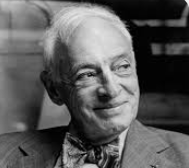
Death is the dark backing that a mirror needs if we are to see anything.
▼
Source
source
Humboldt's Gift (1975), p. 265
4 days ago
Our plans miscarry because they have no aim. When a man does not know what harbour he is making for, no wind is the right wind.
▼
Source
source
Line 2 Alternate translation: If one does not know to which port one is sailing, no wind is favorable. (translator unknown).

3 months 2 weeks ago
The most radical revolutionary will become a conservative the day after the revolution.
▼
Source
source
The New Yorker
3 months 3 weeks ago
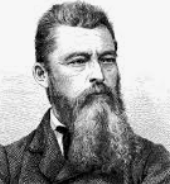
I freely admit that the remembrance of David Hume was the very thing that many years ago first interrupted my dogmatic slumber and gave a completely different direction to my researches in the field of speculative philosophy.
2 months 2 weeks ago
"Can any good come out of Nazareth?" This is always the question of the wiseacres and the knowing ones. But the good, the new, comes from exactly that quarter whence it is not looked for, and is always something different from what is expected. Everything new is received with contempt, for it begins in obscurity. It becomes a power unobserved.
▼
Source
source
As quoted in "Voices of the New Time" as translated by C. C. Shackford in The Radical Vol. 7 (1870), p. 329

3 months 2 weeks ago
It is better to be a human being dissatisfied than a pig satisfied; better to be Socrates dissatisfied than a fool satisfied. And if the fool, or the pig, are of a different opinion, it is because they only know their own side of the question. The other party to the comparison knows both sides.
▼
Source
source
Ch. 2
1 month 1 day ago
Lost time was like a run in a stocking. It always got worse.
▼
Source
source
The Steep Ascent

2 months 2 weeks ago
On our earth we can only love with suffering and through suffering. We cannot love otherwise, and we know of no other sort of love. I want suffering in order to love. I long, I thirst, this very instant, to kiss with tears the earth that I have left, and I don't want, I won't accept life on any other!"
2 months 2 weeks ago
The pretended rights of these theorists are all extremes: and in proportion as they are metaphysically true, they are morally and politically false. The rights of men are in a sort of middle, incapable of definition, but not impossible to be discerned. The rights of men in government are their advantages; and these are often in balances between differences of good; in compromises between good and evil, and sometimes between evil and evil. Political reason is a computing principle: adding, subtracting, multiplying, and dividing, morally and not metaphysically or mathematically, true moral denominations.
1 week 4 days ago
The artist may be well advised to keep his work to himself till it is completed, because no one can readily help him or advise him with it...but the scientist is wiser not to withhold a single finding or a single conjecture from publicity.
▼
Source
source
Essay on Experimentation
2 months 2 weeks ago
A certain maxim of Logic which I have called Pragmatism has recommended itself to me for diverse reasons and on sundry considerations. Having taken it as my guide for most of my thought, I find that as the years of my knowledge of it lengthen, my sense of the importance of it presses upon me more and more. If it is only true, it is certainly a wonderfully efficient instrument. It is not to philosophy only that it is applicable. I have found it of signal service in every branch of science that I have studied. My want of skill in practical affairs does not prevent me from perceiving the advantage of being well imbued with pragmatism in the conduct of life.
▼
Source
source
Lecture I : Pragmatism : The Normative Sciences, CP 5.14
1 month 2 weeks ago
One might think that it must be quite clear to people not deprived of reason, that violence breeds violence; that the only means of deliverance from violence lies in not taking part in it. This method, one would think, is quite obvious. It is evident that a great majority of men can be enslaved by a small minority only if the enslaved themselves take part in their own enslavement. If people are enslaved, it is only because they either fight violence with violence or participate in violence for their own personal profit. Those who neither struggle against violence nor take part in it can no more be enslaved than water can be cut. They can be robbed, prevented from moving about, wounded or killed, but they cannot be enslaved: that is, made to act against their own reasonable will.
▼
Source
source
The Meaning of the Russian Revolution
1 week 4 days ago
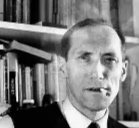
Pragmatism starts from assumptions similar to those of empiriocriticism, but differs from the latter by its striking formulations, loose aphorisms, and analytical unscrupulousness.
▼
Source
source
Chapter Seven, Pragmatism and Positivism, p. 166
3 months 3 weeks ago
Another thing wherein they shew their love of dominion, is, their desire to have things to be theirs: They would have propriety and possession, pleasing themselves with the power which that seems to give, and the right that they thereby have, to dispose of them as they please. He that has not observ's these two humours working very betimes in children, has taken little notice of their actions: And he who thinks that these two roots of almost all the injustice and contention that so disturb human life, are not early to be weeded out, and contrary habits introduc'd, neglects the proper season to lay the foundations of a good and worthy man.
▼
Source
source
Sec. 105
4 days ago
The old Romans had a custom which survived even into my lifetime. They would add to the opening words of a letter: "If you are well, it is well; I also am well." Persons like ourselves would do well to say. "If you are studying philosophy, it is well." For this is just what "being well" means. Without philosophy the mind is sickly.

2 months 5 days ago
Jesus said that God was not the God of the dead, but of the living. And the other life is not, in fact, thinkable to us except under the same forms as those of this earthly and transitory life.
1 month 2 weeks ago
"He who exalts himself shall be humbled; and he who humbles himself shall be exalted." (Matthew 23:12) The person who exalts himself ... will be humbled, because a person who considers himself to be good, intelligent, and kind will not even try to become better, smarter, kinder. The humble person will be exalted, because he considers himself bad and will try to become better, kinder, and more reasonable.
▼
Source
source
p. 110
2 months 1 week ago
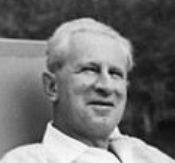
The concept of labor is not peripheral in Hegel's system, but is the central notion through which he conceives the development of society. Driven by the insight that opened this dimension to him, Hegel describes the mode of integration prevailing in a commodity-producing society in terms that clearly fore-shadow Marx's critical approach.
▼
Source
source
P. 78
2 months 2 weeks ago
Never unreal, Pain is a challenge to the universal fiction. What luck to be the only sensation granted a content, if not a meaning!
2 months 2 weeks ago
Bad laws are the worst sort of tyranny.
▼
Source
source
Speech at Bristol Previous to the Election (6 September 1780), quoted in The Works of the Right Honourable Edmund Burke, Vol. II (1855), p. 148
CivilSimian.com created by AxiomaticPanic, CivilSimian, Kalokagathia