


2 days ago
Very often the things that cost nothing cost us the most heavily; I can show you many objects the quest and acquisition of which have wrested freedom from our hands.
1 month 4 weeks ago
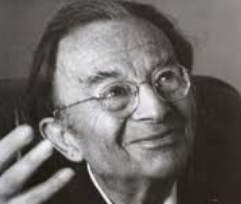
Temperament refers to the mode of reaction and is constitutional and not changeable; character is essentially formed by a person's experiences, especially of those in early life, and changeable, to some extent, by insights and new kinds of experiences. If a person has a choleric temperament, for instance, his mode of reaction is "quick and strong." But what he is quick or strong about depends on his kind of relatedness, his character. If he is a productive, just, loving person he will react quickly and strongly when he loves, when he is enraged by injustice, and when he is impressed by a new idea. If he is a destructive or sadistic character, he will be quick and strong in his destructiveness or in his cruelty. The confusion between temperament and character has had serious consequences for ethical theory. Preferences with regard to differences in temperament are mere matters of subjective taste. But differences in character are ethically of the most fundamental importance.
▼
Source
source
Ch. 3
3 months 1 week ago
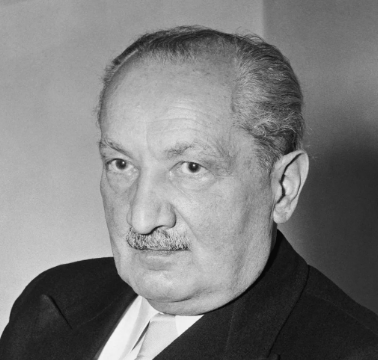
Nevertheless, the ultimate business of philosophy is to preserve the force of the most elemental words in which Dasein expresses itself, and to keep the common understanding from levelling them off to that unintelligibility which functions in turn as a source of pseudo-problems.
▼
Source
source
Macquarrie & Robinson translation

3 months 2 weeks ago
The state is primarily an organization for killing foreigners.
▼
Source
source
Bertrand Russell Speaks His Mind (1960), p. 83

3 months 2 weeks ago
I say a murder is abstract. You pull the trigger and after that you do not understand anything that happens.
▼
Source
source
Act 5, sc. 2
3 months 2 weeks ago
In democratic countries, the most important private organizations are economic. Unlike secret societies, they are able to exercize their terrorism without illegality, since they do not threaten to kill their enemies, but only to starve them.
▼
Source
source
Ch. 12: Powers and forms of governments
3 months 2 weeks ago
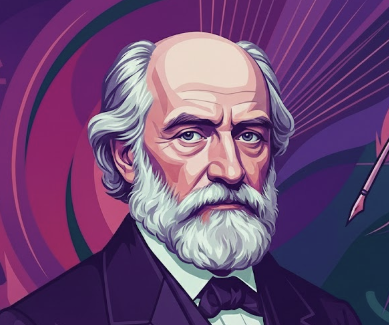
For what is modesty but hypocritical humility, by means of which, in a world swelling with vile envy, a man seeks to beg pardon for his excellences and merits from those who have none? For whoever attributes no merit to himself because he really has none is not modest, but merely honest.
▼
Source
source
Vol. I, Ch. III, The World As Representation: Second Aspect

2 months 3 weeks ago
Thus is man that great and true Amphibium, whose nature is disposed to live not only like other creatures in diverse elements, but in divided and distinguished worlds.
▼
Source
source
Section 34

2 months ago
The fundamental tenet of Steiner's teaching is that if we take the trouble to recognize the independent existence of the inner worlds of thought, and keep the mind turned in that direction, we shall soon become increasingly conscious of their reality. We are not, as Sartre believed, stranded in the universe of matter like a whale on a beach. That inner world is our natural home. Moreover, once we grasp this truth, we can also recognize that we ourselves possess an "essential ego," a "true self," a fundamental identity that goes far beyond our usual feeble sense of being "me."
▼
Source
source
p. 26

3 months 2 weeks ago
Certainly one may, with as much reason and decency, plead for murder, robbery, lewdness, and barbarity, as for this practice: They are not more contrary to the natural dictates of Conscience, and feelings of Humanity; nay, they are all comprehended in it.

1 month 2 weeks ago
Paradox is the technique for seizing the conflicting aspects of any problem. Paradox coalesces or telescopes various facets of a complex process in a single instant.
▼
Source
source
(p. 106)

2 months 2 weeks ago
The people never give up their liberties but under some delusion.
▼
Source
source
Speech at a County Meeting of Buckinghamshire

4 months 1 week ago
The superior man, while there is anything he has not studied, or while in what he has studied there is anything he cannot understand, Will not intermit his labor. While there is anything he has not inquired about, or anything in what he has inquired about which he does not know, he will not intermit his labor. While there is anything which he has not reflected on, or anything in what he has reflected on which he does not apprehend, he will not intermit his labor. While there is anything which he has not discriminated or his discrimination is not clear, he will not intermit his labor. If there be anything which he has not practiced, or his practice fails in earnestness, he will not intermit his labor. If another man succeed by one effort, he will use a hundred efforts. If another man succeed by ten efforts, he will use a thousand. Let a man proceed in this way, and, though dull, he will surely become intelligent; though weak, he will surely become strong.

4 months 2 weeks ago
The next thing you can learn from the woman who was a sinner, something she herself understood, is that with regard to finding forgiveness she is able to do nothing at all.
1 month 2 weeks ago
The assertion fallacy ... is the fallacy of confusing the conditions for the performance of the speech act of assertion with the analysis of the meaning of particular words occurring in certain assertions.
▼
Source
source
P. 141.

4 months 2 weeks ago
I wouldn't give an astrologer the time of day.

1 week 1 day ago
Fire is the best of servents; but what a master!
▼
Source
source
Bk. II, ch. 9.
2 months 2 days ago
Any physical object which by its influence deteriorates its environment, commits suicide.
▼
Source
source
Ch. 6: "The Nineteenth Century", p. 155
2 months 1 week ago
The one intelligible theory of the universe is that of objective idealism, that matter is effete mind, inveterate habits becoming physical laws. But before this can be accepted it must show itself capable of explaining the tridimensionality of space, the laws of motion, and the general characteristics of the universe, with mathematical clearness and precision ; for no less should be demanded of every Philosophy.

2 months ago
There can be no freedom in the large sense of the word, no harmonious development, so long as mercenary and commercial considerations play an important part in the determination of personal conduct.

3 months 2 weeks ago
I want to have her back as an ingredient in the restoration of my past. Could I have wished her anything worse? Having got once through death, to come back and then, at some later date, have all her dying to do all over again? They call Stephen the first martyr. Hadn't Lazarus the rawer deal?
2 months 1 week ago
All names of God remain hallowed because they have been used not only to speak of God but also to speak to him.

3 weeks 5 days ago
Suppose we encounter an advanced civilization that has engineered a happy biosphere. Population sizes are controlled by cross-species immunocontraception. Free-living herbivores lead idyllic lives in their wildlife parks. Should we urge the reintroduction of starvation, asphyxiation, disemboweling and being eaten alive by predators? Is their regime of compassionate stewardship of the biosphere best abandoned in favour of "re-wilding"? I suspect the advanced civilization would regard human pleas to restore the old Darwinian regime of "Nature, red in tooth and claw" as callous if not borderline sociopathic.
▼
Source
source
Reply to "I am horrified at what goes on in philosophy departments, personally", Freethought Blogs, 10 Sept. 2015

3 months 2 weeks ago
What good would it be to possess the whole universe if one were its only survivor?
▼
Source
source
A Lasting Peace Through the Federation of Europe, 1756
2 months 2 weeks ago
The divine origin of man, as taught by Vedanta, IS continually inculcated, to stimulate his efforts to return, to animate him in the struggle, and incite him to consider a reunion and reincorporation with Divinity as the one primary object of every action and reaction. Even the loftiest philosophy of the European, the idealism of reason as it is set forth by the Greek philosophers, appears in comparison with the abundant light and vigor of Oriental idealism like a feeble Promethean spark in the full flood of heavenly glory of the noonday sun, faltering and feeble and ever ready to be extinguished.
▼
Source
source
quoted in Londhe, S. (2008). A tribute to Hinduism: Thoughts and wisdom spanning continents and time about India and her culture. New Delhi: Pragun Publication.
4 months 2 weeks ago
The ancient philosophers... all of them assert that the elements, and those things which are called by them principles, are contraries, though they establish them without reason, as if they were compelled to assert this by truth itself. They differ, however... that some of them assume prior, and others posterior principles; and some of them things more known according to reason, but others such as are more known according to sense: for some establish the hot and the cold, others the moist and the dry, others the odd and the even, and others strife and friendship, as the causes of generation. ...in a certain respect they assert the same things, and speak differently from each other. They assert different things... but the same things, so far as they speak analogously. For they assume principles from the same co-ordination; since, of contraries, some contain, and others are contained.
3 months 2 weeks ago
Every parting gives a foretaste of death; every coming together again a foretaste of the resurrection.
▼
Source
source
"Psychological Observations"
1 month 1 day ago
I've learned from the Bhagavad Gita and other teachings of our culture to detach myself from the results of what I do, because those are not in my hands. The context is not in your control, but your commitment is yours to make, and you can make the deepest commitment with a total detachment about where it will take you. You want it to lead to a better world, and you shape your actions and take full responsibility for them, but then you have detachment. And that combination of deep passion and deep detachment allows me always to take on the next challenge because I don't cripple myself, I don't tie myself in knots. I function like a free being. I think getting that freedom is a social duty because I think we owe it to each other not to burden each other with prescription and demands. I think what we owe each other is a celebration of life and to replace fear and hopelessness with fearlessness and joy.
3 months 2 weeks ago
The thirst after happiness is never extinguished in the heart of man.
▼
Source
source
IX

2 months 4 days ago
The ascetic morality is a negative morality. And strictly, what is important for a man is not to die, whether he sins or not.

2 months 2 weeks ago
Love works magic. It is the final purpose Of the world story, The Amen of the universe.
2 months 1 week ago
The concept of freedom, as the Philosophy of Right has shown, follows the pattern of free ownership. As a result, the history of the world that Hegel looks out upon exalts and enshrines the history of the middle-class, which based itself on this pattern. There is a stark truth in Hegel's strangely certain announcement that history has reached its end. But it announces the funeral of a class, not of history.
▼
Source
source
P. 227

1 month 1 week ago
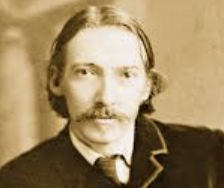
Every man is his own doctor of divinity, in the last resort.
▼
Source
source
An Inland Voyage (1878).
2 months 1 week ago
Thus far, gentlemen, I have been insisting very strenuously upon what the most vulgar common sense has every disposition to assent to and only ingenious philosophers have been able to deceive themselves about. But now I come to a category which only a more refined form of common sense is prepared willingly to allow, the category which of the three is the chief burden of Hegel's song, a category toward which the studies of the new logico-mathematicians, Georg Cantor and the like, are steadily pointing, but to which no modern writer of any stripe, unless it be some obscure student like myself, has ever done anything approaching to justice.
▼
Source
source
Lecture II : The Universal Categories, §3. Laws: Nominalism, CP 5.59
2 months ago
Once again, I experienced that overwhelming joy in the universe that I had felt in London outside the V and A. But this time, my consciousness of the world seemed larger, more complex. It was the mystic's sensation of oneness, of everything blending into everything else. Everything I looked at reminded me of something else, which also became present to my consciousness, as if I were simultaneously seeing a million worlds and smelling a million scents and hearing a million sounds-- not mixed up, but each separate and clear. I was overwhelmed with a sense of my smallness in the face of this vast, beautiful, objective universe, this universe whose chief miracle is that it exists, as well as myself. It is no dream, but a great garden in which life is trying to obtain a foothold. I experienced a desire to burst into tears of gratitude; then I controlled it, and the feeling subsided into a calm sense of immense, infinite beauty.
▼
Source
source
pp. 237-238
4 months 2 weeks ago
Above all do not forget your duty to love yourself; do not permit the fact that you have been set apart from life in a way, been prevented from participating actively in it, and that you are superflous in the obtruse eyes of a busy world, above all, do not permit this to deprive you of your idea of yourself, as if your life, if lived in inwardness, did not have just as much meaning and worth as that of any human being in the eyes of all-wise Governance, and considerably more than the busy, busiest haste of busy-ness - busy with wasting life and losing itself.
3 months 2 weeks ago
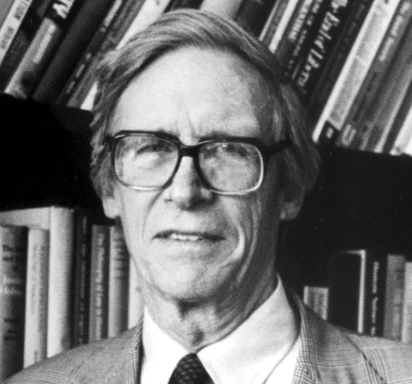
First of all, principles should be general. That is, it must be possible to formulate them without use of what would be intuitively recognized as proper names, or rigged definite descriptions.
▼
Source
source
Chapter III, Section 23, pg. 131

1 week 5 days ago
The regeneration of the inferior or bastard races by the superior ones is consistent with God's plans for humanity. The man of the people, in our countries, is always a fallen aristocrat; his hands are made to handle the sword rather than the laborer's tools. He prefers warring to working, that is, he returns to his original calling.
▼
Source
source
93, as translated by Asselin Charles, in "Colonial Discourse Since Christopher Columbus," Journal of Black Studies, Vol. 26, No. 2 (November 1995), 147
1 month 3 days ago
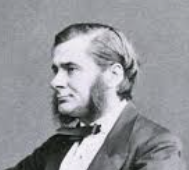
The consciousness of brutes would appear to be related to the mechanism of their body simply as a collateral product of its working, and to be as completely without any power of modifying that working as the steam-whistle which accompanies the work of a locomotive engine is without influence upon its machinery. Their volition, if they have any, is an emotion indicative of physical changes, not a cause of such changes.
3 months 2 weeks ago
"Everything is both a trap and a display; the secret reality of the object is what the Other makes of it."
4 months 2 weeks ago
If there is some end of the things we do, which we desire for its own sake, clearly this must be the good. Will not knowledge of it, then, have a great influence on life? Shall we not, like archers who have a mark to aim at, be more likely to hit upon what we should? If so, we must try, in outline at least, to determine what it is.
4 months 2 weeks ago
The truly good and wise man will bear all kinds of fortune in a seemly way, and will always act in the noblest manner that the circumstances allow.
3 months 2 weeks ago
Then I dreamed that one day there was nothing but milk for them and the jailer said as he put down the pipkin:'Our relations with the cow are not delicate-as you can easily see if you imagine eating any of her other secretions.' ... John said, 'Thank heavens! Now at last I know that you are talking nonsense. You are trying to pretend that unlike things are like. You are trying to make us think that milk is the same sort of thing as sweat or dung.' 'And pray, what difference is there except by custom?''Are you a liar or only a fool, that you see no difference between that which Nature casts out as refuse and that which she stores up as food?'
▼
Source
source
Pilgrim's Regress 49
2 months 1 week ago
The next simplest feature that is common to all that comes before the mind, and consequently, the second category, is the element of Struggle.
▼
Source
source
Lecture II : The Universal Categories, § 2 : Struggle, CP 5.45
2 days ago
You see that man can endure toil: Cato, on foot, led an army through African deserts. You see that thirst can be endured: he marched over sun-baked hills, dragging the remains of a beaten army and with no train of supplies, undergoing lack of water and wearing a heavy suit of armour; always the last to drink of the few springs which they chanced to find. You see that honour, and dishonour too, can be despised: for they report that on the very day when Cato was defeated at the elections, he played a game of ball. You see also that man can be free from fear of those above him in rank: for Cato attacked Caesar and Pompey simultaneously, at a time when none dared fall foul of the one without endeavouring to oblige the other. You see that death can be scorned as well as exile: Cato inflicted exile upon himself and finally death, and war all the while.

1 month 4 weeks ago
Perhaps, if prematurely we dismiss ourselves from this world, all may even have to be suffered through again - the premature birth may not contribute to the production of another being, which must be begun again from the beginning.
4 months 2 weeks ago
When Christianity came into the world the task was simply to proclaim Christianity. The same is the case wherever Christianity is introduced into a country the religion of which is not Christianity.
CivilSimian.com created by AxiomaticPanic, CivilSimian, Kalokagathia