


3 months 1 week ago
The only thing that will redeem mankind is co-operation, and the first step towards co-operation lies in the hearts of individuals.
▼
Source
source
p. 212

3 months 1 week ago
the ultimate end, with reference to and for the sake of which all other things are desirable...is an existence exempt as far as possible from pain, and as rich as possible in enjoyments...This, being, according to the utilitarian opinion, the end of human action, is necessarily also the standard of morality; which may accordingly be defined, the rules and precepts for human conduct, by the observance of which an existence such as has been described might be, to the greatest extent possible, secured to all mankind; and not to them only, but, so far as the nature of things admits, to the whole sentient creation.
▼
Source
source
Ch. 2

4 months 4 days ago
The undramatic fact is that I just think and think and think until I have something [for a story], and there is nothing marvelous or artistic about the phenomenon.

3 months 5 days ago
This is the terrible fix we are in. If the universe is not governed by an absolute goodness, then all our efforts are in the long run hopeless. But if it is, then we are making ourselves enemies to that goodness every day, and are not in the least likely to do any better tomorrow, and so our case is hopeless again....God is the only comfort, He is also the supreme terror: the thing we most need and the thing we most want to hide from.
▼
Source
source
Book I, Chapter 5, "We Have Cause to Be Uneasy"

2 days ago
It is a commonplace of the classical literature on Empire, from Polybius to Montesquieu and Gibbon, that Empire is from its inception decadent and corrupt.
▼
Source
source
201

3 months 1 week ago
Even in the games of children there are things to interest the greatest mathematician.
▼
Source
source
1688-1690

1 month 3 weeks ago
And why be scandalized by the infallibility of a man, of the Pope? What difference does it make whether it be a book that is infallible - the Bible, or a society of men - the Church, or a single man? Does it make any essential change in the rational difficulty? And since the infallibility of a book or of a society of men is not more rational than that of a single man, this supreme offense to the eyes of reason has to be postulated.

3 months 5 days ago
Appealing to his [Einstein's] way of expressing himself in theological terms, I said: If God had wanted to put everything into the universe from the beginning, He would have created a universe without change, without organisms and evolution, and without man and man's experience of change. But he seems to have thought that a live universe with events unexpected even by Himself would be more interesting than a dead one.
▼
Source
source
As quoted in Omnipotence and Other Theological Mistakes by Charles Hartshorne

3 months 1 day ago
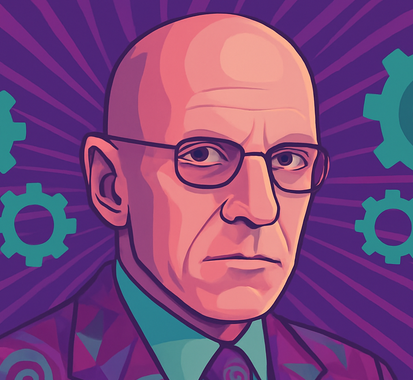
But what then is this confrontation below the language of reason? Where might this interrogation lead, following not reason in its horizontal becoming, but seeking to retrace in time this constant verticality, which, the length of Western culture, confronts it with what it is not, measuring it with its own extravagance?
▼
Source
source
Preface to 1961 edition

1 month 4 weeks ago
Thou hast said: nevertheless I say unto you, Hereafter shall ye see the Son of man sitting on the right hand of power, and coming in the clouds of heaven.
▼
Source
source
26:64 (KJV) Said to Caiaphas, the high priest.
1 month 2 days ago
Is there anything in life so disenchanting as attainment?
▼
Source
source
The Suicide Club, The Adventure of the Hansom Cabs.
1 month 4 weeks ago
Take, eat; this is my body. And he took the cup, and gave thanks, and gave it to them, saying, Drink ye all of it; For this is my blood of the new testament, which is shed for many for the remission of sins. But I say unto you, I will not drink henceforth of this fruit of the vine, until that day when I drink it new with you in my Father's kingdom.
▼
Source
source
26:26-29 (KJV)
1 month 2 weeks ago
In an information-rich world, the wealth of information means a dearth of something else: a scarcity of whatever it is that information consumes. What information consumes is rather obvious: it consumes the attention of its recipients. Hence a wealth of information creates a poverty of attention and a need to allocate that attention efficiently among the overabundance of information sources that might consume it.
▼
Source
source
Simon, H. A. (1971) "Designing Organizations for an Information-Rich World" in: Martin Greenberger, Computers, Communication, and the Public Interest, Baltimore. MD: The Johns Hopkins Press. pp. 40-41.
3 weeks 4 days ago
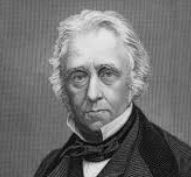
What an incalculable debt do we owe to that little speck of land, Greece.-The principles of taste, the finest models of composition, the doctrines and the glorious examples to which we owe political freedom, the arts, the sciences, architecture, sculpture, every thing that is great and splendid in literature and politics, must be considered as ultimately derived from that little peninsula.
▼
Source
source
Letter to Zachary Macaulay (8 September 1821), quoted in The Letters of Thomas Babington Macaulay, Volume I: 1807-February 1831, ed. Thomas Pinney (1974), p. 163

3 months 2 weeks ago
He who establishes his argument by noise and command shows that his reason is weak.

2 months 3 weeks ago
We ought to regard the interests of the state as of far greater moment than all else, in order that they may be administered well; and we ought not to engage in eager rivalry in despite of equity, nor arrogate to ourselves any power contrary to the common welfare. For a state well administered is our greatest safeguard. In this all is summed up: When the state is in a healthy condition all things prosper; when it is corrupt, all things go to ruin.

3 months 1 week ago
It is not enough to be industrious; so are the ants. What are you industrious about?
▼
Source
source
Letter to Harrison Blake, November 16, 1857
3 months 2 weeks ago
Since I would rather make of him an able man than a learned man, I would also urge that care be taken to choose a guide with a well-made rather than a well-filled head.
▼
Source
source
Ch. 26. On the Education of Children

3 months 6 days ago
Assembled in a crowd, people lose their powers of reasoning and their capacity for moral choice.
▼
Source
source
Chapter 5 (p. 42)
1 month 4 days ago
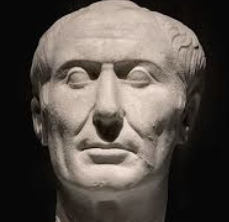
While we stop to think, we often miss our opportunity.
▼
Source
source
Maxim 185
1 month 4 weeks ago
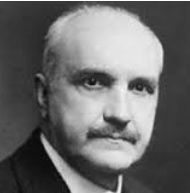
Miracles are propitious accidents, the natural causes of which are too complicated to be readily understood.

3 months 1 week ago
It might otherwise appear paradoxical that money can be replaced by worthless paper; but that the slightest alloying of its metallic content depreciates it.
▼
Source
source
Notebook VII, The Chapter on Capital, p. 734.

1 month 6 days ago
Pierre, who from the moment Prince Andrew entered the room had watched him with glad, affectionate eyes, now came up and took his arm. Before he looked round Prince Andrew frowned again, expressing his annoyance with whoever was touching his arm, but when he saw Pierre's beaming face he gave him an unexpectedly kind and pleasant smile. "There now!... So you, too, are in the great world?" said he to Pierre. "I knew you would be here," replied Pierre. "I will come to supper with you. May I?" he added in a low voice so as not to disturb the vicomte who was continuing his story. "No, impossible!" said Prince Andrew, laughing and pressing Pierre's hand to show that there was no need to ask the question. He wished to say something more, but at that moment Prince Vasíli and his daughter got up to go and the two young men rose to let them pass.
▼
Source
source
Bk. I, Ch. IV

3 months 2 weeks ago
Only charity admitteth no excess. For so we see, aspiring to be like God in power, the angels transgressed and fell.
▼
Source
source
Book II, xxii
1 month 4 weeks ago
So that in the first place, I put for a general inclination of all mankind a perpetual and restless desire of Power after power, that ceaseth only in Death. And the cause of this is not always that a man hopes for a more intensive delight than he has already attained to, or that he cannot be content with a moderate power: but because he cannot assure the power and means to live well, which he hath present, without the acquisition of more.
▼
Source
source
The First Part, Chapter 11, p. 47

2 months 2 days ago
This world was created from God's fear of solitude. In other words, us, the creatures, have no other meaning but to distract the Creator. Poor clowns of the absolute, we forget that we live dramas for the boredom of a spectator, whose claps have never reached the ears of a mortal.

3 months 2 days ago
Burning in effigy. Kissing the picture of one's beloved... it aims at nothing at all; we just behave this way and then we feel satisfied.
▼
Source
source
Ch. 7 : Remarks on Frazer's Golden Bough, p. 123

3 months 1 week ago
It is difficult, if not impossible, to define the limit of our reasonable desires in respect of possessions.
▼
Source
source
E. Payne, trans. (1974) Vol. 1, p. 346

2 months 1 week ago
Yes - you, you alone must pay for everything because you turned up like this, because I'm a scoundrel, because I'm the nastiest, most ridiculous, pettiest, stupidest, and most envious worm of all those living on earth who're no better than me in any way, but who, the devil knows why, never get embarrassed, while all my life I have to endure insults from every louse - that's my fate. What do I care that you do not understand any of this?
▼
Source
source
Part 2, Chapter 9
3 months 6 days ago
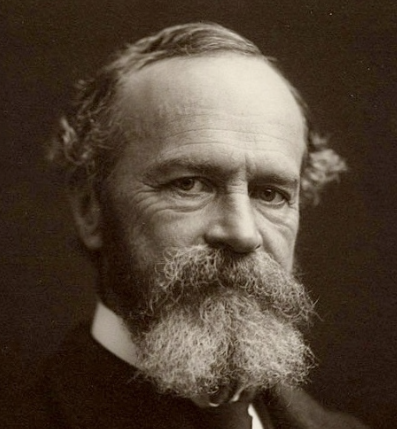
No concrete test of what is really true has ever been agreed upon.
▼
Source
source
"The Will to Believe" p. 15
3 months 1 week ago
It is clear that thought is not free if the profession of certain opinions makes it impossible to earn a living.
▼
Source
source
Ch. 12: Free Thought and Official Propaganda
1 month 3 weeks ago
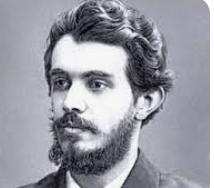
The life of Berdyaev spans the momentous events of the first half of the twentieth century in Europe. He was no ivory tower philosopher but was intimately affected by these events throughout his life and drew his inspirations from them regarding the nature of the human condition. His writings bear the imprint of the catastrophic situations within which he was destined to live.
▼
Source
source
Richard Schain, in In Love with Eternity : Philosophical Essays and Fragments (2005), Ch. 7 : Nikolai Alexandrovich Berdyaev - A Champion of the Spirit, p. 43
4 months 4 days ago
People who want to do so can lose weight most safely and permanently if they realize that above all they must be patient. ... It is better to eat a little less at each meal than impulse would suggest and to do that constantly. Add to this a little more exercise or activity than impulse suggests and keep that up constantly too. A few less calories taken in each day and a few more used up will decrease weight, slowly, to be sure, but without undue misery. And with better long-range results too.
2 months 2 days ago
To have committed every crime but that of being a father.
1 month 2 weeks ago
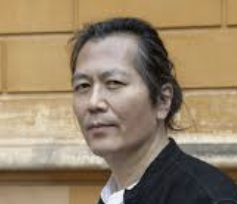
Power is never naked. Rather, it is eloquent.
3 months 6 days ago
Out of my experience, such as it is (and it is limited enough) one fixed conclusion dogmatically emerges, and that is this, that we with our lives are like islands in the sea, or like trees in the forest. The maple and the pine may whisper to each other with their leaves. ... But the trees also commingle their roots in the darkness underground, and the islands also hang together through the ocean's bottom. Just so there is a continuum of cosmic consciousness, against which our individuality builds but accidental fences, and into which our several minds plunge as into a mother-sea or reservoir.
▼
Source
source
"Confidences of a 'Psychical Researcher'", in The American Magazine, Vol. 68 (1909), p. 589
3 months 3 weeks ago
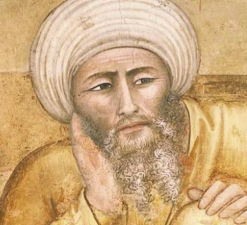
It is quite clear to you that all the people see that lower kinds of creation could have been made in a different way from that in which they really are, and as they see this lower degree in many things they think that they must have been made by chance.
3 months 6 days ago
A thing is important if anyone think it important.
▼
Source
source
Ch. 28, Note 35
2 months 3 weeks ago
From an ill-natured man take no loan.

2 months 1 week ago
Coulson Turnbull in Life and Teachings of Giordano Bruno : Philosopher, Martyr, Mystic 1548 - 1600 (1913), p. 41
1 month 2 days ago
The difficulty of literature is not to write, but to write what you mean; not to affect your reader, but to affect him precisely as you wish.
▼
Source
source
Truth of Intercourse.

3 months 1 week ago
Men did not make the earth... It is the value of the improvements only, and not the earth itself, that is individual property... Every proprietor owes to the community a ground rent for the land which he holds.
▼
Source
source
Agrarian Justice
2 months 2 days ago
Only thoughts that are randomly born die. The other thoughts we carry with us without knowing them. They have abandoned themselves to forgetfulness so that they can be with us all the time.
3 months 1 week ago
People seem good while they are oppressed, but they only wish to become oppressors in their turn: life is nothing but a competition to be the criminal rather than the victim.
▼
Source
source
Letter to Ottoline Morrell, 17 December, 1920

1 month 4 days ago
Without an understanding of causality there can be no theory of communication. What passes as information theory today is not communication at all, but merely transportation.
▼
Source
source
(p. 362)
3 months 6 days ago
Matter is indeed infinitely and incredibly refined. To anyone who has ever looked on the face of a dead child or parent the mere fact that matter could have taken for a time that precious form, ought to make matter sacred ever after. It makes no difference what the principle of life may be, material or immaterial, matter at any rate co-operates, lends itself to all life's purposes. That beloved incarnation was among matter's possibilities.
▼
Source
source
Lecture III, Some Metaphysical Problems Pragmatically Considered
3 months 6 days ago
The last peculiarity of consciousness to which attention is to be drawn in this first rough description of its stream is that it is always interested more in one part of its object than in another, and welcomes and rejects, or chooses, all the while it thinks.
▼
Source
source
Ch. 9
1 month 2 days ago
Every man is his own doctor of divinity, in the last resort.
▼
Source
source
An Inland Voyage (1878).
4 months 4 days ago
The Autarch maintained his indifferent calm, but a certain lack of certainty was gathering, and he did not like to experience a lack of certainty. He liked nothing which made him aware of limitations. An Autarch should have no limitations, and on Lingane he had none that natural law did not impose.
CivilSimian.com created by AxiomaticPanic, CivilSimian, Kalokagathia