


2 weeks 5 days ago
This spirit thrusts itself forward, confident of commendation and esteem. It is superior to all, monarch of all it surveys; hence it should be subservient to nothing, finding no task too heavy, and nothing strong enough to weigh down the shoulders of a man.

2 days ago
The wiser nations are, the more public spirit they possess, the more perfect their political constitution, the fewer constitutional laws they have, for these laws are only props, and a building only needs props when it has become out of plumb or when it has been violently shaken by an external force. The most perfect constitution of antiquity was without contradiction that of Sparta, and Sparta has not left us a single line of its public law. It justly boasted of having written its laws only in the hearts of its children.
▼
Source
source
p. 84

3 weeks 4 days ago
All this of Liberty and Equality, Electoral suffrages, Independence and so forth, we will take, therefore, to be a temporary phenomenon, by no means a final one. Though likely to last a long time, with sad enough embroilments for us all, we must welcome it, as the penalty of sins that are past, the pledge of inestimable benefits that are coming.

2 months 2 weeks ago
Its first ethical precept is the identity of means used and aims sought. The ultimate end of all revolutionary social change is to establish the sanctity of human life, the dignity of man, the right of every human being to liberty and wellbeing. Unless this be the essential aim of revolution, violent social changes would have no justification. For external social alterations can be, and have been, accomplished by the normal processes of evolution. Revolution, on the contrary, signifies not mere external change, but internal, basic, fundamental change. That internal change of concepts and ideas, permeating ever-larger social strata, finally culminates in the violent upheaval known as revolution.
4 months 4 days ago
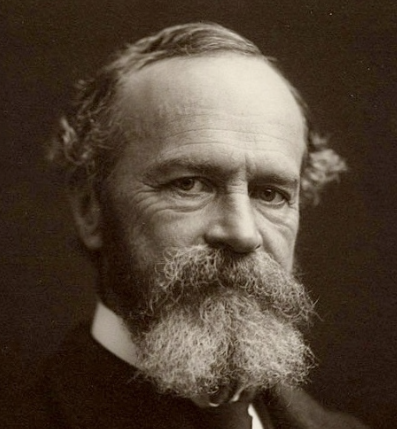
But such a straight identification of religion with any and every form of happiness leaves the essential peculiarity of religious happiness out. The more commonplace happinesses which we get are 'reliefs,' occasioned by our momentary escapes from evils either experienced or threatened. But in its most characteristic embodiments, religious happiness is no mere feeling of escape. It cares no longer to escape. It consents to the evil outwardly as a form of sacrifice - inwardly it knows it to be permanently overcome. ... In the Louvre there is a picture, by Guido Reni, of St. Michael with his foot on Satan's neck. The richness of the picture is in large part due to the fiend's figure being there. The richness of its allegorical meaning also is due to his being there - that is, the world is all the richer for having a devil in it, so long as we keep our foot upon his neck.
▼
Source
source
Lecture II, "Circumscription of the Topic"
3 months 2 days ago
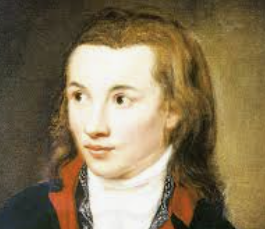
I was still blind, but twinkling stars did dance Throughout my being's limitless expanse, Nothing had yet drawn close, only at distant stages I found myself, a mere suggestion sensed in past and future ages.
▼
Source
source
As quoted in Romantic Vision, Ethical Context: Novalis and Artistic Autonomy (1987) by Géza von Molnár, p. 2



3 months 1 week ago
What most astonishes me in the United States, is not so much the marvelous grandeur of some undertakings, as the innumerable multitude of small ones.
▼
Source
source
Book Two, Chapter XIX.

4 months 4 days ago
Men love to wonder, and that is the seed of our science.
▼
Source
source
Works and Days;

4 months 5 days ago
Good nature is, of all moral qualities, the one that the world needs most, and good nature is the result of ease and security, not of a life of arduous struggle. Modern methods of production have given us the possibility of ease and security for all; we have chosen, instead, to have overwork for some and starvation for the others. Hitherto we have continued to be as energetic as we were before there were machines; in this we have been foolish, but there is no reason to go on being foolish for ever.
▼
Source
source
Ch. 1: In Praise of Idleness
1 month 3 weeks ago
I am an American, Chicago born - Chicago, that somber city - and go at things as I have taught myself, free-style, and will make the record in my own way: first to knock, first admitted; sometimes an innocent knock, sometimes a not so innocent.
▼
Source
source
Ch. 1 (opening line)
2 months 2 weeks ago
The jargon of authenticity ... is a trademark of societalized chosenness, ... sub-language as superior language.
▼
Source
source
pp. 5-6
4 months 1 week ago
In particular, at this point also urge governing authorities and parents to rule well and to send their children to school. Point out how they are obliged to do so and what a damnable sin they commit if they do not, for thereby, as the worst enemies of God and humanity, they overthrow and lay waste both the kingdom of God and the kingdom of the world. Explain very clearly what kind of horrible damage they do when they do not help to train children as pastors, preachers, civil servants, etc., and tell them that God will punish them dreadfully for this. For in our day and age it is necessary to preach about these things. The extent to which parents and governing authorities are now sinning in these matters defies description. The devil, too, intends to do something horrible in all this.
▼
Source
source
Foreword to the small catechismus, as quoted in the Preface, The Book of Concord: The Confessions of the Evangelical Lutheran Church (2000) by Robert Kolb and Timothy J. Wengert, p. 19

4 days ago
As soon as the generals and the politicos can predict the motions of your mind, lose it. Leave it as a sign to mark the false trail, the way you didn't go. Be like the fox who makes more tracks than necessary, some in the wrong direction. Practice resurrection.
▼
Source
source
"Manifesto: The Mad Farmer Liberation Front" in Farming: A Hand Book
2 weeks 1 day ago
There are two great fundamental problems common to all thought: (i) the problem of world- and life-affirmation and world- and life-negation, and (2) the problem of ethics and the relations between ethics and these two forms of man's spiritual attitude to Being.
▼
Source
source
Preface, p. vii
1 week 5 days ago
Heinrich Himmler's political tendencies were philo-monarchist and Right-wing conservative, inherited from his father who had been the loyalist instructor of Heinrich, hereditary prince of Bavaria. He was especially fascinated by the ideal of the Order of Teutonic Knights, which we spoke of earlier. He wanted to make the SS a corps that would perform the same function of the state's central nucleus that the nobility had played with its unquestioning loyalty to the regime, but in a new form. For the formation of a man of the SS, he considered a blend of Spartan spirit and Prussian discipline. But he also had in view the order of Jesuits (Hitler jokingly used to call Himmler 'my Ignatius of Loyola').
2 weeks 1 day ago
The ethic of Reverence for Life is the ethic of Love widened into universality.
▼
Source
source
Epilogue, p. 235
4 months 5 days ago
That power should be exercised over any portion of mankind without any obligation of consulting them, is only tolerable while they are in an infantine, or a semi-barbarous state. In any civilized condition, power ought never to be exempt from the necessity of appealing to the reason, and recommending itself by motives which justify it to the conscience and feelings, of the governed.
▼
Source
source
Thoughts on Parliamentary Reform (1859), p. 24
1 month 4 weeks ago
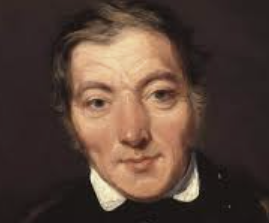
Man is the creature of circumstances.
▼
Source
source
"The Philanthropist"
3 weeks 4 days ago
Considered as the last finish of education, or of human culture, worth and acquirement, the art of speech is noble, and even divine; it is like the kindling of a Heaven's light to show us what a glorious world exists, and has perfected itself, in a man.
2 weeks 1 day ago
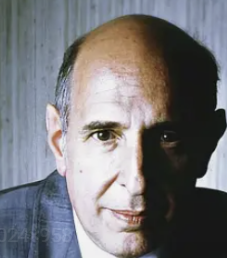
Intellectuals ... advertise their superiority to political practice but are absolutely in its thrall. ... It is no accident that Marxist theory and practice use the intellectuals as tools and keep them in brutal subservience.
▼
Source
source
"Commerce and Culture," p. 281.
4 months 5 days ago
The slave is doomed to worship time and fate and death, because they are greater than anything he finds in himself, and because all his thoughts are of things which they devour.

Just now
What is our task in the question of peace? It does not consist merely in vigorously demonstrating at all times the love of peace of the Social Democrats; but first and foremost our task is to make clear to the masses of people the nature of militarism and sharply and clearly to bring out the differences in principle between the standpoint of the Social Democrats and that of the bourgeois peace enthusiasts.
4 months 4 days ago
So long as antimilitarists propose no substitute for war's disciplinary function, no moral equivalent of war, analogous, as one might say, to the mechanical equivalent of heat, so long they fail to realize the full inwardness of the situation.
▼
Source
source
The Moral Equivalent of War
3 months 1 day ago
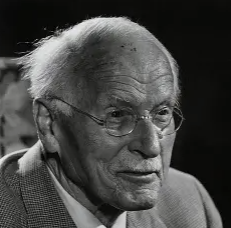
Eros is a superhuman power which, like nature herself, allows itself to be conquered and exploited as though it were impotent. But triumph over nature is dearly paid for. Nature requires no explanations of principle, but asks only for tolerance and wise measure. "Eros is a mighty daemon," as the wise Diotima said to Socrates. We shall never get the better of him, or only to our own hurt. He is not the whole of our inward nature, though he is at least one of its essential aspects.
▼
Source
source
Two Essays on Analytical Psychology, CW 7 (1957). "On the Psychology of the Unconscious" P.32f
4 months 6 days ago
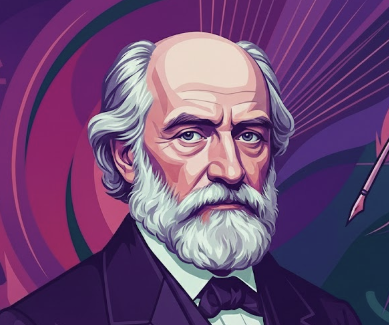
Talent works for money and fame; the motive which moves genius to productivity is, on the other hand, less easy to determine. It isn't money, for genius seldom gets any. It isn't fame: fame is too uncertain and, more closely considered, of too little worth. Nor is it strictly for its own pleasure, for the great exertion involved almost outweighs the pleasure. It is rather an instinct of a unique sort by virtue of which the individual possessed of genius is impelled to express what he has seen and felt in enduring works without being conscious of any further motivation. It takes place, by and large, with the same sort of necessity as a tree brings forth fruit, and demands of the world no more than a soil on which the individual can flourish.
▼
Source
source
Vol. 2 "On Philosophy and the Intellect" as translated in Essays and Aphorisms (1970), as translated by R. J. Hollingdale
2 weeks 6 days ago
The characteristic feature of militarism is not the fact that a nation has a powerful army or navy. It is the paramount role assigned to the army within the political structure. Even in peacetime the army is supreme; it is the predominant factor in political life. The subjects must obey the government as soldiers must obey their superiors. Within a militarist community there is no freedom; there are only obedience and discipline.
▼
Source
source
Omnipotent Government: The Rise of the Total State and Total War

4 months 3 days ago
Every intrusion of the spirit that says, "I'm as good as you" into our personal and spiritual life is to be resisted just as jealously as every intrusion of bureaucracy or privilege into our politics. Hierarchy within can alone preserve egalitarianism without. Romantic attacks on democracy will come again. We shall never be safe unless we already understand in our hearts all that the anti-democrats can say, and have provided for it better than they. Human nature will not permanently endure flat equality if it is extended from its proper political field into the more real, more concrete fields within. Let us wear equality; but let us undress every night.

2 months 3 weeks ago
To say that everything is idea or that everything is spirit, is the same as saying that everything is matter or that everything is energy, for if everything is idea or spirit, just as my consciousness is, it is not plain why the diamond should not endure for ever, if my consciousness, because it is idea or spirit, endures forever.

3 months ago
In order to have the stuff of a tyrant, a certain mental derangement is necessary.

3 months 5 days ago
Jacobinism is the revolt of the enterprising talents of a country against its property.
▼
Source
source
No. 1
4 months 2 weeks ago
Don't hold yourselves cheap, seeing that the creator of all things and of you estimates your value so high, so dear, that he pours out for you every day the most precious blood of his only-begotten Son.
▼
Source
source
216:3:1
4 months 6 days ago
If you try to imagine, as nearly as you can, what an amount of misery, pain and suffering of every kind the sun shines upon in its course, you will admit that it would be much better if, on the earth as little as on the moon, the sun were able to call forth the phenomena of life; and if, here as there, the surface were still in a crystalline state.
▼
Source
source
"On the Sufferings of the World"
3 months 1 day ago
It is a woman's outstanding characteristic that she can do anything for the love of a man. But those women who can achieve something important for the love of a thing are most exceptional, because this does not really agree with their nature. Love for a thing is a man's prerogative. But since masculine and feminine elements are united in our human nature, a man can live in the feminine part of himself, I and a woman in her masculine part. None the less the feminine element in man is only something in the background, as is the masculine element in woman. If one lives out the opposite sex in oneself one is living in one's own background, and one's real individuality suffers. A man should live as a man and a woman as a woman.
▼
Source
source
P. 243

4 months 5 days ago
Homeliness is almost as great a merit in a book as in a house, if the reader would abide there. It is next to beauty, and a very high art.
▼
Source
source
Pearls of Thought (1881) p. 32
2 weeks 5 days ago
What is wisdom? Always desiring the same things, and always refusing the same things.
▼
Source
source
Line 5 Here, Seneca uses the same observation that Sallust made regarding friendship (in his historical account of the Catilinarian conspiracy, Bellum Catilinae[XX.4]) to define wisdom.
2 weeks 1 day ago
A state of war only serves as an excuse for domestic tyranny.
▼
Source
source
The Gulag Archipelago
3 weeks 5 days ago
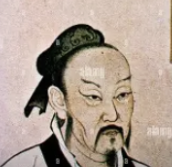
He who outrages benevolence is called a ruffian: he who outrages righteousness is called a villain. I have heard of the cutting off of the villain Chow, but I have not heard of the putting of a ruler to death.
▼
Source
source
1B:8, In relation to righteousness and the overthrow of the tyrannous King Zhou of Shang, as translated by Sir Robert Kennaway Douglas, China (1904), p. 8
1 month ago
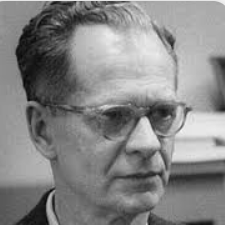
The real question is not whether machines think but whether men do. The mystery which surrounds a thinking machine already surrounds a thinking man.
▼
Source
source
Contingencies of Reinforcement: A Theoretical Analysis
4 months 3 weeks ago
The man of virtue makes the difficulty to be overcome his first business, and success only a subsequent consideration.
1 week 5 days ago
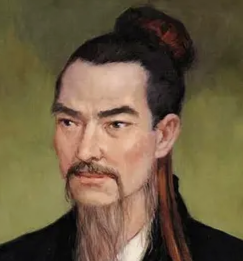
The purpose of the magnanimous is to be found in procuring benefits for the world and eliminating its calamities. ... Mutual attacks among states, mutual usurpation among houses, mutual injuries among individuals; the lack of grace and loyalty between ruler and ruled, the lack of affection and filial piety between father and son, the lack of harmony between elder and younger brothers - these are the major calamities in the world.
▼
Source
source
Book 4; Universal Love II

3 months 3 weeks ago
The friendship of one wise man is better than the friendship of a host of fools.
5 months 5 days ago
That which is desirable on its own account and for the sake of knowing it is more of the nature of wisdom than that which is desirable on account of its results.

2 months 2 weeks ago
The ancient world takes its stand upon the drama of the Universe, the modern world upon the inward drama of the Soul.
▼
Source
source
Ch. 9: "Science and Philosophy", p. 196
5 days ago
Cries rise up on every side. Who shouts? It is we who shout - the living, the dead, and the unborn. But at once we are crushed by fear, and we fall silent. And then we forget - out of laziness, out of habit, out of cowardice. But suddenly the Cry tears at our entrails once more, like an eagle. For the Cry is not outside us, it does not come from a great distance that we may escape it. It sits in the center of our hearts, and cries out. God shouts: "Burn your houses! I am coming! Whoever has a house cannot receive me! "Burn your ideas, smash your thoughts! Whoever has found the solution cannot find me."
2 months 2 weeks ago
Every intellectual revolution which has ever stirred humanity into greatness has been a passionate protest against inert ideas. Then, alas, with pathetic ignorance of human psychology, it has proceeded by some educational scheme to bind humanity afresh with inert ideas of its own fashioning.
3 months ago
No position is so false as having understood and still remaining alive.

3 months 4 weeks ago
A great prison structure was planned, whose different levels would correspond exactly to the levels of the centralized administration. The scaffold, where the body of the tortured criminal had been exposed to the ritually manifested force of the sovereign, the punitive theatre in which the representation of punishment was permanently available to the social body, was replaced by a great enclosed, complex and hierarchized structure that was integrated into the very body of the state apparatus.
▼
Source
source
Chapter Three, The Gentle Way in Punishment
CivilSimian.com created by AxiomaticPanic, CivilSimian, Kalokagathia