


2 months 1 day ago
Always put the best interpretation on a tenet. Why not on Christianity, wholesome, sweet, and poetic? It is the record of a pure and holy soul, humble, absolutely disinterested, a trutn-speaker, and bent on serving, teaching, and uplifting men. Christianity taught the capacity, the element, to Jove the All-perfect without a stingy bargain for personal happiness. It taught that to love him was happiness,-to love him in other's virtues.
3 weeks 1 day ago
The concept of guilt is found most powerfully developed even in the most primitive communal forms which we know: ... the man is guilty who violates one of the original laws which dominate the society and which are mostly derived from a divine founder; the boy who is accepted into the tribal community and learns its laws, which bind him thenceforth, learns to promise; this promise is often given under the sign of death, which is symbolically carried out on the boy, with a symbolical rebirth.
▼
Source
source
p. 178

2 months 2 weeks ago
Again and again our foe, religion, has given birth to deeds sinful and unholy.
▼
Source
source
Book I, lines 82-83 (tr. C. Bailey)


2 months 4 weeks ago
"The real saint", Baudelaire pretends to think, "is he who flogs and kills people for their own good." His argument will be heard. A race of real saints is beginning to spread over the earth for the purposes of confirming these curious conclusions about rebellion.

1 month 2 days ago
And having looked to Government for bread, on the very first scarcity they will turn and bite the hand that fed them.
3 weeks 3 days ago
Ideas are refined and multiplied in the commerce of minds. In their splendor, images effect a very simple communion of souls.
▼
Source
source
Introduction, sect. 4
1 month 6 days ago
The first promise exchanged by two beings of flesh was at the foot of a rock that was crumbling into dust; they took as witness for their constancy a sky that is not the same for a single instant; everything changed in them and around them, and they believed their hearts free of vicissitudes. O children! always children!

2 months 2 days ago
It is high time that Communists should openly, in the face of the whole world, publish their views, their aims, their tendencies, and meet this nursery tale of the spectre of Communism with a Manifesto of the party itself.
▼
Source
source
Preamble, paragraph 3.
2 months 1 day ago
Great men, great nations, have not been boasters and buffoons, but perceivers of the terror of life, and have manned themselves to face it.
▼
Source
source
Fate

1 month 2 days ago
Why count the days, when even one days is enough for a man to know all happiness?
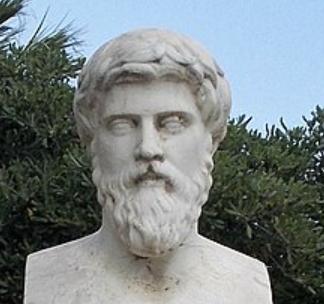
1 month 2 weeks ago
He said they that were serious in ridiculous matters would be ridiculous in serious affairs.
▼
Source
source
Cato the Elder

2 months 1 day ago
Societies are composed of individuals and are good only insofar as they help individuals to realize their potentialities and to lead a happy and creative life.
▼
Source
source
Chapter 3 (p. 20)

2 months 2 days ago
I am as firmly convinced that religions do harm as I am that they are untrue.

2 months 5 days ago
By the removal of the unnecessary mouths, and by extracting from the farmer the full value of the farm, a greater surplus, or what is the same thing, the price of a greater surplus, was obtained for the proprietor...
▼
Source
source
Chapter IV, p. 450 (On Highland Clearances).
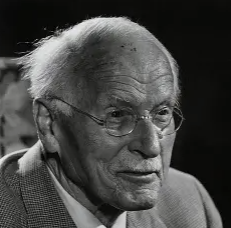
4 weeks ago
Seldom, or perhaps never, does a marriage develop into an individual relationship smoothly and without crises; there is no coming to consciousness without pain.
▼
Source
source
p. 193

1 month 3 weeks ago
Commit no lustfulness, so that harm and regret may not reach thee from thine own actions.
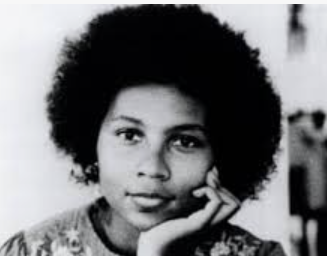
2 weeks 1 day ago
The fear of being alone, or of being unloved, had caused women of all races to passively accept sexism and sexist oppression.

1 month 3 weeks ago
We ought to regard the interests of the state as of far greater moment than all else, in order that they may be administered well; and we ought not to engage in eager rivalry in despite of equity, nor arrogate to ourselves any power contrary to the common welfare. For a state well administered is our greatest safeguard. In this all is summed up: When the state is in a healthy condition all things prosper; when it is corrupt, all things go to ruin.
3 weeks 2 days ago
Everything is what it is: liberty is liberty, not equality or fairness or justice or culture, or human happiness or a quiet conscience.

2 months 3 weeks ago
The wise is one only. It is unwilling and willing to be called by the name of Zeus.
3 weeks 6 days ago
With this as its basic constitution, civilization achieved things of which gentile society was not even remotely capable. But it achieved them by setting in motion the lowest instincts and passions in man and developing them at the expense of all his other abilities. From its first day to this, sheer greed was the driving spirit of civilization; wealth and again wealth and once more wealth, wealth, not of society, but of the single scurvy individual-here was its one and final aim. If at the same time the progressive development of science and a repeated flowering of supreme art dropped into its lap, it was only because without them modern wealth could not have completely realized its achievements.
▼
Source
source
The Origin of the Family, Private Property and the State (1884) as translated by Ernest Untermann (1902)
1 week 4 days ago
Nothing makes one old so quickly as the ever-present thought that one is growing older.
▼
Source
source
K 13
2 months 1 day ago
How significant is the enormous heightening, under mescalin, of the perception of color! ... Man's highly developed color sense is a biological luxury-inestimably precious to him as an intellectual and spiritual being, but unnecessary to his survival as an animal. ... Mescalin raises all colors to a higher power and makes the percipient aware of innumerable fine shades of difference, to which, at ordinary times, he is completely blind. It would seem that, for Mind at Large, the so-called secondary characters of things are primary.
▼
Source
source
describing his experiment with mescaline, pp. 26-27

1 month 6 days ago
The New Englander is attached to his township because it is strong and independent; he has an interest in it because he shares in its management; he loves it because he has no reason to complain of his lot; he invests his ambition and his future in it; in the restricted sphere within his scope, he learns to rule society; he gets to know those formalities without which freedom can advance only through revolutions, and becoming imbued with their spirit, develops a taste for order, understands the harmony of powers, and in the end accumulates clear, practical ideas about the nature of his duties and the extent of his rights.
▼
Source
source
Chapter V.

1 month 1 week ago
Obstinacy in a bad cause, is but constancy in a good.
▼
Source
source
Section 25

2 months 3 days ago
The king Frederic has sent me some of his dirty linen to wash; I will wash yours another time.
▼
Source
source
Reply to General Manstein. Voltaire writes to his niece Dennis, July 24, 1752, "Voilà le roi qui m'envoie son linge à blanchir"; reported in Bartlett's Familiar Quotations, 10th ed.,1919

6 months 1 week ago
If we merely wait for the appropriate moment we will never live to see it, because this [appropriate moment] cannot arrive without the subjective conditions of the maturity of the revolutionary force being fulfilled - it can only arrive after a series of failed attempts.
4 weeks ago
The conscious mind allows itself to be trained like a parrot, but the unconscious does not - which is why St. Augustine thanked God for not making him responsible for his dreams.
▼
Source
source
par. 51 p.46
2 months 2 days ago
Marriage is for women the commonest mode of livelihood, and the total amount of undesired sex endured by women is probably greater in marriage than in prostitution.

2 months 1 week ago
This world, the whole of the planet called earth, is the common country of all who live and breathe upon it.

2 months 1 week ago
God might grant us riches, honours, life, and even health, to our own hurt; for every thing that is pleasing to us is not always good for us. If he sends us death, or an increase of sickness, instead of a cure, Vvrga tua et baculus, tuus ipsa me consolata sunt. "Thy rod and thy staff have comforted me," he does it by the rule of his providence, which better and more certainly discerns what is proper for us than we can do; and we ought to take it in good part, as coming from a wise and most friendly hand.
▼
Source
source
Ch. 12

2 weeks 3 days ago
Might is that which makes a thing of anybody who comes under its sway. When exercised to the full, it makes a thing of man in the most literal sense, for it makes him a corpse.
▼
Source
source
in The Simone Weil Reader, p. 153
2 months ago
An intuitionist conception of justice is, one might say, but half a conception.
▼
Source
source
Chapter I, Section 8, pg. 41
4 weeks 1 day ago
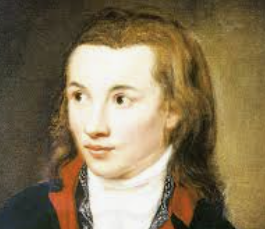
Morality must be the heart of our existence, if it is to be what it wants to be for us. ... The highest form of philosophy is ethics. Thus all philosophy begins with "I am." The highest statement of cognition must be an expression of that fact which is the means and ground for all cognition, namely, the goal of the I.
▼
Source
source
Fichte Studies § 556

3 weeks 6 days ago
Once man loses his faculty of indifference he becomes a potential murderer; once he transforms his idea into a god the consequences are incalculable. We kill only in the name of a god or of his counterfeits: the excesses provoked by the goddess Reason, by the concept of nation, class, or race are akin to those of the Inquisition or of the Reformation.
2 months 1 week ago
Wherever you encounter truth, look upon it as Christianity.
▼
Source
source
As quoted in Erasmus of Rotterdam (1934) by Stefan Zweig, Eden Paul, and Cedar Paul, p. 91; reprinted in Erasmus - The Right to Heresy (2008) by Stefan Zweig, p. 62

2 weeks ago
A screen bans reality.
2 weeks 3 days ago
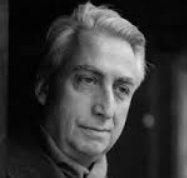
The bourgeoisie is defined as the social class which does not want to be named.
▼
Source
source
p. 138
4 days ago
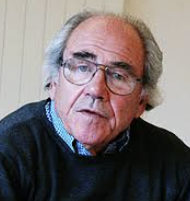
It is perhaps not a surprise that photography developed as a technological medium in the industrial age, when reality started to disappear. It is even perhaps the disappearance of reality that triggered this technical form. Reality found a way to mutate into an image.

2 months 3 days ago
There are, in every country, some magnificent charities established by individuals. It is, however, but little that any individual can do, when the whole extent of the misery to be relieved is considered. He may satisfy his conscience, but not his heart. He may give all that he has, and that all will relieve but little. It is only by organizing civilization upon such principles as to act like a system of pulleys, that the whole weight of misery can be removed.
▼
Source
source
Means by Which the Fund Is to Be Created
3 weeks 3 days ago
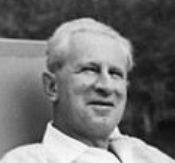
To the degree to which they correspond to the given reality, thought and behavior express a false consciousness, responding to and contributing to the preservation of a false order of facts. And this false consciousness has become embodied in the prevailing technical apparatus which in turn reproduces it.
▼
Source
source
p. 145
3 weeks 3 days ago
Hegel's theological discussion repeatedly asks what the true relation is between the individual man and a state that no longer satisfies his capacities but exists rather as an 'estranged' institution from which the active political interest of the citizens has disappeared. Hegel defined this state with almost the same categories as those of eighteenth century liberalism: the state rests on the consent of the individuals, it circumscribes their rights and duties and protects its members from those internal and external dangers that might threaten the perpetuation of the whole.
▼
Source
source
P. 32
1 month 2 days ago
He was not merely a chip of the old Block, but the old Block itself.
▼
Source
source
On Pitt's First Speech (26 February 1781), from Wraxall's Memoirs, First Series, vol. i. p. 342

2 months 5 days ago
The life of man is of no greater importance to the universe than that of an oyster.
▼
Source
source
On Suicide

2 months 1 week ago
Concerning the female sorcerer. Roman law also prescribes this. Why does the law name women more than men here, even though men are also guilty of this? Because women are more susceptible to those superstitions of Satan; take Eve, for example. They are commonly called "wise women." Let them be killed.
▼
Source
source
Sermon on Exodus, 1526, WA XVI, p. 551 as quoted in Luther on Women: A Sourcebook, edited by Susan C. Karant-Nunn, Merry E. Wiesner-Hanks, (2003), p. 231
3 weeks 6 days ago
When we cannot be delivered from ourselves, we delight in devouring ourselves.
2 months 5 days ago
In the long-run the workman may be as necessary to his master as his master is to him, but the necessity is not so immediate.
▼
Source
source
Chapter VIII, p. 80.
4 weeks ago
The meaning and design of a problem seem not to lie in its solution, but in our working at it incessantly.
▼
Source
source
p. 103
CivilSimian.com created by AxiomaticPanic, CivilSimian, Kalokagathia