Do unto others as you would have done to you.....says the sadistic, masochistic psychopath.


The first promise exchanged by two beings of flesh was at the foot of a rock that was crumbling into dust; they took as witness for their constancy a sky that is not the same for a single instant; everything changed in them and around them, and they believed their hearts free of vicissitudes. O children! always children!

A thing therefore never returns to nothing.
Cinema is an old whore, like circus and variety, who knows how to give many kinds of pleasure. Besides, you can't teach old fleas new dogs.
So that every Crime is a sinne; but not every sinne a Crime.

The shortest way to wealth is through the contempt of wealth.
There exists a species of transcendental ventriloquism by means of which men can be made to believe that something said on earth comes from Heaven.
There is no need for you to develop an armed insurrection. Christ himself has already begun an insurrection with his mouth.
The true discovery of America by mankind came when those first hunting bands crossed over from Siberia 25,000 years ago. This, however, never seems to count. When people speak of the "discovery of America" they invariably mean its discovery by Europeans.
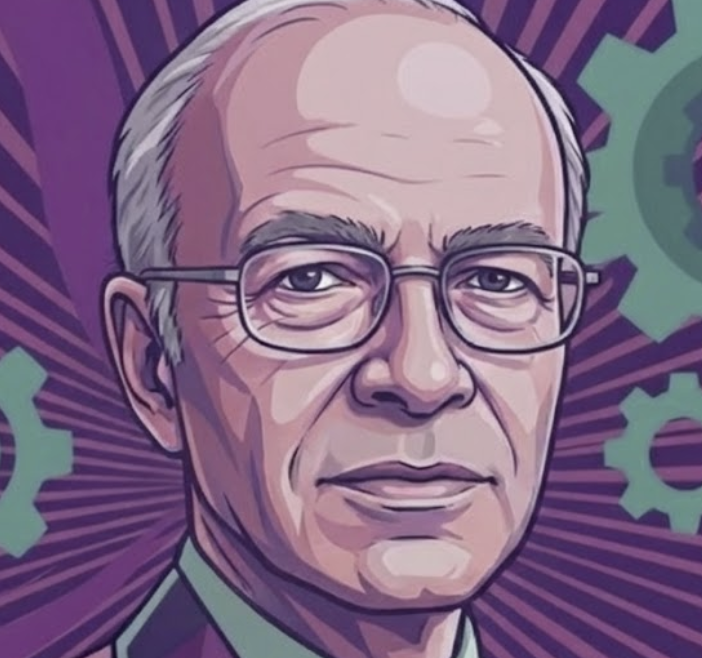
Herbert Spencer is little read now. Philosophers do not regard him as a major thinker.
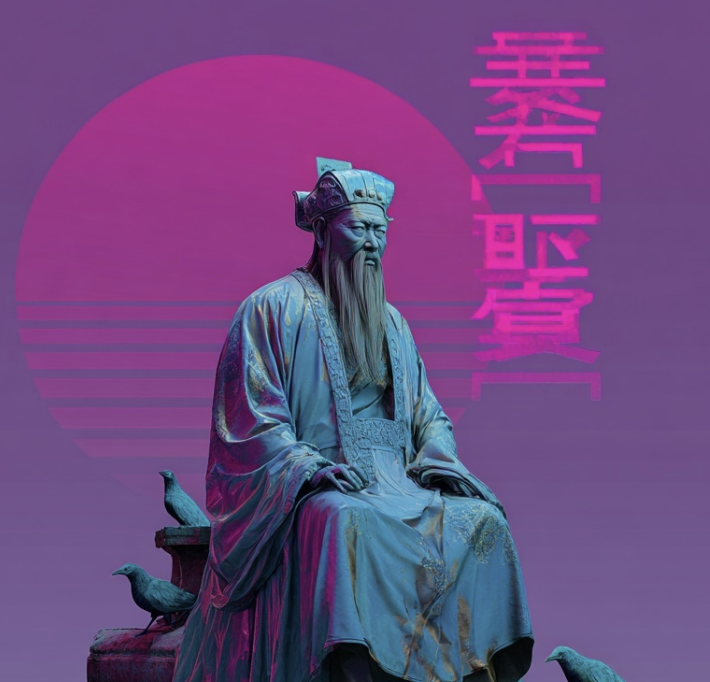
Men all say, "We are wise"; but being driven forward and taken in a net, a trap, or a pitfall, they know not how to escape. Men all say, "We are wise"; but happening to choose the course of the Mean, they are not able to keep it for a round month.

Pass by us, and forgive us our happiness.
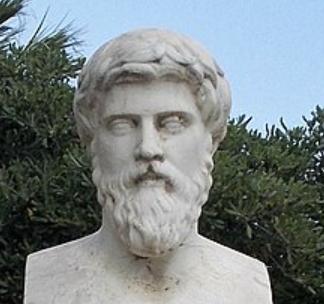
Alcibiades had a very handsome dog, that cost him seven thousand drachmas; and he cut off his tail, "that," said he, "the Athenians may have this story to tell of me, and may concern themselves no further with me."

I find that the best goodness I have has some tincture of vice.

Nature admits no lie.
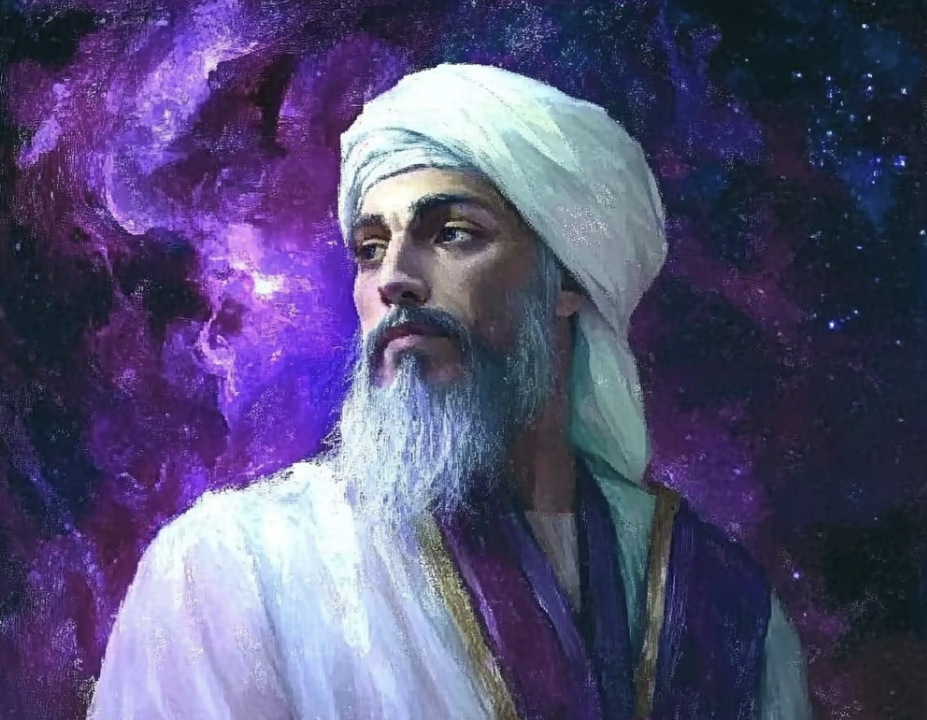
The world is divided into men who have wit and no religion and men who have religion and no wit.

"A man thinks he is dying for his country," said Anatole France, "but he is dying for a few industrialists." But even that is saying too much. What one dies for is not even so substantial and tangible as an industrialist.
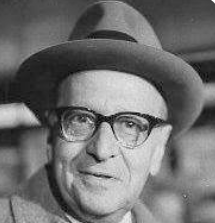
The significance of God, cause, number, substance or soul consists, as James asserts, in nothing but the tendency of the given concept to make us act or think. If the world should reach a point at which it ceases to care not only about such metaphysical entities but also about murders perpetrated behind closed frontiers or simply in the dark, one would have to conclude that the concepts of such murders have no meaning, that they represent no 'distinct ideas' or truths, since they do not make any 'sensible difference to anybody.

Societies have always been shaped more by the nature of the media by which humans communicate than by the content of the communication.

No pleasure is in itself evil, but the things which produce certain pleasures entail annoyances many times greater than the pleasures themselves.

Generally speaking there is no irreducible taste or inclination. They all represent a certain appropriative choice of being. It is up to existential psychoanalysis to compare and classify them. Ontology abandons us here; it has merely enabled us to determine the ultimate ends of human reality, its fundamental possibilities, and the value which haunts it.

They reckon ill who leave me out; When me they fly, I am the wings; I am the doubter and the doubt; And I the hymn the Brahmin sings.
Talents differ; all is well and wisely put; If I cannot carry forests on my back, Neither can you crack a nut.
Scientific theories can always be improved and are improved. That is one of the glories of science. It is the authoritarian view of the Universe that is frozen in stone and cannot be changed, so that once it is wrong, it is wrong forever.
Our responsibility is much greater than we might have supposed, because it involves all mankind.
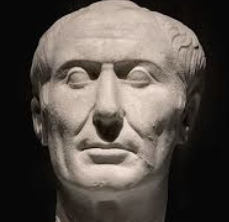
Let a fool hold his tongue and he will pass for a sage.

Consciousness, then, does not appear to itself chopped up in bits ... A 'river' or a 'stream' are the metaphors by which it is most naturally described. In talking of it hereafter, let us call it the stream of thought, of consciousness, or of subjective life.
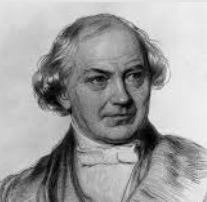
We collect individuals into 'kinds' by applying to them the Idea of Likeness.
Attention consists of suspending our thought, leaving it detached, empty, and ready to be penetrated by the object; it means holding in our minds, within reach of this thought, but on a lower level and not in contact with it, the diverse knowledge we have acquired which we are forced to make use of.
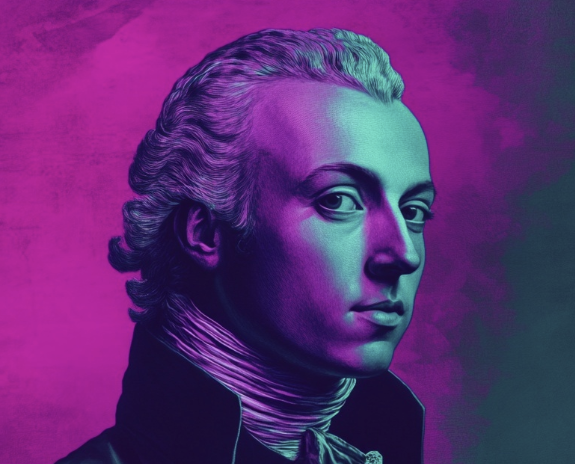
A public can only arrive at enlightenment slowly. Through revolution, the abandonment of personal despotism may be engendered and the end of profit-seeking and domineering oppression may occur, but never a true reform of the state of mind. Instead, new prejudices, just like the old ones, will serve as the guiding reins of the great, unthinking mass. All that is required for this enlightenment is freedom; and particularly the least harmful of all that may be called freedom, namely, the freedom for man to make public use of his reason in all matters. But I hear people clamor on all sides: Don't argue! The officer says: Don't argue, drill! The tax collector: Don't argue, pay! The pastor: Don't argue, believe!
If we want a love which will protect the soul from wounds we must love something other than God.
To SEE and accept the boundaries of the human mind without vain rebellion, and in these severe limitations to work ceaselessly without protest - this is where man's first duty lies.
Brothers, love is a teacher; but one must know how to acquire it, for it is hard to acquire, it is dearly bought, it is won slowly by long labour. For we must love not only occasionally, for a moment, but for ever. Everyone can love occasionally, even the wicked can.
If I compare arithmetic with a tree that unfolds upward into a multitude of techniques and theorems while its root drives into the depths, then it seems to me that the impetus of the root.
There are some defeats more triumphant than victories.
But let the individual man lay claim to ever so many rights because Man or the concept man 'entitles' him to them, because his being man does it: what do I care for his right and his claim? If he has his right only from Man and does not have it from me, then for me he has no right. His life, for example, counts to me only for what it is worth to me. I respect neither a so-called right of property (or his claim to tangible goods) nor yet his right to the 'sanctuary of his inner nature' (or his right to have the spiritual goods and divinities, his gods, remain un-aggrieved). His goods, the sensuous as well as the spiritual, are mine, and I dispose of them as proprietor, in the measure of my - might.
A real man is he whose goodness is a part of himself.
Yes, so it is that knowledge itself must die in order to blossom forth again in death as will; the freedom of thought, belief, and conscience, these wonderful flowers of three centuries will sink back into the lap of mother earth so that a new freedom, the freedom will, will be nourished with its most noble juices.

It might be plausibly maintained, that in almost every one of the leading controversies, past or present, in social philosophy, both sides were in the right in what they affirmed, though wrong in what they denied.

Philosophy hasn't made any progress?-If someone scratches where it itches, do we have to see progress? Is it not genuine scratching otherwise, or genuine itching?
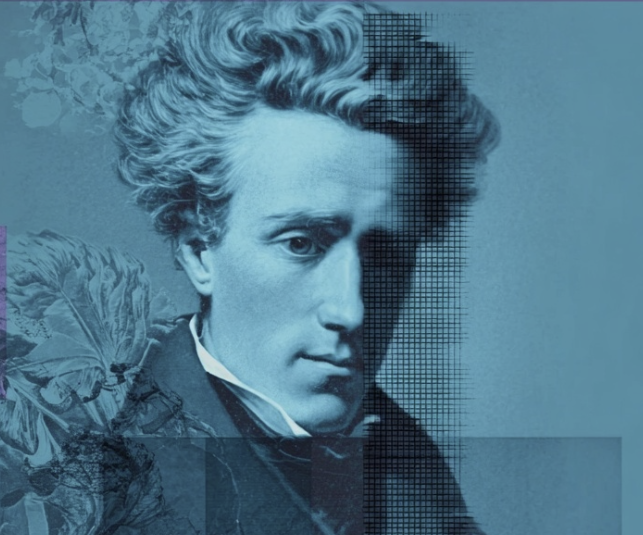
Irony limits, finitizes, and circumscribes and thereby yields truth, actuality, content; it disciplines and punishes and thereby yields balance and consistency.
True peace of mind comes from accepting the worst.
From fanaticism to barbarism is only one step.
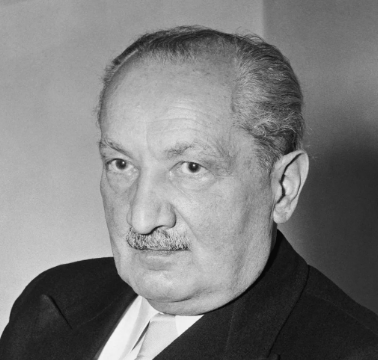
The most thought provoking thing in our thought provoking time is that we are still not thinking.
I would advise no one to send his child where the Holy Scriptures are not supreme. Every institution that does not unceasingly pursue the study of God's word becomes corrupt. Because of this we can see what kind of people they become in the universities and what they are like now. Nobody is to blame for this except the pope, the bishops, and the prelates, who are all charged with training young people. The universities only ought to turn out men who are experts in the Holy Scriptures, men who can become bishops and priests, and stand in the front line against heretics, the devil, and all the world. But where do you find that? I greatly fear that the universities, unless they teach the Holy Scriptures diligently and impress them on the young students, are wide gates to hell.
A spurious axiom of the first class is: Whatever is, is somewhere and sometime.
Just because emotion is essential to that act of expression which produces a work of art, it is easy for inaccurate analysis to misconceive its mode of operation and conclude that the work of art has emotion for its significant content. One may cry out with joy or even weep upon seeing a friend from whom one has been long separated. The outcome is not an expressive object -- save to the onlooker. But if the emotion leads one to gather material that is affiliated to the mood which is aroused, a poem may result. In the direct outburst, an objective situation is the stimulus, the cause, of the emotion. In the poem, objective material becomes the content and matter of the emotion, not just its evocative occasion.
Anyone who studies present and ancient affairs will easily see how in all cities and all peoples there still exist, and have always existed, the same desires and passions. Thus, it is an easy matter for him who carefully examines past events to foresee future events in a republic and to apply the remedies employed by the ancients, or, if old remedies cannot be found, to devise new ones based upon the similarity of the events. But since these matters are neglected or not understood by those who read, or, if understood, remain unknown to those who govern, the result is that the same problems always exist in every era.
CivilSimian.com created by AxiomaticPanic, CivilSimian, Kalokagathia