


1 month 3 weeks ago
To be good and lead a good life means to give to others more than one takes from them.
▼
Source
source
Ch. VII

4 months ago
Those that will combat use and custom by the strict rules of grammar do but jest.
3 months 6 days ago
Incorporeal hypostases, in descending, are distributed into parts, and multiplied about individuals with a diminution of power; but when they ascend by their energies beyond bodies, they become united, and proceed into a simultaneous subsistence, through exuberance of power.
2 months 5 days ago
Rituals are symbolic acts. They represent, and pass on, the values and orders on which a community is based. They bring forth a community without communication; today, however, communication without community prevails.

2 months 2 weeks ago
My mission is to suffer for all those who suffer without knowing it. I must pay for them, expiate their unconsciousness, their luck to be ignorant of how unhappy they are.

3 months 3 weeks ago
Acquisitiveness - the wish to possess as much as possible of goods, or the title to goods - is a motive which, I suppose, has its origin in a combination of fear with the desire for necessaries.

2 months 1 week ago
But our Don Quixote, the inward, the immortal Don Quixote, conscious of his own comicness, does not believe that his doctrines will triumph in this world, because they are not of it. And it is better that they should not triumph. And if the world wished to make Don Quixote king, he would retire alone to the mountain, fleeing from the king-making crowds, as Christ retired alone to the mountain when, after the miracle of the loaves and fishes, they sought to proclaim him king. He left the title of king for the inscription written over the cross.
2 months 5 days ago
Emptiness empties the one seeing into what is seen.
2 months 2 weeks ago
The wrinkles of a nation are as visible as those of an individual.

3 months 3 weeks ago
The first premise of all human history is, of course, the existence of living human individuals. Thus the first fact to be established is the physical organisation of these individuals and their consequent relation to the rest of nature.
▼
Source
source
Volume I; Part 1; "Feuerbach. Opposition of the Materialist and Idealist Outlook"; Section A, "Idealism and Materialism".

2 months 1 week ago
Nothing is more impressive than the fact that as mathematics withdrew increasingly into the upper regions of ever greater extremes of abstract thought, it returned back to earth with a corresponding growth of importance for the analysis of concrete fact. ...The paradox is now fully established that the utmost abstractions are the true weapons with which to control our thought of concrete fact.
▼
Source
source
Ch. 2: "Mathematics as an Element in the History of Thought", p. 46

3 months 3 weeks ago
At present we are on the outside of the world, the wrong side of the door. We discern the freshness and purity of the morning, but they do not make us fresh and pure. We cannot mingle with the splendours we see. But all the leaves of the New Testament are rustling with the rumour that it will not always be so. Some day, God willing, we shall get in.
2 months 2 weeks ago
There can be no movement toward a consummating close unless there is a progressive massing of values, a cumulative effect. This result cannot exist without conservation of the import of what has gone before. Moreover, to secure the needed continuity, the accumulated experience must be such as to create suspense and anticipation of resolution. Accumulation is at the same time preparation, as with each phase of the growth of a living embryo. Only that is carried on which is led to; otherwise there is arrest and a break. For this reason consummation is relative; instead of occurring once for all at a given point, it is recurrent. The final end is anticipated by rhythmic pauses, while that end is final only in an external way. For as we turn from reading a poem or novel or seeing a picture the effect presses forward in further experiences, even if only subconsciously.
▼
Source
source
p. 143
3 months 3 weeks ago
India has always been an object of yearning, a realm of wonder, a world of magic... India is the land of dreams. India had always dreamt - more of the Bliss that is man's final goal. And this has helped India to be more creative in history than any other nation. Hence the effervescence of myths and legends, religious and philosophies, music, and dances and the different styles of architecture." ...
▼
Source
source
quoted in Patri, Umesh Hindu scriptures and American transcendentalists 1st ed. quoted from Londhe, S. (2008).
3 months 3 weeks ago
The product of labour is labour which has been congealed in an object, which has become material: it is the objectification of labour. Labour's realization is its objectification.
▼
Source
source
p. 71, The Marx-Engels Reader
3 days ago
Not one of us knows what effect his life produces, and what he gives to others; that is hidden from us and must remain so, though we are often allowed to see some little fraction of it, so that we may not lose courage.
▼
Source
source
p. 164
3 months 1 week ago
What is to prevent one from telling truth as he laughs, even as teachers sometimes give cookies to children to coax them into learning their A B C?
▼
Source
source
Book I, satire i, line 24 (translation by H. Fairclough)

1 week 6 days ago
"A fair day's wages for a fair day's work": it is as just a demand as governed men ever made of governing. It is the everlasting right of man.
▼
Source
source
Bk. I, ch. 3.
1 month 1 day ago
Money is everywhere but so is poetry. What we lack are the poets.
▼
Source
source
Poets
2 months 1 week ago
Man, if he is to remain man, must advance by way of consciousness. There is no road leading backward. ... We can no longer veil reality from ourselves by renouncing self-consciousness without simultaneously excluding ourselves from the historical course of human existence.
3 months 3 weeks ago
The external embodiment of an act is composed of many parts, and may be regarded as capable of being divided into an infinite number of particulars. An act may be looked on as in the first instance coming into contact with only one of these particulars. But the truth of the particular is the universal. A definite act is not confined in its content to one isolated point of the varied external world, but is universal, including these varied relations within itself. The purpose, which is the product of thought and embraces not the particular only but also the universal side, is intention.
▼
Source
source
Georg Wilhelm Friedrich Hegel, Philosophy of Right translated by SW Dyde Queen's University Canada 1896 p. 114-115
2 months 1 week ago
Pragmatism ... reflects with almost disarming candor the spirit of the prevailing business culture, the very same attitude of 'being practical' as counter to which philosophical meditation as such was conceived.
▼
Source
source
p. 52.

1 month 3 weeks ago
There is one ethical principle, either you are preserving life generally, or you aren't. Preserving life in your ends and your means determines whether you are good or evil.

2 months 2 weeks ago
Sociology does not 'negate' philosophy, in the sense of taking over the hidden content of philosophy and carrying it into social theory and practice, but sets itself up as a realm apart from philosophy, with a province and truth of its own. Comte is rightly held to be the inaugurator of this separation between philosophy and sociology.
▼
Source
source
P. 375
2 days ago
Time is the primitive form of the stream of consciousness. ...If we project ourselves outside the stream of consciousness and represent its content as an object, it becomes an event happening in time, the separate stages of which stand to one another in the relations of earlier and later.
▼
Source
source
Introduction
4 months 3 weeks ago
Therefore only an utterly senseless person can fail to know that our characters are the result of our conduct.
1 month 1 week ago
Nothing is so galling to a people not broken in from the birth, as a paternal, or, in other words, a meddling government, a government which tells them what to read, and say, and eat, and drink, and wear.
▼
Source
source
p. 252
Just now
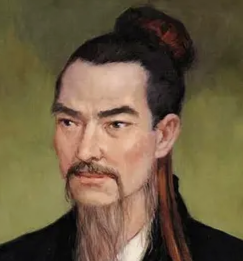
When feudal lords love one another there will be no more war; when heads of houses love one another there will be no more mutual usurpation; when individuals love one another there will be no more mutual injury. When ruler and ruled love each other they will be gracious and loyal; when father and son love each other they will be affectionate and filial; when older and younger brothers love each other they will be harmonious. When all the people in the world love one another, then the strong will not overpower the weak, the many will not oppress the few, the wealthy will not mock the poor, the honoured will not disdain the humble, and the cunning will not deceive the simple. And it is all due to mutual love that calamities, strife, complaints, and hatred are prevented from arising. Therefore the benevolent exalt it.
▼
Source
source
Book 4; Universal Love II
2 weeks ago
Most precious are the people; next come the spirits of land and grain; and last, the kings.
▼
Source
source
7B:14.

3 months 3 weeks ago
Society can and does execute its own mandates: and if it issues wrong mandates instead of right, or any mandates at all in things with which it ought not to meddle, it practises a social tyranny more formidable than many kinds of political oppression, since, though not usually upheld by such extreme penalties, it leaves fewer means of escape, penetrating much more deeply into the details of life, and enslaving the soul itself. Protection, therefore, against the tyranny of the magistrate is not enough: there needs protection also against the tyranny of the prevailing opinion and feeling; against the tendency of society to impose, by other means than civil penalties, its own ideas and practices as rules of conduct on those who dissent from them; to fetter the development, and, if possible, prevent the formation, of any individuality not in harmony with its ways, and compel all characters to fashion themselves upon the model of its own.
▼
Source
source
Ch. 1: Introductory
3 months 3 weeks ago
Alike in the highest regions of speculation and in the smaller practical concerns of daily life, her mind was the same perfect instrument, piercing to the very heart and marrow of the matter; always seizing the essential idea or principle. The same exactness and rapidity of operation, pervading as it did her sensitive as well as her mental faculties, would, with her gifts of feeling and imagination, have fitted her to be a consummate artist, as her fiery and tender soul and her vigorous eloquence would certainly have made her a great orator, and her profound knowledge of human nature and discernment and sagacity in practical life, would, in the times when such a carrière was open to women, have made her eminent among the rulers of mankind. Her intellectual gifts did but minister to a moral character at once the noblest and the best balanced which I have ever met with in life.
▼
Source
source
(pp. 186-187)
3 months 1 week ago
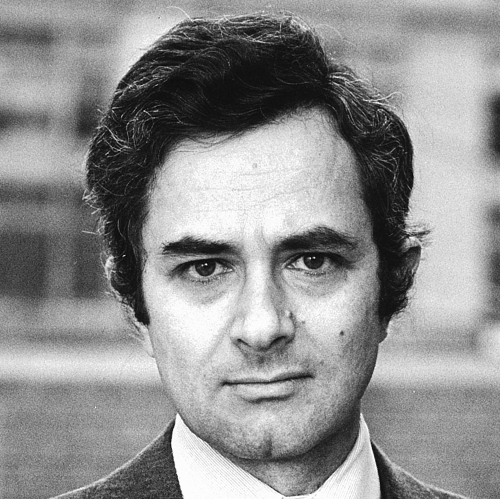
All of us, I believe, are fortunate to have been born.
▼
Source
source
"Death" (1970), p. 7.
2 weeks 1 day ago
It would be silly, of course, to be either 'for' or 'against' modernity tout court, not only because it is pointless to try to stop the development of technology, science, and economic rationality, but because both modernity and antimodernity may be expressed in barbarous and antihuman terms.
▼
Source
source
"Modernity on Endless Trial"

3 months 3 weeks ago
Our minds thus grow in spots; and like grease-spots, the spots spread. But we let them spread as little as possible: we keep unaltered as much of our old knowledge, as many of our old prejudices and beliefs, as we can. We patch and tinker more than we renew. The novelty soaks in; it stains the ancient mass; but it is also tinged by what absorbs it.
▼
Source
source
Lecture V, Pragmatism and Common Sense
3 months 3 weeks ago
Not only must philosophy be in agreement with our empirical knowledge of Nature, but the origin and formation of the Philosophy of Nature presupposes and is conditioned by empirical physics. However, the course of a science's origin and the preliminaries of its construction are one thing, while the science itself is another. In the latter, the former can no longer appear as the foundation of the science; here, the foundation must be the necessity of the Concept.
3 months 3 weeks ago
Being in love is a good thing, but it is not the best thing. There are many things below it, but there are also things above it. You cannot make it the basis of a whole life. It is a noble feeling, but it is still a feeling... Knowledge can last, principles can last, habits can last; but feelings come and go... But, of course, ceasing to be "in love" need not mean ceasing to love. Love in this second sense-love as distinct from "being in love"-is not merely a feeling. It is a deep unity, maintained by the will and deliberately strengthened by habit; reinforced by (in Christian marriages) the grace which both partners ask, and receive, from God... "Being in love" first moved them to promise fidelity: this quieter love enables them to keep the promise. It is on this love that the engine of marriage is run: being in love was the explosion that started it.
▼
Source
source
Book III, Chapter 6, "Christian Marriage"
2 months 2 weeks ago
Operational analysis ... cannot raise the decisive question whether the consent itself was not the work of manipulation-a question for which the actual state of affairs provides ample justification. The analysis cannot raise it because it would transcend its terms toward transitive meaning-toward a concept of democracy which would reveal the democratic election as a rather limited democratic process. Precisely such a non-operational concept is the one rejected by the authors as "unrealistic" because it defines democracy on too articulate a level as the clear-cut control of representation by the electorate-popular control as popular sovereignty.
▼
Source
source
p. 116

4 months 1 day ago
I could not be true and constant to the argument I handle, if I were not willing to go beyond others; but yet not more willing than to have others go beyond me again: which may the better appear by this, that I have propounded my opinions naked and unarmed, not seeking to preoccupate the liberty of men's judgments by confutations.
▼
Source
source
Book II
4 months 1 week ago
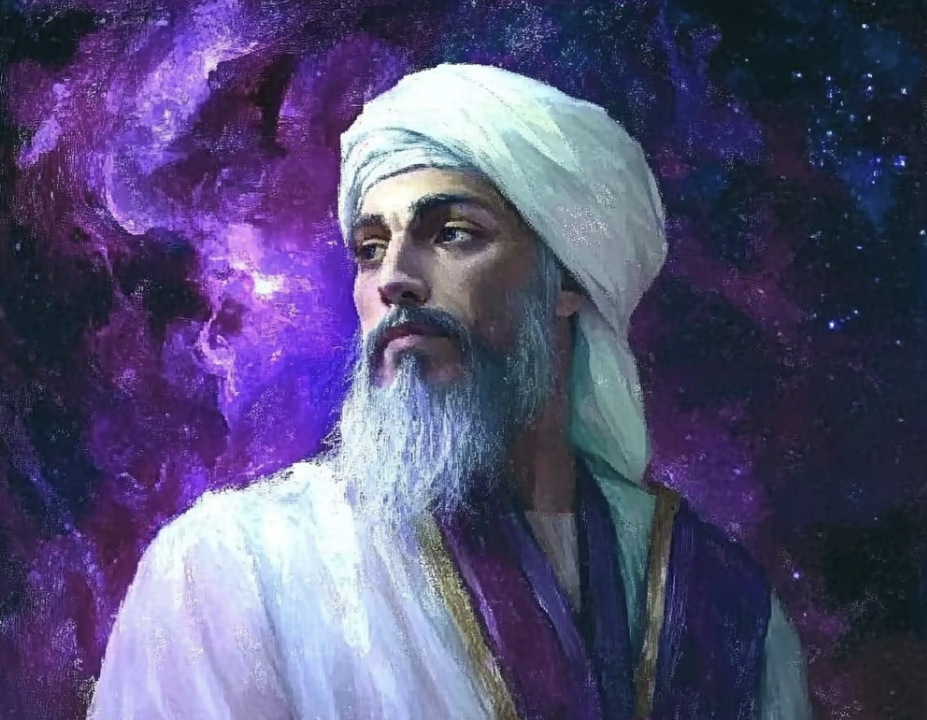
The knowledge of anything, since all things have causes, is not acquired or complete unless it is known by its causes. Therefore in medicine we ought to know the causes of sickness and health. And because health and sickness and their causes are sometimes manifest, and sometimes hidden and not to be comprehended except by the study of symptoms, we must also study the symptoms of health and disease. Now it is established in the sciences that no knowledge is acquired save through the study of its causes and beginnings, if it has had causes and beginnings; nor completed except by knowledge of its accidents and accompanying essentials. Of these causes there are four kinds: material, efficient, formal, and final.
2 months 1 week ago
We must needs believe with faith, whatever counsels reason may give us, that in the depths of our own bodies, in animals, in plants, in rocks, in everything that lives, in all the Universe, there is a spirit that strives to know itself, to acquire consciousness of itself, to be itself - for to be oneself is to know oneself - to be pure spirit; and since it can only achieve this by means of the body, by means of matter, it creates and makes use of matter at the same time that it remains a prisoner of it.

1 week ago
But the wise man is fortified against all inroads; he is alert; he will not retreat before the attack of poverty, or of sorrow, or of disgrace, or of pain. He will walk undaunted both against them and among them.
3 months 3 weeks ago
People will tell us that without the consolations of religion they would be intolerably unhappy. So far as this is true, it is a coward's argument. Nobody but a coward would consciously choose to live in a fool's paradise. When a man suspects his wife of infidelity, he is not thought the better of for shutting his eyes to the evidence. And I cannot see why ignoring evidence should be contemptible in one case and admirable in the other.
▼
Source
source
"Is There a God?", 1952

3 months 3 weeks ago
"Everything is both a trap and a display; the secret reality of the object is what the Other makes of it."

2 months 2 days ago
The most perfect ape cannot draw an ape; only man can do that; but, likewise, only man regards the ability to do this as a sign of superiority.
▼
Source
source
J 115
1 month 3 weeks ago
Not only does reality resist those who still criticize it, but it also abandons those who defend it. Maybe it is a way for reality to get its revenge from those who claim to believe in it for the sole purpose of eventually transforming it: sending back its supporters to their own desires.
3 months 3 weeks ago
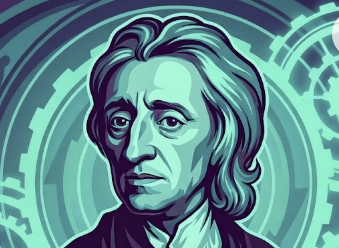
Government has no other end than the preservation of property.
▼
Source
source
Second Treatise of Government, Ch. VII. sec. 94
3 months 3 weeks ago
A genuine first-hand religious experience like this is bound to be a heterodoxy to its witnesses, the prophet appearing as a mere lonely madman. If his doctrine prove contagious enough to spread to any others, it becomes a definite and labeled heresy. But if it then still prove contagious enough to triumph over persecution, it becomes itself an orthodoxy; and when a religion has become an orthodoxy, its day of inwardness is over: the spring is dry; the faithful live at second hand exclusively and stone the prophets in their turn. The new church, in spite of whatever human goodness it may foster, can be henceforth counted on as a staunch ally in every attempt to stifle the spontaneous religious spirit, and to stop all later bubblings of the fountain from which in purer days it drew its own supply of inspiration.
▼
Source
source
Lectures XIV and XV, "The Value of Saintliness"
2 months 4 days ago
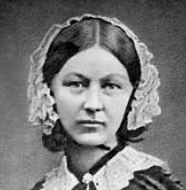
I have had a larger responsibility of human lives than ever man or woman had before. And I attribute my success to this - I never gave or took an excuse. Yes, I do see the difference now between me and other men. When a disaster happens, I act and they make excuses.
▼
Source
source
Letter to Miss H. Bonham Carter, 1861. As quoted in The Gigantic Book of Teachers' Wisdom (2007) by Frank McCourt and Erin Gruwell, p. 410
3 months 3 weeks ago
I resolved from the beginning of my quest that I would not be misled by sentiment and desire into beliefs for which there was no good evidence.
▼
Source
source
Fact and Fiction (1961), Part I, Ch. 6: "The Pursuit of Truth", p. 37

2 months 4 weeks ago
I could never divide myself from any man upon the difference of an opinion, or be angry with his judgement for not agreeing with me in that, from which perhaps within a few days I should dissent myself.
▼
Source
source
Section 6
CivilSimian.com created by AxiomaticPanic, CivilSimian, Kalokagathia