


3 months 3 weeks ago
Christian philosophers have found no difficulty in justifying imperialism, war, the capitalist system, the use of torture, the censorship of the press and ecclesiastical tyrannies of every sort, from the tyranny of Rome to the tyrannies of Geneva and New England.
▼
Source
source
Ch. 14, p. 315 [2012 reprint]

3 months 3 weeks ago
Love in animals, has not for its only object animals of the same species, but extends itself farther, and comprehends almost every sensible and thinking being. A dog naturally loves a man above his own species, and very commonly meets with a return of affection.
▼
Source
source
Part 2, Section 12

2 months 1 week ago
When, as a result of what was called Enlightenment in the eighteenth century, the priests had in fact almost entirely lost this function of guidance. Their place was taken by writers and scientists. In both cases it is equally absurd. Mathematics, physics, and biology are as remote from spiritual guidance as the art of arranging words. When that function is usurped by literature and science it proves there is no longer any spiritual life.
▼
Source
source
"Morality and literature," pp. 164-165

2 months 1 week ago
Not to be loved is a misfortune, but it is an insult to be loved no longer.
▼
Source
source
No. 3. (Zachi writing to Usbek)


3 months 3 weeks ago
Theologian: But what is to love? Philosopher: To be delighted by the happiness of another.
▼
Source
source
Confessio philosophi, 1673

4 months 3 weeks ago
What, exactly, have the errors of exegesis and philosophy done in order to confuse Christianity, and how have they confused Christianity? Quite briefly and categorically, they have simply forced back the sphere of paradox-religion into the sphere of aesthetics, and in consequence have succeeded in brings Christian terminology to such a pass that terms which, so long as they remain within their sphere, are qualitative categories, can be put to almost any use as clever expressions.

3 months 3 weeks ago
Criminals together. We're in hell, my little friend, and there's never any mistake there. People are not damned for nothing. Act 1, sc. 5 Variant translation: Among murderers. We are in hell, my dear, there is never a mistake and people are not damned for nothing.

3 months 2 weeks ago
The problem is not to discover in oneself the truth of one's sex, but, rather, to use one's sexuality henceforth to arrive at a multiplicity of relationships. And, no doubt, homosexuality is not a form of desire but something desirable. Therefore, we have to work at becoming homosexuals.
▼
Source
source
"Friendship as a Way of Life," interview in Gai pied, April 1981, as translated in Ethics, Subjectivity and Truth (1994), pp. 135-136
1 month 1 week ago
We hold that the most wonderful and splendid proof of genius is a great poem produced in a civilized age.
▼
Source
source
p. 5
4 months 3 weeks ago
How absurd men are! They never use the liberties they have, they demand those they do not have. They have freedom of thought, they demand freedom of speech. Either/Or Part I, Swenson Translation p. 19 Variations include: People demand freedom of speech to make up for the freedom of thought, which they avoid. People demand freedom of speech as a compensation for the freedom of thought which they seldom use.

2 months 4 weeks ago
The Universe is one, infinite, immobile. The absolute potential is one, the act is one, the form or soul is one, the material or body is one, the thing is one, the being in one, one is the maximum and the best... It is not generated, because there is no other being it could desire or hope for, since it comprises all being. It does not grow corrupt. because there is nothing else into which it could change, given that it is itself all things. It cannot diminish or grow, since it is infinite.
▼
Source
source
As translated by Paul Harrison

2 weeks 4 days ago
Philosophy is not the owl of Minerva that takes flight after history has been realized in order to celebrate its happy ending; rather, philosophy is subjective proposition, desire, and praxis that are applied to the event.
▼
Source
source
49

2 months 6 days ago
Another response to racism has been the establishment of unlearning racism workshops, which are often led by white women. These workshops are important, yet they tend to focus primarily on cathartic individual psychological personal prejudice without stressing the need for corresponding change in political commitment and action. A woman who attends an unlearning racism workshop and learns to acknowledge that she is racist is no less a threat than one who does not. Acknowledgment of racism is significant when it leads to transformation.
3 months 2 weeks ago
What all these people are doing is not aggressive; they are inventing new possibilities of pleasure with strange parts of their body - through the eroticization of the body. I think it's ... a creative enterprise, which has as one of its main features what I call the desexualization of pleasure.
▼
Source
source
In reference to Sadism and Masochism, as quoted in Who's Who in Contemporary Gay & Lesbian History: From World War II to the Present Day (2001) by Robert Aldrich and Gary Wotherspoon

3 months 2 weeks ago
With a few glorious and glaring exceptions, the shadow of Jim Crow was cast in its new glittering form expressed in the language of superficial diversity... The disarray of a scattered curriculum, the disenchantment of talented yet deferential faculty, and the disorientation of precious students loom large... To witness a faculty enthusiastically support a candidate for tenure then timidly defer to a rejection based on the Harvard administration's hostility to the Palestinian cause was disgusting... We all know the mendacious reasons given had nothing to do with academic standards... This kind of narcissistic academic professionalism, cowardly deference to the anti-Palestinian prejudices of the Harvard administration, and indifference to my Mother's death constitutes an intellectual and spiritual bankruptcy of deep deaths...
▼
Source
source
Quoted in Civil rights activist Cornel West resigns from Harvard, By Jackie Salo, New York Post, July 13, 2021

2 months 2 weeks ago
When you know that every problem is only a false problem, you are dangerously close to salvation.

2 months 3 weeks ago
The weapon of the Republic is terror, and virtue is its strength.
▼
Source
source
Act I.
1 month 2 weeks ago
Decisive actions are often taken in a moment and without any conscious deliverance from the rational parts of man.
▼
Source
source
The Rajah's Diamond, Story of the Young Man in Holy Orders.
2 months 1 week ago
When language is used without true significance, it loses its purpose as a means of communication and becomes an end in itself.

1 month 2 weeks ago
Electricity does not centralize, but decentralizes.
▼
Source
source
(p. 36)
2 months 2 weeks ago
We must suffer to the end, to the moment when we stop believing in suffering.
1 month 2 weeks ago
Media, by altering the environment, evoke in us unique ratios of sense perception...When these ratios change, men change.

2 months 1 day ago
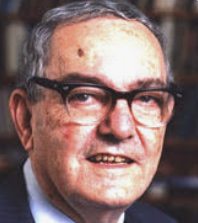
The capacity of the human mind for formulating and solving complex problems is very small compared with the size of the problems whose solution is required for objectively rational behavior in the real world-or even for a reasonable approximation to such objective rationality.
▼
Source
source
p. 198; Cited in: P. Slovic (1972) From Shakespeare to Simon: Speculations - And Some Evidence About Man's Ability to Process Information. Oregon Research Institute Monograph, 1972. p. 1.

2 months 5 days ago
The central fact for me is, I think, that the [role of the] intellectual ... cannot be played without a sense of being someone whose place it is publicly to raise embarrassing questions, to confront orthodoxy and dogma (rather than to produce them), to be someone who cannot easily be co-opted by governments or corporations, and whose raison d'être is to represent all those people and issues that are routinely forgotten or swept under the rug. Representation of the Intellectual
▼
Source
source
1994

1 month 3 weeks ago
People hate it when they're tickled because laughter is not pleasant, if it goes on too long. I think it's a desperate sort of convulsion in desperate circumstances, which helps a little.
▼
Source
source
Interview Public Radio International

4 months 1 week ago
The confession of evil works is the first beginning of good works.
▼
Source
source
Tractates on the Gospel of John; tractate XII on John 3:6-21, and 13
2 months 2 weeks ago
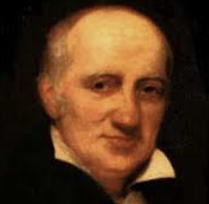
Till mankind be satisfied with the naked statement of what they really perceive, till they confess virtue to be then most illustrious, when she more disdains the aid of ornament, they will never arrive at that manly justice of sentiment at which they seem destined one day to arrive. By his scheme of naked virtue will be every day a gainer; every succeeding observer willl more fully do her justice, while vice, deprived of that varnish with which she delighted to glow her actions of that gaudy exhibition which may be made alike by every pretender will speedily sink into unheeded contempt.
▼
Source
source
Book V, Chapter 12, "Of Titles"

1 week ago
See the foundations of the most celebrated cities hardly now to be discerned; they were ruined by anger. See deserts extending for many miles without an inhabitant: they have been desolated by anger.
1 week ago
Armies have endured all manner of want, have lived on roots, and have resisted hunger by means of food too revolting to mention. All this they have suffered to gain a kingdom, and-what is more marvellous-to gain a kingdom that will be another's. Will any man hesitate to endure poverty, in order that he may free his mind from madness?
1 month 2 weeks ago
Nothing like a little judicious levity.
▼
Source
source
The Wrong Box, ch. 7 (1889).

4 months ago
Now when God sends forth his holy Gospel, He deals with us in a twofold manner, the first outwardly, then inwardly. Outwardly he deals with us through the oral word of the Gospel and through material sings, that is, baptism adndthe sacrament of the altar. Inwardly He deals with us through the Holy spirit, faith, and other gifts. But whatever their measure of order the outward factors should and must procede. The inward experience follows and is effected by the outward. God has determined to give the inward to no one except through the outward.
▼
Source
source
Luthers Works, 40 p. 146 as quoted in Against the Idols: The Reformation of Worship from Erasmus to Calvinby Carlos M. N. Eire, p. 72
4 months 3 weeks ago
If the ethical, that is, social morality is the highest ... then no categories are needed other than the Greek philosophical categories.

4 weeks 1 day ago
Against the many Russian thinkers influenced by Hegel who believed that history was governed by universal laws to which one could only submit, Turgenev upheld the freedom of different societies to pursue different paths of development and of individuals to pursue, even in opposition to powerful historical forces, their own goals and values. Here Turgenev endorsed the celebrated dictum of Alexander Herzen, with whom he disagreed on other matters: that history has no libretto. Human history is a realm of contingency and unpredictability, in which each generation faces conflicts that have no ideal solution.
▼
Source
source
'Isaiah Berlin: The Value of Decency' (p.105)
1 month 2 weeks ago
Omnipresence has become an ordinary human dimension.

2 months 2 weeks ago
Ever since the first World War, when the system of liberalism began to shape into the system of authoritarianism, a widespread opinion has blames Hegelianism for the ideological of the new system.
▼
Source
source
P. 390
3 days ago
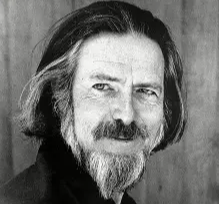
This mysterious something has been called God, the Absolute, Nature, Substance, Energy, Space, Ether, Mind, Being, the Void, the Infinite-names and ideas which shift in popularity and respectabilitywith the winds of intellectual fashion, of considering the universe intelligent or stupid, superhuman or subhuman, specific or vague. All of them might be dismissed as nonsense-noises if the notion of an underlying Ground of Being were no more than a product of intellectual speculation. But these names are often used to designate the content of a vivid and almost sensorily concrete experience-the "unitive" experience of the mystic, which, with secondary variations, is found in almost all cultures at all times. This experience is the transformed sense of self which I was discussing in the previous chapter, though in "naturalistic" terms, purified of all hocus-pocus about mind, soul, spirit, and other intellectually gaseous words.
▼
Source
source
p. 104-105
2 months 1 week ago
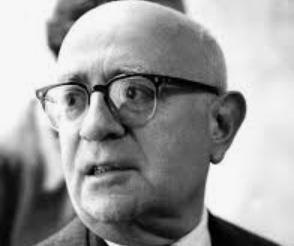
Fear and destructiveness are the major emotional sources of fascism, eros belongs mainly to democracy.
▼
Source
source
The Authoritarian Personality (1950), p. 976, co-written with Else Frenkel-Brunswik, Daniel Levinson, and Nevitt Sanford

2 weeks ago
The superior man has three things in which he delights, and to be ruler over the kingdom is not one of them. That his father and mother are both alive, and that the condition of his brothers affords no cause for anxiety;-this is one delight. That, when looking up, he has no occasion for shame before Heaven, and, below, he has no occasion to blush before men;-this is a second delight. That he can get from the whole kingdom the most talented individuals, and teach and nourish them;-this is the third delight.
▼
Source
source
7A:20, as translated by James Legge in The Chinese Classics, Vol. II (1861), p. 335

2 months 2 weeks ago
Have ye not read what David did, when he was an hungred, and they that were with him; How he entered into the house of God, and did eat the shewbread, which was not lawful for him to eat, neither for them which were with him, but only for the priests? Or have ye not read in the law, how that on the sabbath days the priests in the temple profane the sabbath, and are blameless? But I say unto you, That in this place is one greater than the temple. But if ye had known what this meaneth, I will have mercy, and not sacrifice, ye would not have condemned the guiltless.
▼
Source
source
For the Son of man is Lord even of the sabbath day. 12:3-8 (KJV) Said to some Pharisees.

2 months 4 days ago
Jesus Christ raised women above the condition of mere slaves, mere ministers to the passions of the man, raised them by His sympathy, to be Ministers of God. He gave them moral activity. But the Age, the World, Humanity, must give them the means to exercise this moral activity, must give them intellectual cultivation, spheres of action.

Just now
Although our case is different from that of ascetics who remove themselves from the world, the situation of the latest technological civilization might offer the incentive for commitments of this kind. In a large city, in mass society, among the almost unreal swarming of faceless beings, an essential sense of isolation or of detachment often occurs naturally, perhaps even more than in the solitude of moors and mountains.
▼
Source
source
p. 121

1 month 2 weeks ago
The judge is condemned when the guilty is absolved.
▼
Source
source
Maxim 407 Adopted by the original Edinburgh Review magazine as its motto.
1 day ago
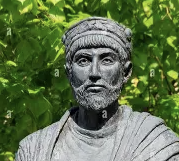
But let us now dismiss these poetical fictions; because with what is divine they have mingled much of human alloy; and let us now consider what the deity has declared concerning himself and the other gods. The region surrounding the Earth has its existence in virtue of birth. From whom then does it receive its eternity and imperishability, if not from him who holds all things together within defined limits, for it is impossible that the nature of bodies (material) should be without a limit, inasmuch as they cannot dispense with a Final Cause, nor exist through themselves.

4 months 3 weeks ago
In cases of this sort, let us say adultery, rightness and wrongness do not depend on committing it with the right woman at the right time and in the right manner, but the mere fact of committing such action at all is to do wrong.
2 weeks 2 days ago
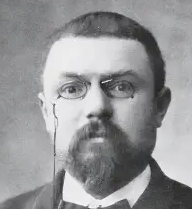
Does the harmony the human intelligence thinks it discovers in nature exist outside of this intelligence? No, beyond doubt, a reality completely independent of the mind which conceives it, sees or feels it, is an impossibility. A world as exterior as that, even if it existed, would for us be forever inaccessible.


1 month 3 weeks ago
The Quakers sent me books, from which I learnt how they had, years ago, established beyond doubt the duty for a Christian of fulfilling the command of non-resistance to evil by force, and had exposed the error of the Church's teaching in allowing war and capital punishment.
▼
Source
source
Chapter I, The Doctrine of Non-resistance to Evil by Force has been Professed by a Minority of Men from the Very Foundation of Christianity
CivilSimian.com created by AxiomaticPanic, CivilSimian, Kalokagathia