

3 months 1 week ago
Science does not stand still, and neither does philosophy, although the latter has a tendency to walk in circles.
▼
Source
source
Afterword To The 2011 Edition, p. 187
1 month 2 weeks ago
An agreeable companion on a journey is as good as a carriage.
▼
Source
source
Maxim 143

4 months 2 weeks ago
Nobody realizes that some people expend tremendous energy merely to be normal.
2 months 2 weeks ago
The more remote and unreal the personal mother is, the more deeply will the son's yearning for her clutch at his soul, awakening that primordial and eternal image of the mother for whose sake everything that embraces, protects, nourishes, and helps assumes maternal form, from the Alma Mater of the university to the personification of cities, countries, sciences and ideals.
▼
Source
source
"Paracelsus as a Spiritual Phenomenon" (1942) In CW 13: Alchemical Studies P.47

2 months 4 weeks ago
The Universe is one, infinite, immobile. The absolute potential is one, the act is one, the form or soul is one, the material or body is one, the thing is one, the being in one, one is the maximum and the best... It is not generated, because there is no other being it could desire or hope for, since it comprises all being. It does not grow corrupt. because there is nothing else into which it could change, given that it is itself all things. It cannot diminish or grow, since it is infinite.
▼
Source
source
As translated by Paul Harrison

1 week ago
The wise man is joyful, happy and calm, unshaken, he lives on a plane with the gods.

4 months 1 day ago
As Christ had recommended peace during the whole of his life, mark with what anxiety he enforces it at the approach of his dissolution. Love one another, says he; as I have loved you, so love one another; and again, my peace I give unto you, my peace I leave you. Do you observe the legacy he leaves to those whom he loves? Is it a pompous retinue, a large estate, or empire? Nothing of this kind. What is it then? Peace he giveth, his peace he leaveth; peace, not only with our near connections, but with enemies and strangers!
4 months 1 week ago
For what is a child? Ignorance. What is a child? Want of instruction. For where a child has knowledge, he is no worse than we are.
▼
Source
source
Book II, ch. 1, 16
2 months 2 weeks ago
The deep critical thinker has become the misfit of the world. This is not a coincidence. To maintain order and control you must isolate the intellectual, the sage, the philosopher, the savant before their ideas awaken people.

3 months 3 weeks ago
The good life is one inspired by love and guided by knowledge.
2 months 2 weeks ago
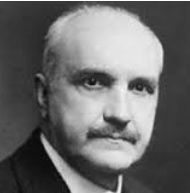
The world is a perpetual caricature of itself; at every moment it is the mockery and the contradiction of what it is pretending to be.
▼
Source
source
"Dickens"

4 months ago
It is the part of cowardice, not of courage, to go and crouch in a hole under a massive tomb, to avoid the blows of fortune.
▼
Source
source
Ch. 3. A Usage of the Island of Cea, tr. George B. Ives, 1925
4 months 2 weeks ago
Accepting the absurdity of everything around us is one step, a necessary experience: it should not become a dead end. It arouses a revolt that can become fruitful.
7 months 4 weeks ago
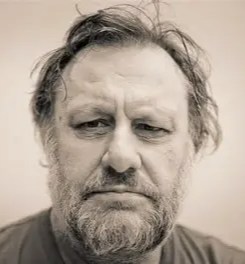
When we observe a thing, we see too much in it, we fall under the spell of the wealth of empirical detail which prevents us from clearly perceiving the notional determination which forms the core of the thing. The problem is thus not that of how to grasp the multiplicity of determinations, but rather to abstract from them, how to constrain our gaze and teach it to grasp only the notional determinism.



2 months 2 weeks ago
Skepticism is an exercise in defascination.

3 months 3 weeks ago
For me, reason is the natural organ of truth; but imagination is the organ of meaning. Imagination, producing new metaphors or revivifying old, is not the cause of truth, but its condition.
▼
Source
source
"Bluspels and Flalansferes: A Semantic Nightmare", Rehabilitations and Other Essays, 1939
1 week ago
Man is a reasoning animal.
4 months 3 weeks ago
Of things said without any combination, each signifies either substance or quantity or qualification or a relative or where or when or being-in-a-position or having or doing or being affected. To give a rough idea, examples of substance are man, horse; of quantity: four-foot, five-foot; of qualification: white, grammatical; of a relative: double, half, larger; of where: in the Lyceum, in the market-place; of when: yesterday, last-year; of being-in-a-position: is-lying, is sitting; of having: has-shoes-on, has-armour-on; of doing: cutting, burning; of being-affected: being-cut, being-burned.

3 months 6 days ago
The Athenians are right to accept advice from anyone, since it is incumbent on everyone to share in that sort of excellence, or else there can be no city at all.
▼
Source
source
As quoted in Protagoras by Plato

1 month 2 weeks ago
The telegraph press mosaic is acoustic space as much as an electric circus.

2 months 3 weeks ago
When we speak of the commerce with our [American] colonies, fiction lags after truth, invention is unfruitful, and imagination cold and barren.
1 month 1 week ago
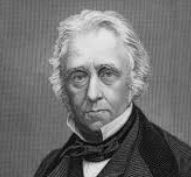
I say that where the public morality is concerned it may be the duty of the State to interfere with the contracts of individuals... It must then, I think, be admitted that, where health is concerned, and where morality is concerned, the State is justified in interfering with the contracts of individuals.
▼
Source
source
Speech in the House of Commons (22 May 1846), quoted in Speeches of the Right Honourable T. B. Macaulay, M.P. (1854), p. 442
3 months 3 weeks ago
Change is one thing, progress is another.
2 months 1 week ago
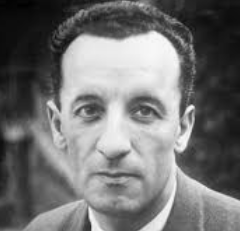
The world is nothing but 'world-as-meaning.'
▼
Source
source
p. xi
1 month 2 weeks ago
Literate man, civilized man, tends to restrict and to separate functions, whereas tribal man has freely extended the form of his body to include the universe.
▼
Source
source
(p. 117)
1 month 2 weeks ago
Invention is the mother of all necessities.
2 months 2 weeks ago
The only subversive mind is the one that questions the obligation to exist; all the others, the anarchist at the top of the list, compromise with the established order.
1 month 5 days ago
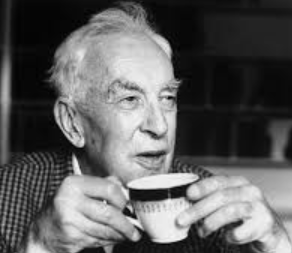
The value of the goal lies in the goal itself; and therefore the goal cannot be attained unless it is pursued for its own sake.
▼
Source
source
Vol. 12
3 months 3 weeks ago
There is no need to worry about mere size. We do not necessarily respect a fat man more than a thin man. Sir Isaac Newton was very much smaller than a hippopotamus, but we do not on that account value him less.
▼
Source
source
"The Expanding Mental Universe", Saturday Evening Post, 7/1/1959
1 month 2 weeks ago
Do not take part in the council, unless you are called.
▼
Source
source
Maxim 310

3 months 4 days ago
If thou intend to do any good; tarry not till to-morrow! for thou knowest not what may chance thee this night.

2 months 1 week ago
I know that all this is dull reading, tiresome, perhaps tedious, but it is all necessary. And I must repeat once again that we have nothing to do with a transcendental police system or with the conversion of God into a great Judge or Policeman - that is to say, we are not concerned with heaven or hell considered as buttresses to shore up our poor earthly mortality, nor are we concerned with anything egoistic or personal. It is not I myself alone, it is the whole human race that is involved, it is the ultimate finality of all our civilization. I am but one, but all men are I's.
2 months 3 weeks ago
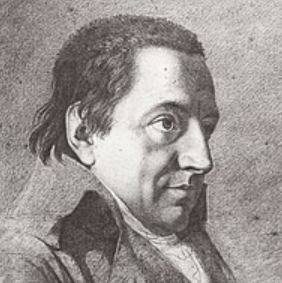
History is mere Empiricism; it has only facts to communicate, and all its proofs are founded upon facts alone. To attempt to rise to Primeval History on this foundation of fact, or to argue by this means how such or such a thing might have been, and then to take for granted that it has been so in reality,is to stray beyond the limits of History, and produce an a priori History; just as the Philosophy of Nature, referred to in our preceding lecture, endeavoured to find an a priori Science of Physics.
▼
Source
source
p. 140

3 months 2 weeks ago
I must plunge into the water of doubt again and again.
▼
Source
source
Ch. 7 : Remarks on Frazer's Golden Bough, p. 119

2 months 2 weeks ago
Do not be afraid. I am the First and the Last, and the living one, and I became dead, but look! I am living forever and ever, and I have the keys of death and of the Grave.
▼
Source
source
Revelation 1:17-18, NWT

2 months 1 week ago
Fertilisation of the soul is the reason for the necessity of art.
▼
Source
source
Ch. 13: "Requisites for Social Progress", p. 283
4 months 2 weeks ago
If the world were clear, art would not exist.
1 month 5 days ago
Civilizations die from suicide, not by murder.
▼
Source
source
In Mark Steyn, "It's the Demography, Stupid!", Opinion Journal, WSJ (2006).

3 months 3 weeks ago
Let sanguine healthy-mindedness do its best with its strange power of living in the moment and ignoring and forgetting, still the evil background is really there to be thought of, and the skull will grin in at the banquet.
▼
Source
source
Lectures IV and V, "The Religion of Healthy-Mindedness"
4 months 1 week ago
Who are those people by whom you wish to be admired? Are they not these about whom you are in the habit of saying that they are mad? What then? Do you wish to be admired by the mad?
▼
Source
source
Book I, ch. 21, 4.
2 months 1 week ago
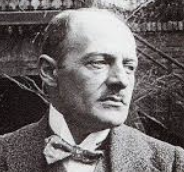
The ultimate goal of the arriviste's aspirations is not to acquire a thing of value, but to be more highly esteemed than others. He merely uses the "thing" as an indifferent occasion for overcoming the oppressive feeling of inferiority which results from his constant comparisons.
▼
Source
source
L. Coser, trans. (1973), pp. 55-56
3 months 2 weeks ago
A pupil and a teacher. The pupil will not let anything be explained to him, for he continually interrupts with doubts, for instance as to the existence of things, the meaning for words, etc. The teacher says "Stop interrupting me and do as I tell you. So far your doubts don't make sense at all."

3 months 2 weeks ago
I'm very proud that some people think that I'm a danger for the intellectual health of students. When people start thinking of health in intellectual activities, I think there is something wrong. In their opinion I am a dangerous man, since I am a crypto-Marxist, an irrationalist, a nihilist.
▼
Source
source
Truth, Power, Self : An Interview with Michel Foucault
3 months 3 weeks ago
Can a society in which thought and technique are scientific persist for a long period, as, for example, ancient Egypt persisted, or does it necessarily contain within itself forces which must bring either decay or explosion? "Can a Scientific Community Be Stable?,"
▼
Source
source
Lecture, Royal Society of Medicine, London, 11/29/1949
3 months 2 weeks ago
A utopia of judicial reticence: take away life, but prevent the patient from feeling it; deprive the prisoner of all rights, but do not inflict pain; impose penalties free of all pain. Recourse to psycho-pharmacology and to various physiological 'disconnectors', even if it is temporary, is a logical consequence of this 'non-corporal' penalty.
▼
Source
source
Chapter One, The Spectacle of the Scaffold
1 week ago
This is the worst trait of minds rendered arrogant by prosperity, they hate those whom they have injured.
▼
Source
source
De Ira (On Anger): Book 2, cap. 33, line 6

2 months 5 days ago
The dominant, almost general, idea of revolution - particularly the Socialist idea - is that revolution is a violent change of social conditions through which one social class, the working class, becomes dominant over another class, the capitalist class. It is the conception of a purely physical change, and as such it involves only political scene shifting and institutional rearrangements. Bourgeois dictatorship is replaced by the "dictatorship of the proletariat" - or by that of its "advance guard," the Communist Party. Lenin takes the seat of the Romanovs, the Imperial Cabinet is rechristened Soviet of People's Commissars, Trotsky is appointed Minister of War, and a labourer becomes the Military Governor General of Moscow. That is, in essence, the Bolshevik conception of revolution, as translated into actual practice.

3 months 3 weeks ago
The measure of action is the sentiment from which it proceeds. The greatest action may easily be one of the most private circumstance.
▼
Source
source
Goethe; or, The Writer
1 month 3 weeks ago
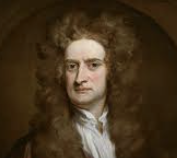
I do not know what I may appear to the world, but to myself I seem to have been only like a boy playing on the sea-shore, and diverting myself in now and then finding a smoother pebble or a prettier shell than ordinary, whilst the great ocean of truth lay all undiscovered before me.
▼
Source
source
Memoirs of the Life, Writings, and Discoveries of Sir Isaac Newton (1855) by Sir David Brewster (Volume II. Ch. 27).
CivilSimian.com created by AxiomaticPanic, CivilSimian, Kalokagathia