


4 months 2 weeks ago
They [theologians] will explain to you how Christ was formed in the Virgin's womb; how accident subsists in synaxis without domicile in place. The most ordinary of them can do this. Those more fully initiated explain further whether there is an instans in Divine generation; whether in Christ there is more than a single filiation; whether 'the Father hates the Son' is a possible proposition; whether God can become the substance of a woman, of an ass, of a pumpkin, or of the devil, and whether, if so, a pumpkin could preach a sermon, or work miracles, or be crucified. And they can discover a thousand other things to you besides these. They will make you understand notions, and instants, formalities, and quiddities, things which no eyes ever saw, unless they were eyes which could see in the dark what had no existence.
▼
Source
source
as quoted by Froude ibid.,

2 months 2 days ago
It's misleading to suppose there's any basic difference between education & entertainment. This distinction merely relieves people of the responsibility of looking into the matter.
▼
Source
source
(1957) from "Classroom Without Walls", Explorations Vol. 7, 1957; reprinted in Explorations in Communication ed. E. Carpenter & M. McLuhan, (Boston: Beacon, 1960); and again in McLuhan: Hot and Cool ed. G. E. Stearn (NY: Dial, 1967).

Just now
The times when the centre of gravity of political development and the crystallising agent of capitalist contradictions lay on the European continent, are long gone by. To-day Europe is only a link in the tangled chain of international connections and contradictions.

4 months 1 week ago
Marriage is like a cage; one sees the birds outside desperate to get in, and those inside equally desperate to get out.
▼
Source
source
Book III, Ch. 5
2 days ago
Philosophers who have wanted to banish the ghost from the machine have usually sought to do so by showing that truths about behavior can sometimes, and in some sense, logically implicate truths about mental states. In so doing, they have rather strongly suggested that the exorcism can be carried through only if such a logical connection can be made out. ... Once it has been made clear that the choice between dualism and behaviorism is not exhaustive, a major motivation for the defense of behaviorism is removed: we are not required to be behaviorists simply in order to avoid being dualists.
▼
Source
source
Fodor (1986) "Why Paramecia Don't Have Mental Representations," Midwest Studies in Philosophy 10: 3-23. cited in: Bradley Rives "Jerry A. Fodor (1935 - )" Internet Encyclopedia of Philosophy, Oct. 25, 2010
1 day ago
I observe, that of late Chymistry begins, as indeed it deserves, to be cultivated by Learned Men who before despis'd it; and to be pretended to by many who never cultivated it, that they may be thought not to ignore it: Whence it is come to passe, that divers Chymical Notions about Matters Philosophical are taken for granted and employ'd, and so adopted by very eminent Writers both Naturalists and Physitians. Now this I fear may prove somewhat prejudicial to the Advancement of solid Philosophy: For though I am a great Lover of Chymical Experiments, and though I have no mean esteem of divers Chymical Remedies, yet I distinguish these from their Notions about the causes of things, and their manner of Generation.
4 months 3 weeks ago
What! You would convict me from my own words, and bring against me what I had said or written elsewhere. You may act in that manner with those who dispute by established rules. We live from hand to mouth, and say anything that strikes our mind with probability, so that we are the only people who are really at liberty.
▼
Source
source
Book 5 Section 11

4 months 5 days ago
You can hardly convince a man of an error in a lifetime, but must content yourself with the reflection that the progress of science is slow. If he is not convinced, his grandchildren may be.
4 months 1 week ago
Valor is stability, not of legs and arms, but of courage and the soul.
4 months 2 weeks ago
People almost invariably arrive at their beliefs not on the basis of proof but on the basis of what they find attractive.
▼
Source
source
De l'Art de persuader ["On the Art of Persuasion"], written 1658; published posthumously.

2 weeks 5 days ago
Things that were hard to bear are sweet to remember.
▼
Source
source
lines 656-657;

2 months 2 weeks ago
The family uses people, not for what they are, nor for what they are intended to be, but for what it wants them for - its own uses. It thinks of them not as what God has made them, but as the something which it has arranged that they shall be.

2 months 2 weeks ago
Indeed much of the literature written about black folks in the post-civil rights era emphasized the need for jobs. Material advancement was deemed the pressing agenda. Mental health concerns were not a high priority.
2 weeks 5 days ago
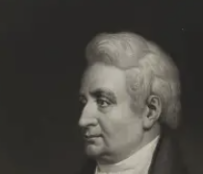
What would life be without arithmetic, but a scene of horrors?
▼
Source
source
Vol. II, letter to Miss Lucie Austin (22 July 1835), p. 364

2 months 3 weeks ago
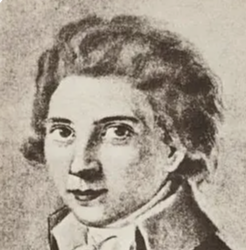
From whatever side the matter is regarded, it is always found that reason confronts our longing for personal immortality and contradicts it. And the truth is, in all strictness, that reason is the enemy of life.
3 months 5 days ago
Whoever does not philosophize for the sake of philosophy, but rather uses philosophy as a means, is a sophist.
▼
Source
source
"Selected Aphorisms from the Athenaeum (1798)", Dialogue on Poetry and Literary Aphorisms, Ernst Behler and Roman Struc, trans. (Pennsylvania University Press:1968) #96
4 months 6 days ago
Christianity taught only what the whole of Asia knew already long before and even better.
▼
Source
source
quoted in Londhe, S. (2008). A tribute to Hinduism: Thoughts and wisdom spanning continents and time about India and her culture. New Delhi: Pragun Publication.

3 months 5 days ago
The power of discretionary disqualification by one law of Parliament, and the necessity of paying every debt of the Civil List by another law of Parliament, if suffered to pass unnoticed, must establish such a fund of rewards and terrors as will make Parliament the best appendage and support of arbitrary power that ever was invented by the wit of man. This is felt. The quarrel is begun between the Representatives and the People. The Court Faction have at length committed them. In such a strait the wisest may well be perplexed, and the boldest staggered. The circumstances are in a great measure new. We have hardly any land-marks from the wisdom of our ancestors, to guide us. At best we can only follow the spirit of their proceeding in other cases.
▼
Source
source
Volume i, p. 516
1 month ago
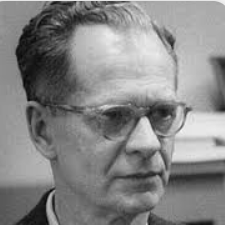
The way positive reinforcement is carried out is more important than the amount.
▼
Source
source
As quoted in Meditations for Parents Who Do Too Much (1993) by Jonathon Lazear and Wendy Lazear, p. 5

5 months 2 days ago
The fact is that I've never called myself a genius, and I think the term has been cheapened by overuse into meaninglessness. If other people want to call me that, that's their problem.

3 months 1 week ago
After having thus successively taken each member of the community in its powerful grasp and fashioned him at will, the government then extends its arm over the whole community. It covers the surface of society with a network of small, complicated rules, minute and uniform, through which the most original minds and the most energetic characters cannot penetrate, to rise above the crowd. The will of man is not shattered, but softened, bent, and guided; men are seldom forced by it to act, but they are constantly restrained from acting. Such a power does not destroy, but it prevents existence: it does not tyrannize, but it compresses, enervates, extinguishes, and stupefies a people, till each nation is reduced to nothing better than a flock of timid and industrious animals, of which the government is the shepherd.
▼
Source
source
Book Four, Chapter VI.
3 months 5 days ago
...what I look to with seriousness is the Phalanx of Party which exists in the body of the dissenters, who are, at the very least, nine tenths of them entirely devoted, some with greater some with less zeal, to the principles of the French Revolution.
▼
Source
source
Letter to the Home Secretary, Henry Dundas (30 September 1791), quoted in Alfred Cobban and Robert A. Smith (eds.), The Correspondence of Edmund Burke, Volume VI: July 1789-December 1791 (1967), p. 419

5 months 1 day ago
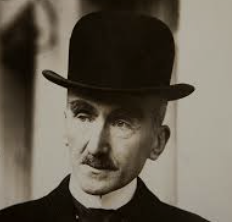
A fate is not a punishment.
2 months 3 weeks ago
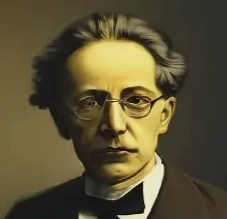
Why did we obey? The question hardly occurred to us. We had formed the habit of deferring to our parents and teachers. All the same we knew very well that it was because they were our parents, because they were our teachers. Therefore, in our eyes, their authority came less from themselves than from their status in relation to us.
▼
Source
source
Chapter I: Moral Obligation
2 weeks 6 days ago
An appeal to men's self-sacrificing disposition and self-renouncing love ought at least to have lost its seductive plausibility when, after an activity of thousands of years, it has left nothing behind but the - misery of today. Why then still fruitlessly expect self-sacrifice to bring us better times? Why not rather hope for them from usurpation? Salvation comes no longer from the giver, the bestower, the loving one, but from the taker, the appropriator (usurper), the owner. Communism, and, consciously, egoism-reviling humanism, still count on love.
▼
Source
source
Cambridge 1995, p. 274
3 months 3 weeks ago
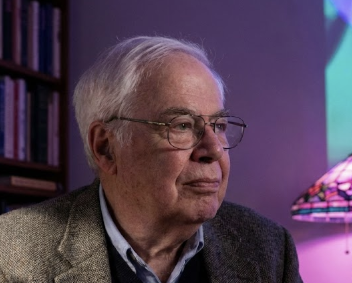
If I had to lay bets, my bet would be that everything is going to go to hell, but, you know, what else have we got except hope?
▼
Source
source
"Richard Rorty Interviewed by Gideon Lewis-Kraus." The Believer, June 2003.
5 months 2 days ago
It is an odd fact that anyone who wishes to start a war must always make it appear that he is fighting in a just cause even if the real motive is naked aggression. Fortunately for the would-be aggressor, a "just cause" is very easy to find.

3 months 1 day ago
At this very moment, I am suffering - as we say in French, j'ai mal. This event, crucial for me, is nonexistent, even inconceivable for anyone else, for everyone else. Except for God, if that word can have a meaning.
4 months 4 days ago
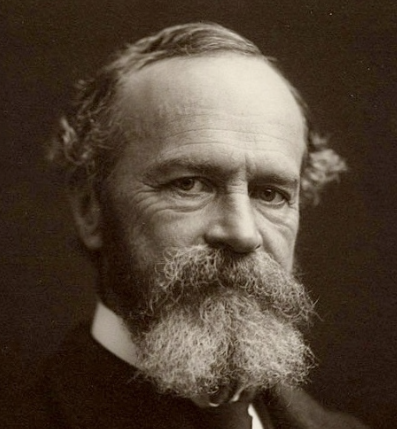
There is but one unconditional commandment, which is that we should seek incessantly, with fear and trembling, so to vote and to act as to bring about the very largest total universe of good which we can see. Abstract rules indeed can help; but they help the less in proportion as our intuitions are more piercing, and our vocation is the stronger for the moral life. For every real dilemma is in literal strictness a unique situation; and the exact combination of ideals realized and ideals disappointed which each decision creates is always a universe without a precedent, and for which no adequate previous rule exists.
▼
Source
source
"The Moral Philosopher and the Moral Life", International Journal of Ethics, April 1891

4 months 3 days ago
The worst of misfortunes is still a stroke of luck, since one feels oneself living when one experiences it.
▼
Source
source
p. 275

4 months 1 week ago
The human being, corrupted to the root, can neither desire nor perform anything but evil.
▼
Source
source
The Making of Martin Luther, By Richard Rex, p66

4 days ago
I see too many proofs of the imperfection of human reason, to entertain wonder or intolerance at any difference of opinion on any subject; and acquiesce in that difference as easily as on a difference of feature or form; experience having long taught me the reasonableness of mutual sacrifices of opinion among those who are to act together for any common object, and the expediency of doing what good we can, when we cannot do all we would wish.
▼
Source
source
Letter to John Randolph (1 December 1803), published in The Works of Thomas Jefferson in Twelve Volumes, Federal Edition, Paul Leicester Ford, ed., New York: G. P. Putnam's Sons, 1904, Vol. 109, pp. 54
Just now
In the history of bourgeois society, legislative reform served to strengthen progressively the rising class till the latter was sufficiently strong to seize political power, to suppress the existing juridical system and to construct itself a new one.
▼
Source
source
Ch.8
3 months 5 days ago
Romantic poetry ... recognizes as its first commandment that the will of the poet can tolerate no law above itself.
▼
Source
source
Philosophical Fragments, P. Firchow, trans. (1991) § 116
3 months 3 weeks ago
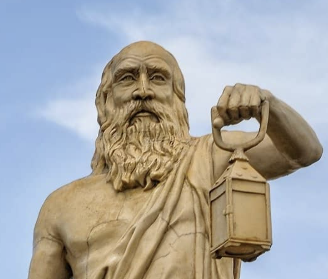
He was going into a theatre, meeting face to face those who were coming out, and being asked why, "This," he said, "is what I practise doing all my life."
▼
Source
source
Diogenes Laërtius, vi. 64
4 months 1 week ago
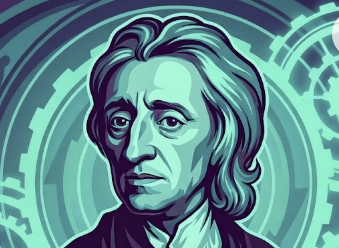
As to the having and possessing of things, teach them to part with what they have, easily and freely to their friends, and let them find by experience that the most liberal has always the most plenty, with esteem and commendation to boot, and they will quickly learn to practise it.
▼
Source
source
Sec. 110

4 days ago
After World War II, we hoped the world might be united for the sake of peacemaking. Now the world is being "globalized" for the sake of trade and the so-called free market - for the sake, that is, of plundering the world for cheap labor, cheap energy, and cheap materials. How nations, let alone regions and communities, are to shape and protect themselves within this "global economy" is far from clear.
2 months 3 weeks ago
For the truth is that our doctrines are usually only the justification a posteriori of our conduct, or else they are our way of trying to explain that conduct to ourselves.
4 months 5 days ago
The youth gets together his materials to build a bridge to the moon, or, perchance, a palace or temple on the earth, and, at length, the middle-aged man concludes to build a woodshed with them.
▼
Source
source
July 14, 1852
4 weeks 1 day ago
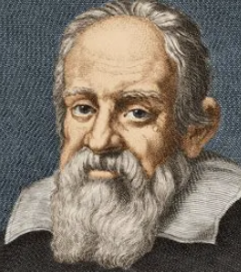
I cannot sufficiently admire the eminence of those men's wits, that have received and held it to be true, and with the sprightliness of their judgments offered such violence to their own senses, as that they have been able to prefer that which their reason dictated to them, to that which sensible experiments represented most manifestly to the contrary. ...I cannot find any bounds for my admiration, how that reason was able in Aristarchus and Copernicus, to commit such a rape on their senses, as in despite thereof to make herself mistress of their credulity.
▼
Source
source
Thomas Salusbury translation (1661) p. 301 as quoted by Edwin Arthur Burtt, The Metaphysical Foundations of Modern Physical Science
4 months 5 days ago
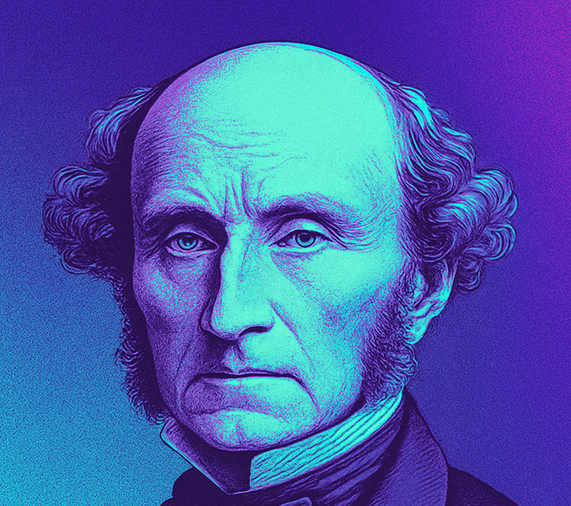
He who knows only his own side of the case, knows little of that. His reasons may be good, and no one may have been able to refute them. But if he is equally unable to refute the reasons on the opposite side; if he does not so much as know what they are, he has no ground for preferring either opinion.
▼
Source
source
Ch. II: Of the Liberty of Thought and Discussion
5 months 1 day ago
He discovered the cruel paradox by which we always deceive ourselves twice about the people we love — first to their advantage, then to their disadvantage.
4 months 3 days ago
As for us, my little friend, we entered [the Communist Party] because we were tired of dying of hunger.
▼
Source
source
Act 3, sc. 2
4 months 5 days ago
Whatever is known to us by consciousness, is known beyond possibility of question. What one sees or feels, whether bodily or mentally, one cannot but be sure that one sees or feels. No science is required for the purpose of establishing such truths; no rules of art can render our knowledge of them more certain than it is in itself. There is no logic for this portion of our knowledge.
▼
Source
source
p. 4
4 months 3 days ago
...the reality of society involves the socialization of certain unrealities.
▼
Source
source
p. 455

2 months 6 days ago
Say what you will about the sweet miracle of unquestioning faith, I consider a capacity for it terrifying and absolutely vile.
3 months 3 weeks ago
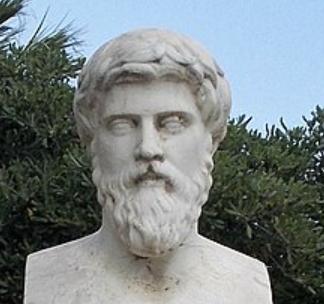
When he was wounded with an arrow in the ankle, and many ran to him that were wont to call him a god, he said smiling, "That is blood, as you see, and not, as Homer saith, 'such humour as distils from blessed gods.'"
▼
Source
source
43 Alexander

4 months 5 days ago
The law of gravity thus asserts itself when a house falls about our ears.
▼
Source
source
Vol. I, Ch. 1, Section 4, pg. 86.
4 months 1 week ago
Many have been deceived by outward appearances and have proceeded to write and teach about good works and how they justify without even mentioning faith. ... Wearying themselves with many works, they never come to righteousness.
▼
Source
source
p. 75

4 months 5 days ago
Men tend to have the beliefs that suit their passions. Cruel men believe in a cruel God, and use their belief to excuse their cruelty. Only kindly men believe in a kindly God, and they would be kindly in any case.
▼
Source
source
In London Calling (1947), p. 18
CivilSimian.com created by AxiomaticPanic, CivilSimian, Kalokagathia