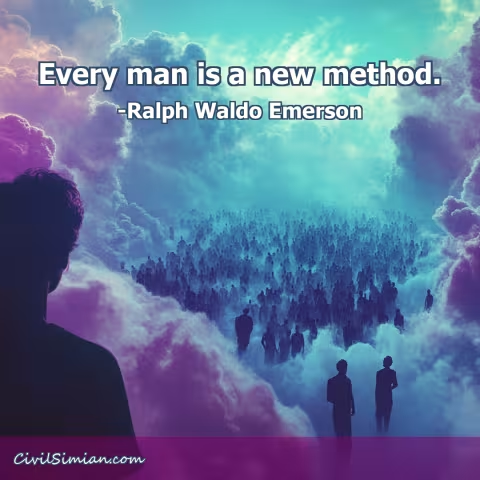
But...objective reality determines the grade he gets...


Mankind was never so happily inspired as when it made a cathedral.

Shallow men believe in luck.

Statues are not about history. We don't memorialize each piece of history. We memorialize things that we want to value and things that we want our children to walk by and say "This person embodied the values that I care about." Therefore, statues are about values not about history.

Today we have arrived at a point when the three principles [of modern resistance: 1. measure of efficacy, 2. the form of political and military organization correspond to the current forms of economic and social production, 3. democracy and freedom] coincide. The distributed network structure provides the model for an absolutely democratic organization that corresponds to the dominant forms of economic and social production and is also the most powerful weapon against the ruling power structure.

Art is not, as the metaphysicians say, the manifestation of some mysterious Idea of beauty or God; it is not, as the aesthetical physiologists say, [play or] a game in which one releases surplus energy, ...not the production of pleasing objects, and is above all, not pleasure itself, but it is the means of union among mankind, joining them in the same feelings, and necessary for the life and progress toward the good of the individual and of humanity.
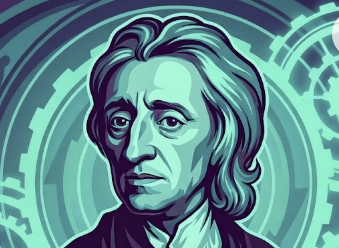
You shall find, that there cannot be a greater spur to the attaining what you would have the eldest learn, and know himself, than to set him upon teaching it his younger brothers and sisters.
Philological analogies are to be preserved if possible, but modified according to scientific convenience.
The appreciation of the merits of art (of the emotions it conveys) depends upon an understanding of the meaning of life, what is seen as good and evil. Good and evil are defined by religions.
He [Jesus] not only forbids actual uncleanness, but all irregular desires, upon pain of hell-fire; causeless divorces; swearing in conversation, as well as forswearing in judgment; revenge; retaliation; ostentation of charity, of devotion, and of fasting; repetitions in prayer, covetousness, worldly care, censoriousness: and on the other side commands loving our enemies, doing good to those that hate us, blessing those that curse us, praying for those that despitefully use us; patience and meekness under injuries, forgiveness, liberality, compassion: and closes all; his particular injunctions, with this general golden rule, Matt. VII. 12, "All things whatsoever ye would that men should do to you, do you even so to them, for this is the law and the prophets." And to show how much He is in earnest, and expects obedience to these laws, He tells them, Luke VI. 35, That if they obey, " great shall be their reward".
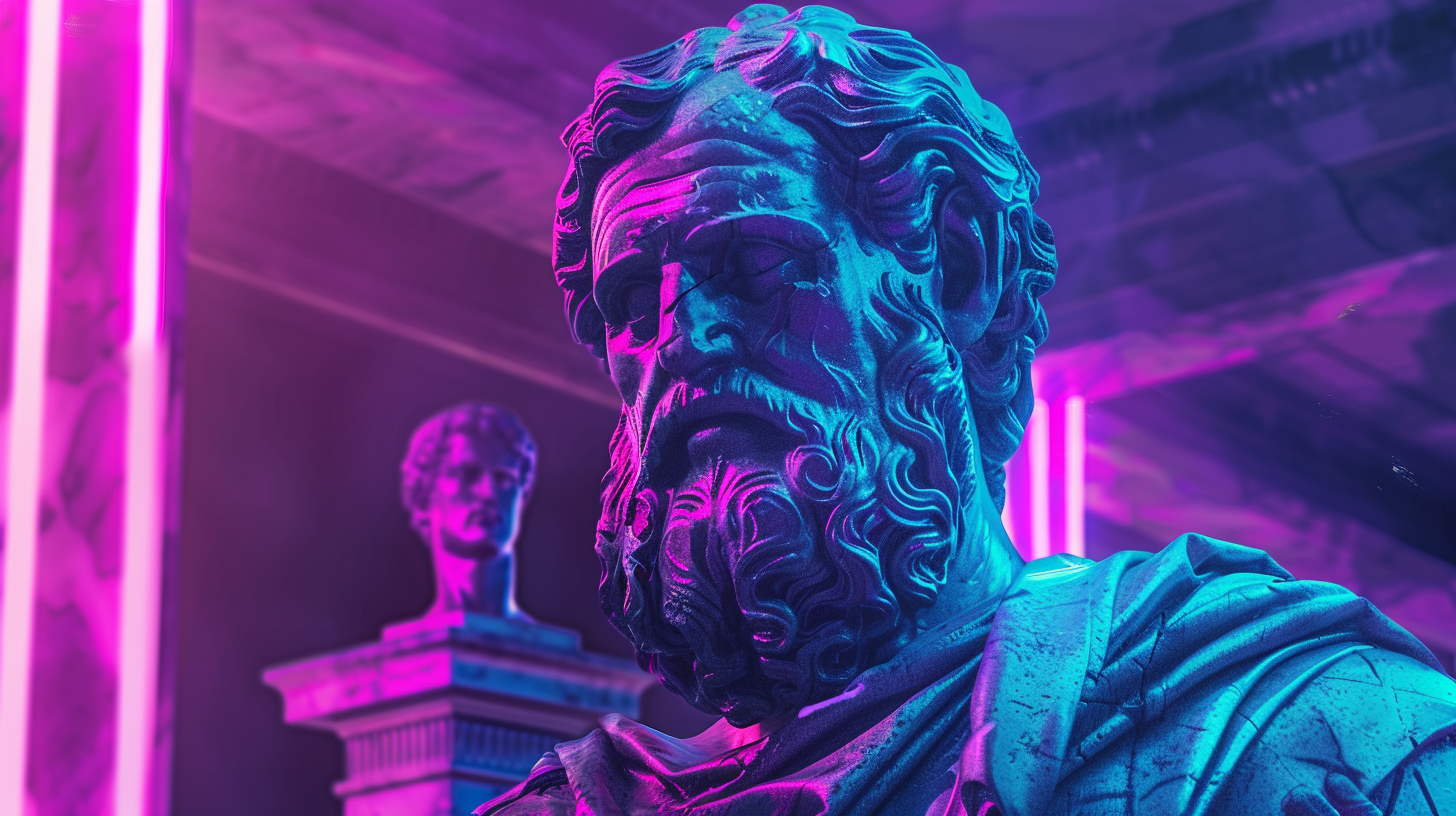
Zeus, the god of gods, who rules according to law, and is able to see into such things, perceiving that an honourable race was in a woeful plight, and wanting to inflict punishment on them, that they might be chastened and improve, collected all the gods into their most holy habitation, which, being placed in the centre of the world, beholds all created things.

I was your luxury. For nineteen years I have been put in your man's world and was forbidden to touch anything and you made me think that all was going very well and that I did not have to worry about anything but putting flowers in vases. Why did you lie to me? Why did you keep me ignorant, if it was to admit to me one day that this world is cracking and that you are all powerless and to make me choose between a suicide and a murder?
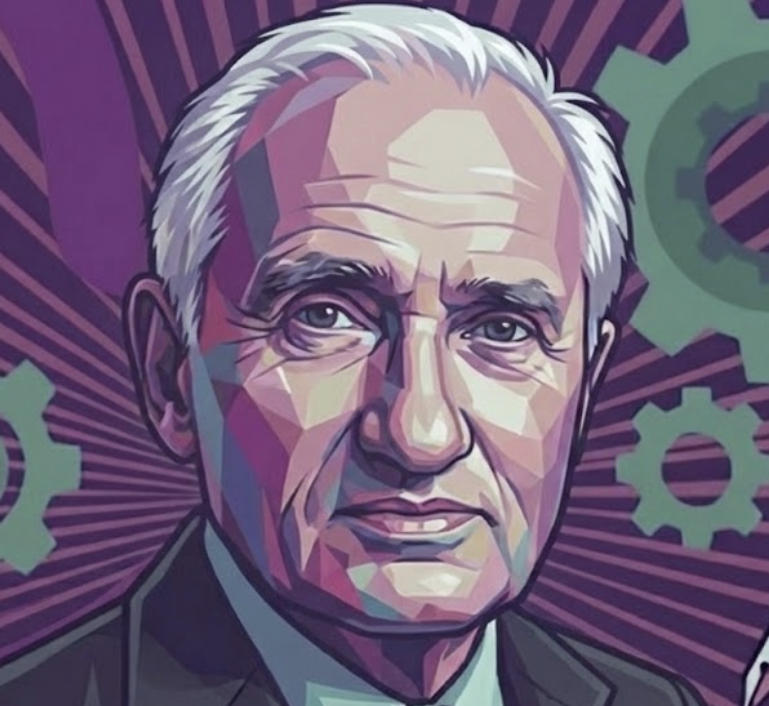
I would in fact tend to have more confidence in the outcome of a democratic decision if there was a minority that voted against it, than if it was unanimous... Social psychology has amply shown the strength of this bandwagon effect.

Observe, observe perpetually.

My theory was that we are all fundamentally 'multiple personalities', beginning with the baby and the child, and slowly developing into more complex selves. If, for some reason, we abruptly cease to develop -- through some trauma that undermines self-confidence -- all those potential personalities are stunted and repressed. And some accident or violent shock may give one of them the opportunity to 'take over'. This suggests, of course, that in some mysterious sense, our 'future' personalities are already there, in embryo, so to speak, and that they also develop as we mature. We move from personality to personality, as we might climb a ladder. The Beethovens and Leonardos got further up the ladder than most of us; yet even they failed to reach the top, as we can see if we study their lives.

The remedy for loneliness is human fellowship, the warmth of real, live, flesh-and-blood companions and loved-ones; not prating in a vacuum to an imaginary friend for whose existence there is no vestige of serious evidence. Even an AI robot is better than that. At least ChatGPT exists, really talks back at you, will actually hold a friendly conversation. But talk to the imaginary friend which is God (Allah, Virgin Mary, Lord Krishna, Thor, Zeus, Mithras, name yours) and the only reply you'll get is conjured within your own imagination. You'll be talking to yourself, which is really rather sad, and hardly an antidote to loneliness. No Satisfying Alternative to Religion? Try Reality.

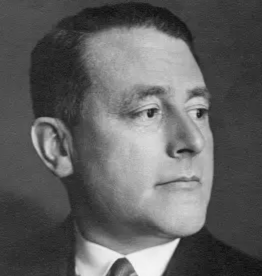
All significant concepts of the modern theory of the state are secularized theological concepts not only because of their historical development-in which they were transferred from theology to the theory of the state, whereby, for example, the omnipotent God became the omnipotent lawgiver-but also because of their systematic structure, the recognition of which is necessary for a sociological consideration of these concepts. The exception in jurisprudence is analogous to the miracle in theology.
Give me health and a day, and I will make the pomp of emperors ridiculous.
Ideal legislators do not vote their interests.

I have ever deemed it more honorable and profitable, too, to set a good example than to follow a bad one.

While it is true that science cannot decide questions of value, that is because they cannot be intellectually decided at all, and lie outside the realm of truth and falsehood. Whatever knowledge is attainable, must be attained by scientific methods; and what science cannot discover, mankind cannot know.
The main problem for the average reader -- particularly of The Great Beast -- is that Crowley seems such an intolerable show-off that it is hard to believe anything he says.
Often it is only after immense intellectual effort, which may have continued over centuries, that humanity at last succeeds in achieving knowledge of a concept in its pure form, by stripping off the irrelevant accretions which veil it from the eye of the mind.

Thou shalt love the Lord thy God with all thy heart, and with all thy soul, and with all thy mind. This is the first and great commandment. And the second is like unto it, Thou shalt love thy neighbour as thyself. On these two commandments hang all the law and the prophets.

The commonest and cheapest sounds, as the barking of a dog, produce the same effect on fresh and healthy ears that the rarest music does. It depends on your appetite for sound. Just as a crust is sweeter to a healthy appetite than confectionery to a pampered or diseased one.
A good American makes propaganda for whatever existence has forced him to become.
The oldest and best known evil was ever more supportable than one that was new and untried.
Between God and man there is and remains an eternal, essential, qualitative difference. The paradoxical relationship (which, quite rightly, cannot be thought, but only believed) appears when God appoints a particular man to divine authority, in relation, be it carefully noted, to that which has entrusted to him.

The election... on November 3 ... illustrates a lot of these clashing forces. ..That election was the most important political fight ...in my lifetime. It's important not just for the United States but... for the rest of the world, given the role that the United States has historically played in maintaining that broader liberal international order.
Whenever government assumes to deliver us from the trouble of thinking for ourselves, the only consequences it produces are those of torpor and imbecility.

When the wise man opens his mouth, the beauties of his soul present themselves to the view, like the statues in a temple.
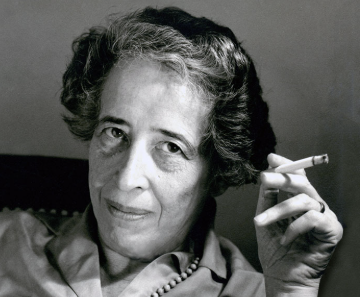
In its flight from death, the craving for permanence clings to the very things sure to be lost in death.
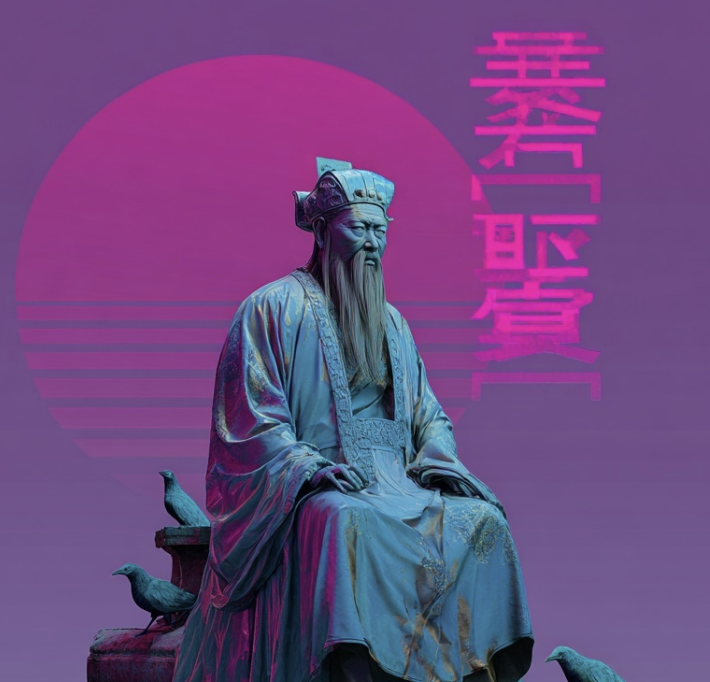
A scholar who loves comfort is not worthy of the name.
The wise find pleasure in water; the virtuous find pleasure in hills. The wise are active; the virtuous are tranquil. The wise are joyful; the virtuous are long-lived.
I shall take leave to think the worse, rather of the practice of the men than of the book of God.

For the philosophy which is so important in each of us is not a technical matter; it is our more or less dumb sense of what life honestly and deeply means. It is only partly got from books; it is our individual way of just seeing and feeling the total push and pressure of the cosmos. ...I have heard friends and colleagues try to popularize philosophy... but they soon grew dry, and then technical, and the results were only partially encouraging. So my enterprise is a bold one. The founder of pragmatism... gave... lectures... with that very word in its title,-flashes of brilliant light relieved against Cimmerian darkness! None of us... understood all that he said-yet here I stand making a very similar venture. ...There is... a curious fascination in hearing deep things talked about, even though neither we nor the disputants understand them. We get the problematic thrill, we feel the presence of the vastness.
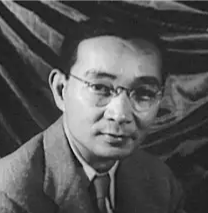
This is a personal testimony, a testimony of my own experience of thought and life. It is not intended to be objective and makes no claim to establish eternal truths. In fact I rather despise claims to objectivity in philosophy; the point of view is the thing. I should have liked to call it "A Lyrical Philosophy," using the word "lyrical" in the sense of being a highly personal and individual outlook...

This is how I recognize an authentic poet: by frequenting him, living a long time in the intimacy of his work, something changes in myself, not so much my inclinations or my tastes as my very blood, as if a subtle disease had been injected to alter its course, its density and nature. To live around a true poet is to feel your blood run thin, to dream a paradise of anemia, and to hear, in your veins, the rustle of tears.
Are ye come out as against a thief with swords and staves for to take me? I sat daily with you teaching in the temple, and ye laid no hold on me. But all this was done, that the scriptures of the prophets might be fulfilled.

But why,' (some ask), 'why, if you have a serious comment to make on the real life of men, must you do it by talking about a phantasmagoric never-never land of your own?' Because, I take it, one of the main things the author wants to say is that the real life of men is of that mythical and heroic quality. One can see the principle at work in his characterization. Much that in a realistic work would be done by 'character delineation' is here done simply by making the character an elf, a dwarf, or a hobbit. The imagined beings have their insides on the outside; they are visible souls. And Man as a whole, Man pitted against the universe, have we seen him at all till we see that he is like a hero in a fairy tale?
If every strategy today is that of mental terror and of deterrence tied to the suspension and the eternal simulation of catastrophe, then the only means of mitigating this scenario would be to make the catastrophe arrive, to produce or to reproduce a real catastrophe. To which Nature is at times given: in its inspired moments, it is God who through his cataclysms unknots the equilibrium of terror in which humans are imprisoned. Closer to us, this is what terrorism is occupied with as well: making real, palpable violence surface in opposition to the invisible violence of security. Besides, therein lies terrorism's ambiguity.

Once it's been proved to you that you're descended from an ape, it's no use pulling a face; just accept it. Once they've proved to you that a single droplet of your own fat must be dearer to you than a hundred thousand of your fellow human beings and consequently that all so-called virtues and duties are nothing but ravings and prejudices, then accept that too, because there's nothing to be done.
It is as though we had buried Someone we thought dead, and now hear him calling in the night: Help me! Heaving and panting, he raises the gravestone of our soul and body higher and still higher, breathing more freely at every moment. Every word, every deed, every thought is the heavy gravestone he is forever trying to lift. And my own body and all the visible world, all heaven and earth, are the gravestone which God is struggling to heave upward.
Eros conquers depression.
How did they meet? By chance, like everybody ... Where did they come from? From the nearest place. Where were they going? Do we know where we are going?
It is the mark of a good action that it appears inevitable in the retrospect. We should have been cut-throats to do otherwise. And there's an end. We ought to know distinctly that we are damned for what we do wrong; but when we have done right, we have only been gentlemen, after all. There is nothing to make a work about.

You're either excluding the right people or including the wrong people.
The most disadvantageous peace is better than the most just war.
CivilSimian.com created by AxiomaticPanic, CivilSimian, Kalokagathia