


2 months 2 days ago
There is absolutely no inevitability, so long as there is a willingness to contemplate what is happening.
▼
Source
source
[A chapter sub-heading attributed by McLuhan to Alfred North Whitehead]

3 months ago
Impossible for me to know whether or not I take myself seriously. The drama of detachment is that we cannot measure its progress. We advance into a desert, and we never know where we are in it.
2 months 3 weeks ago
Skepticism is the chastity of the intellect, and it is shameful to surrender it too soon or to the first comer: there is nobility in preserving it coolly and proudly through long youth, until at last, in the ripeness of instinct and discretion, it can be safely exchanged for fidelity and happiness.
▼
Source
source
The Works of George Santayana p. 65

4 months 2 weeks ago
For every one feels to what purpose he can use his own powers. Before the horns of a calf appear and sprout from his forehead, he butts with them when angry, and pushes passionately.
▼
Source
source
Book V, lines 1033-1035 (tr. Bailey)
1 week 5 days ago
Whoever criticizes others must have something to replace them. Criticism without suggestion is like trying to stop flood with flood and put out fire with fire. It will surely be without worth.
▼
Source
source
Book 4; Universal Love III
1 month 1 day ago
The present crisis of Western democracy is a crisis in journalism.
▼
Source
source
Journalism and the Higher Law, p. 5
2 weeks 1 day ago
I do not want to frighten you by telling you about the temptations life will bring. Anyone who is healthy in spirit will overcome them. But there is something I want you to realize. It does not matter so much what you do. What matters is whether your soul is harmed by what you do. If your soul is harmed, something irreparable happens, the extent of which you won't realize until it will be too late.
3 months 1 day ago
I saw a Divine Being. I'm afraid I'm going to have to revise all my various books and opinions.
▼
Source
source
National Post (3 March 2001).
1 month 4 days ago
Heresy is a set of opinions "at variance with established or generally received principles." In this sense, heresy is the price of all originality and innovation.

1 day ago
Nothing happens to anyone that he can't endure.
▼
Source
source
(Hays translation) Nothing happens to anybody which he is not fitted by nature to bear. , V, 18
2 months 2 weeks ago
Bourgeois sport [wants] to differentiate itself strictly from play. Its bestial seriousness consists in the fact that instead of remaining faithful to the dream of freedom by getting away from purposiveness, the treatment of play as a duty puts it among useful purposes and thereby wipes out the trace of freedom in it. This is particularly valid for contemporary mass music. It is only play as a repetition of prescribed models, and the playful release from responsibility which is thereby achieved does not reduce at all the time devoted to duty except by transferring the responsibility to the models, the following of which one makes into a duty for himself.
▼
Source
source
p. 296

3 weeks 4 days ago
Under all speech that is good for anything there lies a silence that is better.
▼
Source
source
Silence is deep as Eternity; speech is shallow as Time.
4 months 5 days ago
All honour to those who can abnegate for themselves the personal enjoyment of life, when by such renunciation they contribute worthily to increase the amount of happiness in the world; but he who does it, or professes to do it, for any other purpose, is no more deserving of admiration than the ascetic mounted on his pillar. He may be an inspiriting proof of what men can do, but assuredly not an example of what they should.
▼
Source
source
Ch. 2
4 days ago
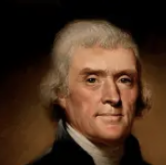
The idea of creating a national bank I do not concur in, because it seems now decided that Congress has not that power (although I sincerely wish they had it exclusively), and because I think there is already a vast redundancy rather than a scarcity of paper medium.
▼
Source
source
Letter to Thomas Law, 1813. FE 9:433

2 months 3 weeks ago
The novel, the novel proper that is, is about people's treatment of each other, and so it is about human values.
▼
Source
source
Ch. 10, p. 138
2 months 2 weeks ago
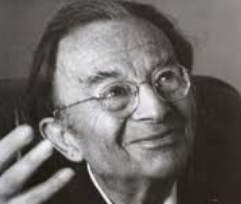
The application of psychoanalysis to sociology must definitely guard against the mistake of wanting to give psychoanalytic answers where economic, technical, or political facts provide the real and sufficient explanation of sociological questions. On the other hand, the psychoanalyst must emphasize that the subject of sociology, society, in reality consists of individuals, and that it is these human beings, rather than abstract society as such, whose actions, thoughts, and feelings are the object of sociological research.
▼
Source
source
"Psychoanalyse und Soziologie" (1929); published as "Psychoanalysis and Sociology" as translated by Mark Ritter, in Critical Theory and Society : A Reader (1989) edited by S. E. Bronner and D. M. Kellner

4 months 1 week ago
Who loves not woman, wine, and song / Remains a fool his whole life long.
▼
Source
source
As quoted by Anonymous, "On Luther's Love for and Knowledge of Music" in The Musical World. Vol VII, No. 83 (Oct 13, 1837).
2 weeks 1 day ago
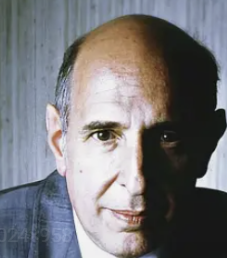
Only the search back to the origins of one's ideas in order to see the real arguments for them, before people became so certain of them that they ceased thinking about them at all, can liberate us. Our study of history has taught us to laugh at the follies of the whole past, the monarchies, oligarchies, theocracies, and aristocracies with the fanaticism for empire or salvation, once taken so seriously. But we have very few tools for seeing ourselves in the same way, as others will see us. Each age always conspires to make its own way of thinking appear to be the only possible or just way, and our age has the least resistance to the triumph of its own way. There is less real presence of respectable alternatives and less knowledge of the titanic intellectual figures who founded our way.
▼
Source
source
Western Civ, p. 20.
1 month 2 weeks ago
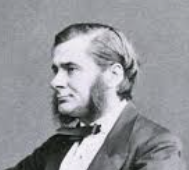
Scientific men get an awkward habit - no, I won't call it that, for it is a valuable habit - of believing nothing unless there is evidence for it; and they have a way of looking upon belief which is not based upon evidence, not only as illogical, but as immoral.
▼
Source
source
Thomas Henry Huxley. "Lectures on Evolution Title: This is Essay# 3 from" Science and Hebrew Tradition." (1882); as cited in: William Trufant Foster, (1908) Argumentation and debating, p. 55
5 days ago
All hopes and despairs vanish in the voracious, funneling whirlwind of God. God laughs, wails, kills, sets us on fire, and then leaves us in the middle of the way, charred embers. And I rejoice to feel between my temples, in the flicker of an eyelid, the beginning and the end of the world. I condense into a lightning moment the seeding, sprouting, blossoming, fructifying, and the disappearance of every tree, animal, man, star, and god. All Earth is a seed planted in the coils of my mind. Whatever struggles for numberless years to unfold and fructify in the dark womb of matter bursts in my head like a small and silent lightning flash. Ah! let us gaze intently on this lightning flash, let us hold it for a moment, let us arrange it into human speech. Let us transfix this momentary eternity which encloses everything, past and future, but without losing in the immobility of language any of its gigantic erotic whirling.

4 days ago
There's far too much generalization now about rural America. Conservatives and corporations have had their eye on rural America all along. And they've been turning it into money as fast as they can, which is to say destroying the land and the people...

4 months 3 days ago
Her face seems ravaged by both lightning and hail. But on yours there is something like the promise of a storm: one day passion will burn it to the bone.
▼
Source
source
Act 1
1 day ago
I can control my thoughts as necessary; then how can I be troubled?
▼
Source
source
(Hays translation) VII, 2

2 months 2 weeks ago
The poor, stupid, free American citizen! Free to starve, free to tramp the highways of this great country, he enjoys universal suffrage, and, by that right, he has forged chains about his limbs. The reward that he receives is stringent labor laws prohibiting the right of boycott, of picketing, in fact, of everything, except the right to be robbed of the fruits of his labor.

3 months 4 days ago
People ... become so preoccupied with the means by which an end is achieved, as eventually to mistake it for the end. Just as money, which is a means of satisfying wants, comes to be regarded by a miser as the sole thing to be worked for, leaving the wants unsatisfied; so the conduct men have found preferable because most conducive to happiness, has come to be thought of as intrinsically preferable: not only to be made a proximate end (which it should be), but to be made an ultimate end, to the exclusion of the true ultimate end.
▼
Source
source
Ethics (New York:1915), § 14, pp. 38-39

1 month 1 week ago
If our universe is one of many, unlike others in containing observers like ourselves, there is no need to posit a designer. Most universes will be too chaotic to allow the emergence of life or mind. In that case, the fact that humans exist in this universe needs no special explanation.
▼
Source
source
Sweet Morality (p. 222)
3 months 4 days ago
Science raises itself above all Ages and all Times, embracing and apprehending the ONE UNCHANGING TIME as the higher source of all Ages and Epochs, and grasping that vast idea in its free, unbounded comprehension.
▼
Source
source
p. 11
2 months 2 weeks ago
The importance of the culture industry in the spiritual constitution of the masses is no dispensation for reflection on its objective legitimation, its essential being, least of all by a science which thinks itself pragmatic.

2 months 3 weeks ago
The free will, the actual motor of reason in society, necessarily creates wrong. The individual must clash with the social order that claims to represent his own will in its objective form. But the wrong and the 'avenging justice' that remedies it not only expresses a 'higher logical necessity,' but also prepare the transition to a higher social form of freedom, the transition from abstract right to morality. For, in committing a wrong, and in accepting punishment for his deed, the individual becomes conscious of the 'infinite subjectivity' of his freedom. He learns that he is free only as a private person.
▼
Source
source
P. 198

4 months 2 weeks ago
The essence of the good is a certain kind of moral purpose, and that of the evil is a certain kind of moral purpose.
▼
Source
source
Book I, ch. 29, 1
2 months 3 weeks ago
No system would have ever been framed if people had been simply interested in knowing what is true, whatever it may be. What produces systems is the interest in maintaining against all comers that some favourite or inherited idea of ours is sufficient and right.
2 months 2 days ago
The name of a man is a numbing blow from which he never recovers.

4 months 1 week ago
There is nothing more notable in Socrates than that he found time, when he was an old man, to learn music and dancing, and thought it time well spent.
▼
Source
source
Book III, Ch. 13
2 weeks 1 day ago
Altogether, Jesus never behaves like a man wandering in a system of delusions. He reacts in absolutely normal fashion to what is said to Him, and to the events that concern Him. He is never out of touch with reality.
▼
Source
source
Ch. 12 : Literary Work During My Medical Course, p. 133.

2 months ago
It really comes down to parsimony, economy of explanation. It is possible that your car engine is driven by psychokinetic energy, but if it looks like a petrol engine, smells like a petrol engine and performs exactly as well as a petrol engine, the sensible working hypothesis is that it is a petrol engine.
4 months 5 days ago
[H]e regarded it with the feelings due not to a mere mental delusion, but to a great moral evil. He looked upon it as the greatest enemy of morality: first, by setting up factitious excellencies,-belief in creeds, devotional feelings, and ceremonies, not connected with the good of human kind,-and causing these to be accepted as substitutes for genuine virtues: but above all, by radically vitiating the standard of morals; making it consist in doing the will of a being, on whom it lavishes indeed all the phrases of adulation, but whom in sober truth it depicts as eminently hateful.
▼
Source
source
(p. 40)
1 day ago
A person who doesn't know what the universe is doesn't know who they are. A person who doesn't know their purpose in life doesn't know who they are or what the universe is. A person who doesn't know any of these things doesn't know why they are here. So what to make of people who seek or avoid the praise of those who have no knowledge of where or who they are?
▼
Source
source
VIII. 52:14

1 month 3 weeks ago
[On members of the Nazi Party] The most shocking, but also important thing, is they were not the uneducated masses. The majority had academic degrees. We like to think that education provides immunity to racist and fascist ideology. And it doesn't.

4 months 4 days ago
But these young scholars who invade our hills, Bold as the engineer who fells the wood, And travelling often in the cut he makes, Love not the flower they pluck, and know it not, And all their botany is Latin names.
▼
Source
source
Blight, st. 2
3 months ago
Only thoughts that are randomly born die. The other thoughts we carry with us without knowing them. They have abandoned themselves to forgetfulness so that they can be with us all the time.
2 months 2 weeks ago
There are two ways of extending life: firstly by moving the two points "born" and "died" farther away from one another... The other method is to go more slowly and leave the two points wherever God wills they should be, and this method is for the philosophers.
▼
Source
source
B 22

4 months 5 days ago
The savage in man is never quite eradicated.
▼
Source
source
September 26, 1859
Just now
I cannot conceive, how a body, destitute of understanding and sense, truly so called, can moderate and determine its own motions; especially so as to make them conformable to laws that it has no knowledge of.
▼
Source
source
Sect.1.

5 months 5 days ago
A friend is one soul abiding in two bodies. p. 188; also reported in various sources as:Friendship is a single soul dwelling in two bodies. A true friend is one soul in two bodies. Love is composed of a single soul inhabiting two bodies. What is a friend? A single soul dwelling in two bodies.

8 months 3 weeks ago
A common goal...
Issue:
Because of subgrouping, physical separation, different types of genetics and other cultural factors, as well as limited isolation people subjectively deviate from their universal human necessity. They become aware of it when they are exposed to difference regularly.
Solution:
With controlled information delivery, as well as a clear ideological goal like universality, we can clear away the noise of chaos to understand deterministic goals directly.

2 months 1 week ago
It seems to me, that if the matter of our sun and planets and all the matter of the universe, were evenly scattered throughout all the heavens, and every particle had an innate gravity towards all the rest, and the whole of space throughout which this matter was scattered was but finite, the matter on [toward] the outside of this space would, by its gravity, tend towards all the matter on the inside, and, by consequence, fall down into the middle of the whole space, and there compose one great spherical mass. But if the matter was evenly disposed throughout an infinite space it could never convene into one mass; but some of it would convene into one mass and some into another, so as to make an infinite number of great masses, scattered at great distances from one another throughout all that infinite space.
▼
Source
source
Four Letters to Bentley (1692) first letter

2 months 3 weeks ago
Wherefore I say unto you, All manner of sin and blasphemy shall be forgiven unto men: but the blasphemy against the Holy Ghost shall not be forgiven unto men. And whosoever speaketh a word against the Son of man, it shall be forgiven him: but whosoever speaketh against the Holy Ghost, it shall not be forgiven him, neither in this world, neither in the world to come.
▼
Source
source
(Matthew 12:31-32) (KJV)
3 months ago
By asserting the objectivity of the physical world, naturalism identifies the existence and the conditions of existence of the physical world with existence and the conditions of existence in general. It forgets that the world of the physicist necessarily refers back, through its intrinsic meaning, through the subjective world which one tries to exclude from reality as being pure appearance, conditioned by the empirical nature of man, which is incapable of reaching directly to a world of things in themselves. But while the world of the physicist claims to go beyond naive experience, his world really exists only in relation to naive experience.
▼
Source
source
The Theory Of Intuition In Husserls Phenomenology 1963, 1995 p. 9
3 weeks 4 days ago
One life; a little gleam of Time between two Eternities; no second chance to us for evermore!
CivilSimian.com created by AxiomaticPanic, CivilSimian, Kalokagathia