


2 months 3 weeks ago
The power of perpetuating our property in our families is one of the most valuable and interesting circumstances belonging to it, and that which tends most to the perpetuation of society itself. It makes our weakness subservient to our virtue; it grafts benevolence even upon avarice. The possession of family wealth and of the distinction which attends hereditary possessions (as most concerned in it,) are the natural securities for this transmission.
Just now
What is it that we humans depend on? We depend on our words... Our task is to communicate experience and ideas to others. We must strive continually to extend the scope of our description, but in such a way that our messages do not thereby lose their objective or unambiguous character ... We are suspended in language in such a way that we cannot say what is up and what is down. The word "reality" is also a word, a word which we must learn to use correctly.
▼
Source
source
Quoted in Philosophy of Science Vol. 37 (1934), p. 157, and in The Truth of Science : Physical Theories and Reality (1997) by Roger Gerhard Newton, p. 176
3 months 4 weeks ago
There is no need for you to develop an armed insurrection. Christ himself has already begun an insurrection with his mouth.
▼
Source
source
pp. 67-68
2 months 2 weeks ago
A judgment, for me is not the mere grasping of a thought, but the admission of its truth.
▼
Source
source
Gottlob Frege (1892). On Sense and Reference, note 7.
3 months 3 weeks ago
Since the narrower or wider community of the peoples of the earth has developed so far that a violation of rights in one place is felt throughout the world, the idea of a cosmopolitan right is not fantastical, high-flown or exaggerated notion. It is a complement to the unwritten code of the civil and international law, necessary for the public rights of mankind in general and thus for the realization of perpetual peace.
▼
Source
source
Perpetual Peace: A Philosophical Sketch, 1795
3 months 3 weeks ago
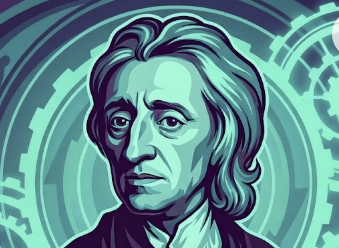
The next thing is by gentle degrees to accustom children to those things they are too much afraid of. But here great caution is to be used, that you do not make too much haste, nor attempt this cure too early, for fear lest you increase the mischief instead of remedying it.
▼
Source
source
Sec. 115
2 months 3 weeks ago
The wise will determine from the gravity of the case; the irritable from sensibility to oppression; the high-minded from disdain and indignation at abusive power in unworthy hands.

3 months 3 weeks ago
The South may keep her pine-apples, and we will be content with our strawberries, which are, as it were, pine-apples with "going a-strawberrying" stirred into them, infinitely enhancing their flavor.
1 week 4 days ago
India will teach us the tolerance and gentleness of mature mind, understanding spirit and a unifying, pacifying love for all human beings.

2 months 2 weeks ago
"What is truth?" is a fundamental question. But what is it compared to "How to endure life?" And even this one pales beside the next: "How to endure oneself?" - That is the crucial question in which no one is in a position to give us an answer.

3 months 2 weeks ago
I will take it all: tongs, molten lead, prongs, garrotes, all that burns, all that tears, I want to truly suffer. Better one hundred bites, better the whip, vitriol, than this suffering in the head, this ghost of suffering which grazes and caresses and never hurts enough.
▼
Source
source
Act 1, sc. 5

1 week 5 days ago
Philosophy complains that Custom has hoodwinked us, from the first; that we do everything by Custom, even Believe by it; that our very Axioms, let us boast of Free-thinking as we may, are oftenest simply such Beliefs as we have never heard questioned. Nay, what is Philosophy throughout but a continual battle against Custom; an ever-renewed effort to transcend the sphere of blind Custom, and so become Transcendental?
▼
Source
source
Bk. III, ch. 8.
2 months 2 weeks ago
I can prove now, for instance, that two human hands exist. How? By holding up my two hands, and saying, as I make a certain gesture with the right hand, "Here is one hand," and adding, as I make a certain gesture with the left, "and here is another." And if, by doing this, I have proved ipso facto the existence of external things, you will all see that I can also do it now in numbers of other ways: there is no need to multiply examples.
▼
Source
source
"Proof of an External World," Proceedings of the British Academy 25 (1939).
2 months 4 days ago
The custom of procuring abortions has reached such appalling proportions in America as to be beyond belief... So great is the misery of the working classes that seventeen abortions are committed in every one hundred pregnancies.
▼
Source
source
Mother Earth
2 months 3 weeks ago
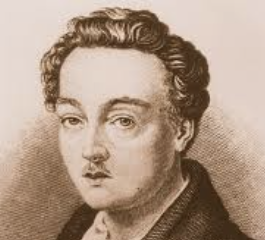
The death clock is ticking slowly in our breast, and each drop of blood measures its time, and our life is a lingering fever.
▼
Source
source
Act II.
2 months 3 weeks ago
The zealous never fail to draw political inferences from religious tenets, by which they interest the magistrate in the dispute; and then to the heat of a religious fervour is added the fury of a party zeal. All intercourse is cut off between the parties. They lose all knowledge of each other, tho' countrymen and neighbours, and are therefore easily imposed upon with the most absurd stories concerning each other's opinions and practices. They judge of the hatred of the adverse side by their own. Then fear is added to their hatred; and preventive injuries arise from their fear. The remembrance of the past, the dread of the future, the present ill, will join together to urge them forward to the most violent courses.Such is the manner of proceeding of religious parties towards each other.
▼
Source
source
Volume II, p. 147
3 months 2 weeks ago
Karsky: I met your father last week. Are you still interested in hearing how he is doing?
Hugo: No.
Karsky: It is very probable that you will be responsible for his death.
Hugo: It is virtually certain that he is responsible for my life. We are even.
▼
Source
source
Act 4, sc. 4

3 months 3 weeks ago
If this is the best of possible worlds, what then are the others?
1 month 3 weeks ago
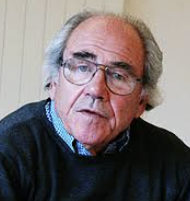
Take provocation, for instance, which is the opposite and the caricature of seduction. It says: "I know that you want to be seduced, and I will seduce you." Nothing could be worse than betraying this secret rule. Nothing could be less seductive than a provocative smile or inciteful behaviour, since both presuppose that one cannot be seduced naturally and that one needs to be blackmailed into it, or through a declaration of intent: "Let me seduce you"
▼
Source
source
(p. 67)
3 months 3 weeks ago
If I had had more time, this letter would have been shorter.
▼
Source
source
Written by Voltaire in an over-long letter to a friend, quoted to A. P. Martinich in Philosophical Writing: An Introduction, Note to the Second Edition, 1996

6 days ago
Drunkenness is nothing but voluntary madness.
▼
Source
source
Line 18.
2 months 3 days ago
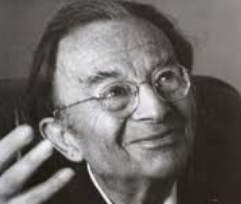
All men are in need of help and depend on one another. Human solidarity is the necessary condition for the unfolding of any one individual.
▼
Source
source
Ch. 2

3 months 3 weeks ago
Nature is too thin a screen; the glory of the One breaks in everywhere.
▼
Source
source
p. 182
2 months 3 weeks ago
We must all obey the great law of change. It is the most powerful law of nature, and the means perhaps of its conservation.
▼
Source
source
Letter to Sir Hercules Langrishe
2 months 2 weeks ago
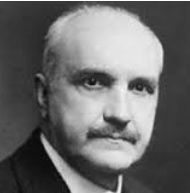
The human race, in its intellectual life, is organized like the bees: the masculine soul is a worker, sexually atrophied, and essentially dedicated to impersonal and universal arts; the feminine is a queen, infinitely fertile, omnipresent in its brooding industry, but passive and abounding in intuitions without method and passions without justice.

1 month 3 weeks ago
Whatever it may be, animals have always had, until our era, a divine or sacrificial nobility that all mythologies recount. Even murder by hunting is still a symbolic relation, as opposed to an experimental dissection. Even domestication is still a symbolic relation, as opposed to industrial breeding. One only has to look at the status of animals in peasant society. And the status of domestication, which presupposes land, a clan, a system of parentage of which the animals are a part, must not be confused with the status of the domestic pet-the only type of animals that are left to us outside reserves and breeding stations-dogs, cats, birds, hamsters, all packed together in the affection of their master. The trajectory animals have followed, from divine sacrifice to dog cemeteries with atmospheric music, from sacred defiance to ecological sentimentality, speaks loudly enough of the vulgarization of the status of man himself.
▼
Source
source
"The Animals: Territory and Metamorphoses," p. 134
3 months 4 weeks ago
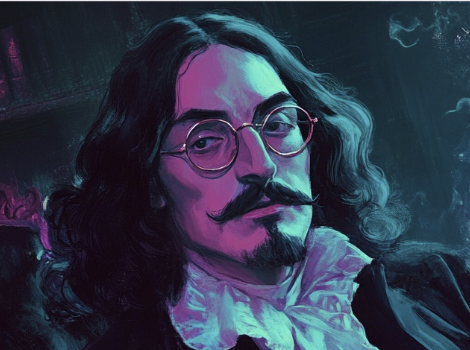
Staying as I am, one foot in one country and the other in another, I find my condition very happy, in that it is free.
▼
Source
source
Letter to Elisabeth of Bohemia, Princess Palatine, Paris, June/July 1648
2 months ago
At the time of its initial publication, Public Administration helped to define this field of study and practice by introducing two major new emphases: an orientation toward human behavior and human relations in organizations, and an emphasis on the interaction between administration, politics, and policy. Without neglecting more traditional concerns with organization structure, Simon, Thompson, and Smithburg viewed administration in its behavioral and political contexts. The viewpoints they express still are at the center of public administration's concerns.
▼
Source
source
Book abstract, 1991

2 months 3 weeks ago
Your worst sin is that you have destroyed and betrayed yourself for nothing.
1 month 1 week ago
I cannot say that I am in the slightest degree impressed by your bigness, or your material resources, as such. Size is not grandeur, and territory does not make a nation. The great issue, about which hangs true sublimity, and the terror of overhanging fate, is what are you going to do with all these things?
▼
Source
source
"Address on University Education" (1876), delivered at the formal opening of Johns Hopkins University, Baltimore, Maryland, September 12, 1876. Huxley, American Addresses (1877), p. 125.
2 months 2 weeks ago
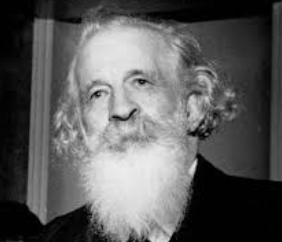
Man is an imagining being.
▼
Source
source
Ch. 2, sect. 10
2 months 3 weeks ago
Men are qualified for civil liberty in exact proportion to their disposition to put moral chains upon their own appetites, - in proportion as their love to justice is above their rapacity, - in proportion as their soundness and sobriety of understanding is above their vanity and presumption, - in proportion as they are more disposed to listen to the counsels of the wise and good, in preference to the flattery of knaves. Society cannot exist, unless a controlling power upon will and appetite be placed somewhere; and the less of it there is within, the more there must be without. It is ordained in the eternal constitution of things, that men of intemperate minds cannot be free. Their passions forge their fetters.

3 months 2 weeks ago
Is anything more certain than that in all those vast times and spaces, if I were allowed to search them, I should nowhere find her face, her voice, her touch? She died. She is dead. Is the word so difficult to learn?

2 months 4 weeks ago
Of the eternal incorporeal substance nothing is changed, is formed or deformed, but there always remains only that thing which cannot be a subject of dissolution, since it is not possible that it be a subject of composition, and therefore, either of itself or by accident, it cannot be said to die.
▼
Source
source
As translated by Arthur Imerti
2 months 1 week ago
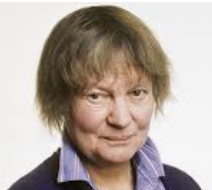
Perhaps misguided moral passion is better than confused indifference.
▼
Source
source
The Book and the Brotherhood (1987) p. 248.
3 months 3 weeks ago
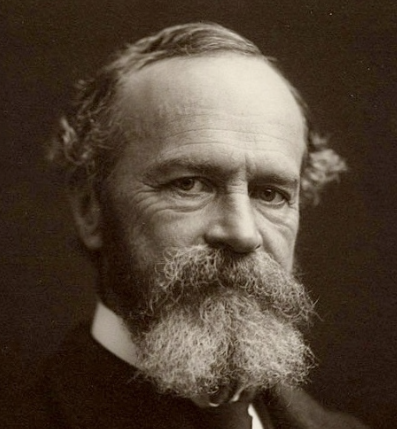
The gods we stand by are the gods we need and can use, the gods whose demands on us are reinforcements of our demands on ourselves and on one another. What I then propose to do is, briefly stated, to test saintliness by common sense, to use human standards to help us decide how far the religious life commends itself as an ideal kind of human activity . ... It is but the elimination of the humanly unfit, and the survival of the humanly fittest, applied to religious beliefs; and if we look at history candidly and without prejudice, we have to admit that no religion has ever in the long run established or proved itself in any other way. Religions have approved themselves; they have ministered to sundry vital needs which they found reigning. When they violated other needs too strongly, or when other faiths came which served the same needs better, the first religions were supplanted.
▼
Source
source
Lectures XIV and XV, "The Value of Saintliness"

3 months 3 weeks ago
Wherever there is great property, there is great inequality.
▼
Source
source
Chapter I, Part II, p. 770.
3 months 1 week ago
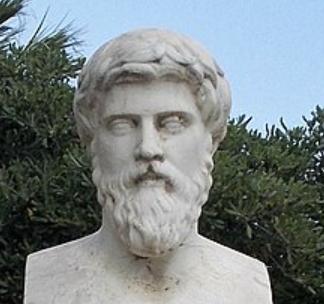
He made one of Antipater's recommendation a judge; and perceiving afterwards that his hair and beard were coloured, he removed him, saying, "I could not think one that was faithless in his hair could be trusty in his deeds."
▼
Source
source
40 Philip
2 months 5 days ago
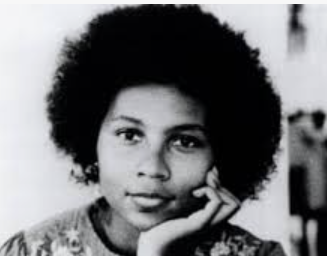
When contemporary feminist movement first began, feminist writings and scholarship by black women was groundbreaking. The writings of black women like Cellestine Ware, Toni Cade Bambara, Michele Wallace, Barbara Smith, and Angela Davis, to name a few, were all works that sought to articulate, define, speak to and against the glaring omissions in feminist work, the erasure of black female presence.
▼
Source
source
Teaching to Transgress: Education as the Practice of Freedom
2 months 2 weeks ago
A people represents not so much an aggregate of ideas and theories as of obsessions.

4 months 2 weeks ago
It is impossible that evils should be done away with, for there must always be something opposed to the good; and they must inevitably hover about mortal nature and this earth. Therefore we ought to try to escape from earth to the dwelling of the gods as quickly as we can; and to escape is to become like God, so far as this is possible, God is in no wise and in no manner unrighteous, but utterly and perfectly righteous, and there is nothing so like him as that one of us who in turn becomes most nearly perfect in righteousness.

3 months 3 weeks ago
Love in animals, has not for its only object animals of the same species, but extends itself farther, and comprehends almost every sensible and thinking being. A dog naturally loves a man above his own species, and very commonly meets with a return of affection.
▼
Source
source
Part 2, Section 12

3 months 3 weeks ago
Science seems to be at war with itself.... Naive realism leads to physics, and physics, if true, shows naive realism to be false. Therefore naive realism, if true, is false; therefore it is false.
▼
Source
source
An Inquiry into Meaning and Truth (1940), Introduction, p. 15

4 months 1 week ago
Thus, where'er the drift of hazardSeems most unrestrained to flow,Chance herself is reined and bitted,And the curb of law doth know.
3 months 3 weeks ago
It is the duty of every patriot to protect his country from its government.
▼
Source
source
Edward Abbey, "A patriot must always be ready to defend his country against his government." as written in "A Voice Crying in the Wilderness" (Vox Clamantis en Deserto): Notes from a Secret Journal (1990), ISBN 0312064888

2 months 4 weeks ago
A grievous crime indeed against religion has been committed by the man who imagines that Islam is defended by the denial of the mathematical sciences.
▼
Source
source
III. The Classes of Seekers, p. 23.

2 months 3 weeks ago
Every pleasure raises the tide of life; every pain lowers the tide of life.
▼
Source
source
Ch. 6, The Biological View
1 month 2 weeks ago
Do not take part in the council, unless you are called.
▼
Source
source
Maxim 310
3 months 3 weeks ago
Tis only from the selfishness and confin'd generosity of men, along with the scanty provision nature has made for his wants, that justice derives its origin.
▼
Source
source
Part 2, Section 2
CivilSimian.com created by AxiomaticPanic, CivilSimian, Kalokagathia