


7 months 3 weeks ago
Canned laughter: After some supposedly funny or witty remark you can hear the laughter and applause included in the soundtrack of the show itself - here we have the exact counterpart of the Chorus in classical tragedy; it is here that we have to look for 'living Antiquity.' That is to say, why this laughter? The first possible answer - that it serves to remind us when to laugh - is interesting enough, because it implies the paradox that laughter is a matter of duty and not of some spontaneous feeling; but this answer is not sufficient because we do not usually laugh. The only correct answer would be that the Other - embodied in the television set - is relieving us even of our duty to laugh - is instead laughing for us. So even if, tired from a hard days stupid work, all evening we did nothing but gaze drowsily into the television screen, we can say afterwards that objectively, through the medium of the other, we had a really good time.

3 months 3 weeks ago
In art the Chinese aim at being exquisite, and in life at being reasonable.
▼
Source
source
The Problem of China (1922), Ch. XI: Chinese and Western Civilization Contrasted
Just now
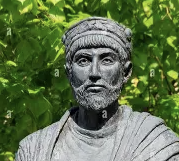
By the gods I do not want the Galileans to be killed or beaten unjustly nor to suffer any other ill. I do, however, state that the god-fearing (theosebeis) should be preferred to them ... honour should go to the gods and to the men and cities that worship them.
▼
Source
source
As quoted in Julian the Apostate (1978), by G. W. Bowersock, Ch. 8 : The Puritanical Pagan, p, 83

2 months 1 week ago
There is no tyranny in the world more hateful than that of ideas. Ideas bring ideophobia, and the consequence is that people begin to persecute their neighbors in the name of ideas. I loathe and detest all labels, and the only label that I could now tolerate would be that of ideoclast or idea breaker.
▼
Source
source
Recalled by Walter Starkie from a conversation he had with Unamuno, as related in the Epilogue of Unamuno.

3 months 4 weeks ago
How many worthy men have we seen survive their own reputation!
▼
Source
source
Book II, Ch. 16. Of Glory
3 months 1 week ago
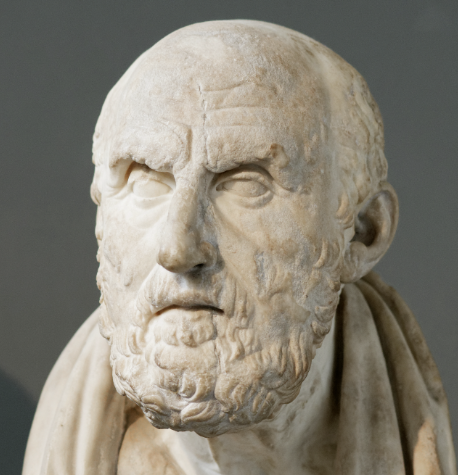
If I had followed the multitude, I should not have studied philosophy.
▼
Source
source
As quoted by Diogenes Laërtius, vii. 182.

2 months 3 weeks ago
The most formidable of all the ills that threaten the future of the Union arises from the presence of a black population upon its territory; and in contemplating the cause of the present embarrassments, or the future dangers of the United States, the observer is invariably led to this as a primary fact.
▼
Source
source
Chapter XVIII.

2 months 2 weeks ago
We define only out of despair, we must have a formula... to give a facade to the void.
2 days ago
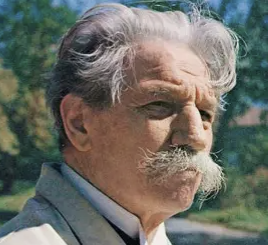
Resignation as to knowledge of the world is for me not an irretrievable plunge into a scepticism which leaves us to drift about in life like a derelict vessel. I see in it that effort of honesty which we must venture to make in order to arrive at the serviceable world-view which hovers within sight. Every world-view which fails to start from resignation in regard to knowledge is artificial and a mere fabrication, for it rests upon an inadmissible interpretation of the universe.
3 months 3 weeks ago
Do not shorten the morning by getting up late, or waste it in unworthy occupations or in talk; look upon it as the quintessence of life, as to a certain extent sacred. Evening is like old age: we are languid, talkative, silly. Each day is a little life: every waking and rising a little birth, every fresh morning a little youth, every going to rest and sleep a little death.
▼
Source
source
Vol. 2, Ch. 2: Our Relation To Ourselves

4 months 6 days ago
No man is free who is not master of himself.
▼
Source
source
Fragment 35 (Oldfather translation)

3 months 2 weeks ago
All that is not eternal is eternally out of date.
▼
Source
source
"Charity"
2 days ago
Psychotherapists ... are dealing with people whose distress arises from what may be termed maya, to use the Hindu-Buddhist word whose exact meaning is not merely 'illusion' but the entire world-conception of a culture, considered as illusion in the strict etymological sense of a play (Latin, ludere). The aim of a way of liberation is not the destruction of maya but seeing it for what it is, or seeing through it. Play is not to be taken seriously, or, in other words, ideas of the world and of oneself which are social conventions and institutions are not to be confused with reality.
▼
Source
source
p. 9
2 months 2 weeks ago
History proves nothing because it contains everything.

1 month 2 weeks ago
The telegraph press mosaic is acoustic space as much as an electric circus.
2 months 2 weeks ago
Man has ever expressed some symbolical Philosophy of his Being in his Works and Conduct; he announces himself and his Gospel of Nature; he is the Messiah of Nature.

3 months 2 weeks ago
Similarly, individual acts of aristocratic generosity do not eliminate pauperism; they perpetuate it.
▼
Source
source
p. 219

3 months 3 weeks ago
Consider what you have in the smallest chosen library. A company of the wisest and wittiest men that could be picked out of all civil countries, in a thousand years, have set in best order the results of their learning and wisdom. The men themselves were hid and inaccessible, solitary, impatient of interruption, fenced by etiquette; but the thought which they did not uncover to their bosom friend is here written out in transparent words to us, the strangers of another age.
3 months 3 weeks ago
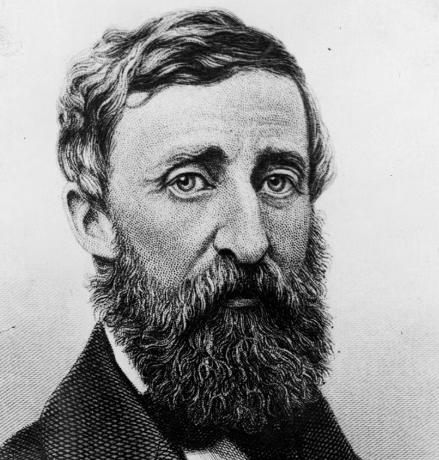
The same law that shapes the earth-star shapes the snow-star. As surely as the petals of a flower are fixed, each of these countless snow-stars comes whirling to earth...these glorious spangles, the sweeping of heaven's floor.
▼
Source
source
January 5, 1856

2 months 3 weeks ago
Life itself is but the shadow of death, and souls departed but the shadows of the living: All things fall under this name. The Sun itself is but the dark simulacrum, and the light but the shadow of God.
▼
Source
source
Ch. 4
3 months 2 weeks ago
"A pleasure is full grown only when it is remembered. You are speaking, Hmān, as if the pleasure were one thing and the memory another. It is all one thing. The séroni could say it better than I say it now. Not better than I could say it in a poem. What you call remembering is the last part of the pleasure, as the crah is the last part of a poem. When you and I met, the meeting was over very shortly, it was nothing. Now it is growing something as we remember it. But still we know very little about it. What it will be when I remember it as I lie down to die, what it makes in me all my days till then-that is the real meeting. The other is only the beginning of it."
▼
Source
source
Hyoi, p. 73

3 months 3 weeks ago
Life is just a notebook with blank pages. Every time we make a mistake, the pages get stained and living in it becomes impossible.

1 month 2 weeks ago
If you have a faith, it is statistically overwhelmingly likely that it is the same faith as your parents and grandparents had. No doubt soaring cathedrals, stirring music, moving stories and parables, help a bit. But by far the most important variable determining your religion is the accident of birth. The convictions that you so passionately believe would have been a completely different, and largely contradictory, set of convictions, if only you had happened to be born in a different place. Epidemiology, not evidence.
2 months 2 weeks ago
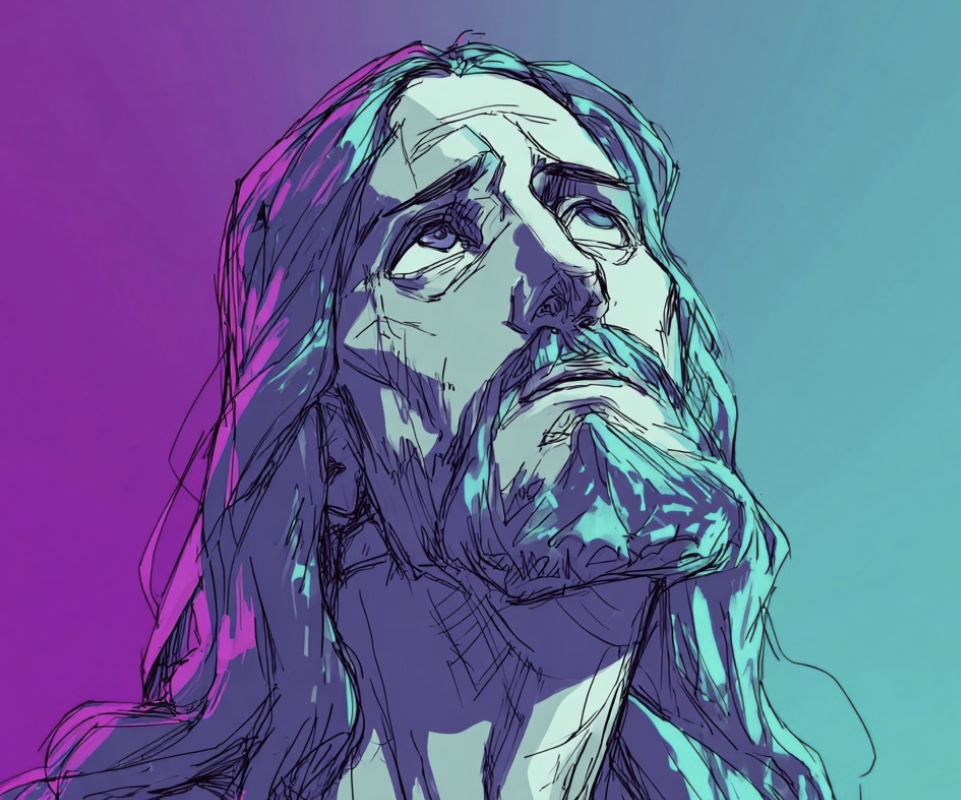
The Spirit of the Lord is on me, because he has anointed me to proclaim good news to the poor. He has sent me to proclaim freedom for the prisoners and recovery of sight for the blind, to set the oppressed free, to proclaim the year of the Lord's favor.
▼
Source
source
Luke 4:18-19 NIV

1 week 5 days ago
Under all speech that is good for anything there lies a silence that is better.
▼
Source
source
Silence is deep as Eternity; speech is shallow as Time.
1 month 2 weeks ago
Literacy, the visual technology, dissolved the tribal magic by means of its stress on fragmentation and specialization and created the individual.
3 months 3 weeks ago
Obey the voice at eve obeyed at prime.
▼
Source
source
Terminus

3 months 3 weeks ago
Conformity to nature has no connection whatever with right and wrong. The idea can never be fitly introduced into ethical discussions at all, except, occasionally and partially, into the question of degrees of culpability. To illustrate this point, let us consider the phrase by which the greatest intensity of condemnatory feeling is conveyed in connection with the idea of nature - the word "unnatural." That a thing is unnatural, in any precise meaning which can be attached to the word, is no argument for its being blamable; since the most criminal actions are to a being like man not more unnatural than most of the virtues.
▼
Source
source
page 62; Broadview Press, page 102
3 months 3 weeks ago
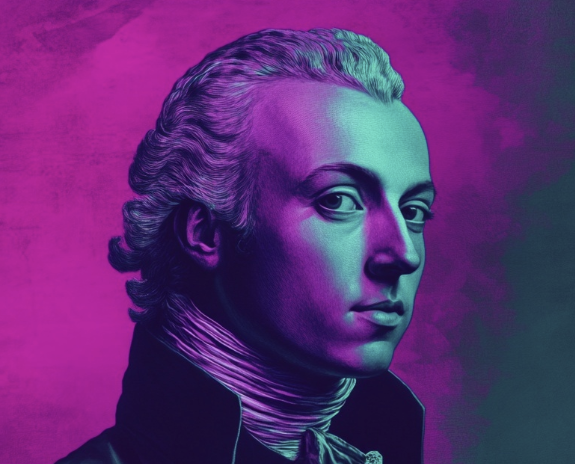
Since men in their endeavors behave, on the whole, not just instinctively, like the brutes, nor yet like rational citizens of the world according to some agreed-on plan, no history of man conceived according to a plan seems to be possible, as it might be possible to have such a history of bees or beavers. One cannot suppress a certain indignation when one sees men's actions on the great world-stage and finds, beside the wisdom that appears here and there among individuals, everything in the large woven together from folly, childish vanity, even from childish malice and destructiveness. In the end, one does not know what to think of the human race, so conceited in its gifts.
▼
Source
source
Introduction
3 months 2 weeks ago
Of course a war is entertaining. The immediate fear and suffering of the humans is a legitimate and pleasing refreshment for our myriads of toiling workers. But what permanent good does it do us unless we make use of it for bringing souls to Our Father Below? When I see the temporal suffering of humans who finally escape us, I feel as if I had been allowed to taste the first course of a rich banquet and then denied all the rest. It is worse than not to have tasted it at all. The Enemy, true to His barbarous methods of warfare, allows us to see the short misery of His favourites only to tantalize and torment us - to mock the incessant hunger, which, during this present phase of great conflict, His blockade is admittedly imposing.
▼
Source
source
Letter V
3 months 4 weeks ago
There is no wish more natural than the wish to know.
▼
Source
source
Ch. 13
1 week 5 days ago
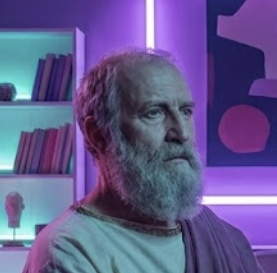
To fall into mere unreasoning deliquium of love and admiration, was not good; but such unreasoning, nay irrational supercilious no-love at all is perhaps still worse!-It is a thing forever changing, this of Hero-worship: different in each age, difficult to do well in any age. Indeed, the heart of the whole business of the age, one may say, is to do it well.

3 months 5 days ago
The utility of a science which enables men to take cognizance of the travellers on the mind's highway, and excludes those disorderly interlopers, verbal fallacies, needs but small attestation. Its searching penetration by definition alone, before which even mathematical precision fails, would especially commend it to those whom the abstruseness of the study does not terrify, and who recognise the valuable results which must attend discipline of mind. Like a medicine, though not a panacea for every ill, it has the health of the mind for its aim, but requires the determination of a powerful will to imbibe its nauseating yet wholesome influence: it is no wonder therefore that puny intellects, like weak stomachs, abhor and reject it.
▼
Source
source
Introduction to Aristotle's Organon, as translated by Octavius Freire Owen (1853), p. v

3 months 1 week ago
Thou shouldst not become presumptuous through much treasure and wealth; for in the end it is necessary for thee to leave all.

2 months 4 days ago
The ideal of human kinship that would brook no injustice or social wrong agave the only meaning and purpose to my life. This ideal I found in anarchism. Not, to be sure, in the distorted image of anarchism presented in the Press and by pseudo-social economists or hounded and persecuted by the powers that be. I found anarchism the moving spirit of beauty-of social harmony-of a free and untrammeled growth of the individual. This became my inspiration and my highest goal.

1 month 3 weeks ago
Reason has discovered the struggle for existence and the law that I must throttle all those who hinder the satisfaction of my desires. That is the deduction reason makes. But the law of loving others could not be discovered by reason, because it is unreasonable.
▼
Source
source
Pt. VIII, ch. 13
3 months 3 weeks ago
Explore, and explore, and explore. Be neither chided nor flattered out of your position of perpetual inquiry. Neither dogmatise yourself, nor accept another's dogmatism. Why should you renounce your right to traverse the star-lit deserts of truth, for the premature comforts of an acre, house, and barn? Truth also has its roof, and bed, and board. Make yourself necessary to the world, and mankind will give you bread, and if not store of it, yet such as shall not take away your property in all men's possessions, in all men's affections, in art, in nature, and in hope.

4 months ago
They [theologians] will explain to you how Christ was formed in the Virgin's womb; how accident subsists in synaxis without domicile in place. The most ordinary of them can do this. Those more fully initiated explain further whether there is an instans in Divine generation; whether in Christ there is more than a single filiation; whether 'the Father hates the Son' is a possible proposition; whether God can become the substance of a woman, of an ass, of a pumpkin, or of the devil, and whether, if so, a pumpkin could preach a sermon, or work miracles, or be crucified. And they can discover a thousand other things to you besides these. They will make you understand notions, and instants, formalities, and quiddities, things which no eyes ever saw, unless they were eyes which could see in the dark what had no existence.
▼
Source
source
as quoted by Froude ibid.,

2 weeks 3 days ago
Multitude is a class concept. ... Class is determined by class struggle. There are, of course, in infinite number of ways that humans can be grouped into classes - hair color, blood type, and so forth - but the classes that matter are those defined by the lines of collective struggle. Race is just as much a political concept as economic class is in this regard. ... Class is a political concept, in short, in that a class is and can only be a collectivity that struggles in common.
▼
Source
source
104

4 months 1 week ago
Better a diamond with a flaw than a pebble without.

4 months 3 weeks ago
You wanted God's ideas about what was best for you to coincide with your ideas, but you also wanted him to be the almighty Creator of heaven and earth so that he could properly fulfill your wish. And yet, if he were to share your ideas, he would cease to be the almighty Father.
3 months 3 weeks ago
Four snakes gliding up and down a hollow for no purpose that I could see - not to eat, not for love, but only gliding.
▼
Source
source
April 11, 1834

2 months 3 weeks ago
The second half of a man's life is made up of nothing but the habits he has acquired during the first half.
▼
Source
source
As quoted in Peter's Quotations: Ideas for Our Time (1979) by Laurence J. Peter, p. 299
2 months 1 week ago
Equally there is no rhythm when variations are not placed. There is a wealth of suggestions in the phrase "takes place". The change not only comes but it belongs; it had its definite place in a larger whole.
▼
Source
source
p. 160
2 weeks 4 days ago
It requires wisdom to understand wisdom: the music is nothing if the audience is deaf.
▼
Source
source
Ch. XV: "The Moralist in an Unbelieving World", §2, p. 324.
1 week ago
The republic is nothing whatever but - absolute monarchy; for it makes no difference whether the monarch is called prince or people, both being a 'majesty'.
▼
Source
source
Cambridge 1995, p. 202, 203
CivilSimian.com created by AxiomaticPanic, CivilSimian, Kalokagathia