


4 months 3 days ago
Association, applied to land, shares the economic advantage of large-scale landed property, and first brings to realization the original tendency inherent in land-division, namely, equality. In the same way association also re-establishes, now on a rational basis, no longer mediated by serfdom, overlordship and the silly mysticism of property, the intimate ties of man with the earth, since the earth ceases to be an object of huckstering, and through free labour and free enjoyment becomes once more a true personal property of man.
▼
Source
source
Rent of Land, p. 65.
3 months 1 week ago
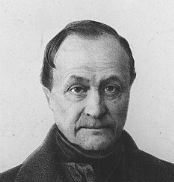
The errors of Communism must be rectified; but there is no necessity for giving up the name, which is a simple assertion of the paramount importance of Social Feeling. However, now that we have happily passed from monarchy to republicanism, the name of Communist is no longer indispensable; the word Republican expresses the meaning as well, and without the same danger. Positivism, then, has nothing to fear from Communism; on the contrary, it will probably be accepted by most Communists among the working classes, especially in France where abstractions have but little influence on minds thoroughly emancipated from theology. The people will gradually find that the solution of the great social problem which Positivism offers is better than the Communistic solution.
▼
Source
source
p. 169

2 months 4 weeks ago
When we know what words are worth, the amazing thing is that we try to say anything at all, and that we manage to do so. This requires, it is true, a supernatural nerve.

2 days ago
I never consider a difference of opinion in politics, in religion, in philosophy, as cause for withdrawing from a friend.
▼
Source
source
As quoted in The Life and Writings of Thomas Jefferson : Including All of His Important Utterances on Public Questions (1900) by Samuel E. Forman, p. 429

4 months 1 week ago
There is no man so good, who, were he to submit all his thoughts and actions to the laws, would not deserve hanging ten times in his life.
▼
Source
source
Book III, Ch. 9. Of Vanity
1 month 4 weeks ago
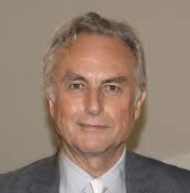
I would mind more if I could claim that The Selfish Gene had become severely outmoded and superseded. Unfortunately (from one point of view) I cannot. Details have changed and factual examples burgeoned mightily. But, with an exception that I shall discuss in a moment, there is little in the book that I would rush to take back now, or apologize for.
▼
Source
source
Arthur Cain, late Professor of Zoology at Liverpool and one of my inspiring tutors at Oxford in the sixties, described The Selfish Gene in 1976 as a 'young man's book'.
1 month 2 weeks ago
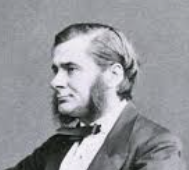
These examples... show that, in whatever proportion of its limbs the Gorilla differs from Man, the other Apes depart still more widely from the Gorilla and that, consequently, such differences of proportion can have no ordinal value.
▼
Source
source
Ch.2, p. 89

3 months 2 days ago
The ultimate result of shielding men from the effects of folly, is to fill the world with fools.
▼
Source
source
Vol. 3, Ch. IX, State-Tamperings with Money and Banks
3 months 4 weeks ago
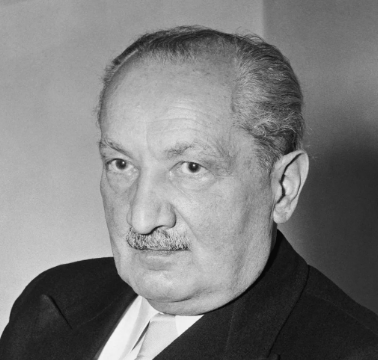
For anyone who at the end of Western philosophy can and must still question philosophically, the decisive question is no longer merely "What basic character do beings manifest?" or "How may the being of beings be characterized?" but "What is this 'being' itself?" The decisive question is that of "the meaning of being," not merely that of the being of beings.
▼
Source
source
p. 18

5 months 3 days ago
That which distinguishes the Christian narrow way from the common human narrow way is the voluntary. Christ was not someone who coveted earthly things but had to be satisfied with poverty, no, he chose poverty.

2 months 2 weeks ago
In fact, we had a number of extreme leftists and trade unionists among us, and they seemed to take it for granted that we all agreed that the rich must somehow be forced to surrender their ill-gotten gains. Yet there was an air of good humor about their idealism that made me feel they would not be too offended if I admitted that I regard socialists as well-meaning but muddle-headed brigands.
▼
Source
source
p. 30
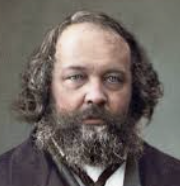
3 months ago
We wish, in a word, equality - equality in fact as a corollary, or rather, as primordial condition of liberty. From each according to his faculties, to each according to his needs; that is what we wish sincerely and energetically.
▼
Source
source
As quoted in The Old Order and the New (1890) by J. Morris Davidson
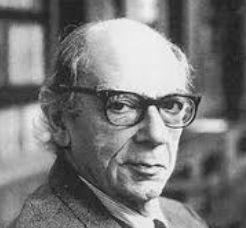
2 months 3 weeks ago
But to manipulate men, to propel them towards goals which you - the social reformer - see, but they may not, is to deny their human essence, to treat them as objects without wills of their own, and therefore to degrade them.

4 months 6 days ago
Methinks I am like a man, who having struck on many shoals, and having narrowly escap'd shipwreck in passing a small frith, has yet the temerity to put out to sea in the same leaky weather-beaten vessel, and even carries his ambition so far as to think of compassing the globe under these disadvantageous circumstances.
▼
Source
source
Part 4, Section 7
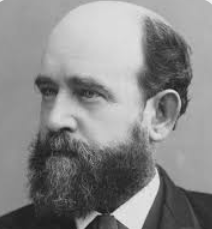
1 day ago
It is impossible to read the works of the economists who since the time of Smith have endeavored to build up and elucidate the science of political economy without seeing how, over and over again, they stumble over the law of wages without once recognizing it. Yet, "if it were a dog it would bite them!" Indeed, it is difficult to resist the impression that some of them really saw this law of wages, but, fearful of the practical conclusions to which it would lead, preferred to ignore and cover it up, rather than use it as the key to problems which without it are so perplexing. A great truth to an age which has rejected and trampled on it, is not a word of peace, but a sword!
4 months 1 week ago
What of a truth that is bounded by these mountains and is falsehood to the world that lives beyond?
▼
Source
source
Ch. 12
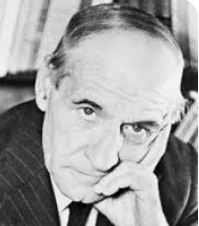
2 months 3 weeks ago
The assurance that we have no means of answering final questions is no valid excuse for callousness towards them. The more deeply should we feel, down to the roots of our being, their pressure and their sting. Whose hunger has ever been sated with the knowledge that he could not eat?
▼
Source
source
p. 15
2 months 2 weeks ago
Like Fichte, Brentano had one simple and powerful insight. He declared: there is a basic difference between a mental and physical act. if I slip on the snow and fall flat on my back, that is an unintentional physical act. But there is no such thing as an unintentional mental act. When I think, I have to think about something; I have to focus my mind on it. You could compare all mental acts (thinking, willing, loving, trying to remember something) to a searchlight beam stabbing into the darkness. There is an element of will, of 'intentionality,' in all mental activity. So it is quite inaccurate to compare mental activity to chemistry, or to a kind of drifting, like leaves on a stream. It flows purposefully or not at all.
▼
Source
source
p. 35
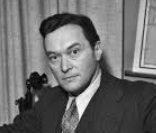
4 weeks 1 day ago
Art enlarges experience by admitting us to the inner life of others.
▼
Source
source
Ch. IV: "The Golden Rule and After", p. 110.

4 months 3 days ago
That power should be exercised over any portion of mankind without any obligation of consulting them, is only tolerable while they are in an infantine, or a semi-barbarous state. In any civilized condition, power ought never to be exempt from the necessity of appealing to the reason, and recommending itself by motives which justify it to the conscience and feelings, of the governed.
▼
Source
source
Thoughts on Parliamentary Reform (1859), p. 24

4 months 3 days ago
I am sure that university life would be better, both intellectually and morally, if most university students had temporary childless marriages. This would afford a solution to the sexual urge neither restless nor surreptitious, neither mercenary nor casual, and of such a nature that it need not take up time which ought to be given to work.
▼
Source
source
"Sex in Education", p. 119-120

4 months 4 weeks ago
Idleness is only fatal to the mediocre.

4 months 3 weeks ago
The end of living, or the ultimate good, which is to be sought for its own sake, according to the universal opinion of mankind, is happiness; yet men, for the most part, fail in the pursuit of this end, either because they do not form a right idea of the nature of happiness, or because they do not make use of proper means to attain it.
2 months 4 weeks ago
This is how I recognize an authentic poet: by frequenting him, living a long time in the intimacy of his work, something changes in myself, not so much my inclinations or my tastes as my very blood, as if a subtle disease had been injected to alter its course, its density and nature. To live around a true poet is to feel your blood run thin, to dream a paradise of anemia, and to hear, in your veins, the rustle of tears.

4 months 3 days ago
The finest manners in the world are awkwardness and fatuity, when contrasted with a finer intelligence.
▼
Source
source
p. 493

3 months 3 weeks ago
But let there be no misunderstanding: it is not that a real man, the object of knowledge, philosophical reflection or technological intervention, has been substituted for the soul, the illusion of theologians. The man described for us, whom we are invited to free, is already in himself the effect of a subjection more profound than himself. A 'soul' inhabits him and brings him to existence, which is itself a factor in the mastery that power exercises over the body. The soul is the effect and instrument of a political anatomy; the soul is the prison of the body.

4 months 4 days ago
If a big diamond is cut up into pieces, it immediately loses its value as a whole; or if an army is scattered or divided into small bodies, it loses all its power; and in the same way a great intellect has no more power than an ordinary one as soon as it is interrupted, disturbed, distracted, or diverted; for its superiority entails that it concentrates all its strength on one point and object, just as a concave mirror concentrates all the rays of light thrown upon it. Noisy interruption prevents this concentration. This is why the most eminent intellects have always been strongly averse to any kind of disturbance, interruption and distraction, and above everything to that violent interruption which is caused by noise; other people do not take any particular notice of this sort of thing.
▼
Source
source
On Noise

4 months 3 weeks ago
It is quite clear to you that all the people see that lower kinds of creation could have been made in a different way from that in which they really are, and as they see this lower degree in many things they think that they must have been made by chance.
4 months 1 week ago
For my own part, I may desire in general to be other than I am; I may condemn and dislike my whole form, and beg of Almighty God for an entire reformation, and that He will please to pardon my natural infirmity: but I ought not to call this repentance, methinks, no more than the being dissatisfied that I am not an angel or Cato. My actions are regular, and conformable to what I am and to my condition; I can do no better; and repentance does not properly touch things that are not in our power; sorrow does.. I imagine an infinite number of natures more elevated and regular than mine; and yet I do not for all that improve my faculties, no more than my arm or will grow more strong and vigorous for conceiving those of another to be so.
▼
Source
source
Ch. 2
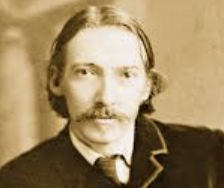
1 month 4 weeks ago
Them that die will be the lucky ones!
▼
Source
source
Ch. 20, Silver's Embassy.

3 months 1 week ago
Not only does democracy make every man forget his ancestors, but also clouds their view of their descendants and isolates them from their contemporaries. Each man is for ever thrown back on himself alone, and there is danger that he may be shut up in the solitude of his own heart.
▼
Source
source
Book Two, Chapter II.

3 months 3 days ago
It looks to me to be narrow and pedantic to apply the ordinary ideas of criminal justice to this great public contest. I do not know the method of drawing up an indictment against a whole people.
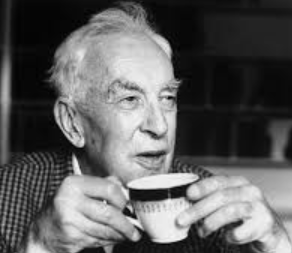
1 month 2 weeks ago
Societies, not states, are 'the social atoms' with which students of history have to deal.
▼
Source
source
Vol. 1
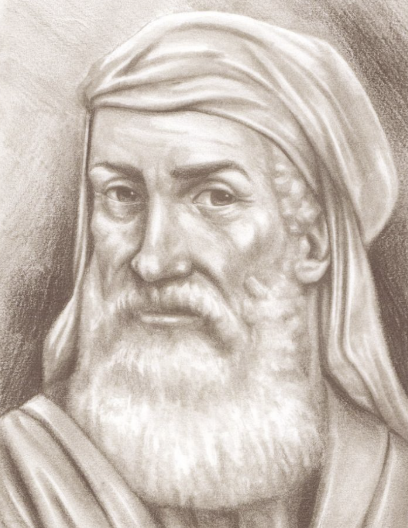
3 months 3 weeks ago
For already, sometime, I have been a boy and a girl, a shrub, a bird, and a silent fish in the sea.
▼
Source
source
fr. 117
2 months 4 weeks ago
In the fact of being born there is such an absence of necessity that when you think about it a little more than usual, you are left-ignorant how to react-with a foolish grin
4 months 5 days ago
...they cudgel their brains with absurd questions, such as, for instance, why God did not make the world many centuries earlier. They persuade themselves that it is easy to conceive, to be sure, how God may discern what is present, that is, what is actual in the time in which he is, but how He may foresee what is future, that is, what is actual in the time in which He is not yet, they deem an intellectual difficulty; as if the existence of the Necessary Being descended through all the moments of an imaginary time, and, having already exhausted a part of His duration, saw before Him the eternity He was yet to live simultaneously with the present events of the world. All these difficulties upon proper insight into the notion of time vanish like smoke.

5 months ago
You want to know whether I can make a long speech, such as you are in the habit of hearing; but that is not my way. Socrates speaking to Alcibiades
1 month 4 weeks ago
It would be deeply depressing if the only way children could get moral values was from religion. Either from scripture, and God knows we don't want them to get it from scripture, I mean, just look at scripture. Or, from being afraid of God, being intimidated by God. Anybody who is good for only those two reasons is not really being good at all. Why not teach children things like the Golden Rule, do as you would be done by, how would you like it if other children did that to you, so why do you do it to them... I think it's depressing that anybody should suggest that you actually need God in order to be moral. I would hope that our morals come from a better source than that, and therefore they are genuinely moral rather than based on outmoded scripture, or based on fear.
▼
Source
source
BBC,
1 month 1 week ago
True hedonic engineering, as distinct from mindless hedonism or reckless personal experimentation, can be profoundly good for our character. Character-building technologies can benefit utilitarians and non-utilitarians alike. Potentially, we can use a convergence of biotech, nanorobotics and information technology to gain control over our emotions and become better (post-)human beings, to cultivate the virtues, strength of character, decency, to become kinder, friendlier, more compassionate: to become the type of (post)human beings that we might aspire to be, but aren't, and biologically couldn't be, with the neural machinery of unenriched minds. Given our Darwinian biology, too many forms of admirable behaviour simply aren't rewarding enough for us to practise them consistently: our second-order desires to live better lives as better people are often feeble echoes of our baser passions.
▼
Source
source
Utopian Neuroscience, BLTC Research, 2019

3 weeks 2 days ago
Civil government does by its nature include much that is mechanical, and must be treated accordingly. We term it indeed, in ordinary language, the Machine of Society, and talk of it as the grand working wheel from which all private machines must derive, or to which they must adapt, their movements.
2 weeks 3 days ago
He not only overflowed with learning but stood in the slops.
▼
Source
source
On Macaulay; reported in Hesketh Pearson, The Smith of Smiths (London: Hamish Hamilton, 1934), p. 180
3 weeks 2 days ago
Such souls are, in these days, getting somewhat out of humour with the world. Your very Byron, in these days, is at least driven mad; flatly refuses fealty to the world. The world with its injustices, its golden brutalities, and dull yellow guineas, is a disgust to such souls: the ray of Heaven that is in them does at least pre-doom them to be very miserable here. Yes:-and yet all misery is faculty misdirected, strength that has not yet found its way. The black whirlwind is mother of the lightning. No smoke, in any sense, but can become flame and radiance! Such soul, once graduated in Heaven's stern University, steps out superior to your guinea.

4 months 2 days ago
The Ideal Man of the eighteenth century was the Rationalist; of the seventeenth, the Christian Stoic; of the Renaissance, the Free Individual; of the Middle Ages, the Contemplative Saint. And what is our Ideal Man? On what grand and luminous mythological figure does contemporary humanity attempt to model itself? The question is embarrassing. Nobody knows. And, in spite of all the laudable efforts of the Institute for Intellectual Co-operation to fabricate an acceptable Ideal Man for the use of Ministers of Education, nobody, I suspect, will know until such time as a major poet appears upon the scene with the unmistakable revelation. Meanwhile, one must be content to go on piping up for reason and realism and a certain decency.
▼
Source
source
p. 5
2 months 3 weeks ago
This new philosophy, however, was far from giving the temporal an inherent position and function in the constitution of things. Change was acting on the side of man but only because of fixed laws which governed the changes that take place. There was hope in change just because the laws that govern it do not change.
3 days ago
God huddles in a knot in every cell of flesh. When I break a fruit open, this is how every seed is revealed to me. When I speak to men, this what I discern in their thick and muddy brains. God struggles in every thing, his hands flung upward toward the light. What light? Beyond and above every thing!
3 days ago
The centuries are thick, dark waves that rise and fall, steeped in blood. Every moment is a gaping abyss. Gaze on the dark sea without staggering, confront the abyss every moment without illusion or impudence or fear. ... But this is not enough; take a further step: battle to give meaning to the confused struggles of man.
4 months 4 weeks ago
For those of us who have been thrown into hell, mysterious melodies and the torturing images of a vanished beauty will always bring us, in the midst of crime and folly, the echo of that harmonious insurrection which bears witness, throughout the centuries, to the greatness of humanity.
2 days ago
I agree with you that there is a natural aristocracy among men. The grounds of this are virtue and talents... The natural aristocracy I consider as the most precious gift of nature, for the instruction, the trusts, and government of society... Every one, by his property, or by his satisfactory situation, is interested in the support of law and order. And such men may safely and advantageously reserve to themselves a wholesome control over their public affairs, and a degree of freedom, which, in the hands of the canaille [the masses] of the cities of Europe, would be instantly perverted to the demolition and destruction of everything public and private.
▼
Source
source
Letter to John Adams

2 months 1 week ago
Cautiousness in judgment is nowadays to be recommended to each and every one: if we gained only one incontestable truth every ten years from each of our philosophical writers the harvest we reaped would be sufficient. ... To grow wiser means to learn to know better and better the faults to which this instrument with which we feel and judge can be subject.
▼
Source
source
A 38

2 weeks 3 days ago
If you wish to be loved, love.
▼
Source
source
Seneca quotes this in Epistulae Morales ad Lucilium; Epistle IX and attributes it to Hecato
CivilSimian.com created by AxiomaticPanic, CivilSimian, Kalokagathia