


4 months 1 week ago
He who establishes his argument by noise and command shows that his reason is weak.
2 months 2 days ago
Our tools are extensions of our purposes, and so we find it natural to make metaphorical attributions of intentionality to them; but I take it no philosophical ice is cut by such examples.
2 months 3 weeks ago
The radical empiricist onslaught ... provides the methodological justification for the debunking of the mind by the intellectuals-a positivism which, in its denial of the transcending elements of Reason, forms the academic counterpart of the socially required behavior.
▼
Source
source
p. 13

1 month 1 week ago
Principles of Earth Democracy, #10: Earth Democracy connects people in circles of care, cooperation, and compassion instead of dividing them through competition and conflict, fear and hatred. In the face of a world of greed, inequality, and overconsumption, Earth Democracy globalizes compassion, justice, and sustainability.
▼
Source
source
(p. 11)

2 months 3 weeks ago
Self-pity is not as sterile as we suppose. Once we feel its mere onset, we assume a thinker's attitude, and come to think of it, we come to think!
3 months 2 weeks ago
The kind of equality utilitarianism supports is given by Bentham's formula...: 'everybody to count for one, and nobody for more than one'...Utilitarianism seeks to maximize happiness, and in deciding how to calculate whether happiness is being maximized, no one's pleasures or pains should count for less because they are peasants rather than aristocrats, slaves rather than slave-owners, Africans rather than Europeans, poor rather than rich, illiterates rather than doctors of philosophy, children rather than adults, females rather than males, or even, as we have seen, non-human animals rather than human beings.
▼
Source
source
p. 349

3 weeks 5 days ago
It is no coincidence that the ABM Treaty was signed midway between the delinking of the U.S. dollar from the gold standard in 1971 and the first oil crisis in 1973. These were the years not only of monetary and economic crises but also of both the beginning of the destruction of the welfare state and the shift of the hegemony of economic production from the factory to more social and immaterial sectors. One might think of these various transformations as different faces of one common phenomenon, one grand social transformation.
▼
Source
source
39
1 week 4 days ago
When a man no longer confuses himself with the definition of himself that others have given him, he is at once universal and unique. He is universal by virtue of the inseparability of his organism from the cosmos. He is unique in that he is just this organism and not any stereotype of role, class, or identity assumed for the convenience of social communication.
▼
Source
source
p. 9
3 months 2 weeks ago
On James's view, "true" resembles "good" or "rational" in being a normative notion, a compliment paid to sentences that seem to be paying their way and that fit with other sentences which are doing so.
▼
Source
source
Introduction to Consequences of Pragmatism

3 months 4 days ago
Not only does democracy make every man forget his ancestors, but also clouds their view of their descendants and isolates them from their contemporaries. Each man is for ever thrown back on himself alone, and there is danger that he may be shut up in the solitude of his own heart.
▼
Source
source
Book Two, Chapter II.

4 months 1 week ago
I am a lover of liberty. I will not and I cannot serve a party.
▼
Source
source
Spongia adversus aspergines Hutteni (1523), § 176, As quoted in Desiderius Erasmus of Rotterdam (1900) by Ephraim Emerton, p. 377

2 months 2 weeks ago
Science is a cemetery of dead ideas, even though life may issue from them.
4 months 3 days ago
By a lie a man throws away and, as it were, annihilates his dignity as a man. A man who himself does not believe what he tells another ... has even less worth than if he were a mere thing. ... makes himself a mere deceptive appearance of man, not man himself.
▼
Source
source
Doctrine of Virtue as translated by Mary J. Gregor (1964), p. 93
3 months 2 weeks ago
Beginning to reason is like stepping onto an escalator that leads upward and out of sight. Once we take the first step, the distance to be traveled is independent of our will and we cannot know in advance where we shall end.
▼
Source
source
Chapter 4, Reason, p. 88

Just now
Truth will do well enough if left to shift for herself. She seldom has received much aid from the power of great men to whom she is rarely known & seldom welcome. She has no need of force to procure entrance into the minds of men. Error indeed has often prevailed by the assistance of power or force. Truth is the proper & sufficient antagonist to error.
▼
Source
source
Notes on Religion (October 1776), published in The Writings of Thomas Jefferson : 1816-1826 (1899) edited by Paul Leicester Ford, v. 2, p. 102
1 month 2 weeks ago
In all ages a chief cause of the intestine disorders of states has been that the natural distribution of power and the legal distribution of power have not corresponded with each other.
▼
Source
source
Speech in the House of Commons (28 February 1832), quoted in Speeches of the Right Honourable T. B. Macaulay, M.P. (1854), p. 91
3 months 4 weeks ago
The main characteristic of any event is that it has not been foreseen. We don't know the future but everybody acts into the future. Nobody knows what he is doing because the future is being done, action is being done by a "we" and not an "I." Only if I were the only one acting could I foretell the consequences of what I'm doing. What actually happens is entirely contingent, and contingency is indeed one of the biggest factors in all history.
3 months 4 weeks ago
Totalitarianism in power invariably replaces all first-rate talents, regardless of their sympathies, with those crackpots and fools whose lack of intelligence and creativity is still the best guarantee of their loyalty.
▼
Source
source
Part 3, Chapter 10
2 months 3 weeks ago
What can be said, lacks reality. Only what fails to make its way into words exists and counts.

4 months ago
The frontiers are not east or west, north or south, but wherever a man fronts a fact, though that fact be his neighbor, there is an unsettled wilderness between him and Canada, between him and the setting sun, or, farther still, between him and it.

4 months 1 day ago
The slave is doomed to worship time and fate and death, because they are greater than anything he finds in himself, and because all his thoughts are of things which they devour.
4 months 3 weeks ago
There is a cult of ignorance in the United States, and there always has been. The strain of anti-intellectualism has been a constant thread winding its way through our political and cultural life, nurtured by the false notion that democracy means that "my ignorance is just as good as your knowledge."
4 months 3 weeks ago
If anyone can be considered the greatest writer who ever lived, it is Shakespeare.
1 week 4 days ago
Ivanov came to quite the same conclusion, though life supplied him with quite different material to think about. He puts it like this: many lives have a mystical sense, but not everyone reads it right; more often than not it is given to us in cryptic form, and when we fail to decipher it we despair because our lives seem meaningless... the secret of a great life is often a man's success in deciphering the mysterious symbols vouchsafed to him, understanding them, and so learning to walk in the true path.
4 months 1 week ago
In true education, anything that comes to our hand is as good as a book: the prank of a page-boy, the blunder of a servant, a bit of table talk- they are all part of the curriculum.
▼
Source
source
The Autobiography of Michel de Montaigne, Chapter III, pg. 24 (Translated by Marvin Lowenthal
2 months 1 week ago
A clever child brought up with a foolish one can itself become foolish. Man is so perfectable and corruptible he can become a fool through good sense.
▼
Source
source
F 69
3 months 4 weeks ago
Intuitionism is not constructive, perfectionism is unacceptable.
▼
Source
source
Chapter I, Section 9, pg. 52

5 months 2 days ago
One may certainly admire man as a mighty genius of construction, who succeeds in piling an infinitely complicated dome of concepts upon an unstable foundation, and, as it were, on running water. Of course, in order to be supported by such a foundation, his construction must be like one constructed of spiders' webs: delicate enough to be carried along by the waves, strong enough not to be blown apart by every wind.
1 month 2 weeks ago
Let us remember that the government and the society act and react on each other. Sometimes the government is in advance of the society, and hurries the society forward. So urged, the society gains on the government, comes up with the government, outstrips the government, and begins to insist that the government shall make more speed. If the government is wise, it will yield to that just and natural demand. The great cause of revolutions is this, that, while nations move onward, constitutions stand still. The peculiar happiness of England is that here, through many generations, the constitution has moved onward with the nation.
▼
Source
source
Speech in the House of Commons on the Reform Bill (5 July 1831), quoted in Speeches of the Right Honourable T. B. Macaulay, M.P. (1854), p. 25

4 months 4 days ago
The whole is a riddle, an aenigma, an inexplicable mystery. Doubt, uncertainty, suspence of judgment appear the only result of our most accurate scrutiny, concerning this subject. But such is the frailty of human reason, and such the irresistible contagion of opinion, that even this deliberate doubt could scarcely be upheld; did we not enlarge our view, and opposing one species of superstition to another, set them a quarrelling; while we ourselves, during their fury and contention, happily make our escape, into the calm, though obscure, regions of philosophy.
▼
Source
source
Part XV - General corollary
Just now
This is the Supreme Duty of the man who struggles - to set out for the lofty peak which Christ, the first-born sone of salvation, attained. How can we begin? If we are to follow him we must have a profound knowledge of his conflict, we must relive his anguish: his victory over the blossoming snares of the earth, his sacrifice of the great and small joys of men and his ascent from sacrifice to sacrifice, exploit to exploit, to martyrdom's summit, the Cross.

2 months 3 weeks ago
Go thy way; and as thou hast believed, so be it done unto thee.
▼
Source
source
8:13 (KJV) Said to the officer.
4 months 2 weeks ago
War is the father and king of all: some he has made gods, and some men; some slaves and some free.
4 months 3 days ago
Nature has willed that man should, by himself, produce everything that goes beyond the mechanical ordering of his animal existence, and that he should partake of no other happiness or perfection than that which he himself, independently of instinct, has created by his own reason.
▼
Source
source
Third Thesis

3 months ago
Well is it known that ambition can creep as well as soar.
▼
Source
source
No. 3

4 months 2 weeks ago
Nothing can be produced from nothing.
▼
Source
source
Book I, lines 156-157 (tr. Munro) Variant translations: Nothing can be created from nothing. Nothing can be created out of nothing.
3 months ago
Dying people often become childish.
▼
Source
source
Act II.
2 months 3 weeks ago
A people represents not so much an aggregate of ideas and theories as of obsessions.
4 months 1 day ago
Thee will find out in time that I have a great love of professing vile sentiments, I don't know why, unless it springs from long efforts to avoid priggery.
▼
Source
source
Letter to Alys Pearsall Smith (1894). Smith was a Quaker, thus the archaic use of "Thee" in this and other letters to her.
4 months 3 weeks ago
Of all the books I have ever worked on, I think Asimov's Guide to Shakespeare gave me the most pleasure, day in, day out. For months and months I lived and thought Shakespeare, and I don't see how there can be any greater pleasure in the world, any pleasure, that is, that one can indulge in for as much as ten hours without pause, day after day indefinitely.

3 months 4 days ago
The philosopher has never killed any priests, whereas the priest has killed a great many philosophers.

4 months 4 days ago
God is the Immanent Cause of all things, never truly transcendent from them.
▼
Source
source
Part I, Prop. XVIII

2 months 3 weeks ago
May some future student go over this ground again, and have the leisure to give his results to the world.

4 months 3 weeks ago
All systems of morality are based on the idea that an action has consequences that legitimize or cancel it. A mind imbued with the absurd merely judges that those consequences must be considered calmly. It is ready to pay up. In other words, there may be responsible persons, but there are no guilty ones, in its opinion. At very most, such a mind will consent to use past experience as a basis for its future actions.
4 months 1 week ago
I feel that the entire spiritual life consists in this: That we gradually turn from those things whose appearance is deceptive to those things that are real.
▼
Source
source
p. 63
1 month 3 weeks ago
Orwell's essay speaks to us today. It tells us that patriotism is the sine qua non of survival, and that it arises spontaneously in the ordinary human heart. It does not depend upon any grand narrative of triumph of the kind put about by the fascists and the communists, but grows from the habits of association that we British have been fortunate enough to inherit. We do not use grand and tainted honorifics like "la patrie" or "das Vaterland". We refer simply to this spot of earth, which belongs to us because we belong to it, have lived in it, loved it, defended it and established peace and prosperity within its borders.
▼
Source
source
'Brexit will give us back pride in our island roots', The Times (18 November 2017), p. 35

4 months ago
The faith that stands on authority is not faith.
▼
Source
source
The Over-soul
3 months ago
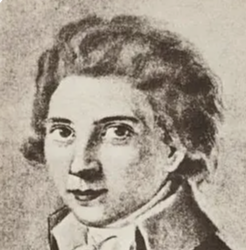
To disrespect the masses is moral; to honor them, lawful.
▼
Source
source
Lucinde and the Fragments, P. Firchow, trans. (1991), "Athenaeum Fragments" § 211
4 months 3 days ago
The use of the intellect in the sciences whose primitive concepts as well as axioms are given by sensuous intuition is only logical, that is, by it we only subordinate cognitions to one another according to their relative universality conformably to the principle of contradiction, phenomena to more general phenomena, and consequences of pure intuition to intuitive axioms. But in pure philosophy, such as metaphysics, in which the use of the intellect in respect to principles is real, that is to say, where the primary concept of things and relations and the very axioms are given originally by the pure intellect itself, and not being intuitions do not enjoy immunity from error, the method precedes the whole science, and whatever is attempted before its precepts are thoroughly discussed and firmly established is looked upon as rashly conceived and to be rejected among vain instances of mental playfulness.
2 months 2 weeks ago
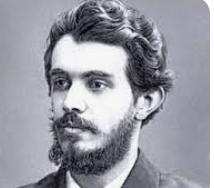
There is absolute truth in anarchism and it is to be seen in its attitude to the sovereignty of the state and to every form of state absolutism. ... The religious truth of anarchism consists in this, that power over man is bound up with sin and evil, that a state of perfection is a state where there is no power of man over man, that is to say, anarchy. The Kingdom of God is freedom and the absence of such power... the Kingdom of God is anarchy.
▼
Source
source
Slavery and Freedom (1939), p. 147
CivilSimian.com created by AxiomaticPanic, CivilSimian, Kalokagathia