

2 months 5 days ago
Implication is thus the very texture of our web of belief, and logic is the theory that traces it.
▼
Source
source
S. 41
1 week 2 days ago
Life is that which is discontent, which struggles and seeks, which suffers and creates.
▼
Source
source
Ch. 1 : Our life begins

2 months 2 weeks ago
We have repeatedly observed that while any whole is evolving, there is always going on an evolution of the parts into which it divides itself; but we have not observed that this equally holds of the totality of things, which is made up of parts within parts from the greatest down to the smallest.
▼
Source
source
Pt. II, The Knowable; Ch. XV, The Law of Evolution (continued)

3 months 2 weeks ago
Logic takes care of itself; all we have to do is to look and see how it does it.
▼
Source
source
Journal entry (13 October 1914), also in Tractatus Logico-Philosophicus (§ 5.47)
1 month 2 weeks ago
In anything fit to be called by the name of reading, the process itself should be absorbing and voluptuous; we should gloat over a book, be rapt clean out of ourselves, and rise from the perusal, our mind filled with the busiest, kaleidoscopic dance of images, incapable of sleep or of continuous thought. The words, if the book be eloquent, should run thenceforward in our ears like the noise of breakers, and the story, if it be a story, repeat itself in a thousand coloured pictures to the eye.
▼
Source
source
A Gossip on Romance, printed in Longman's Magazine (November 1882).
2 months 1 day ago
It seems as if the female spirit of the world were mourning everlastingly over blessings, not lost, but which she has never had, and which, in her discouragement she feels that she never will have, they are so far off.

3 months 1 week ago
Those who have a well-ordered character lead also a well-ordered life.
2 weeks 2 days ago
The facts we see depend on where we are placed, and the habits of our eyes.
▼
Source
source
Ch. VI: "Stereotypes", p. 80

4 days ago
For no man is free who is a slave to his body.
2 months 2 weeks ago
Religion is the dream of the human mind. But even in dreams we do not find ourselves in emptiness or in heaven, but on earth, in the realm of reality; we only see real things in the entrancing splendor of imagination and caprice, instead of in the simple daylight of reality and necessity.
▼
Source
source
Preface to Second Edition
2 months 2 weeks ago
Limiting the liberty of each by the like liberty of all, excludes a wide range of improper actions, but does not exclude certain other improper ones.
▼
Source
source
Pt. II, Ch. 4 : Derivation of a First Principle, § 4

3 months 3 weeks ago
The greatest improvement in the productive powers of labour, and the greatest part of skill, dexterity, and judgment with which it is any where directed, or applied, seem to have been the effects of the division of labour.
▼
Source
source
Chapter I, p. 7

3 months 2 weeks ago
What can be said can and should always be said more and more simply and clearly.
2 months 2 days ago
To die is to wander.
4 months 2 weeks ago
What is the essence of life? To serve others and to do good. Often given as a saying of Aristotle with no reference.

3 months 2 weeks ago
Nothing contributes more to nourish elevation of sentiments in a people, than the large and free character of their habitations.
▼
Source
source
(p. 55)
3 months 2 weeks ago
I believe that one of the things Christianity says is that sound doctrines are all useless. That you have to change your life. (Or the direction of your life.)
▼
Source
source
p. 53e

3 months 2 weeks ago
Only that position can impart dignity in which we do not appear as servile tools but rather create independently within our circle.
▼
Source
source
Writings of the Young Marx on Philosophy and Society, L. Easton, trans. (1967), p. 38
1 month 1 week ago
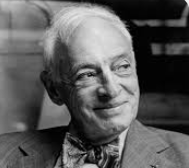
I discovered that rejections are not altogether a bad thing. They teach a writer to rely on his own judgment and to say in his heart of hearts, "To hell with you."
▼
Source
source
Quoted in "Feeling Rejected? Join Updike, Mailer, Oates..." by Barbara Bauer and Robert F. Moss, New York Times (21 July 1985), section 7, page 1, column 1
3 months 3 weeks ago
The state of nature has a law of nature to govern it, which obliges every one: and reason, which is that law, teaches all mankind, who will but consult it, that being all equal and independent, no one ought to harm another in his life, health, liberty, or possessions.
▼
Source
source
Second Treatise of Government, Ch. II, sec. 6

3 months 2 weeks ago
Suppose atomic bombs had reduced the population of the world to one brother and one sister, should they let the human race die out? I do not know the answer, but I do not think it can be in the affirmative merely on the ground that incest is wicked.
▼
Source
source
p. 47
3 months 2 weeks ago
Do not allow your dreams of a beautiful world to lure you away from the claims of men who suffer here and now.
▼
Source
source
p. 485

3 months 4 weeks ago
This world, the whole of the planet called earth, is the common country of all who live and breathe upon it.
3 months 3 weeks ago
I approached the task of destroying images by first tearing them out of the heart through God's Word and making them worthless and despised. This indeed took place before Dr. Karlstadt ever dreamed of destroying images. For when they are no longer in the heart, they can do no harm when seen with the eyes. But Dr. Karlstadt, who pays no attention to matters of the heart, has reversed the order by removing them from sight and leaving them in the heart. For he does not preach faith, nor can he preach it; unfortunately, only now do I see that. Which of these two forms of destroying images is best, I will let each man judge for himself.
▼
Source
source
pp. 84-85
1 month 1 week ago
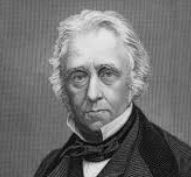
Let us remember that the government and the society act and react on each other. Sometimes the government is in advance of the society, and hurries the society forward. So urged, the society gains on the government, comes up with the government, outstrips the government, and begins to insist that the government shall make more speed. If the government is wise, it will yield to that just and natural demand. The great cause of revolutions is this, that, while nations move onward, constitutions stand still. The peculiar happiness of England is that here, through many generations, the constitution has moved onward with the nation.
▼
Source
source
Speech in the House of Commons on the Reform Bill (5 July 1831), quoted in Speeches of the Right Honourable T. B. Macaulay, M.P. (1854), p. 25
3 months 2 weeks ago
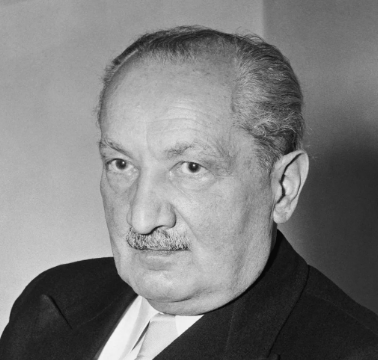
If beings are grasped as will to power, the "should" which is supposed to hang suspended over them, against which they might be measured, becomes superfluous. If life itself is will to power, it is itself the ground, principium, of valuation. Then a "should" does not determine being. Being determines a "should." "When we talk of values we are speaking under the inspiration or optics of life: life itself compels us to set up values; life itself values through us whenever we posit values."
▼
Source
source
(VIII, 89) p. 32

4 months 3 weeks ago
But let us not forget this either: it is enough to create new names and estimations and probabilities in order to create in the long run new "things."
2 months 1 week ago
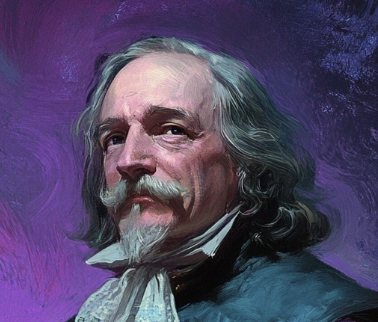
Time, and Industry, produce everyday new knowledge.
▼
Source
source
The Second Part, Chapter 30, p. 176

4 months 2 weeks ago
In every rebellion is to be found the metaphysical demand for unity, the impossibility of capturing it, and the construction of a substitute universe.

2 months 2 weeks ago
It is the man of science, eager to have his every opinion regenerated, his every idea rationalized, by drinking at the fountain of fact, and devoting all the energies of his life to the cult of truth, not as he understands it, but as he does not yet understand it, that ought properly to be called a philosopher. To an earlier age knowledge was power - merely that and nothing more; to us it is life and the summum bonum. Emancipation from the bonds of self, of one's own prepossessions, importunately sought at the hands of that rational power before which all must ultimately bow, - this is the characteristic that distinguishes all the great figures of nineteenth-century science from those of former periods.
▼
Source
source
"The Century's Great Men in Science" in The 19th Century : A Review of Progress During the Past One Hundred Years in the Chief Departments of Human Activity (1901), published by G. P. Putnam's Sons.
2 months 1 week ago
The concept of God was for a long time the place where the idea was kept alive that there are other norms besides those to which nature and society give expression in their operation.
▼
Source
source
"Thoughts on Religion," Critical Theory: Selected Essays (1995), p. 129.

1 week 3 days ago
Music is well said to be the speech of angels.
▼
Source
source
The Opera (1852).
3 months 3 weeks ago
When the profits of trade happen to be greater than ordinary, over-trading becomes a general error both among great and small dealers.
▼
Source
source
Chapter I, p. 469.

1 month 2 weeks ago
For a good cause, wrongdoing is virtuous.
▼
Source
source
Maxim 207

2 months 3 weeks ago
The infant runs toward it with its eyes closed, the adult is stationary, the old man approaches it with his back turned.
▼
Source
source
"Death"
3 months 3 weeks ago
China is a much richer country than any part of Europe.
▼
Source
source
Chapter XI, Part III, (First Period) p. 221.

3 months 2 weeks ago
I will not talk about people a thousand miles off, but come as near home as I can. As the time is short, I will leave out all the flattery, and retain all the criticism. Let us consider the way in which we spend our lives.
▼
Source
source
p. 484
2 months 1 day ago
I use the word nursing for want of a better. It has been limited to signify little more than the administration of medicines and the application of poultices. It ought to signify the proper use of fresh air, light, warmth, cleanliness, quiet, and the proper selection and administration of diet - all at the least expense of vital power to the patient.
▼
Source
source
Notes on Nursing

1 month 4 weeks ago
Of all the inventions of man I doubt whether any was more easily accomplished than that of a Heaven.
▼
Source
source
L 34
3 months 2 weeks ago
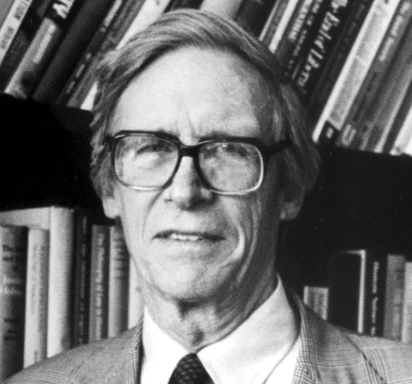
The intolerant can be viewed as free-riders, as persons who seek the advantages of just institutions while not doing their share to uphold them.
▼
Source
source
Chapter VI, Section 59, pg. 388
2 months 1 week ago
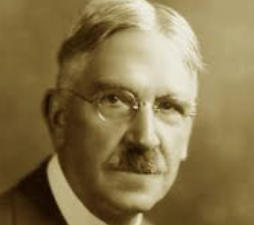
... classic philosophy maintained that change, and consequently time, are marks of inferior reality, holding that true and ultimate reality is immutable and eternal. Human reasons, all too human, have given birth to the idea that over and beyond the lower realm of things that shift like the sands on the seashore there is the kingdom of the unchanging, of the complete, the perfect. The grounds for the belief are couched in the technical language of philosophy, but the grounds for the cause is the heart's desire for surcease from change, struggle, and uncertainty. The eternal and immutable is the consummation of mortal man's quest for certainty.

3 months 2 weeks ago
In the vaunted works of Art The master stroke is Nature's part.
▼
Source
source
Art
4 months 2 weeks ago
Rhetoric is the counterpart of Dialectic. Both alike are concerned with such things as come, more or less, within the general ken of all men and belong to no definite science. Accordingly, all men make use, more or less, of both; for to a certain extent all men attempt to discuss statements and to maintain them, to defend themselves and to attack others.

3 months 3 weeks ago
The strangest, most generous, and proudest of all virtues is true courage.

3 months 2 weeks ago
The man described for us, whom we are invited to free, is already in himself the effect of a subjection much more profound than himself. A 'soul' inhabits him and brings him to existence...the soul is the effect and instrument of political anatomy; the soul is the prison of the body.
3 months 2 weeks ago
Never read any book that is not a year old.
▼
Source
source
Books

2 months 3 weeks ago
To keep our eyes open longer were but to set our Antipodes. The Huntsmen are up in America, and they are already past their first sleep in Persia. But who can be drowsy at that hour which freed us from everlasting sleep? or have slumbering thoughts at that time, when sleep itself must end, and as some conjecture all shall awake again?
▼
Source
source
Ch. 5
2 months 2 days ago
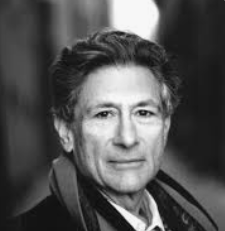
In the end, I am moved by causes and ideas that I can actually choose to support because they conform to values and principles that I believe in.
▼
Source
source
p. 88
2 months 1 week ago
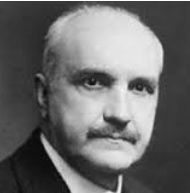
No system would have ever been framed if people had been simply interested in knowing what is true, whatever it may be. What produces systems is the interest in maintaining against all comers that some favourite or inherited idea of ours is sufficient and right.
3 months 2 weeks ago
People do not deserve to have good writing, they are so pleased with bad.
▼
Source
source
1841
CivilSimian.com created by AxiomaticPanic, CivilSimian, Kalokagathia