

2 months 3 weeks ago
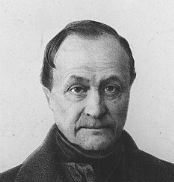
In the final, positive state, the mind has given over the vain search after Abolute notions, the origin and destination of the universe, and the cause of phenomenon, and applies itself to the tudy of their laws, - that is, their invariable relations of succession and resemblance. Reasoning and observation, duly combined, are the means of this knowledge. What is now understood when we speak of an explanation of the facts is simply the establishment of a connection between single phenomena and some general facts, the number of which continually diminishes with the progress of science.
▼
Source
source
Vol I
2 months 1 week ago
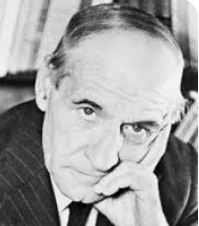
Is this not an advantage? Is it not a sign of immense progress that the masses should have "ideas," that is to say, should be cultured? By no means. The "ideas" of the average man are not genuine ideas, nor is their possession culture. An idea is a putting truth in checkmate. Whoever wishes to have ideas must first prepare himself to desire truth and to accept the rules of the game imposed by it. It is no use speaking of ideas when there is no acceptance of a higher authority to regulate them, a series of standards to which it is possible to appeal in a discussion. These standards are the principles on which culture rests.
▼
Source
source
Chap. VIII: The Masses Intervene In Everything, And Why Their Intervention Is Solely By Violence

4 months 2 weeks ago
If the only significant history of human thought were to be written, it would have to be the history of its successive regrets and its impotences.

3 months 2 weeks ago
If, when a man writes a poem or commits a murder, the bodily movements involved in his act result solely from physical causes, it would seem absurd to put up a statue to him in the one case and to hang him in the other.
▼
Source
source
"The Doctrine of Free Will"

4 months 2 weeks ago
People are entirely too disbelieving of coincidence. They are far too ready to dismiss it and to build arcane structures of extremely rickety substance in order to avoid it. I, on the other hand, see coincidence everywhere as an inevitable consequence of the laws of probability, according to which having no unusual coincidence is far more unusual than any coincidence could possibly be.

1 week 3 days ago
No sadder proof can be given by a man of his own littleness than disbelief in great men.

2 months 1 week ago
Bereavement is a darkness impenetrable to the imagination of the unbereaved.
▼
Source
source
The Sacred and Profane Love Machine (1974) p. 37.

4 months 3 weeks ago
Woe to the thinker who is not the gardener but only the soil of the plants that grow in him!

3 months 3 weeks ago
The act of navigation is not favourable to foreign commerce, or to the growth of that opulence which can arise from it. ... As defence, however, is of much more importance than opulence, the act of navigation is, perhaps, the wisest of all the commercial regulations of England.
▼
Source
source
Chapter II
2 months 1 week ago
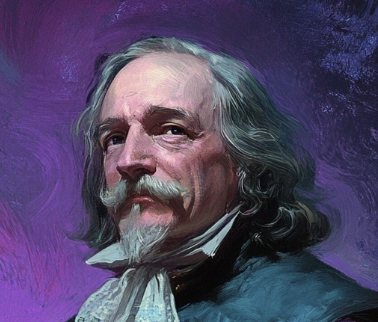
Give an inch, he'll take an ell.
▼
Source
source
Liberty and Necessity (no. 111)
3 months 2 weeks ago
Ironclads and Maxim guns must be the ultimate arbiters of metaphysical truth.
▼
Source
source
Quoted in The Edinburgh Review: Or Critical Journal, Vol. 209 (1909), p. 387

3 months 2 weeks ago
Your church is a whore: she sells her favors to the rich.
▼
Source
source
Act 1


3 months 3 weeks ago
The love of God consists in an ardent desire to procure the general welfare, and reason teaches me that there is nothing which contributes more to the general welfare of mankind than the perfection of reason.
▼
Source
source
Closing sentence of the Preface to the general science (1677) (in P. Wiener (ed.), Leibniz Selections, Macmilland Press Ltd, 1951).
2 weeks 1 day ago
An empire derives no advantage from the caresses of two turtledoves who spend a year cooing to each other in public meetings.
▼
Source
source
Charles Fourier: The Visionary and His World, J. Beecher (1986), p. 315

4 weeks ago
Human intuitions are systematically biased. Evolutionary psychology explains how our moral intuitions and the rationalisations they spawn have been shaped by millennia of natural selection to maximise the inclusive fitness of our genes, not to track the welfare of other sentient beings impartially conceived. Many human cultures have found nothing intuitively wrong with aggressive warfare, slavery, wife-beating, infanticide or female genital mutilation. Ultimately, folk morality is a doomed enterprise as hopeless as folk physics. A mature posthuman ethics, I'd argue, must be committed to the well-being of all sentient life; and mature posthuman technology offers the means to deliver that commitment.
▼
Source
source
"Post-Darwinian Ethics?", H+ Magazine, May 2009
1 month 2 weeks ago
Let a fool hold his tongue and he will pass for a sage.
▼
Source
source
Maxim 914

2 months 2 weeks ago
In the fact of being born there is such an absence of necessity that when you think about it a little more than usual, you are left...with a foolish grin.
4 months 1 week ago
On the whole, a man who denies the existence of the effects arranged according to the causes in the question of arts, or whose wisdom cannot understand it, then he has no knowledge of the art of its Maker.
2 months 1 week ago
Existential envy which is directed against the other person's very nature, is the strongest source of ressentiment. It is as if it whispers continually: "I can forgive everything, but not that you are- that you are what you are-that I am not what you are-indeed that I am not you." This form of envy strips the opponent of his very existence, for this existence as such is felt to be a "pressure," a "reproach," and an unbearable humiliation. In the lives of great men there are always critical periods of instability, in which they alternately envy and try to love those whose merits they cannot but esteem. Only gradually, one of these attitudes will predominate. Here lies the meaning of Goethe's reflection that "against another's great merits, there is no remedy but love."
▼
Source
source
L. Coser, trans. (1973), pp. 52-53

3 months 2 weeks ago
Freedom is only necessity understood.
▼
Source
source
The Dilemma of Determinism, 1884

2 months 2 days ago
The everyday world demands our attention, and prevents us from sinking into ourselves. As a romantic, I have always resented this: I like to sink into myself. The problems and anxieties of living make it difficult. Well, now I had an anxiety that referred to something inside of me, and it reminded me that my inner world was just as real and important as the world around me.
▼
Source
source
p. 39
1 week 3 days ago
The greatest of faults, I should say, is to be conscious of none.
1 month 5 days ago
The mediaeval university looked backwards: it professed to be a storehouse of old knowledge... The modern university looks forward: it is a factory of new knowledge.
▼
Source
source
Letter to E. Ray Lankester (11 April 1892) Huxley Papers, Imperial College: 30.448

4 months 2 weeks ago
Zeno: The many do not know that except by this devious passage through all things the mind cannot attain to the truth. Zeno: Most people are not aware that this roundabout progress through all things is the only way in which the mind can attain truth and wisdom.

3 months 3 weeks ago
Saying is one thing and doing is another.
▼
Source
source
Ch. 31

4 months 1 week ago
Thus, where'er the drift of hazardSeems most unrestrained to flow,Chance herself is reined and bitted,And the curb of law doth know.

2 months 2 days ago
"What I believe" is a process rather than a finality. Finalities are for gods and governments, not for the human intellect. While it may be true that Herbert Spencer's formulation of liberty is the most important on the subject, as a political basis of society, yet life is something more than formulas. In the battle for freedom, as Ibsen has so well pointed out, it is the struggle for, not so much the attainment of, liberty, that develops all that is strongest, sturdiest and finest in human character.
4 months 2 days ago
As soon as the soul has been made to perceive that a thing can conduct it to that which it loves supremely, it must inevitably embrace it with joy.
1 month 5 days ago
If the brutes have consciousness and no souls, then it is clear that, in them, consciousness is a direct function of material changes; while, if they possess immaterial subjects of consciousness, or souls, then, as consciousness is brought into existence only as the consequence of molecular motion of the brain, it follows that it is an indirect product of material changes. The soul stands related to the body as the bell of a clock to the works, and consciousness answers to the sound which the bell gives out when it is struck.

3 months 2 weeks ago
There is wishful thinking in Hell as well as on Earth.
▼
Source
source
Preface

3 months 3 weeks ago
We think it also necessary to express our astonishment that a government, desirous of being called free, should prefer connection with the most despotic and arbitrary powers in Europe.
▼
Source
source
Address and Declaration at a Select Meeting of the Friends of Universal Peace and Liberty (August 20, 1791) p. 5
2 months 2 days ago
In fact, we had a number of extreme leftists and trade unionists among us, and they seemed to take it for granted that we all agreed that the rich must somehow be forced to surrender their ill-gotten gains. Yet there was an air of good humor about their idealism that made me feel they would not be too offended if I admitted that I regard socialists as well-meaning but muddle-headed brigands.
▼
Source
source
p. 30
3 months 3 weeks ago
I have seen something of the project of M. de St. Pierre, for maintaining a perpetual peace in Europe. I am reminded of a device in a cemetery, with the words: Pax perpetua; for the dead do not fight any longer: but the living are of another humor; and the most powerful do not respect tribunals at all. Letter 11 to Grimarest: Passages Concerning the Abbe de St. Pierre's 'Project for Perpetual Peace' (June 1712).
▼
Source
source
Taken from Leibniz: Political Writings (2nd Edition, 1988), Edited by Patrick Riley.
3 months 1 week ago
There can be no brotherhood when some nations indulge in previously unheard of luxuries, while others struggle to stave off famine.
▼
Source
source
Chapter 4, Reason, p. 119
2 months 2 weeks ago
:...Vienna is the origin of so many schools of its own which were dominant in the 1920s. And one of the most fundamental and influential, in which we all were partially caught, was logical positivism. In fact, Mises' brother, Richard von Mises, became one of the leading figures. Now he and I all grew up in this Ernst Mach philosophy that ultimately everything must be rationally justified...
▼
Source
source
Friedrich Hayek, in 1985 interview, quoted in Alan Ebenstein, Hayek's Journey: The Mind of Friedrich Hayek (2003), Ch. 10. Epistemology, Psychology, and Methodology
2 weeks 5 days ago
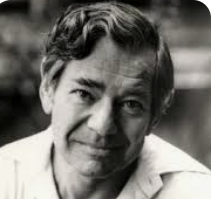
The great artist liberates the emotions and recreates the sheer wonder of childhood without surrendering the development of the intellect.
▼
Source
source
p. 258

2 months 1 week ago
All men cannot receive this saying, save they to whom it is given. For there are some eunuchs, which were so born from their mother's womb: and there are some eunuchs, which were made eunuchs of men: and there be eunuchs, which have made themselves eunuchs for the kingdom of heaven's sake. He that is able to receive it, let him receive it.
▼
Source
source
19:11-12 (KJV)

3 months 2 weeks ago
There are various, nay, incredible faiths; why should we be alarmed at any of them? What man believes, God believes.
1 week 3 days ago
It is no longer the moral, religious, spiritual condition of the people that is our concern, but their physical, practical, economical condition, as regulated by public laws.
1 week 3 days ago
In every man's writings, the character of the writer must lie recorded.
▼
Source
source
Goethe (1828).
4 months 1 week ago
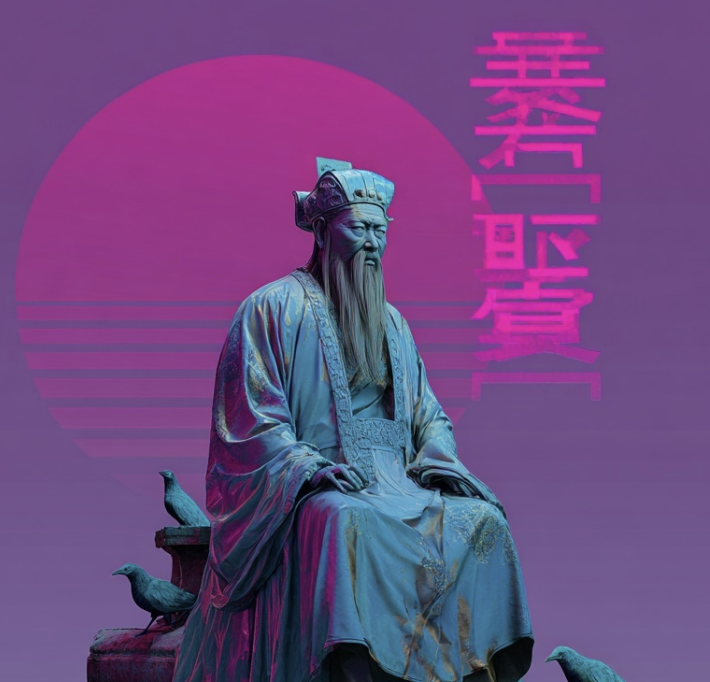
There are only the wise of the highest class, and the stupid of the lowest class, who cannot be changed.
3 months 2 weeks ago
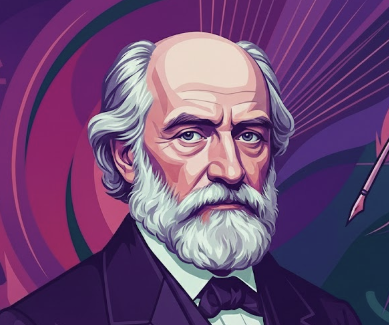
Great minds are related to the brief span of time during which they live as great buildings are to a little square in which they stand: you cannot see them in all their magnitude because you are standing too close to them.
▼
Source
source
Vol. 2, Ch. 20, § 242
2 weeks 2 days ago
All achievement should be measured in human happiness.
▼
Source
source
Ch. IV: "The Golden Rule and After", p. 90

4 days ago
"You will have less money." Yes, and less trouble. "Less influence." Yes, and less envy.

2 months 5 days ago
The prestige which constitutes three-fourths of might is first of all made up of that superb indifference which the powerful have for the weak, an indifference so contagious that it is communicated even to those who are its object.
▼
Source
source
in The Simone Weil Reader, p. 168
2 months 1 week ago
O my Father, if this cup may not pass away from me, except I drink it, thy will be done.
▼
Source
source
26:42 (KJV)

1 month 2 weeks ago
Each new technology is a reprogramming of sensory life.
▼
Source
source
(p. 33)

3 months 2 weeks ago
Christianity has functioned for the normative self-understanding of modernity as more than a mere precursor or a catalyst. Egalitarian universalism, from which sprang the ideas of freedom and social solidarity, of an antonomous conduct of life and emancipation, of the individual morality of conscience, human rights, and democracy, is the direct heir to the judaic ethic of justice and the Christian ethic of love. This legacy, substantially unchanged, has been the object of continual critical appropriation and reinterpretation. To this day, there is no alternative to it. And in the light of the current challenges of a postnational constellation, we continue to draw on the substance of this heritage. Everything else is just idle postmodern talk.
▼
Source
source
Habermas (2006) "Conversation about God and the World." Time of transitions. Cambridge: Polity Press, p. 150-151.
CivilSimian.com created by AxiomaticPanic, CivilSimian, Kalokagathia