


1 month 3 weeks ago
Purity is for man, next to life, the greatest good that parity is procured by the Law of Mazda to him who cleanses his own self with Good Thoughts, Words, and Deeds.
▼
Source
source
(Extracts, p. 57)
2 months 4 days ago
Is it reasonable to assume a purposiveness in all the parts of nature and to deny it to the whole?
▼
Source
source
Seventh Thesis

2 months 1 week ago
There is no need for you to develop an armed insurrection. Christ himself has already begun an insurrection with his mouth.
▼
Source
source
pp. 67-68
3 weeks 1 day ago
Torn in this way from its normal connection with contemplation, with being within one's self, pure action permits and produces only a chain of stupidities which we might better call "stupidity unchained." So we see today that an absurd attitude justifies the appearance of an opposing attitude no more reasonable; at least, reasonable enough, and so on indefinitely. Such is the extreme to which political affairs in the West have come!
▼
Source
source
p. 34

3 weeks 6 days ago
We are so lonely in life that we must ask ourselves if the loneliness of dying is not a symbol of our human existence.
1 month 3 weeks ago
When you wish to instruct, be brief; that men's minds may take in quickly what you say, learn its lesson, and retain it faithfully. Every word that is unnecessary only pours over the side of a brimming mind.
▼
Source
source
Lines 335-337; Edward Charles Wickham translation
1 week 4 days ago
Astronomy is perhaps the science whose discoveries owe least to chance, in which human understanding appears in its whole magnitude, and through which man can best learn how small he is.
▼
Source
source
C 23

2 months 2 days ago
Every commodity is compelled to chose some other commodity for its equivalent.
▼
Source
source
Vol. I, Ch. 1, Section 3, pg. 65.
3 weeks 3 days ago
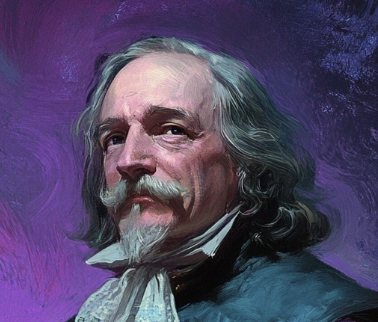
But this priviledge, is allayed by another; and that is, by the priviledge of Absurdity; to which no living creature is subject, but man only.
▼
Source
source
The First Part, Chapter 5, p. 20

1 month 3 weeks ago
A proposition is completely logically analyzed if its grammar is made completely clear: no matter what idiom it may be written or expressed in...
▼
Source
source
Philosophical Remarks (1930), Part I (1)
2 months 2 days ago
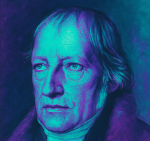
The necessities of the time have accorded to the petty interests of every day life such overwhelming attention : the deep interests of actuality and the strife respecting these have engrossed all the powers and the forces of the mind - as also the necessary means - to so great an extent, that no place has been left to the higher inward life, the intellectual operations of a purer sort; and the better natures have thus been stunted in their growth, and in great measure sacrificed.
▼
Source
source
p. x Inaugural Address, delivered at Heidelberg on the 28th October(1816), Lectures on the history of philosophy, translated from German by E. S. Haldane in Three Volumes (1892-96) full text.

2 months 1 day ago
I had better never see a book than to be warped by its attraction clean out of my own orbit, and made a satellite instead of a system. The one thing in the world, of value, is the active soul.
▼
Source
source
par. 15
3 weeks 3 days ago
Skepticism, like chastity, should not be relinquished too readily.
▼
Source
source
George Santayana, as quoted in Quotations for Our Time (1977) edited by Laurence J. Peter
1 month 2 days ago
Only a man who is at one with the world can be at one with himself.
▼
Source
source
"Ideas," Lucinde and the Fragments, P. Firchow, trans. (1991), § 130

2 months 5 days ago
When I endeavour to examine my own conduct, when I endeavour to pass sentence upon it, and either to approve or condemn it, it is evident that, in all such cases, I divide myself, as it were, into two persons; and that I, the examiner and judge, represent a different character from that other I, the person whose conduct is examined into and judged of.
▼
Source
source
Chap. I.

3 weeks 3 days ago
Whosoever will come after me, let him deny himself, and take up his cross, and follow me. For whosoever will save his life shall lose it; but whosoever shall lose his life for my sake and the gospel's, the same shall save it. For what shall it profit a man, if he shall gain the whole world, and lose his own soul?
▼
Source
source
8:34b-36 (KJV)

2 weeks ago
Obviously, Anarchism, or any other social theory, making man a conscious social unit, will act as a leaven for rebellion.
3 weeks 6 days ago
Without will, no conflict: no tragedy among the abulic. Yet the failure of will can be experienced more painfully than a tragic destiny.

2 months 4 weeks ago
Printing will tell you such useful things and such interesting things that not being able to read would be as bad as not being able to see.

2 months 4 weeks ago
Let us be understood. If the Japanese surrender after the destruction of Hiroshima, having been intimidated, we will rejoice. But we refuse to see anything in such grave news other than the need to argue more energetically in favor of a true international society, in which the great powers will not have superior rights over small and middle-sized nations, where such an ultimate weapon will be controlled by human intelligence rather than by the appetites and doctrines of various states. Before the terrifying prospects now available to humanity, we see even more clearly that peace is the only goal worth struggling for. This is no longer a prayer but a demand to be made by all peoples to their governments a demand to choose definitively between hell and reason.
3 weeks 6 days ago
Psychoanalysis will be entirely discredited one of these days, no doubt about it. Which will not keep it from destroying our last vestiges of naivete. After psychoanalysis, we can never again be innocent.

1 month 6 days ago
Men sometimes submit to shame, to tyranny, to conquest, but they never long suffer anarchy. There is no people so barbarous that they escape this general law of humanity.
▼
Source
source
Second letter on Algeria (1837), Travels in Algeria p. 38
2 months 1 day ago
I think no virtue goes with size; The reason of all cowardice Is, that men are overgrown, And, to be valiant, must come down To the titmouse dimension.
▼
Source
source
The Titmouse, st. 5
1 month 3 weeks ago
"It is necessary to be given the prop that all elementary props are given." This is not necessary because it is even impossible. There is no such prop! That all elementary props are given is SHOWN by there being none having an elementary sense which is not given.
▼
Source
source
Notes of 1919, as quoted in Ludwig Wittgenstein : The Duty of Genius (1990) by Ray Monk

2 months 5 days ago
My philosophical views approach somewhat closely those of the late Countess of Conway, and hold a middle position between Plato and Democritus, because I hold that all things take place mechanically as Democritus and Descartes contend against the views of Henry More and his followers, and hold too, nevertheless, that everything takes place according to a living principle and according to final causes - all things are full of life and consciousness, contrary to the views of the Atomists.
▼
Source
source
Letter to Thomas Burnet (1697), as quoted in Platonism, Aristotelianism and Cabalism in the Philosophy of Leibniz (1938) by Joseph Politella, p. 18

1 month 3 weeks ago
Be a craftsman in speech that thou mayest be strong, for the strength of one is the tongue, and speech is mightier than all fighting.
▼
Source
source
Translated by J. H. Breasted, The Dawn of Conscience (New York: Charles Scribner's Sons, 1933) p. 131
1 month 3 weeks ago
Philosophy makes progress not by becoming more rigorous but by becoming more imaginative.
▼
Source
source
Introduction to Truth and Progress: Philosophical Papers, Volume 3 (1998).
2 months 4 weeks ago
In that daily effort in which intelligence and passion mingle and delight each other, the absurd man discovers a discipline that will make up the greatest of his strengths. The required diligence and doggedness and lucidity thus resemble the conqueror's attitude. To create is likewise to give a shape to one's fate. For all these characters, their work defines them at least as much as it is defined by them. The actor taught us this: There is no frontier between being and appearing.
2 months 1 day ago
Fine manners need the support of fine manners in others.
▼
Source
source
Behavior

2 months 2 days ago
All's well that ends well; which is the epitaph I should put on my tombstone if I were the last man left alive.
▼
Source
source
Letter to Lucy Donnely, April 22, 1906
1 month 2 days ago
For my part for one, though I make no doubt of preferring the antient Course, or almost any other to this vile chimera, and sick mans dream of Government yet I could not actively, or with a good heart, and clear conscience, go to the establishment of a monarchical despotism in the place of this system of Anarchy.
▼
Source
source
Letter to Richard Burke (26 September 1791), quoted in Alfred Cobban and Robert A. Smith (eds.), The Correspondence of Edmund Burke, Volume VI: July 1789-December 1791 (1967), p. 414
3 weeks 3 days ago
O my Father, if this cup may not pass away from me, except I drink it, thy will be done.
▼
Source
source
26:42 (KJV)
2 months 1 week ago
I prefer the company of peasants because they have not been educated sufficiently to reason incorrectly.
3 weeks 6 days ago
How is it possible that the poorer classes can remain healthy and have a reasonable expectation of life under such conditions? What can one expect but that they should suffer from continual outbreaks of epidemics and an excessively low expectation of life? The physical condition of the workers shows a progressive deterioration.
3 weeks 6 days ago
What every man who loves his country hopes for in his inmost heart: the suppression of half his compatriots.
3 weeks 6 days ago
Love of the absolute engenders a predilection for self-destruction. Hence the passion for monasteries and brothels. Cells and women, in both cases. Weariness with life fares well in the shadow of whores and saintly women.
3 weeks 3 days ago
In Walt Whitman democracy is carried into psychology and morals. The various sights, moods, and emotions are given each one vote; they are declared to be all free and equal, and the innumerable commonplace moments of life are suffered to speak like the others. Those moments formerly reputed great are not excluded, but they are made to march in the ranks with their companions-plain foot-soldiers and servants of the hour.
▼
Source
source
p. 53
2 months 2 days ago
A new moral outlook is called for in which submission to the powers of nature is replaced by respect for what is best in man. It is where this respect is lacking that scientific technique is dangerous.
▼
Source
source
Attributed to Russell at the end of Isaac Asimov's short story Franchise with no specific source given.
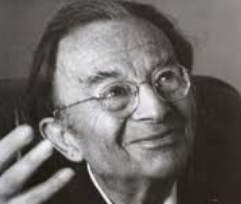
1 week 6 days ago
I believe that man is the product of natural evolution that is born from the conflict of being a prisoner and separated from nature, and from the need to find unity and harmony with it.
3 weeks 6 days ago
Ennui is the echo in us of time tearing itself apart.
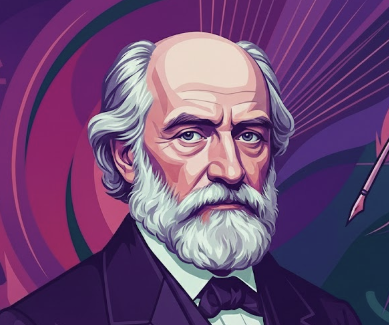
2 months 3 days ago
Consider the Koran... this wretched book was sufficient to start a world-religion, to satisfy the metaphysical need of countless millions for twelve hundred years, to become the basis of their morality and of a remarkable contempt for death, and also to inspire them to bloody wars and the most extensive conquests. In this book we find the saddest and poorest form of theism. Much may be lost in translation, but I have not been able to discover in it one single idea of value.
▼
Source
source
E. Payne, trans., Vol. II, Ch. XVII: On Man's Need for Metaphysics
2 months 1 week ago
The first law that ever God gave to man was a law of pure obedience; it was a commandment naked and simple, wherein man had nothing to inquire after, nor to dispute; forasmuch as to obey is the proper office of a rational soul, acknowledging a heavenly superior and benefactor.
▼
Source
source
Ch. 12, tr. Cotton, 1685
2 months 2 days ago
I think modern educational theorists are inclined to attach too much importance to the negative virtue of not interfering with children, and too little to the positive merit of enjoying their company.
▼
Source
source
Ch. 12: Education and Discipline

2 months 3 days ago
Thus parents, by humouring and cockering them when little, corrupt the principles of nature in their children, and wonder afterwards to taste the bitter waters, when they themselves have poison'd the fountain.
▼
Source
source
Sec. 35

1 month 1 week ago
Men that look upon my outside, perusing only my condition, and fortunes, do err in my altitude; for I am above Atlas his shoulders.
▼
Source
source
Section 11
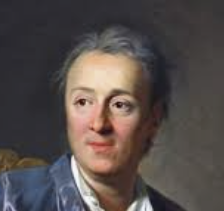
1 month 6 days ago
Jacques said that his master said that everything good or evil we encounter here below was written on high.
▼
Source
source
Prologue

3 months 4 days ago
Socialism itself can hope to exist only for brief periods here and there, and then only through the exercise of the extremest terrorism. For this reason it is secretly preparing itself for rule through fear and is driving the word 'justice' into the heads of the half-educated masses like a nail so as to rob them of their reason... and to create in them a good conscience for the evil game they are to play.
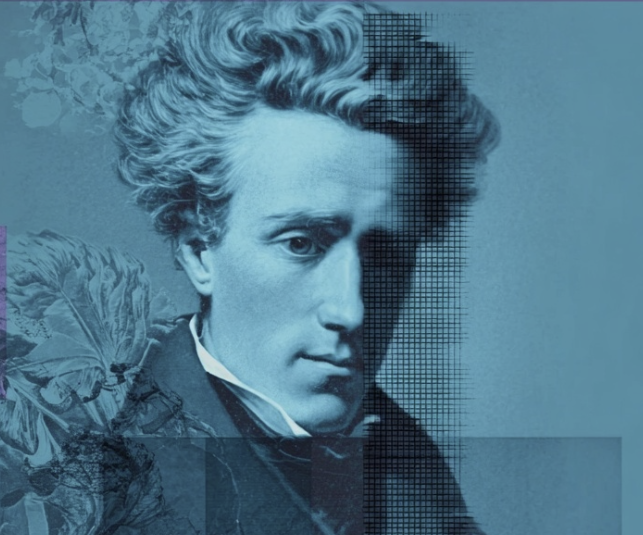
3 months 2 days ago
When God chooses to let himself be born in lowliness, when he who holds all possibilities in his hand takes upon himself the form of a lowly servant, when he goes about defenseless and lets people do with him what they will, he surely must know well enough what he is doing and why he wills it; but for all that it is he who has people in his power and not they who have power over him-so history ought not play Mr. Malapert by this wanting to make manifest who he was.
2 months 2 weeks ago
Does anyone bathe in a mighty little time? Don't say that he does it ill, but in a mighty little time. Does anyone drink a great quantity of wine? Don't say that he does ill, but that he drinks a great quantity. For, unless you perfectly understand the principle from which anyone acts, how should you know if he acts ill? Thus you will not run the hazard of assenting to any appearances but such as you fully comprehend.
▼
Source
source
(45).
1 month 2 days ago
...they who would make peace without a previous knowledge of the terms, make a surrender. They are conquered. They do not treat; they receive the law. Is this the disposition of the people of England? Then the people of England are contented to seek in the kindness of a foreign systematick enemy combined with a dangerous faction at home, a security which they cannot find in their own patriotism and their own courage. They are willing to trust to the sympathy of Regicides the guarantee of the British Monarchy. They are content to rest their religion on the piety of atheists by establishment. They are satisfied to seek in the clemency of practised murderers the security of their lives. They are pleased to confide their property to the safeguard of those who are robbers by inclination, interest, habit, and system. If this be our deliberate mind, truly we deserve to lose, what it is impossible we should long retain, the name of a nation.
▼
Source
source
p. 48
CivilSimian.com created by AxiomaticPanic, CivilSimian, Kalokagathia