


3 months 2 weeks ago
To be shaken out of the ruts of ordinary perception, to be shown for a few timeless hours the outer and inner world, not as they appear to an animal obsessed with survival or to a human being obsessed with words and notions, but as they are apprehended, directly and unconditionally, by Mind at Large - this is an experience of inestimable value to everyone and especially to the intellectual.

2 months 1 week ago
We must needs believe in the other life, in the eternal life beyond the grave. ...And we must needs believe in that other life, perhaps, in order that we may deserve it, in order that we may obtain it, for it may be that he neither deserves it nor will obtain it who does not passionately desire it above reason and, if need be, against reason.
3 months 2 weeks ago
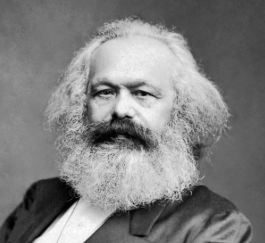
Everyone who knows anything of history also knows that great social revolutions are impossible without the feminine ferment. Social progress may be measured precisely by the social position of the fair sex (plain ones included).
▼
Source
source
Letter to Ludwig Kugelmann, dated 12 December 1868.


3 months 1 day ago
Happy is that City that hath a wise man to govern it.

3 months 2 weeks ago
The disappearance of public executions marks therefore the decline of the spectacle; but it also marks a slackening of the hold on the body.
▼
Source
source
Chapter One, The Spectacle of the Scaffold

4 days ago
"Although," said he [Cato], "all the world has fallen under one man's sway, although Caesar's legions guard the land, his fleets the sea, and Caesar's troops beset the city gates, yet Cato has a way of escape; with one single hand he will open a wide path to freedom. This sword, unstained and blameless even in civil war, shall at last do good and noble service: the freedom which it could not give to his country it shall give to Cato!
▼
Source
source
De Providentia (On Providence), 2.10; translation by John W. Basore
3 months 1 week ago
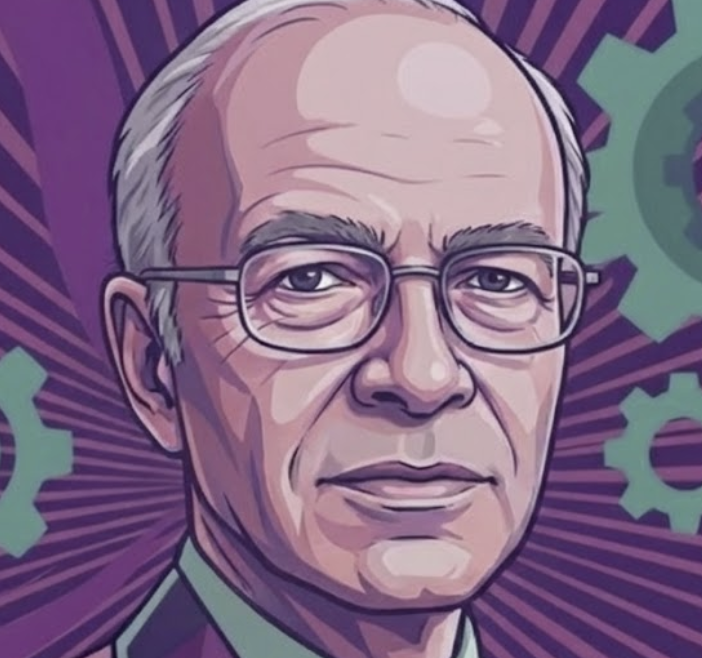
The capacity to reason is a special sort of capacity because it can lead us to places that we did not expect to go.
▼
Source
source
Chapter 4, Reason, p. 88

3 months 3 weeks ago
The only thing that will redeem mankind is co-operation, and the first step towards co-operation lies in the hearts of individuals.
▼
Source
source
p. 212

4 months 3 weeks ago
Unpleasant, even dangerous, qualities can be found in every nation and every individual: it is cruel to demand that the Jew be an exception. In him, these qualities may even be dangerous and revolting to an unusual degree; and perhaps the young stock-exchange Jew is altogether the most disgusting invention of mankind.

4 months 2 weeks ago
The greatest saving one can make in the order of thought is to accept the unintelligibility of the world and to pay attention to man.
4 weeks 1 day ago
If we want eternal life, then we'll need to rewrite our bug-ridden genetic code and become god-like. "May all that have life be delivered from suffering", said Gautama Buddha. It's a wonderful sentiment. Sadly, only hi-tech solutions can ever eradicate suffering from the living world. Compassion alone is not enough.
▼
Source
source
Interview with Nick Bostrom and David Pearce, Dec. 2007
5 days ago
Bourgeois civilization has built railroads and electric power plants, has invented explosives and airplanes, in order to create wealth. Imperialism has placed the tools of peace in the service of destruction. With modern means it would be easy to wipe out humanity at one blow.
▼
Source
source
p. 252

1 week 4 days ago
Clever men are good, but they are not the best.
▼
Source
source
Goethe.
2 months 1 week ago
No one is guiltless...But no one is beyond the pale of human existence, provided he pays for his guilt.
4 months 2 days ago
As to the objection that these rules are common in the world, that it is necessary to define every thing and to prove every thing, and that logicians themselves have placed them among their art, I would that the thing were true and that it were so well known... But so little is this the case, that, geometricians alone excepted, who are so few in number that they are a single in a whole nation and long periods of time, we see no others that know it.

3 months 2 weeks ago
When the rich make war, it's the poor that die.
1 month 2 weeks ago
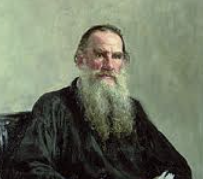
Government is violence, Christianity is meekness, non-resistance, love. And, therefore, government cannot be Christian, and a man who wishes to be a Christian must not serve government.
▼
Source
source
Letter to Dr. Eugen Heinrich Schmitt (October 12, 1896), translated by Nathan Haskell Dole

3 months 3 weeks ago
All the world knows me in my book, and my book in me.
▼
Source
source
Book III, Ch. 5. Upon some Verses of Virgil
1 month 1 week ago
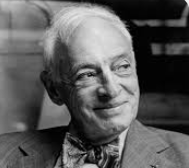
Tocqueville predicted that in democratic countries the public would demand larger and larger doses of excitement and increasingly stronger stimulants from its writers. He probably did not expect that public to dramatize itself so extensively, to make the world scene everybody's theatre, or, in the developed countries, to take to alcohol and drugs in order to get relief from the horrors of ceaseless intensity, the torment of thrills and distractions. A great many writers have done little more than meet the mounting demand for thrills. I think that this demand has, in the language of marketing, peaked.
▼
Source
source
The Distracted Public

1 month 3 weeks ago
Perhaps the promise of phallus is always dissatisfying in some way.
▼
Source
source
"The Lesbian Phallus and the Morphological Imaginary" (1993), later published in The Judith Butler Reader (2004) edited by Sarah Salih with Judith Butler

1 month 2 weeks ago
The telegraph press mosaic is acoustic space as much as an electric circus.

3 months 2 weeks ago
The violence of love is as much to be dreaded as that of hate. When it is durable, it is serene and equable. Even its famous pains begin only with the ebb of love, for few are indeed lovers, though all would fain be.
▼
Source
source
Pearls of Thought (1881) p. 158

3 months 2 weeks ago
Fine manners need the support of fine manners in others.
▼
Source
source
Behavior

3 months 1 week ago
The pleasure is only for a little moment, and it [passes] like a dream, and a man at the end thereof finds death through knowing it.
▼
Source
source
Maxim no. 18. Translated by Sir E. A. Wallis Budge, Teaching Of Amenem Apt Son Of Kanekht (London: Martin Hopkinson and Company Ltd, 1924) p. 58
2 months 1 week ago
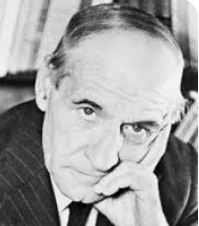
Be it well understood, I am free by compulsion, whether I wish to be or not. Freedom is not an activity pursued by an entity that, apart from and previous to such pursuit, is already possessed of a fixed being. To be free means to be lacking in constitutive identity, not to have subscribed to a determined being, to be able to be other than what one was, to be unable to install oneself once and for all in any given being. The only attribute of the fixed, stable being in the free being is this constitutive instability.
▼
Source
source
"Man has no nature"

2 months 3 weeks ago
They (the emperors) frequently abused their power arbitrarily to deprive their subjects of property or of life: their tyranny was extremely onerous to the few, but it did not reach the greater number; .. But it would seem that if despotism were to be established amongst the democratic nations of our days it might assume a different character; it would be more extensive and more mild, it would degrade men without tormenting them.
▼
Source
source
Book Four, Chapter VI.

3 months 4 weeks ago
This type of man who is devoted to the study of wisdom is always most unlucky in everything, and particularly when it comes to procreating children; I imagine this is because Nature wants to ensure that the evils of wisdom shall not spread further throughout mankind.

3 months 2 weeks ago
There is no spiritual sustenance in flat equality. It is a dim recognition of this fact which makes much of our political propaganda sound so thin. We are trying to be enraptured by something which is merely the negative condition of the good life. That is why the imagination of people is so easily captured by appeals to the craving for inequality, whether in a romantic form of films about loyal courtiers or in the brutal form of Nazi ideology. The tempter always works on some real weakness in our own system of values - offers food to some need which we have starved.
3 months 2 weeks ago
Considering the optimistic turn taken by world trade AT THIS MOMENT...it is some consolation at least that the revolution has begun in Russia, for I regard the convocation of 'notables' to Petersburg as such a beginning. ... On the Continent revolution is imminent and will, moreover, instantly assume a socialist character.
▼
Source
source
Letter to Friedrich Engels (8 October 1858), quoted in The Collected Works of Karl Marx and Friedrich Engels: Volume 40. Letters 1856-59 (2010), pp. 346-347

3 months 3 weeks ago
The necessaries of life occasion the great expense of the poor. They find it difficult to get food, and the greater part of their little revenue is spent in getting it. The luxuries and vanities of life occasion the principal expense of the rich, and a magnificent house embellishes and sets off to the best advantage all the other luxuries and vanities which they possess. A tax upon house-rents, therefore, would in general fall heaviest upon the rich; and in this sort of inequality there would not, perhaps, be anything very unreasonable. It is not very unreasonable that the rich should contribute to the public expense, not only in proportion to their revenue, but something more than in that proportion.
▼
Source
source
Chapter II, Part II, Article I, p. 911.

2 months 2 weeks ago
"What is truth?" is a fundamental question. But what is it compared to "How to endure life?" And even this one pales beside the next: "How to endure oneself?" - That is the crucial question in which no one is in a position to give us an answer.
5 days ago
Friendship is always helpful, but love sometimes even does harm

4 months 1 week ago
Reviewing what you have learned and learning anew, you are fit to be a teacher.
3 months 2 weeks ago
He came in sight of a pass guarded by armed men. 'you cannot pass ... Do you not know that all this country belongs to the Spirit of the Age? ... Here Enlightenment, take this fugitive to our Master.'
▼
Source
source
Pilgrim's Regress 44-45
3 months 3 weeks ago
Of all those expensive and uncertain projects, however, which bring bankruptcy upon the greater part of the people who engage in in them, there is none perhaps more perfectly ruinous than the search after new silver and gold mines. It is perhaps the most disadvantageous lottery in the world, or the one in which the gain of those who draw the prizes bears the least proportion to the loss of those who draw the blanks: for though the prizes are few and the blanks are many, the common price of a ticket is the whole fortune of a very rich man.
▼
Source
source
Chapter VII, Part First, p. 610.
3 months 1 week ago
Absurdity is one of the most human things about us: a manifestation of our most advanced and interesting characteristics. ... It is possible only because we possess a certain kind of insight - the capacity to transcend ourselves in thought.If a sense of the absurd is a way of perceiving our true situation (even though the situation is not absurd until the perception arises), then what reason can we have to resent or escape it? ... It results from the ability to understand our human limitations. It need not be a matter of agony unless we make it so. Nor need it evoke a defiant contempt of fate that allows us to feel brave or proud. Such dramatics even if carried on in private, betray a failure to appreciate the cosmic unimportance of the situation. If sub specie aeternitatis there is no reason to believe that anything matters, then that does not matter either, and we can approach our absurd lives with irony instead of heroism or despair.
▼
Source
source
"The Absurd" (1971), p. 23.
2 months 3 weeks ago
The good of the people must be the great purpose of government. By the laws of nature and of reason, the governors are invested with power to that end. And the greatest good of the people is liberty. It is to the state what health is to the individual.
▼
Source
source
Article on Government

3 months 2 weeks ago
We all remember how many religious wars were fought for a religion of love and gentleness; how many bodies were burned alive with the genuinely kind intention of saving souls from the eternal fire of hell. Only if we give up our authoritarian attitude in the realm of opinion, only if we establish the attitude of give and take, of readiness to learn from other people, can we hope to control acts of violence inspired by piety and duty.
3 months 3 weeks ago
How many people ruin themselves by laying out money on trinkets of frivolous utility? What pleases these lovers of toys is not so much the utility, as the aptness of the machines which are fitted to promote it. All their pockets are stuffed with little conveniences. They contrive new pockets, unknown in the clothes of other people, in order to carry a greater number. They walk about loaded with a multitude of baubles, in weight and sometimes in value not inferior to an ordinary Jew's-box, some of which may sometimes be of some little use, but all of which might at all times be very well spared, and of which the whole utility is certainly not worth the fatigue of bearing the burden.
▼
Source
source
Chap. I.
2 months 1 week ago
But to manipulate men, to propel them towards goals which you - the social reformer - see, but they may not, is to deny their human essence, to treat them as objects without wills of their own, and therefore to degrade them.
4 months 1 week ago
All people respect and love their own parents and children, as well as the parents and children of others.
1 month 2 weeks ago
There is but a step between a proud man's glory and his disgrace.
▼
Source
source
Maxim 138

2 months 6 days ago
Truth is sought not because it is truth but because it is good.
▼
Source
source
p. 213

2 months 3 weeks ago
It is proof of a base and low mind for one to wish to think with the masses or majority, merely because the majority is the majority. Truth does not change because it is, or is not, believed by a majority of the people.
▼
Source
source
Included as a quotation in The Great Quotations (1977) by George Seldes, p. 35
5 days ago
War prosperity is like the prosperity that an earthquake or a plague brings.
▼
Source
source
p 186
7 months 3 weeks ago
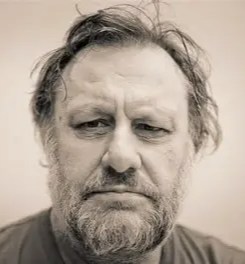
In the Critique of Cynical Reasoning, a great bestseller in Germany (Sloterdijk, 1983), Peter Sloterdijk puts forward the thesis that ideology's dominant mode of functioning is cynical which renders impossible - or, more precisely, vain - the classical critical-ideological procedure. The cynical subject is quite aware of the distance between the ideological mask and the social reality, but he none the less still insists upon the mask.
4 months 3 weeks ago
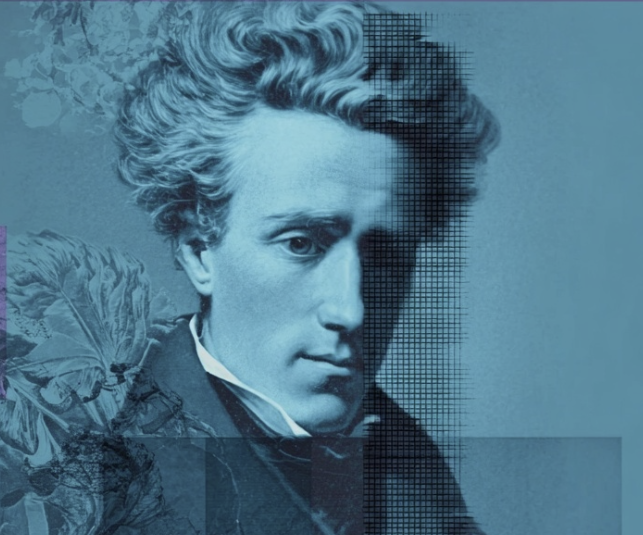
If someone were to expound that godliness is to belong to childhood in the temporal sense and thus dwindle and die with the years as childhood does, is to be a happy frame of mind that cannot be preserved but only recollected; if someone were to expound that repentance as a weakness of old age accompanies the decline of one's powers, when the senses are dulled, when sleep no longer strengthens but increases lethargy-this would be ungodliness and foolishness.
CivilSimian.com created by AxiomaticPanic, CivilSimian, Kalokagathia