

1 month 1 week ago
Perhaps no person can be a poet, or even enjoy poetry, without a certain unsoundness of mind.
▼
Source
source
p. 7
4 months 1 week ago
I am a Roman citizen.
▼
Source
source
Against Verres [In Verrem], part 2, book 5, section 57; reported in Cicero, The Verrine Orations, trans. L. H. G. Greenwood (1935), vol. 2, p. 629

5 days ago
Let us now enquire whether anger be in accordance with nature, and whether it be useful and worth entertaining in some measure.


2 months 2 weeks ago
Here we must make one of those inductive applications of the law of continuity which have produced such great results in all of the positive sciences. We must extend the law of insistency into the future. Plainly, the insistency of a future idea with reference to the present is a quantity affected by the minus sign; for it is the present that affects the future, if there be any effect, not the future that affects the present.
3 months 3 weeks ago
There are Plebes in all classes.
▼
Source
source
As quoted by Julien Coupat in Interview with Julien Coupat, 2009

3 months 2 weeks ago
What is called "objectivity," scientific for instance (in which I firmly believe, in a given situation) imposes itself only within a context which is extremely vast, old, firmly established, or rooted in a network of conventions ... and yet which still remains a context.
▼
Source
source
Limited Inc
2 months 2 weeks ago
How did this division of the nations come about, what was its basis? The division is in accordance with all the previous history of the nationalities in question. It is the beginning of the decision on the life or death of all these nations, large and small. All the earlier history of Austria up to the present day is proof of this and 1848 confirmed it. Among all the large and small nations of Austria, only three standard-bearers of progress took an active part in history, and still retain their vitality - the Germans, the Poles and the Magyars. Hence they are now revolutionary. All the other large and small nationalities and peoples are destined to perish before long in the revolutionary world storm. (Weltsturm). For that reason they are now counter-revolutionary.
▼
Source
source
The Magyar Struggle in Neue Rheinische Zeitung (13 January 1849).

2 months 3 weeks ago
For nature is not merely present, but is implanted within things, distant from none; naught is distant from her except the false, and that which existed never and nowhere-nullity. And while the outer face of things changeth so greatly, there flourisheth the origin of being more intimately within all things than they themselves. The fount of all kinds, Mind, God, Being, One, Truth, Destiny, Reason, Order.
▼
Source
source
VIII 10 as translated by Dorothea Waley Singer

3 months 2 weeks ago
I am not sure but I should betake myself in extremities to the liberal divinities of Greece, rather than to my country's God. Jehovah, though with us he has acquired new attributes, is more absolute and unapproachable, but hardly more divine, than Jove. He is not so much of a gentleman, not so gracious and catholic, he does not exert so intimate and genial an influence on nature, as many a god of the Greeks.
4 months 4 days ago
In each separate thing that you do consider the matters which come first, and those which follow after, and only then approach the thing itself.
▼
Source
source
Book III, ch. 15, 1 (= Enchiridion 29, 1).
2 months 1 week ago
For Prudence, is but Experience; which equal time, equally bestows on all men, in those things they equally apply themselves unto.
▼
Source
source
The First Part, Chapter 13, p. 60
2 months 2 weeks ago
Second, in the presence of this continuity of feeling, nominalistic maxims appear futile. There is no doubt about one idea affecting another, when we can directly perceive the one generally modified and shaping itself into the other. Nor can there any longer be any difficulty about one idea resembling another, when we can pass along the continuous field of quality from one to the other and back again to the point which we had marked.
2 months 1 week ago
I am a dreamer of words, of written words. I think I am reading; a word stops me. I leave the page. The syllables of the word begin to move around. Stressed accents begin to invert. The word abandons its meaning like an overload which is too heavy and prevents dreaming. Then words take on other meanings as if they had the right to be young. And the words wander away, looking in the nooks and crannies of vocabulary for new company, bad company.
▼
Source
source
Introduction, sect. 6

3 months 2 weeks ago
I became my own only when I gave myself to Another.
▼
Source
source
Letters of C. S. Lewis (17 July 1953), para. 2, p. 251 - as reported in The Quotable Lewis (1989), p. 334
1 month 4 weeks ago
Since these questions lie in the future, imagination must supply the lack of experienced feeling in attaching value to them. But values can be only imperfectly anticipated.

3 months 3 weeks ago
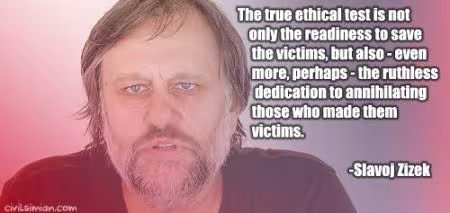
We rarely hear, it has been said, of the combinations of masters, though frequently of those of the workman. But whoever imagines, upon this account, that masters rarely combine, is as ignorant of the world as of the subject.
▼
Source
source
Chapter VIII, p. 80.

1 week 4 days ago
In brief, all this Mammon-Gospel, of Supply-and-demand, Competition, Laissez-faire, and Devil take the hindmost, begins to be one of the shabbiest Gospels ever preached on Earth; or altogether the shabbiest.
3 months 2 weeks ago
The victory of vivisection marks a great advance in the triumph of ruthless, non-moral utilitarianism over the old world of ethical law; a triumph in which we, as well as animals, are already the victims, and of which Dachau and Hiroshima mark the more recent achievements.
▼
Source
source
"Vivisection" (1947), p. 228

2 months 3 weeks ago
I could show, that the same faction has, in one reign, promoted popular seditions, and, in the next, been a patron of tyranny; I could show, that they have all of them betrayed the public safety at all times, and have very frequently with equal perfidy made a market of their own cause, and their own associates. I could show how vehemently they have contended for names, and how silently they have passed over things of the last importance.
2 months 1 week ago
The general fellowship of our human situation has been rendered even more dubious than before, inasmuch as, though the old ties of caste have been loosened, a new restriction of the individual to some prescribed status in society is manifest. Less than ever, perhaps, is it possible for a man to transcend the limitations imposed by his social origins.
3 months 2 weeks ago
But what of the poor Ghosts who never get into the omnibus at all?' 'Everyone who wishes it does. Never fear. There are only two kinds of people in the end: those who say to God, "Thy will be done," and those to whom God says, in the end, "Thy will be done." All that are in Hell, choose it. Without that self-choice there could be no Hell. No soul that seriously and constantly desires joy will ever miss it. Those who seek find. To those who knock it is opened.
▼
Source
source
Ch. 9, p. 72; part of this has also been rendered in a variant form, and quoted as:

1 month 2 weeks ago
We begin again to structure the primordial feelings...from which 3000 years of literacy divorced us. We begin again to live a myth.
▼
Source
source
(p. 17)

3 months 2 weeks ago
In order to make myself recognized by the Other, I must risk my own life. To risk one's life, in fact, is to reveal oneself as not-bound to the objective form or to any determined existence - as not-bound to life.
▼
Source
source
p. 237, 1998 edition

3 months 4 weeks ago
...so it is with human reason, which strives not against faith, when enlightened, but rather furthers and advances it.
▼
Source
source
On Justification CCXCIV

3 months 3 weeks ago
Even if there never have been actions arising from such pure sources, what is at issue here is not whether this or that happened; that, instead, reason by itself and independently of all appearances commands what ought to happen; that, accordingly, actions of which the world has perhaps so far given no example, and whose very practicability might be very much doubted by one who bases everything on experience, are still inflexibly commanded by reason ... because ... duty ... lies, prior to all experience, in the idea of a reason determing the will by means of apriori grounds.

4 months 2 weeks ago
Science doesn't purvey absolute truth. Science is a mechanism. It's a way of trying to improve your knowledge of nature. It's a system for testing your thoughts against the universe and seeing whether they match. And this works, not just for the ordinary aspects of science, but for all of life. I should think people would want to know that what they know is truly what the universe is like, or at least as close as they can get to it.
3 months 2 weeks ago
The strangest mores of the most of-the-way societies will, in spite of everything, be relatively comprehensible to the person who has a flesh-and-blood knowledge of man's needs, anxieties, and hopes. If, on the other hand, this experience is lacking, he will not even be able to understand the customs of those about him.
▼
Source
source
p. 139
4 months 2 weeks ago
It was the addition of status that brought the little things: a more comfortable seat here, a better cut of meat there, a shorter wait in line at the other place. To the philosophical mind, these items might seem scarcely worth any great trouble to acquire.Yet no one, however philosophical, could give up those privileges, once acquired, without a pang. That was the point.

3 months 2 weeks ago
Pass in, pass in, the angels say, In to the upper doors; Nor count compartments of the floors, But mount to Paradise By the stairway of surprise.
▼
Source
source
Merlin, I, st. 2
5 days ago
You do not know where death awaits you; so be ready for it everywhere.

2 months 3 days ago
It is the fallacy of all intellectuals to believe that intellect can grasp life. It cannot, because it works in terms of symbols and language. There is another factor involved: consciousness. If the flame of consciousness is low, a symbol has no power to evoke reality, and intellect is helpless.
▼
Source
source
p. 112


2 months 6 days ago
If a young girl is being forced into a brothel she will not talk about her rights. In such a situation the word would sound ludicrously inadequate.
▼
Source
source
p. 63
4 months 2 weeks ago
It is all too easy to forget that there are emotional motivations in history, as well as economic ones.

3 months 4 weeks ago
A wise man sees as much as he ought, not as much as he can.

4 months 1 week ago
Reviewing what you have learned and learning anew, you are fit to be a teacher.
2 months 6 days ago
What the public wants is the image of passion, not passion itself.
▼
Source
source
"Le monde où l'on catche"

2 months 2 weeks ago
If, at the limit, you can rule without crime, you cannot do so without injustices.

2 months 3 weeks ago
We are all instruments endowed with feeling and memory. Our senses are so many strings that are struck by surrounding objects and that also frequently strike themselves.
▼
Source
source
"Conversation Between D'Alembert and Diderot"

1 month 2 weeks ago
The oppression of a majority by a minority, and the demoralization inevitably resulting from it, is a phenomenon that has always occupied me and has done so most particularly of late.
▼
Source
source
I
3 months 3 weeks ago
In man (as the only rational creature on earth) those natural capacities which are directed to the use of his reason are to be fully developed only in the race, not in the individual.
▼
Source
source
Second Thesis
2 weeks 3 days ago
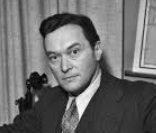
Art enlarges experience by admitting us to the inner life of others.
▼
Source
source
Ch. IV: "The Golden Rule and After", p. 110.
2 months 3 days ago
It is not enough to accept a concept of order and live by it; that is cowardice, and such cowardice cannot result from freedom. Chaos must be faced. Real order must be preceded by a descent into chaos.
▼
Source
source
Chapter Three, The Romantic Outsider

3 months 2 weeks ago
We cannot always choose the vocation to which we believe we are called. Our social relations, to some extent, have already begun to form before we are in a position to determine them.
▼
Source
source
Writings of the Young Marx on Philosophy and Society, L. Easton, trans. (1967), p. 37
2 months 2 weeks ago
We are fulfilled only when we aspire to nothing, when we are impregnated by that nothing to the point of intoxication.
3 months 1 week ago
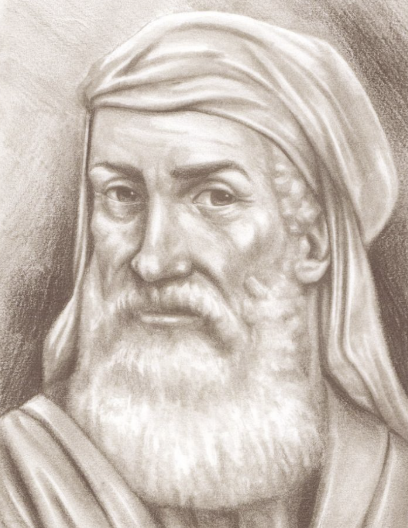
A law there is, an oracle of Doom, Of old enacted by the assembled gods, That if a Daemon-such as live for ages- Defile himself with foul and sinful murder, He must for seasons thrice ten thousand roam Far from the Blest; such is the path I tread, I too a wanderer and exile from heaven.
▼
Source
source
tr. Phillip H. De Lacy and Benedict Einarson. Cf. full quotation at Leonard p. 54-55 fr. 115, as paraphrased in Plutarch's Moralia
2 months 2 days ago
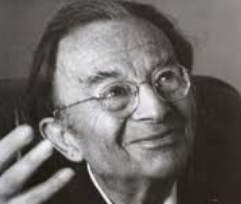
Both dreams and myths are important communications from ourselves to ourselves. If we do not understand the language in which they are written, we miss a great deal of what we know and tell ourselves in those hours when we are not busy manipulating the outside world.
▼
Source
source
As quoted in The New York Times

2 months 2 weeks ago
To be a good mother - a woman must have sense, and that independence of mind which few women possess who are taught to depend entirely on their husbands. Meek wives are, in general, foolish mothers; wanting their children to love them best, and take their part, in secret, against the father, who is held up as a scarecrow.
▼
Source
source
Ch. 10
CivilSimian.com created by AxiomaticPanic, CivilSimian, Kalokagathia