


3 months 2 weeks ago
All that is not eternal is eternally out of date.
▼
Source
source
"Charity"

4 days ago
Who, then, can be more ignorant of nature than he who classes this cruel and hurtful vice as belonging to her best and most polished work?

1 month 2 weeks ago
The mask, like the side-show freak, is mainly participatory rather than pictorial in its sensory appeal.
▼
Source
source
(p. 352)

3 months 2 weeks ago
But if you say: "How am I to know what he means, when I see nothing but the signs he gives?" then I say: "How is he to know what he means, when he has nothing but the signs either?"
▼
Source
source
§ 504
2 months 2 weeks ago
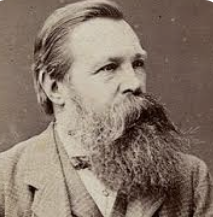
It is no longer a question anywhere of inventing interconnections from out of our brains, but of discovering them in the facts.
▼
Source
source
Ludwig Feuerbach and the End of Classical German Philosophy



2 months 2 weeks ago
Man grows used to everything, the scoundrel.

1 month 2 weeks ago
Bush and bin Laden are really on the same side: the side of faith and violence against the side of reason and discussion. Both have implacable faith that they are right and the other is evil. Each believes that when he dies he is going to heaven. Each believes that if he could kill the other, his path to paradise in the next world would be even swifter. The delusional "next world" is welcome to both of them. This world would be a much better place without either of them.
▼
Source
source
Gordy Slack, "The Atheist" Salon.com

4 months 1 week ago
I hear and I forget. I see and I remember. I do and I understand.

1 week 3 days ago
There is an irrepressible tendency in every man to develop himself according to the magnitude which Nature has made him of; to speak out, to act out, what nature has laid in him. This is proper, fit, inevitable; nay it is a duty, and even the summary of duties for a man. The meaning of life here on earth might be defined as consisting in this: To unfold your self, to work what thing you have the faculty for.

3 months 3 weeks ago
The real and effectual discipline which is exercised over a workman is that of his customers. It is the fear of losing their employment which restrains his frauds and corrects his negligence.
▼
Source
source
Chapter X, Part II.

2 weeks 2 days ago
If an action ... involves little profit but much righteousness, do it.
▼
Source
source
Readings in Classical Chinese Philosophy (2001), p. 263
1 week 3 days ago
Find in any country the Ablest Man that exists there; raise him to the supreme place, and loyally reverence him: you have a perfect government for that country; no ballot-box, parliamentary eloquence, voting, constitution-building, or other machinery whatsoever can improve it a whit.

2 months 1 week ago
I am Alpha and Omega, the beginning and the end, the first and the last.
▼
Source
source
Revelation 22:13
1 week 6 days ago
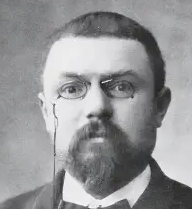
Does the harmony the human intelligence thinks it discovers in nature exist outside of this intelligence? No, beyond doubt, a reality completely independent of the mind which conceives it, sees or feels it, is an impossibility. A world as exterior as that, even if it existed, would for us be forever inaccessible.

3 months 2 weeks ago
The pursuit of philosophy is founded on the belief that knowledge is good, even if what is known is painful. A man imbued with the philosophic spirit, whether a professional philosopher or not, will wish his beliefs to be as true as he can make them, and will, in equal measure, love to know and hate to be in error. This principle has a wider scope than may be apparent at first sight.
2 months 2 weeks ago
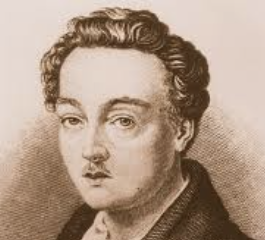
Death is the most blessed dream.
▼
Source
source
Act II.

2 months 2 weeks ago
My mission is to see things as they are. Exactly the contrary of a mission.
2 months 2 weeks ago
Doutbless, revenge is not always sweet, once it is consummated we feel inferior to our victim, or else we are tangled in the subtleties of remorse; so vengeance too has its venom, though it comes closer to what we are, to what we feel, to the very law of the self; it is also healthier than magnanimity. The Furies were held to antedate the gods, Zeus included. Vengeance before Divinity! This is the Major intuition of ancient mythology. p. 70.
5 days ago
But let the individual man lay claim to ever so many rights because Man or the concept man 'entitles' him to them, because his being man does it: what do I care for his right and his claim? If he has his right only from Man and does not have it from me, then for me he has no right. His life, for example, counts to me only for what it is worth to me. I respect neither a so-called right of property (or his claim to tangible goods) nor yet his right to the 'sanctuary of his inner nature' (or his right to have the spiritual goods and divinities, his gods, remain un-aggrieved). His goods, the sensuous as well as the spiritual, are mine, and I dispose of them as proprietor, in the measure of my - might.
▼
Source
source
Cambridge 1995, p. 219

2 months 6 days ago
For the truth is that our doctrines are usually only the justification a posteriori of our conduct, or else they are our way of trying to explain that conduct to ourselves.

2 months 3 weeks ago
The foremost, or indeed the sole condition which is required in order to succeed in centralizing the supreme power in a democratic community, is to love equality, or to get men to believe you love it. Thus the science of despotism, which was once so complex, is simplified, and reduced as it were to a single principle.
▼
Source
source
Book Four, Chapter IV.
2 months 2 weeks ago
Life inspires more dread than death - it is life which is the great unknown.

3 months 3 weeks ago
It is a great mortification to the vanity of man, that his utmost art and industry can never equal the meanest of nature's productions, either for beauty or value. Art is only the under-workman, and is employed to give a few strokes of embellishment to those pieces, which come from the hand of the master.
▼
Source
source
Part I, Essay 15: The Epicurean

2 months 2 weeks ago
You have theories enough concerning the Rights of Men. It may not be amiss to add a small degree of attention to their Nature and disposition.
▼
Source
source
Letter to Charles-Jean-François Depont (November 1789), quoted in Alfred Cobban and Robert A. Smith (eds.), The Correspondence of Edmund Burke, Volume VI: July 1789-December 1791 (1967), p. 46

2 months 2 weeks ago
The determination to print them (his lectures), and to communicate them to the General Public, must also speak for itself; and should it not do so, any other recommendation of them would be thrown away. Thus, with respect to the appearance of this work, I have nothing further to say to the Public, than that I have nothing to say.
▼
Source
source
Preface
3 months 2 weeks ago
"Then those people are right who say that Heaven and Hell are only states of mind?" "Hush," he said sternly. "Do not blaspheme. Hell is a state of mind - ye never said a truer word. And every state of mind, left to itself, every shutting up of the creature within the dungeon of its own mind - is, in the end, Hell. But Heaven is not a state of mind. Heaven is reality itself. All that is fully real is Heavenly."
▼
Source
source
Ch. 9
1 month 2 weeks ago
The world and the universe is an extremely beautiful place, and the more we understand about it the more beautiful does it appear. It is an immensely exciting experience to be born in the world, born in the universe, and look around you and realise that before you die you have the opportunity of understanding an immense amount about that world and about that universe and about life and about why we're here. We have the opportunity of understanding far, far more than any of our predecessors ever. That is such an exciting possibility, it would be such a shame to blow it and end your life not having understood what there is to understand.
1 week 3 days ago
Aesop's Fly, sitting on the axle of the chariot, has been much laughed at for exclaiming: What a dust I do raise!

4 months 2 weeks ago
O light! This is the cry of all the characters of ancient drama brought face to face with their fate. This last resort was ours, too, and I knew it now. In the middle of winter I at last discovered that there was in me an invincible summer. Return to Tipasa (1954) Variant translation: In the depths of winter, I finally learned that within me there lay an invincible summer.
2 months 1 week ago
Judge not, that ye be not judged. For with what judgment ye judge, ye shall be judged: and with what measure ye mete, it shall be measured to you again.
▼
Source
source
(Matthew 7:1-2) (KJV)


2 months 2 days ago
The purpose of consciousness is to illuminate the world. If we try to run consciousness at half its proper voltage, the result will be a "devalued" world. But that is not the fault of the world; it is our fault. Low-voltage consciousness shows us less of the world than high-voltage consciousness, just as we would see an art gallery less clearly by candlelight than by sunlight.

4 weeks ago
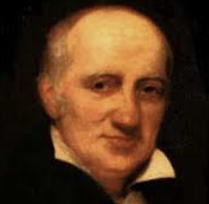
When Bernard Marx tells the Savage he will try to secure permission for him and his mother to visit the Other Place, John is initially pleased and excited. Echoing Miranda in The Tempest, he exclaims: "O brave new world that has such people in it." Heavy irony. Like innocent Miranda, he is eager to embrace a way of life he neither knows nor understands. And of course he comes unstuck. Yet if we swallow such fancy literary conceits, then ultimately the joke is on us. It is only funny in the sense there are "jokes" about Auschwitz. For it is Huxley who neither knows nor understands the glory of what lies ahead. A utopian society in which we are sublimely happy will be far better than we can presently imagine, not worse. And it is we, trapped in the emotional squalor of late-Darwinian antiquity, who neither know nor understand the lives of the god-like super-beings we are destined to become. "Brave New World? A Defence of Paradise-Engineering", BLTC Research, 1998

2 months 2 weeks ago
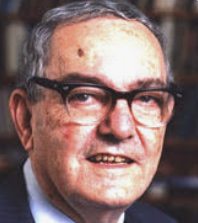
To conceive that compulsion and punishment are the proper means of reformation, is the sentiment of a barbarian; civilisation and science are calculated to explode so ferocious an idea. It was once universally admitted and approved; it is now necessarily upon the decline.
▼
Source
source
Vol. 2, bk. 7, ch. 5
1 month 4 weeks ago
Decision making processes are aimed at finding courses of action that are feasible or satisfactory in the light of multiple goals and constraints.
▼
Source
source
p. 274.

1 month 2 weeks ago
To say that the activity of science and art helps humanity's progress, if by that activity we mean the activity which now calls itself by those names, is as though one said that the clumsy, obstructive splashing of oars in a boat moving down stream assists the boat's progress. It only hinders it... The proof of this is seen in the confession made by men of science that the achievements of the arts and sciences are inaccessible to the labouring masses on account of the unequal distribution of wealth.

4 months 1 week ago
Those animals which are incapable of making binding agreements with one another not to inflict nor suffer harm are without either justice or injustice; and likewise for those peoples who either could not or would not form binding agreements not to inflict nor suffer harm.

2 months 2 weeks ago
The same energy of character which renders a man a daring villain would have rendered him useful to society, had that society been well organized.
▼
Source
source
Letter 19
3 months 2 weeks ago
There is much pleasure to be gained from useless knowledge.
▼
Source
source
Ch. 2: 'Useless' Knowledge

2 months 1 day ago
Women are never supposed to have any occupation of sufficient importance not to be interrupted, except "suckling their fools "; and women themselves have accepted this, have written books to support it, and have trained themselves so as to consider whatever they do as not of such value to the world or to others, but that they can throw it up at the first "claim of social life." They have accustomed themselves to consider intellectual occupation as a merely selfish amusement, which it is their " duty " to give up for every trifler more selfish than themselves.

2 months 3 weeks ago
All things are in all.
▼
Source
source
V 9; as translated by Dorothea Waley Singer
1 month 2 weeks ago
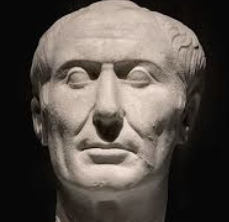
It is a very hard undertaking to seek to please everybody.
▼
Source
source
Maxim 675

2 months 3 days ago
The process begins with the individual woman's acceptance that American women, without exception, are socialized to be racist, classist and sexist, in varying degrees, and that labeling ourselves feminists does not change the fact that we must consciously work to rid ourselves of the legacy of negative socialization.

3 months 3 weeks ago
Two Chinamen visiting Europe went to the theatre for the first time. One of them occupied himself with trying to understand the theatrical machinery, which he succeeded in doing. The other, despite his ignorance of the language, sought to unravel the meaning of the play. The former is like the astronomer, the latter the philosopher.
▼
Source
source
Vol. 2 "On Various Subjects" as translated in Essays and Aphorisms (1970), as translated by R. J. Hollingdale

3 months 3 weeks ago
Visions are a feeble resource, you will say, against great adversity! Oh Sir, these visions may possibly have more reality than all those apparent goods about which men make so much ado, for they never bring a true feeling of happiness to the soul, and those who possess them are equally forced to project themselves into the future for want of finding enjoyments that satisfy them, in the present.
▼
Source
source
Second Dialogue; translated by Judith R. Bush, Christopher Kelly, Roger D. Masters
1 month 2 weeks ago
We may with advantage at times forget what we know.
▼
Source
source
Maxim 234

3 months 1 week ago
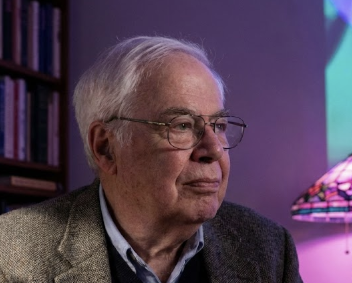
It is no more evident that democratic institutions are to be measured by the sort of person they create than that they are to be measured against divine commands. ... Even if the typical character types of liberal democracies are bland, calculating, petty, and unheroic, the prevalence of such people may be a reasonable price to pay for political freedom.
CivilSimian.com created by AxiomaticPanic, CivilSimian, Kalokagathia