


3 months 3 weeks ago
His character does not appear more extraordinary and unusual by the mixture of so much absurdity with so much penetration, than by his tempering such violent ambition, and such enraged fanaticism with so much regard to justice and humanity.
▼
Source
source
Volume III, Chapter LXI; referring to Oliver Cromwell
3 months 2 weeks ago
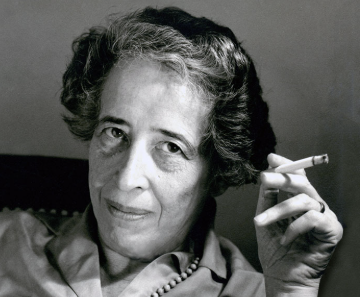
Nobody knows what is going to happen because so much depends on an enormous number of variables, on simple hazard. On the other hand if you look at history retrospectively, then, even though it was contingent, you can tell a story that makes sense.... Jewish history, for example, in fact had its ups and downs, its, enmities and its friendships, as every history of all people has. The notion that there is one unilinear history is of course false. But if you look at it after the experience of Auschwitz it looks as though all of history-or at least history since the Middle Ages - had no other aim than Auschwitz.... This, is the real problem of every philosophy of history how is it possible that in retrospect it always looks as though it couldn't have happened otherwise?
2 months 2 weeks ago
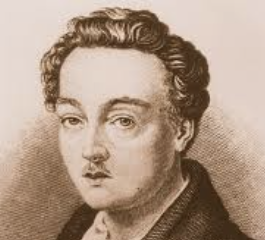
Revolution is like Saturn, it devours its own children.
▼
Source
source
Act I.

3 months 2 weeks ago
Our conviction that the world is meaningless is due in part to the fact (discussed in a later paragraph) that the philosophy of meaningless lends itself very effectively to furthering the ends of political and erotic passion; in part to a genuine intellectual error - the error of identifying the world of science, a world from which all meaning has deliberately been excluded, with ultimate reality.
▼
Source
source
Ch. 14, p. 309 [2012 reprint]

2 months 1 day ago
It may seem to be a long way from Blake's innocent talk of love and copulation to De Sade's need to inflict pain. And yet both are the outcome of a sexual mysticism that strives to transcend the everyday world. Simone de Beauvoir said penetratingly of De Sade's work that 'he is trying to communicate an experience whose distinguishing characteristic is, nevertheless its will to remain incommunicable'. De Sade's perversion may have sprung from his dislike of his mother or of other women, but its basis is a kind of distorted religious emotion.
▼
Source
source
p. 90

3 months 3 weeks ago
Nature has willed that man should, by himself, produce everything that goes beyond the mechanical ordering of his animal existence, and that he should partake of no other happiness or perfection than that which he himself, independently of instinct, has created by his own reason.
▼
Source
source
Third Thesis
2 months 1 week ago
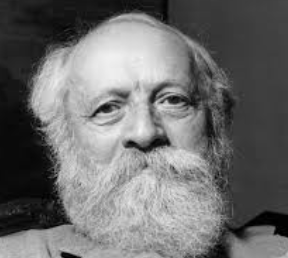
The concept of guilt is found most powerfully developed even in the most primitive communal forms which we know: ... the man is guilty who violates one of the original laws which dominate the society and which are mostly derived from a divine founder; the boy who is accepted into the tribal community and learns its laws, which bind him thenceforth, learns to promise; this promise is often given under the sign of death, which is symbolically carried out on the boy, with a symbolical rebirth.
▼
Source
source
p. 178
1 month 4 days ago
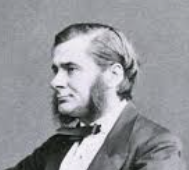
Social progress means a checking of the cosmic process at every step and the substitution for it of another, which may be called the ethical process; the end of which is not the survival of those who may happen to be the fittest, in respect of the whole of the conditions which obtain, but of those who are ethically the best.

1 month 2 weeks ago
I cannot recall those years without horror, loathing, and heart-rending pain. I killed people in war, challenged men to duels with the purpose of killing them, and lost at cards; I squandered the fruits of the peasants' toil and then had them executed; I was a fornicator and a cheat. Lying, stealing, promiscuity of every kind, drunkenness, violence, murder - there was not a crime I did not commit... Thus I lived for ten years.
▼
Source
source
Pt. I, ch. 2
1 month 2 days ago
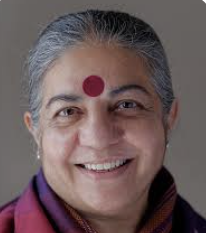
I think we have reached a stage now where we need to find solutions to economic injustice in the same place and in the same ways that we find solutions to sustainability. Sustainability on environmental grounds and justice in terms of everyone having a place in the production and consumption system - these are two aspects of the same issue. They have been artificially separated and have to be put back again in the Western way of thinking.
▼
Source
source
1998

3 months 2 weeks ago
The poet presents the imagination with images from life and human characters and situations, sets them all in motion and leaves it to the beholder to let these images take his thoughts as far as his mental powers will permit. This is why he is able to engage men of the most differing capabilities, indeed fools and sages together. The philosopher, on the other hand, presents not life itself but the finished thoughts which he has abstracted from it and then demands that the reader should think precisely as, and precisely as far as, he himself thinks. That is why his public is so small.
▼
Source
source
Vol. 2 "On Philosophy and the Intellect" as translated in Essays and Aphorisms (1970), as translated by R. J. Hollingdale
4 months 4 days ago
Anger is a weed; hate is the tree.
▼
Source
source
58 Alternate versions: Anger is a stem, hate is a trunk. Anger is the mote, hate is the beam.

2 months 3 weeks ago
If you want me to believe in God, you must make me touch him.
▼
Source
source
as quoted in Diderot and the Encyclopædists (1897) by John Morley, p. 92.

3 months 2 weeks ago
Besides, we should never attempt to balance anybody's misery against somebody else's happiness.
▼
Source
source
pp. 486-487

3 months 2 weeks ago
I did not know that mankind were suffering for want of gold. I have seen a little of it. I know that it is very malleable, but not so malleable as wit. A grain of gold will gild a great surface, but not so much as a grain of wisdom.
▼
Source
source
p. 488

3 months 3 weeks ago
The commodities of Europe were almost all new to America, and many of those of America were new to Europe. A new set of exchanges, therefore, began..and which should naturally have proved as advantageous to the new, as it certainly did to the old continent. The savage injustice of the Europeans rendered an event, which ought to have been beneficial to all, ruinous and destructive to several of those unfortunate countries.
▼
Source
source
Chapter I, p. 481.
4 months 1 day ago
All men are almost led to believe not of proof, but by attraction. This way is base, ignoble, and irrelevant; every one therefore disavows it. Each one professes to believe and even to love nothing but what he knows to be worthy of belief and love.
2 months 1 day ago
Anyone who can understand that the Buddhist idea of Nirvana is not merely negative, and that the Buddha himself who (like the Superman) 'looks down on suffering humanity like a hillsman on the planes' is not an atheistic monster, will instantly see how this misses the point. Nietzsche was not an atheist, any more than the Buddha was. Anyone who reads the Night Song and the Dance Song in Zarathustra will recognize that they spring out of the same emotion as the Vedic or Gathic hymns or the Psalms of David. The idea of the Superman is a response to the need for salvation in precisely the same way that Buddhism was a response to the 'three signs'.
▼
Source
source
p. 135


4 months 3 days ago
Don't you know that a good and excellent person does nothing for the sake of appearances, but only for the sake of having acted right?
▼
Source
source
Book III, ch. 24, 50.
4 months 4 days ago
The light will not shame you, if it shows you your own ugliness, and that ugliness so offends you that you perceive the beauty of the light.
▼
Source
source
First Homily, as translated by John Burnaby (1955), p. 262

4 months 1 week ago
Man has three ways of acting wisely. First, on meditation; that is the noblest. Secondly, on imitation; that is the easiest. Thirdly, on experience; that is the bitterest.

3 months 2 weeks ago
Real culture lives by sympathies and admirations, not by dislikes and disdain - under all misleading wrappings it pounces unerringly upon the human core.
▼
Source
source
The Social Value of the College-Bred

3 days ago
When the changes of our times gave you an opportunity, you restored to the use of man that genius of your father for which he had suffered, and made him in real truth immortal by publishing as an eternal memorial of him those books which that bravest of men had written with his own blood. You have done a great service to Roman literature: a large part of Cordus's books had been burned; a great service to posterity, who will receive a true account of events, which cost its author so dear; and a great service to himself, whose memory flourishes and ever will flourish, as long as men set any value upon the facts of Roman history, as long as anyone lives who wishes to review the deeds of our fathers, to know what a true Roman was like - one who still remained unconquered when all other necks were broken in to receive the yoke of Sejanus, one who was free in every thought, feeling, and act.

3 months 2 weeks ago
Mr. Neo-Angular - I am doing my duty. My ethics are based on dogma, not on feeling. Vertue - I know that a rule is to be obeyed because it is a rule and not because it appeals to my feelings at the moment.
▼
Source
source
Pilgrim's Regress 90

3 months 2 weeks ago
The Theophilanthropists do not call themselves the disciples of such or such a man. They avail themselves of the wise precepts that have been transmitted by writers of all countries and in all ages.
▼
Source
source
Introduction

3 months 2 weeks ago
If a victory is told in detail, one can no longer distinguish it from a defeat.
▼
Source
source
Act 1
1 month 3 weeks ago
Such would be the successive phases of the image:it is the reflection of a profound reality;it masks and denatures a profound reality;it masks the absence of a profound reality;it has no relation to any reality whatsoever: it is its own pure simulacrum.In the first case, the image is a good appearance-representation is of the sacramental order. In the second, it is an evil appearance-it is of the order of maleficence. In the third, it plays at being an appearance-it is of the order of sorcery. In the fourth, it is no longer of the order of appearances, but of simulation.

2 months 1 week ago
When the whole is at stake, there is no crime except that of rejecting the whole, or not defending it. ... Those who identify themselves with the whole, who are installed as the leaders and defenders of the whole can make mistakes, but they cannot do wrong-they are not guilty. They may become guilty again when this identification no longer holds, when they are gone.
▼
Source
source
pp. 82-83

4 months 2 weeks ago
You know what charm is: a way of getting the answer 'yes' without having asked any clear question.

1 month 2 weeks ago
In one way or another, all my books have been devoted to expounding and exploring the almost limitless power of the Darwinian principle-power unleashed whenever and wherever there is enough time for the consequences of primordial self-replication to unfold. Preface
2 months 2 weeks ago
A character is a completely fashioned will.
▼
Source
source
(vollkommen gebildeter Wille).
4 months 1 day ago
All the excesses, all the violence, and all the vanity of great men, come from the fact that they know not what they are: it being difficult for those who regard themselves at heart as equal with all men... For this it is necessary for one to forget himself, and to believe that he has some real excellence above them, in which consists this illusion that I am endeavoring to discover to you.

1 month 2 weeks ago
One of the things that happens at the speed of light is that people lose their goals in life. So what takes the place of goals and objectives? Well, role-playing is coming in very fast.
▼
Source
source
Interview between Californian Governor Jerry Brown and Marshall McLuhan, 1977

1 week 6 days ago
Progressives on the left have shown themselves willing to abandon liberal values in pursuit of social justice objectives. There has been a sustained intellectual attack on liberal principles over the past three decades coming out of academic pursuits like gender studies, critical race theory, postcolonial studies, and queer theory, that deny the universalistic premises underlying modern liberalism. The challenge is not simply one of intolerance of other views or "cancel culture" in the academy or the arts. Rather, the challenge is to basic principles that all human beings were born equal in a fundamental sense, or that a liberal society should strive to be color-blind.
2 months 1 week ago
You do not attain to knowledge by remaining on the shore and watching the foaming waves, you must make the venture and cast yourself in, you must swim, alert and with all your force, even if a moment comes when you think you are losing consciousness; in this way, and in no other, do you reach anthropological insight.
▼
Source
source
p. 148

2 months 1 week ago
Diogenes, in his mud-covered sandals, tramps over the carpets of Aristippus. The cynic pullulated at every corner, and in the highest places. This cynic did nothing but saboter the civilisation of the time. He was the nihilist of Hellenism. He created nothing, he made nothing. His role was to undo - or rather to attempt to undo, for he did not succeed in his purpose. The cynic, a parasite of civilisation, lives by denying it, for the very reason that he is convinced that it will not fail. What would become of the cynic among a savage people where everyone, naturally and quite seriously, fulfils what the cynic farcically considers to be his personal role?
▼
Source
source
Chapter XI: The Self-Satisfied Age

2 months 5 days ago
Love is a contradiction if there is no God.

3 months 2 weeks ago
The life of man is a long march through the night, surrounded by invisible foes, tortured by weariness and pain, towards a goal that few can hope to reach, and where none may tarry long.

3 months 2 weeks ago
At the core of all well-founded belief, lies belief that is unfounded.
4 months 1 day ago
They [men] have corrupted this [God's supernatural] order by making profane things what they should make of holy things, because in fact, we believe scarcely any thing except which pleases us.
7 months 3 weeks ago
It is also crucial to bear in mind the interconnection between the Decalogue... and its modern obverse, the celebrated 'human Rights'. As the experience of our post-political liberal-permissive society amply demonstrates, human Rights are ultimately, at their core, simply Rights to violate the Ten Commandments. 'The right to privacy' — the right to adultery, in secret, where no one sees me or has the right to probe my life. 'The right to pursue happiness and to possess private property' -- the right to steal (to exploit others). 'Freedom of the press and of the expression of opinion' -- the right to lie. 'The right of free citizens to possess weapons' -- the right to kill. And, ultimately, 'freedom of religious belief' — the right to worship false gods.

3 months 2 weeks ago
There is always a best way of doing everything, if it be to boil an egg. Manners are the happy ways of doing things; each once a stroke of genius or of love, - now repeated and hardened into usage. They form at last a rich varnish, with which the routine of life is washed, and its details adorned.
▼
Source
source
Behavior
3 days ago
A good judge condemns wrongful acts, but does not hate them.
▼
Source
source
De Ira (On Anger): Book 1, cap. 16, line 6.
2 months 1 week ago
A man discovers what he is actually worth in this world when he faces society as a man, without money, name, or powerful connections, stripped of all but his native potentialities. He soon finds that nothing has less weight than his human qualities. They are prized so low that the market does not even list them. Strict science, which acknowledges man only as a biological concept, reflects man's lot in the actual world; in himself, man is nothing more than a member of a species. In the eyes of the world, the quality of humanity confers no title to existence, nay, not even a right of sojourn. Such title must be certified by special social circumstances stipulated in documents to be presented on demand.
▼
Source
source
p. 137.

2 months 2 weeks ago
Ethical ideas and sentiments have to be considered as parts of the phenomena of life at large. We have to deal with man as a product of evolution, with society as a product of evolution, and with moral phenomena as products of evolution.
▼
Source
source
Ch. 1, Introductory

1 month 1 week ago
The late philosopher Morris R. Cohen of CCNY was asked by a student in the metaphysics course, "Professor Cohen, how do I know that I exist?" The keen old prof replied, "And who is asking?"
▼
Source
source
Humboldt's Gift (1996), p. 163
4 months 3 days ago
For what is it that everyone is seeking? To live securely, to be happy, to do everything as they wish to do, not to be hindered, not to be subject to compulsion.
▼
Source
source
Book IV, ch. 1, 46.
CivilSimian.com created by AxiomaticPanic, CivilSimian, Kalokagathia