


4 months 5 days ago
I live from day to day, and content myself with having enough to meet my present and ordinary needs; for the extraordinary, all the provision in the world could not suffice.
▼
Source
source
Ch. 14
4 months 4 weeks ago
It is absurd to hold that a man ought to be ashamed of being unable to defend himself with his limbs but not of being unable to defend himself with reason when the use of reason is more distinctive of a human being than the use of his limbs.

1 month 3 weeks ago
It is the poets and painters who react instantly to a new medium like radio or TV.
▼
Source
source
(p. 53)
2 months 1 week ago
Today, tattoos lack symbolic power. All they do is point toward the uniqueness of the bearer. The body is neither a ritual stage nor a surface of projection; rather, it is an advertising space.
5 days ago
If every one in the world will love universally; states not attacking one another; houses not disturbing one another; thieves and robbers becoming extinct; emperor and ministers, fathers and sons, all being affectionate and filial -- if all this comes to pass the world will be orderly. Therefore, how can the wise man who has charge of governing the empire fail to restrain hate and encourage love? So, when there is universal love in the world it will be orderly, and when there is mutual hate in the world it will be disorderly.
▼
Source
source
Book 4; Universal Love I

3 months 3 weeks ago
The labour-power is a commodity, not capital, in the hands of the labourer, and it constitutes for him a revenue so long as he can continuously repeat its sale; it functions as capital after its sale, in the hands of the capitalist, during the process of production itself.
▼
Source
source
Vol. II, Ch. XIX, p. 384.
1 week ago
When one says, for example, that superiority and inferiority is a formation to be found in every human association, though the proposition certainly involves very profound insight into the essence of human nature and human relationship, yet the assertion is so general that it affords little knowledge of particular societary formations. In order to reach such particular knowledge we must study separate types of superiority and inferiority, and we must master the special features of their formation, which in proportion to their definiteness of course lose generality of application.
▼
Source
source
p. 169
2 months ago
"The Precession of Simulacra,"
▼
Source
source
p. 6

3 months 3 weeks ago
This is the contradiction of racism, colonialism, and all forms of tyranny: in order to treat a man like a dog, one must first recognize him as a man.

3 months 3 weeks ago
Frazer's account of the magical and religious views of mankind is unsatisfactory; it makes these views look like errors.
▼
Source
source
Ch. 7 : Remarks on Frazer's Golden Bough, p. 119

3 months 4 weeks ago
Indeed, history is nothing more than a tableau of crimes and misfortunes.
▼
Source
source
L'Ingénu, ch.10 (1767) Quoted in The End, part 13 of A Series of Unfortunate Events

3 months 3 weeks ago
It is because we are predominantly purposeful beings that we are perpetually correcting our immediate sensations. But men are free not to be utilitarianly purposeful. They can sometime be artists, for example. In which case they may like to accept the immediate sensation uncorrected, because it happens to be beautiful.
▼
Source
source
"One and Many," p. 11

1 month 3 weeks ago
If Mormonism is able to endure, unmodified, until it reaches the third and fourth generation, it is destined to become the greatest power the world has ever known.
▼
Source
source
This quote originates in Thomas J. Yates, "Count Tolstoi and the 'American Religion' ", Improvement Era (February 1939)


2 months 4 weeks ago
The people never give up their liberties but under some delusion.
▼
Source
source
Speech at a County Meeting of Buckinghamshire

3 months 2 days ago
You may set the Negro free, but you cannot make him otherwise than an alien to the European. Nor is this all we scarcely acknowledge the common features of humanity in this stranger whom slavery has brought among us. His physiognomy is to our eyes hideous, his understanding weak, his tastes low; and we are almost inclined to look upon him as a being intermediate between man and the brutes.
▼
Source
source
Chapter XVIII.
1 month 6 days ago
Many city-dwellers have a romanticized conception of the living world. From another perspective, some "conservation biologists" favour e.g. "Pleistocene rewilding". By contrast, I think any truly compassionate person should be horrified at the terrible suffering of Nature "red in tooth and claw". Why not aim for a cruelty-free world instead?
▼
Source
source
"Interview with Pensata Animal", Pensata Animal, 25 Oct. 2009
2 months 3 weeks ago
The secret of Hegel's dialectic lies ultimately in this alone, that it negates theology through philosophy in order then to negate philosophy through theology. Both the beginning and the end are constituted by theology; philosophy stands in the middle as the negation of the first positedness, but the negation of the negation is again theology. At first everything is overthrown, but then everything is reinstated in its old place, as in Descartes. The Hegelian philosophy is the last grand attempt to restore a lost and defunct Christianity through philosophy, and, of course, as is characteristic of the modern era, by identifying the negation of Christianity with Christianity itself.
▼
Source
source
Part II, Section 21
1 month 3 weeks ago
The loss which is unknown is no loss at all.
▼
Source
source
Maxim 38

4 months 3 weeks ago
Metaphysical rebellion is a claim, motivated by the concept of a complete unity, against the suffering of life and death and a protest against the human condition both for its incompleteness, thanks to death, and its wastefulness, thanks to evil.
4 months 3 weeks ago
He realized now that to be afraid of this death he was staring at with animal terror meant to be afraid of life. Fear of dying justified a limitless attachment to what is alive in man. And all those who had not made the gestures necessary to live their lives, all those who feared and exalted impotence — they were afraid of death because of the sanction it gave to a life in which they had not been involved. They had not lived enough, never having lived at all.
2 months 1 week ago
The greatest events occur without intention playing any part in them; chance makes good mistakes and undoes the most carefully planned undertaking. The world's greatest events are not produced, they happen.
▼
Source
source
K 68
2 months 2 weeks ago
The world of immediate experience-the world in which we find ourselves living-must be comprehended, transformed, even subverted in order to become that which it really is.
▼
Source
source
p. 123
2 months 4 weeks ago
I considerd a general War against Jacobins and Jacobinism, as the only possible chance of saving Europe, (and England as included in Europe) from a truly frightful revolution. ... It is my Protest against the delusion, by which some have been taught to look upon this Jacobin contest at home as an ordinary party squabble about place or Patronage; and to regard this Jacobin War abroad as a common War about Trade, or Territorial Boundaries, or about a political Balance of power among Rival or jealous States.
▼
Source
source
Letter to the Duke of Portland (29 September 1793), quoted in P. J. Marshall and John A. Woods (eds.)
5 days ago
Instead of holding on to the Biblical view that we are made in the image of God, we come to realize that we are made in the image of the monkey.
▼
Source
source
p. 36

2 months 1 week ago
The real importance of Swedenborg lies in the doctrines he taught, which are the reverse of the gloom and hell-fire of other breakaway sects. He rejects the notion that Jesus died on the cross to atone for the sin of Adam, declaring that God is neither vindictive nor petty-minded, and that since he is God, he doesn't need atonement. It is remarkable that this common-sense view had never struck earlier theologians. God is Divine Goodness, and Jesus is Divine Wisdom, and Goodness has to be approached through Wisdom. Whatever one thinks about the extraordinary claims of its founder, it must be acknowledged that there is something very beautiful and healthy about the Swedenborgian religion. Its founder may have not been a great occultist, but he was a great man.
▼
Source
source
p. 280

2 months 1 week ago
Corruption of politics has nothing to do with the morals, or the laxity of morals, of various political personalities. Its cause is altogether a material one. Politics is the reflex of the business and industrial world, the mottos of which are: "To take is more blessed than to give"; "buy cheap and sell dear"; "one soiled hand washes the other." There is no hope even that woman, with her right to vote, will ever purify politics.

1 week 5 days ago
Religion is regarded by the common people as true, by the wise as false, and by rulers as useful.
▼
Source
source
As quoted in What Great Men Think About Religion (1945) by Ira D. Cardiff, p. 342.
2 months 1 week ago
Every religious practice is an exercise in attention. A temple is the highest degree of attention.

1 month 4 days ago
The basis of science is the empirical method, which uses the senses to build up a picture of the world; but science tells us that our senses have evolved to help us get by, not to show us the world as it is. Science is only a systematic examination of our impressions, and in the end all each of us has left are our own sensations ... The end-result of the empirical method, then, is that each individual is left alone with their own experiences. We can escape this solitude, Balfour suggested, only if we accept that there is a divine mind.
▼
Source
source
Cross-correspondences (p. 69-70)
2 weeks 6 days ago
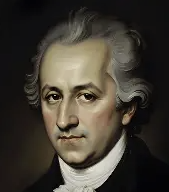
I have found a paper of mine among some others in which I call architecture 'petrified music.' Really there is something in this; the tone of mind produced by architecture approaches the effect of music.
▼
Source
source
Conversations with Eckermann (23 March 1829) - Often quoted as "Architecture is frozen music."
2 months 4 weeks ago
Old religious factions are volcanoes burnt out.
▼
Source
source
Speech on the Petition of the Unitarians
1 week 1 day ago
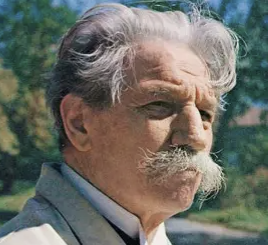
The deeper we look into nature, the more we recognize that it is full of life, and the more profoundly we know that all life is a secret and that we are united with all life that is in nature. Man can no longer live for himself alone. We realize that all life is valuable, and that we are united to all this life. From this knowledge comes our spiritual relationship to the universe.
▼
Source
source
p. 248
1 month 3 weeks ago
I neither approve nor disapprove. I merely try to understand. Sexual freedom is as natural to newly tribalized youth as drugs.
1 month 3 weeks ago
A wise man rules his passions, a fool obeys them.
▼
Source
source
Maxim 49

2 weeks 4 days ago
Innumerable are the illusions and legerdemain-tricks of Custom: but of all these, perhaps the cleverest is her knack of persuading us that the Miraculous, by simple repetition, ceases to be Miraculous.
▼
Source
source
Bk. III, ch. 8.

3 months 2 weeks ago
He who upholds Truth with all the might of his power, He who upholds Truth the utmost in his word and deed,He, indeed, is Thy most valued helper, O Mazda Ahura!
▼
Source
source
Ahunuvaiti Gatha; Yasna 31, 22.
2 months 1 week ago
A leftist government doesn't exist because being on the left has nothing to do with governments.
▼
Source
source
from L'Abécédaire de Gilles Deleuze: G comme Gauche ("Gilles Deleuze's Alphabet Book: Left-wing Politics"), 1988-1989.
2 months 2 weeks ago
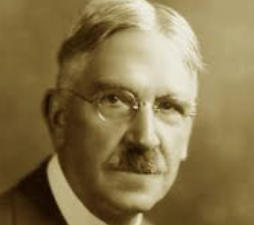
"Relation" in its idiomatic usage denotes something direct and active, something dynamic and energetic. It fixes attention upon the way things bear upon one another, their clashings and unitings, the way they fulfill and frustrate, promote and retard, excite and inhibit one another. Intellectual relations subsist in propositions; they state the connection of terms with one another. In art, as in nature and in life, relations are modes of interaction.
▼
Source
source
p. 139
4 months 2 weeks ago
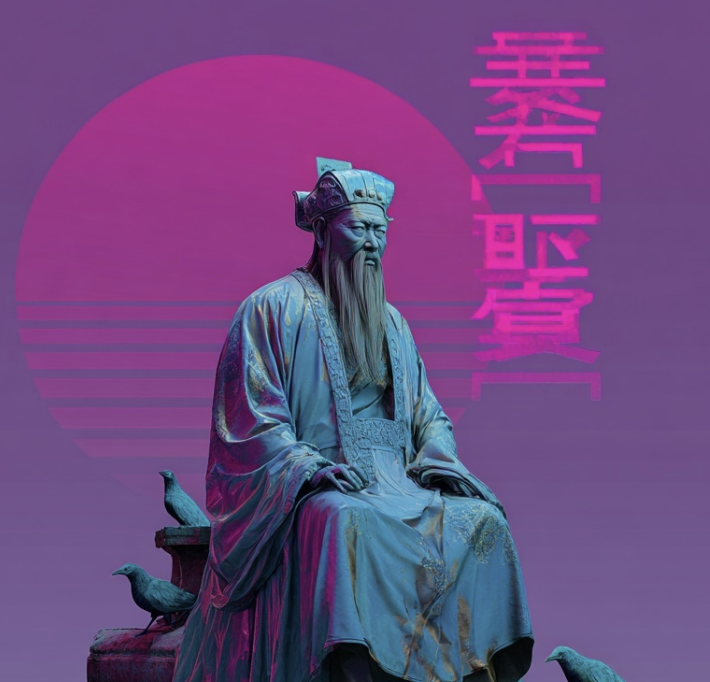
When a country is well governed, poverty and a mean condition are things to be ashamed of. When a country is ill governed, riches and honor are things to be ashamed of.
2 weeks 4 days ago
All this of Liberty and Equality, Electoral suffrages, Independence and so forth, we will take, therefore, to be a temporary phenomenon, by no means a final one. Though likely to last a long time, with sad enough embroilments for us all, we must welcome it, as the penalty of sins that are past, the pledge of inestimable benefits that are coming.
4 months 5 days ago
How many things served us yesterday for articles of faith, which today are fables for us?
▼
Source
source
Ch. 27. Of Friendship
2 months 1 week ago
Perhaps even more than constituted authority, it is social uniformity and sameness that harass the individual most. His very "uniqueness," "separateness" and "differentiation" make him an alien, not only in his native place, but even in his own home. Often more so than the foreign born who generally falls in with the established. In the true sense one's native land, with its back ground of tradition, early impressions, reminiscences and other things dear to one, is not enough to make sensitive human beings feel at home. A certain atmosphere of "belonging," the consciousness of being "at one" with the people and environment, is more essential to one's feeling of home. This holds good in relation to one's family, the smaller local circle, as well as the larger phase of the life and activities commonly called one's country. The individual whose vision encompasses the whole world often feels nowhere so hedged in and out of touch with his surroundings than in his native land.
5 days ago
The creative imagination of the Hindus has conceived no loftier and holier character than Sita; the literature of the world has not produced a higher ideal of womanly love, womanly truth, and womanly devotion.
▼
Source
source
The Wisdom Of China And India by ) Lin Yutang
4 months 4 weeks ago
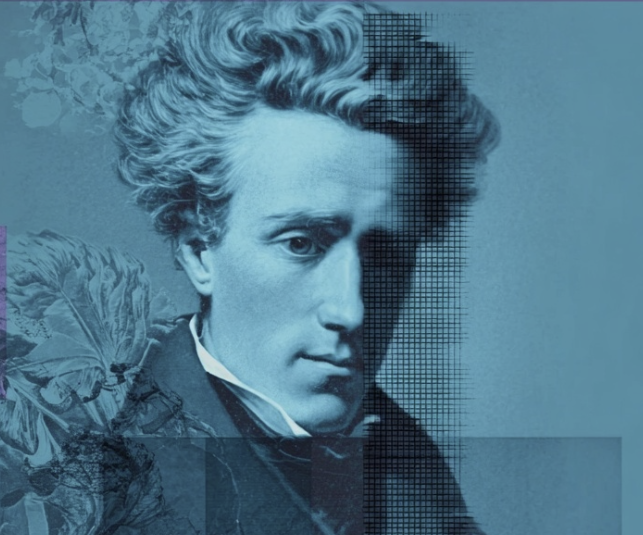
It will be easy for us once we receive the ball of yarn from Ariadne (love) and then go through all the mazes of the labyrinth (life) and kill the monster. But how many are there who plunge into life (the labyrinth) without taking that precaution?
2 weeks 4 days ago
The latest Gospel in this world is, Know thy work and do it. 'Know thyself:' long enough has that poor 'self' of thine tormented thee; thou wilt never get to 'know' it, I believe! Think it not thy business, this of knowing thyself; thou art an unknowable individual: know what thou canst work at; and work at it, like a Hercules! That will be thy better plan.
1 month 1 week ago
These immense cities lie basking on the beaches of the continent like whales that have taken to the land again. What do these great, sleek, well-fed creatures live on so sumptuously?
▼
Source
source
12. The Elusive Continent (on the six state capitals of Australia)
1 week 1 day ago
In our country the lie has become not just a moral category but a pillar of the State.
▼
Source
source
As quoted in The Observer

1 month 3 weeks ago
The name of a man is a numbing blow from which he never recovers.
CivilSimian.com created by AxiomaticPanic, CivilSimian, Kalokagathia