

3 months 1 week ago
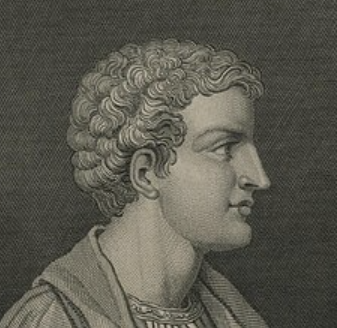
He who postpones the hour of living rightly is like the rustic who waits for the river to run out before he crosses.
▼
Source
source
Book I, epistle ii, lines 41-42

4 months 2 weeks ago
Self-education is, I firmly believe, the only kind of education there is.
3 months 3 weeks ago
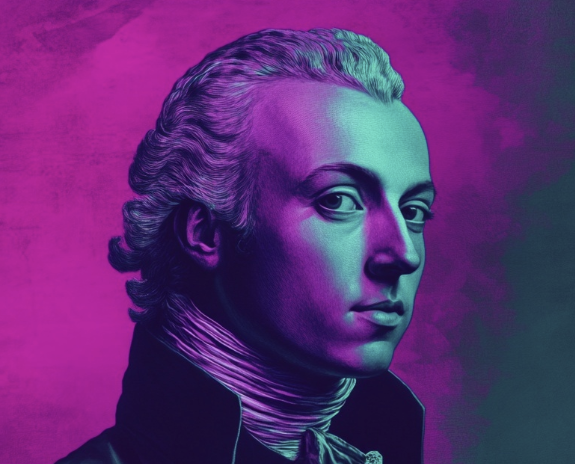
A mind of slow apprehension is therefore not necessarily a weak mind. The one who is alert with abstractions is not always profound, he is more often very superficial.
▼
Source
source
Kant, Immanuel (1996), page 99

3 months 3 weeks ago
He that I am reading seems always to have the most force.
▼
Source
source
Book II, Ch. 12. Apology for Raimond Sebond

2 months 2 weeks ago
To try curing someone of a "vice," of what is the deepest thing he has, is to attack his very being, and this is indeed how he himself understands it, since he will never forgive you for wanting him to destroy himself in your way and not his.

2 months 5 days ago
Like monarchy, monotheism had a martial origin. "It is only on the march and it time of war," says Robertson Smith in The Prophets of Israel, "that a nomad people feels any urgent need of a central authority, and so it came about that in the first beginnings of national organization, centering in the sanctuary of the ark, Israel was thought of mainly as a host of Jehovah. the very name of Israel is martial, and means 'God (El) fighteth,' and Jehovah in the Old Testament is Iahwé Cebāôth - the Jehovah of the armies of Israel. It was on the battlefield that Jehovah's presence was most clearly realized; but in primitive nations the leader in time of war is also the natural judge in time of peace."
4 months 2 weeks ago
It is important to remember that the viciousness and wrongs of life stick out very plainly but that even at the worst times there is a great deal of goodness, kindness, and day-to-day decency that goes unnoticed and makes no headlines.
3 months 1 week ago
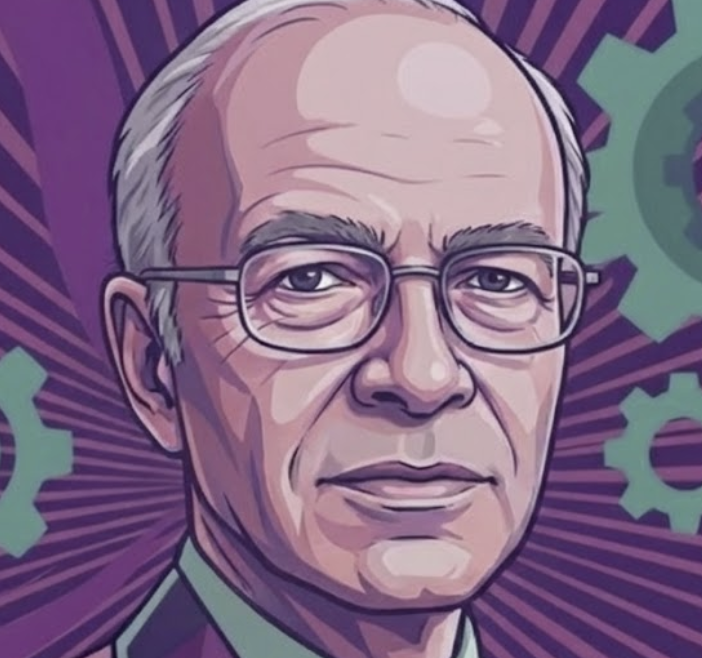
At one level, this movement on behalf of oppressed farm animals is emotional...Yet the movement is also the product of a deep intellectual ferment pioneered by the Princeton scholar Peter Singer...This idea popularized by Professor Singer - that we have ethical obligations that transcend our species - is one whose time appears to have come...What we're seeing now is an interesting moral moment: a grass-roots effort by members of one species to promote the welfare of others...animal rights are now firmly on the mainstream ethical agenda.
▼
Source
source
Nicholas Kristof, "Humanity Even for Nonhumans," in The New York Times (8 April 2009).

3 months 2 weeks ago
The Value of myth is that it takes all the things you know and restores to them the rich significance which has been hidden by the veil of familiarity.
▼
Source
source
p. 90
3 months 2 weeks ago
Every story of conversion is the story of a blessed defeat.
▼
Source
source
Foreword to Joy Davidman's Smoke on the Mountain, 1954
1 month 2 weeks ago
The cruelest lies are often told in silence. A man may have sat in a room for hours and not opened his teeth, and yet come out of that room a disloyal friend or a vile calumniator. And how many loves have perished because, from pride, or spite, or diffidence, or that unmanly shame which withholds a man from daring to betray emotion, a lover, at the critical point of the relation, has but hung his head and held his tongue?
▼
Source
source
Truth of Intercourse.

2 months 2 weeks ago
Man needed one moral constitution to fit him for his original state; he needs another to fit him for his present state; and he has been, is, and will long continue to be, in process of adaptation. And the belief in human perfectibility merely amounts to the belief that, in virtue of this process, man will eventually become completely suited to his mode of life. Progress, therefore, is not an accident, but a necessity. Instead of civilization being artificial, it is part of nature; all of a piece with the development of the embryo or the unfolding of a flower. The modifications mankind have undergone, and are still undergoing, result from a law underlying the whole organic creation; and provided the human race continues, and the constitution of things remains the same, those modifications must end in completeness.
▼
Source
source
Pt. I, Ch. 2 : The Evanescence of Evil, concluding paragraph

4 months 2 days ago
Cease therefore to be dismayed by the mere novelty and so to reject reason from your mind with loathing: weigh the questions rather with keen judgment and if they seem to you to be true, surrender, or if the thing is false, gird yourself to the encounter.
▼
Source
source
Book II, lines 1040-1043 (tr. Munro)

3 months 3 weeks ago
Here then we may learn the fallacy of the remark... that any particular state is weak, though fertile, populous, and well cultivated, merely because it wants money. It appears that the want of money can never injure any state within itself: For men and commodities are the real strength of any community. It is the simple manner of living which here hurts the public, by confining the gold and silver to few hands, and preventing its universal diffusion and circulation. On the contrary, industry and refinements of all kinds incorporate it with the whole state, however small its quantity may be: They digest it into every vein, so to speak; and make it enter into every transaction and contract.
▼
Source
source
Of Money (1752) as quoted in David Hume: Writings on Economics (1955, 1970) ed., Eugene Rotwein, p. 45.

1 month 2 weeks ago
Applied knowledge in the Renaissance had to take the form of translation of the auditory into visual terms, of the plastic into retinal form.
▼
Source
source
(p. 180)
2 months 5 days ago
And what has Don Quixote left, do you ask? I answer, he has left himself, and a man, a living and eternal man, is worth all the theories and all the philosophies. Other peoples have left chiefly institutions, books; we have left souls; St. Teresa is worth any institution, any Critique of Pure Reason.
2 months 2 weeks ago
There is something beautiful about virtue, Captain. But I am just a poor guy.
▼
Source
source
Scene VI.

3 days ago
Do you seek Alcides' equal? None is, except himself.
▼
Source
source
line 84; (Juno)

4 months 2 weeks ago
To work and create "for nothing," to sculpture in clay, to know one's creation has no future, to see one's work destroyed in a day while being aware that fundamentally this has no more importance than building for centuries, this is the difficult wisdom that absurd thought sanctions. Performing these two tasks simultaneously, negating on the one hand and magnifying on the other, it the way open to the absurd creator. He must give the void its colors.

3 months 2 weeks ago
It is remarkable that, notwithstanding the universal favor with which the New Testament is outwardly received, and even the bigotry with which it is defended, there is no hospitality shown to, there is no appreciation of, the order of truth with which it deals.

3 months 2 weeks ago
It's not the experience that happens to you: it's what you do with the experience that happens to you.
▼
Source
source
Attributed to Russell in Slaby's Sixty Ways to Make Stress Work for You, 1987
2 months 1 day ago
Violence and freedom are the two endpoints on the scale of power.
3 days ago
It makes a big difference whether you give something back or pay it off... The framers of the laws instituted festivals, in order that men should be publicly compelled to gaiety, as a necessary temperance for labors; We remember the great orator Pollio Asinius, who was not detained by anything beyond the tenth hour: he did not even need letters for an hour after that, so that no new concern arose, but he put the fatigue of the whole day in those two hours. Some joined in the middle of the day and put off some lighter work in the afternoon hours. Our elders also forbade a new report to be made in the senate after ten o'clock. The army divided the vigils, and the night was safe from the return of the expedition.

3 months 2 weeks ago
Tis very certain that each man carries in his eye the exact indication of his rank in the immense scale of men, and we are always learning to read it. A complete man should need no auxiliaries to his personal presence.
▼
Source
source
Behavior

3 months 1 week ago
Don't for heaven's sake, be afraid of talking nonsense! But you must pay attention to your nonsense.
▼
Source
source
p. 56e
1 month 2 weeks ago
A good reputation is more valuable than money.
▼
Source
source
Maxim 108

3 months 2 weeks ago
Hegel once observed that comedy is in act superior to tragedy and humourous reasoning superior to grandiloquent reasoning. Although Lincoln does not possess the grandiloquence of historical action, as an average man of the people he has its humour.
2 months 2 weeks ago
No one can enjoy freedom without trembling.
1 month 2 weeks ago
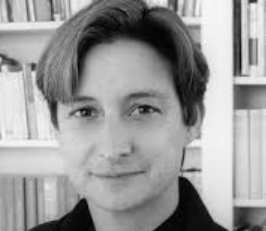
I am much more open about categories of gender, and my feminism has been about women's safety from violence, increased literacy, decreased poverty and more equality. I was never against the category of men. "As a Jew, I was taught it was ethically imperative to speak up" in Haaretz.
▼
Source
source
24-Feb-10
1 month 2 weeks ago
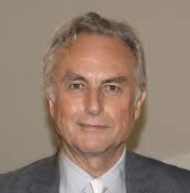
McDonald: Now a lot of people find great comfort from religion. Not everybody is as you are - well-favored, handsome, wealthy, with a good job, happy family life. I mean, your life is good - not everybody's life is good, and religion brings them comfort.Dawkins: There are all sorts of things that would be comforting. I expect an injection of morphine would be comforting - it might be more comforting, for all I know. But to say that something is comforting is not to say that it's true.

3 months 3 weeks ago
Mercantile jealousy is excited, and both inflames, and is itself inflamed, by the violence of national animosity.
▼
Source
source
Chapter III, Part II, p. 534.
1 month 6 days ago
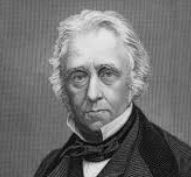
If...we look at the essential characteristics of the Whig and the Tory, we may consider each of them as the representative of a great principle, essential to the welfare of nations. One is, in an especial manner, the guardian of liberty, and the other, of order. One is the moving power, and the other the steadying power of the state. One is the sail, without which society would make no progress, the other the ballast, without which there would be small safety in a tempest.
▼
Source
source
The Earl of Chatham', The Edinburgh Review (October 1844), quoted in T. B. Macaulay, Critical and Historical Essays Contributed to The Edinburgh Review: A New Edition (1852), p. 725
3 months 2 weeks ago
Only the great generalizations survive. The sharp words of the Declaration of Independence, lampooned then and since as 'glittering generalities,' have turned out blazing ubiquities that will burn forever and ever.
▼
Source
source
From a lecture on Books given in the Fraternity Course in Boston in 1864
1 month 1 week ago
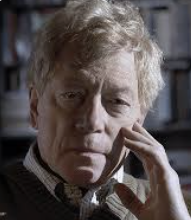
Hayek's theory of evolutionary rationality shows how traditions and customs (those surrounding sexual relations, for example) might be reasonable solutions to complex social problems, even when, and especially when, no clear rational grounds can be provided to the individual for obeying them. These customs have been selected by the ''invisible hand'' of social reproduction, and societies that reject them will soon enter the condition of ''maladaptation,'' which is the normal prelude to extinction.
▼
Source
source
Hayek and conservatism, in Edward Feser (ed.), The Cambridge Companion to Hayek
3 months 2 weeks ago
The position of the revolutionary party in Germany is certainly difficult at the moment, but, with some critical analysis of the circumstances, clear nevertheless. As to the "governments," it is obvious from every point of view, if only for the sake of Germany's existence, that the demand must be put to them not to remain neutral, but, as you rightly say, to be patriotic. But the revolutionary point is to be given to the affair simply by emphasising the antagonism to Russia more strongly than the antagonism against Boustrapa.
▼
Source
source
Letter to Friedrich Engels (18 May 1859), quoted in Karl Marx and Friedrich Engels, Selected Correspondence, 1846-1895 (1943), p. 122
2 months 2 weeks ago
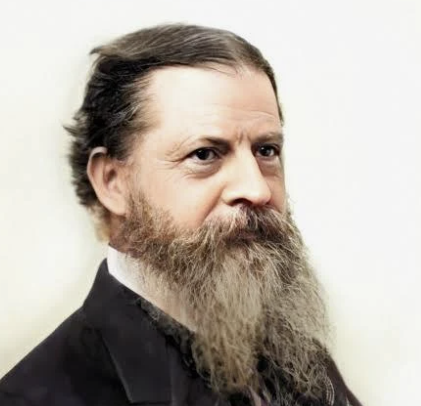
A difficulty which confronts the synechistic philosophy is this. In considering personality, that philosophy is forced to accept the doctrine of a personal God; but in considering communication, it cannot but admit that if there is a personal God, we must have a direct perception of that person and indeed be in personal communication with him. Now, if that be the case, the question arises how it is possible that the existence of this being should ever have been doubted by anybody. The only answer that I can at present make is that facts that stand before our face and eyes and stare us in the face are far from being, in all cases, the ones most easily discerned. That has been remarked since time immemorial.

1 week 2 days ago
Shall we say, for example, that Science and Art are indebted principally to the founders of Schools and Universities? Did not Science originate rather, and gain advancement, in the obscure closets of the Roger Bacons, Keplers, Newtons; in the workshops of the Fausts and the Watts; wherever, and in what guise soever Nature, from the first times downwards, had sent a gifted spirit upon the earth? Again, were Homer and Shakspeare members of any beneficed guild, or made Poets by means of it? Were Painting and Sculpture created by forethought, brought into the world by institutions for that end? No; Science and Art have, from first to last, been the free gift of Nature; an unsolicited, unexpected gift; often even a fatal one.

2 months 1 week ago
I daresay anything can be made holy by being sincerely worshipped.
▼
Source
source
The Message to the Planet (1989) p. 322.

2 months 3 weeks ago
Do you see this egg? With this you can topple every theological theory, every church or temple in the world. What is it, this egg, before the seed is introduced into it? An insentient mass. And after the seed has been introduced to into it? What is it then? An insentient mass. For what is the seed itself other than a crude and inanimate fluid? How is this mass to make a transition to a different structure, to sentience, to life? Through heat. And what will produce that heat in it? Motion. "Conversation Between D'Alembert and Diderot", as quoted in Selected Writings (1966) edited by Lester G. Crocker, and The Enlightenment and the Intellectual Foundations of Modern Culture (2004) by Louis K Dupré, p. 30 Variant translation: See this egg. It is with this that all the schools of theology and all the temples of the earth are to be overturned.
▼
Source
source
As quoted in Diderot, Reason and Resonance (1982) by Élisabeth de Fontenay, p. 217
3 months 1 week ago
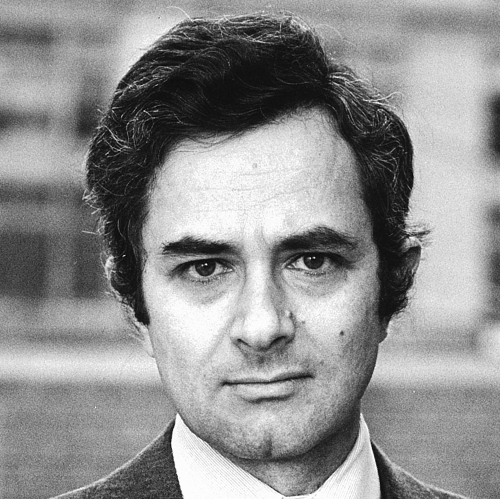
I should not really object to dying if it were not followed by death.
▼
Source
source
"Death" (1970), p. 3 footnote.
3 months 1 week ago
Those who claim to care about the wellbeing of human beings and the preservation of our environment should become vegetarians for that reason alone. They would thereby increase the amount of grain available to feed people elsewhere, reduce pollution, save water and energy, and cease contributing to the clearing of forests; moreover, since a vegetarian diet is cheaper than one based on meat dishes, they would have more money available to devote to famine relief, population control, or whatever social or political cause they thought most urgent. ... when nonvegetarians say that "human problems come first" I cannot help wondering what exactly it is that they are doing for human beings that compels them to continue to support the wasteful, ruthless exploitation of farm animals.
▼
Source
source
Ch. 6: Speciesism Today
3 months 2 weeks ago
To be taken without consent from my home and friends; to lose my liberty; to undergo all those assaults on my personality which modern psychotherapy knows how to deliver; to be re-made after some pattern of "normality" hatched in a Viennese laboratory to which I never professed allegiance; to know that this process will never end until either my captors have succeeded or I have grown wise enough to cheat them with apparent success-who cares whether this is called Punishment or not? "The Humanitarian Theory of Punishment"
▼
Source
source
1949

4 months 6 days ago
The highest manifestation of life consists in this: that a being governs its own actions. A being that is always subject to the direction of another is somewhat of a dead thing. Variant translation: Now slavery has a certain likeness to death, hence it is also called civil death. For life is most evident in a thing's moving itself, while what can only be moved by another, seems to be as if dead. But it is manifest that a slave is not moved by himself, but only at his master's command.
▼
Source
source
Chapter 14

1 month 3 weeks ago
There are two kinds of people, killers, and everybody else.
3 months 2 weeks ago
We may well call it black diamonds. Every basket is power and civilization. For coal is a portable climate. It carries the heat of the tropics to Labrador and the polar circle; and it is the means of transporting itself withersoever it is wanted. Watt and Stephenson whispered in the ear of mankind their secret, that a half-ounce of coal will draw two tons a mile, and coal carries coal, by rail and by boat, to make Canada as warm as Calcutta, and with its comfort brings its industrial power.
▼
Source
source
Wealth

1 week 6 days ago
After World War II, liberal rights were not something that were only deserved by white Europeans. ...There was a recognition that the black and brown peoples being held in colonial bondage could not consistently be held in that bondage, because liberalism was a universal doctrine. ...That's the other respect in which we can defend liberalism, a moral one.
▼
Source
source
10:30

2 months 4 weeks ago
When the wise man opens his mouth, the beauties of his soul present themselves to the view, like the statues in a temple.
▼
Source
source
Pythagorean Ethical Sentences From Stobæus

2 months 2 weeks ago
To be acutely conscious is a disease, a real, honest-to-goodness disease.
▼
Source
source
Part 1, Chapter 2 (tr. David Magarshack, 1950) To think too much is a disease, a real, actual disease.
4 months 3 days ago
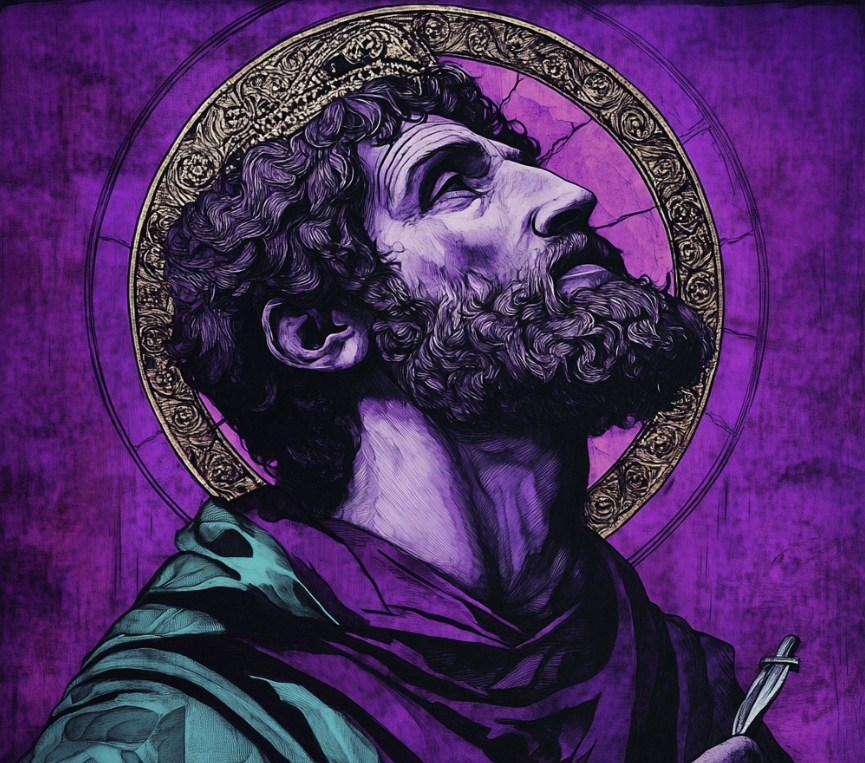
If thou shouldst say, 'It is enough, I have reached perfection,' all is lost. For it is the function of perfection to make one know one's imperfection.
▼
Source
source
Quoted by Aldous Huxley, in The Perennial Philosophy (1945)
CivilSimian.com created by AxiomaticPanic, CivilSimian, Kalokagathia