


1 week 1 day ago
Music is well said to be the speech of angels.
▼
Source
source
The Opera (1852).

3 months 2 weeks ago
Define your terms, you will permit me again to say, or we shall never understand one another.
▼
Source
source
"Miracles", 1764

3 months 2 weeks ago
Standing on the bare ground, - my head bathed by the blithe air, and uplifted into infinite space, - all mean egotism vanishes. I become a transparent eye-ball; I am nothing; I see all; the currents of the Universal Being circulate through me; I am part or particle of God.
▼
Source
source
Nature
2 months 2 weeks ago
It is the destiny of our race to become united into one great body, thoroughly connected in all its parts, and possessed of similar culture. Nature, and even the passions and vices of Man, have from the beginning tended towards this end. A great part of the way towards it is already passed, and we may surely calculate that it will in time be reached.
▼
Source
source
Jane Sinnett, trans 1846 p. 88
1 month 1 week ago
Women will be no longer made the slaves of, or dependent upon men ... They will be equal in education, rights, privileges and personal liberty.
▼
Source
source
Sixth Part
1 month 2 weeks ago
I was taught in the sixth grade that we had a standing army of just over a hundred thousand men and that the generals had nothing to say about what was done in Washington. I was taught to be proud of that and to pity Europe for having more than a million men under arms and spending all their money on airplanes and tanks. I simply never unlearned junior civics. I still believe in it. I got a very good grade.
▼
Source
source
As quoted by James Lundquist in Kurt Vonnegut

3 months 2 weeks ago
Of all forms of caution, caution in love is perhaps the most fatal to true happiness.
3 months 2 weeks ago
The manly part is to do with might and main what you can do.
▼
Source
source
Wealth
4 months 2 days ago
Little is needed to ruin and upset everything, only a slight aberration from reason.
▼
Source
source
Book IV, ch. 3, 4.

2 months ago
The Outsider has his proper place in the Order of Society, as the impractical dreamer.
▼
Source
source
Chapter Three, The Romantic Outsider
1 month 1 week ago
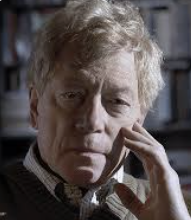
The core of common culture is religion. Tribes survive and flourish because they have gods, who fuse many wills into a single will, and demand and reward the sacrifices on which social life depends.
▼
Source
source
"Culture and Cult" (p. 5)

2 months 3 days ago
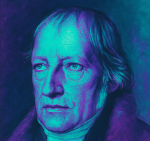
Truth is sought not because it is truth but because it is good.
▼
Source
source
p. 213

4 months 1 week ago
When the Superior Man (Junzi) eats he does not try to stuff himself; at rest he does not seek perfect comfort; he is diligent in his work and careful in speech. He avails himself to people of the Tao and thereby corrects himself. This is the kind of person of whom you can say, "he loves learning."
1 month 2 weeks ago
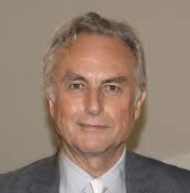
Bush and bin Laden are really on the same side: the side of faith and violence against the side of reason and discussion. Both have implacable faith that they are right and the other is evil. Each believes that when he dies he is going to heaven. Each believes that if he could kill the other, his path to paradise in the next world would be even swifter. The delusional "next world" is welcome to both of them. This world would be a much better place without either of them.
▼
Source
source
Gordy Slack, "The Atheist" Salon.com

1 month 2 weeks ago
Native societies did not think of themselves as being in the world as occupants but considered that their rituals created the world and keep it operational.
▼
Source
source
College and University Journal, Volumes 6-7, American College Public Relations Association, 1967, p. 3

4 months 2 weeks ago
Every revolutionary ends as an oppressor or a heretic.

1 month 2 weeks ago
One is ashamed to say how little is needed for all men to be delivered from those calamities which now oppress them; it is only needful not to lie.
▼
Source
source
Ch. 17
1 month 2 weeks ago
A man can live and be healthy without killing animals for food; therefore, if he eats meat, he participates in taking animal life merely for the sake of his appetite. And to act so is immoral.
▼
Source
source
Writings on Civil Disobedience and Nonviolence
1 month 2 weeks ago
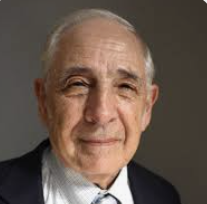
Finally, and perhaps most importantly, you need to acquire the skills of writing and speaking that make for candor, rigor, and clarity. You cannot think clearly if you cannot speak and write clearly.

3 months 2 weeks ago
If a victory is told in detail, one can no longer distinguish it from a defeat.
▼
Source
source
Act 1
3 months 2 weeks ago
We are faced with the paradoxical fact that education has become one of the chief obstacles to intelligence and freedom of thought.
▼
Source
source
Ch. 12: Free Thought and Official Propaganda

3 months 2 weeks ago
The country that is more developed industrially only shows, to the less developed, the image of its own future.
▼
Source
source
Author's prefaces to the First Edition.
3 months 2 weeks ago
...an intellectual concept abstracts from everything sensuous, it is not abstracted from sensuous things, and perhaps would be more correctly called abstracting than abstract. Intellectual concepts it is more cautious, therefore, to call pure ideas, and concepts given only empirically, abstract ideas.
1 month 1 day ago
Instead of water belonging to millions of local communities, water too is to be controlled by five or six global water giants. These are recipes that use economic systems to appropriate for the few the base of survival of the majority.
3 months 2 weeks ago
The "social contract," in the only sense in which it is not completely mythical, is a contract among conquerors, which loses its raison d'être if they are deprived of the benefits of conquest.
▼
Source
source
Ch. 12: Powers and forms of governments
2 months 1 week ago
Science is the knowledge of Consequences, and dependence of one fact upon another: by which, out of that we can presently do, we know how to do something else when we will, or the like, another time.
▼
Source
source
The First Part, Chapter 5, p. 21

2 months 1 week ago
Either one defines "personality" and "individuality" in terms of their possibilities within the established form of civilization, in which case their realization is for the vast majority tantamount to successful adjustment. Or one defines them in terms of their transcending content, including their socially denied potentialities beyond (and beneath) their actual existence; in this case, their realization would imply transgression, beyond the established form of civilization, to radically new modes of "personality" and "individuality" incompatible with the prevailing ones. Today, this would mean "curing" the patient to become a rebel or (which is saying the same thing) a martyr.
▼
Source
source
"Critique of Neo-Freudian Revisionism"

2 months 1 week ago
How I wish I didn't know anything about myself and this world!
3 months 1 week ago
I would in fact tend to have more confidence in the outcome of a democratic decision if there was a minority that voted against it, than if it was unanimous... Social psychology has amply shown the strength of this bandwagon effect.
▼
Source
source
Habermas (1993) "Further reflections on the public sphere", in: Craig Calhoun Eds. Habermas and the Public Sphere. MIT Press. p. 441
3 months 1 week ago
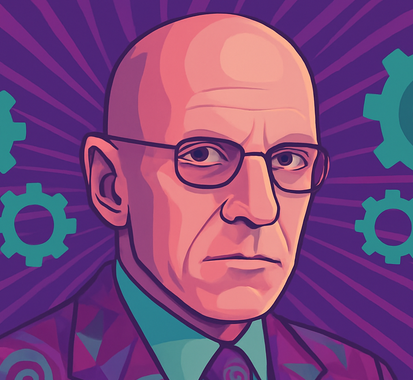
Sometimes, because my position has not been made clear enough, people think I'm a sort of radical anarchist who has an absolute hatred of power. No! What I am trying to do is to approach this extremely important and tangled phenomenon in our society, the exercise of power, with the most reflective, and I would say prudent attitude. Prudent in my analysis, in the moral and theoretical postulates I use: I try to figure out what's at stake. But to question the relations of power in the most scrupulous and attentive manner possible, looking into all the domains of its exercise, that's not the same thing as constructing a mythology of power as the beast of the apocalypse.
▼
Source
source
"Power, Moral Values, and the Intellectual", interview in History of the Present 4


2 months 2 weeks ago
Early and provident fear is the mother of safety.
▼
Source
source
Speech on the Petition of the Unitarians (11 May 1792), volume vii, p. 50
3 months 2 weeks ago
As the chosen people bore in their features the sign manual of Jehovah, so the division of labour brands the manufacturing workman as the property of capital.
▼
Source
source
Vol. I, Ch. 14, Section 5, pg. 396.
3 months 2 weeks ago
Only a neutral, who is indifferent to the stake and perhaps to all stakes, can appreciate aesthetically the grandeur of a fine disaster
▼
Source
source
p. 212
3 months 2 weeks ago
Superstition sets the whole world in flames; philosophy quenches them.
▼
Source
source
Dictionnaire philosophique (1822), "Superstition"
1 month 6 days ago
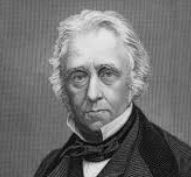
It is surely delightful, Sir, to look forward to that period when a series of liberal and prudent measures shall have delivered islands, so highly favoured by the bounty of Providence, from the curse inflicted on them by the frantic rapacity of man. Then the peasant of the Antilles will no longer crawl in listless and trembling dejection round a plantation from whose fruits he must derive no advantage, and a hut whose door yields him no protection; but, when his cheerful and voluntary labour is performed, he will return with the firm step and erect brow of a British citizen from the field which is his freehold to the cottage which is his castle.
▼
Source
source
Speech to a meeting of the Anti-Slavery Society held in Freemasons' Tavern (25 June 1824), quoted in Report of the Committee of the Society for the Mitigation and Gradual Abolition of Slavery Throughout the British Dominions, Volume I (1824), p. 77
4 months ago
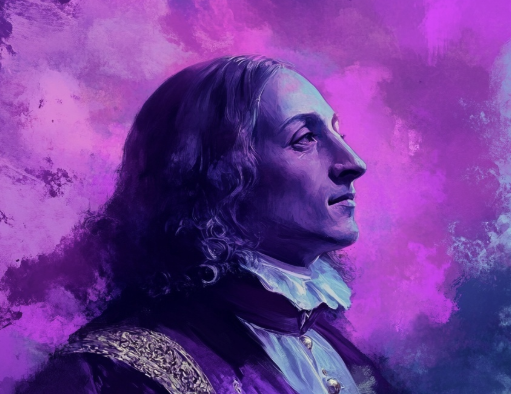
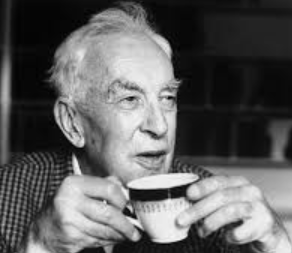
They [men] have corrupted this [God's supernatural] order by making profane things what they should make of holy things, because in fact, we believe scarcely any thing except which pleases us.
1 month ago
Now civilizations, I believe, come to birth and proceed to grow by successfully responding to successive challenges. They break down and go to pieces if and when a challenge confronts them which they fail to meet.
▼
Source
source
Ch. 8: Civilization on Trial

3 months 3 weeks ago
By nature a philosopher is not in genius and disposition half so different from a street porter, as a mastiff is from a greyhound.
▼
Source
source
Chapter II, p. 17.
3 months 2 weeks ago
There are three juridical attributes that inseparably belong to the citizen by right. These are: Constitutional freedom, as the right of every citizen to have to obey no other law than that to which he has given his consent or approval; Civil equality, as the right of the citizen to recognize no one as a superior among the people in relation to himself...; and Political independence, as the right to owe his existence and continuance in society not to the arbitrary will of another, but to his own rights and powers as a member of the commonwealth.
▼
Source
source
Science of Right, 1797
1 week 1 day ago
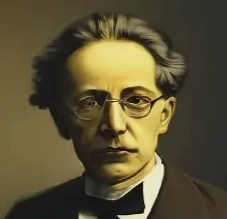
Complete, at the same time, was his confidence in his own judgment when it spoke to him decisively. He was one of those few that could believe and know as well as inquire and be of opinion. When I remember how much he admired intellectual force, how much he had of it himself, and yet how unconsciously and contentedly he gave others credit for superiority, I again see the healthy spirit of the genuine man.
3 days ago
Look upon yourself as more powerful than they give you out for, and you have more power; look upon yourself as more, and you have more.
▼
Source
source
Cambridge 1995, p. 318
1 month 2 weeks ago
Atheists have the intellectual courage to accept reality for what it is: wonderfully and shockingly explicable. As an atheist, you have the moral courage to live to the full the only life you're ever going to get: to fully inhabit reality, rejoice in it, and do your best finally to leave it better than you found it.
▼
Source
source
The Intellectual and Moral Courage of Atheism
3 months 2 weeks ago
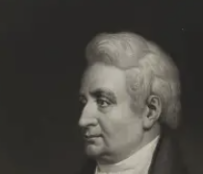
Since Adam and Eve ate the apple, man has never refrained from any folly of which he was capable. The End.
▼
Source
source
Full text of Russell's book History of the World in Epitome , written in 1959
2 days ago
A comfortable house is a great source of happiness. It ranks immediately after health and a good conscience.
▼
Source
source
Vol. II, letter to Lord Murray (29 September 1843), p. 501

2 months 3 weeks ago
It is manifest... that every soul and spirit hath a certain continuity with the spirit of the universe, so that it must be understood to exist and to be included not only there where it liveth and feeleth, but it is also by its essence and substance diffused throughout immensity... The power of each soul is itself somehow present afar in the universe... Naught is mixed, yet is there some presence. Anything we take in the universe, because it has in itself that which is All in All, includes in its own way the entire soul of the world, which is entirely in any part of it.

2 months 2 weeks ago
To care only for well-being seems to me positively ill-bred. Whether it's good or bad, it is sometimes very pleasant, too, to smash things.
▼
Source
source
Part 1, Chapter 9

3 months 2 weeks ago
My friend Professor Tolkien asked me the very simple question, "What class of men would you expect to be most preoccupied with, and most hostile to, the idea of escape?" and gave the obvious answer: jailers.
▼
Source
source
"On Science Fiction". Of Other Worlds: Essays and Stories. Houghton Mifflin Harcourt (2002). p. 67.
CivilSimian.com created by AxiomaticPanic, CivilSimian, Kalokagathia