
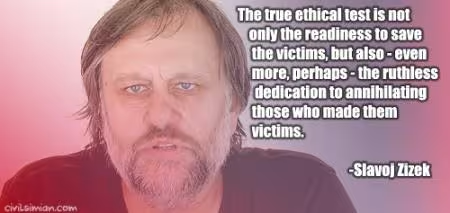
To be honest, Zizek has been saying some disappointing things lately. But, that's the reality of complex philosophy. If it's a good philosophy, if the grounding is good and it's complex, it will hit some sensitive edges.



It is only when we think abstractly that we have such a high opinion of man. Of men in the concrete, most of us think the vast majority very bad. Civilized states spend more than half their revenue on killing each other's citizens. Consider the long history of the activities inspired by moral fervour: human sacrifices, persecutions of heretics, witch-hunts, pogroms leading up to wholesale extermination by poison gases ... Are these abominations, and the ethical doctrines by which they are prompted, really evidence of an intelligent Creator? And can we really wish that the men who practised them should live for ever? The world in which we live can be understood as a result of muddle and accident; but if it is the outcome of a deliberate purpose, the purpose must have been that of a fiend. For my part, I find accident a less painful and more plausible hypothesis.

Is it really not possible to touch the gaming table without being instantly infected by superstition?
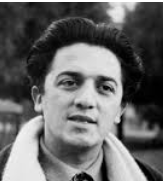
I don't believe in total freedom for the artist. Left on his own, free to do anything he likes, the artist ends up doing nothing at all. If there's one thing that's dangerous for an artist, it's precisely this question of total freedom, waiting for inspiration and the rest of it.

The pleasure is only for a little moment, and it [passes] like a dream, and a man at the end thereof finds death through knowing it.

It is not by genius, it is by suffering, and suffering alone, that one ceases to be a marionette.
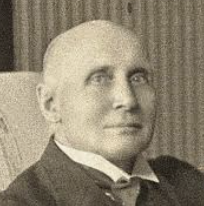
The chief danger to philosophy is narrowness in the selection of evidence.

We seek and offer ourselves to be gulled.
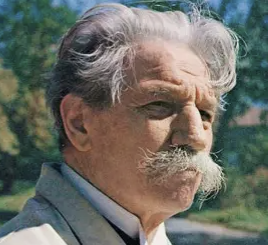
Reverence for life, veneratio vitæ, is the most direct and at the same time the profoundest achievement of my will-to-live. In reverence for life my knowledge passes into experience. The simple world- and life-affirmation which is within me just because I am will-to-live has, therefore, no need to enter into controversy with itself, if my will-to-live learns to think and yet does not understand the meaning of the world. In spite of the negative results of knowledge, I have to hold fast to world- and life-affirmation and deepen it. My life carries its own meaning in itself. This meaning lies in my living out the highest idea which shows itself in my will-to-live, the idea of reverence for life. With that for a starting-point I give value to my own life and to all the will-to-live which surrounds me, I persevere in activity, and I produce values.
Marriage is for women the commonest mode of livelihood, and the total amount of undesired sex endured by women is probably greater in marriage than in prostitution.
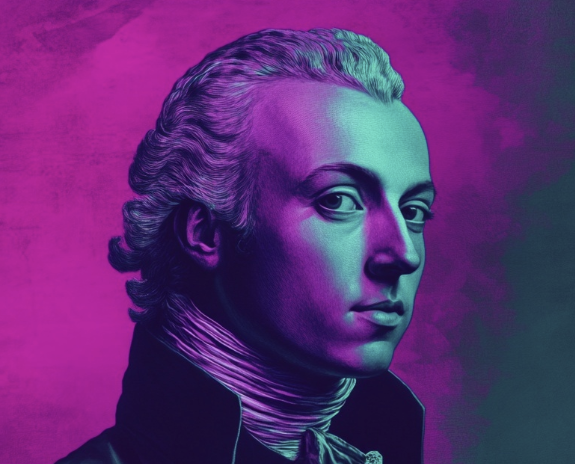
The deceiver is really the fool.

A philosopher is a man who has to cure many intellectual diseases in himself before he can arrive at the notions of common sense.

One is ashamed to say how little is needed for all men to be delivered from those calamities which now oppress them; it is only needful not to lie.

[H]e regarded it with the feelings due not to a mere mental delusion, but to a great moral evil. He looked upon it as the greatest enemy of morality: first, by setting up factitious excellencies,-belief in creeds, devotional feelings, and ceremonies, not connected with the good of human kind,-and causing these to be accepted as substitutes for genuine virtues: but above all, by radically vitiating the standard of morals; making it consist in doing the will of a being, on whom it lavishes indeed all the phrases of adulation, but whom in sober truth it depicts as eminently hateful.
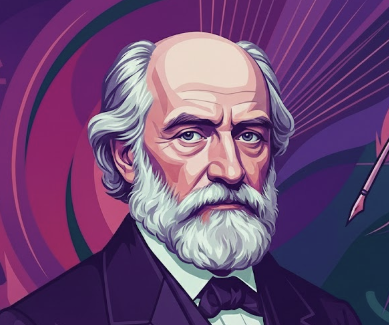
The auspices for philosophy are bad if, when proceeding ostensibly on the investigation of truth, we start saying farewell to all uprightness, honesty and sincerity, and are intent only on passing ourselves off for what we are not. We then assume, like those three sophists [Fichte, Schelling and Hegel], first a false pathos, then an affected and lofty earnestness, then an air of infinite superiority, in order to impose where we despair of ever being able to convince.
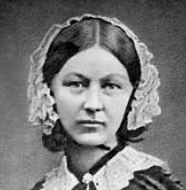
I have lived and slept in the same bed with English countesses and Prussian farm women... no woman has excited passions among women more than I have.
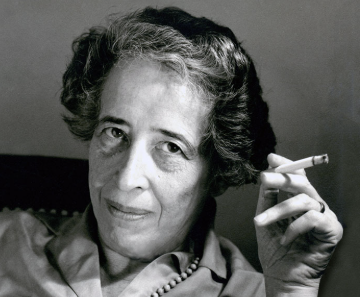
The moment we no longer have a free press, anything can happen. What makes it possible for a totalitarian or any other dictatorship to rule is that people are not informed; how can you have an opinion if you are not informed? If everybody always lies to you, the consequence is not that you believe the lies, but rather that nobody believes anything any longer. This is because lies, by their very nature, have to be changed, and a lying government has constantly to rewrite its own history. On the receiving end you get not only one lie - a lie which you could go on for the rest of your days - but you get a great number of lies, depending on how the political wind blows. And a people that no longer can believe anything cannot make up its mind. It is deprived not only of its capacity to act but also of its capacity to think and to judge. And with such a people you can then do what you please.

Art is anything you can get away with.
Pi's face was masked, and it was understood that none could behold it and live. But piercing eyes looked out from the mask, inexorable, cold and enigmatic.

Any ethics that needs religion is bad ethics, and any religion that tries to do so is bad religion. Of course, there are plenty of both around.
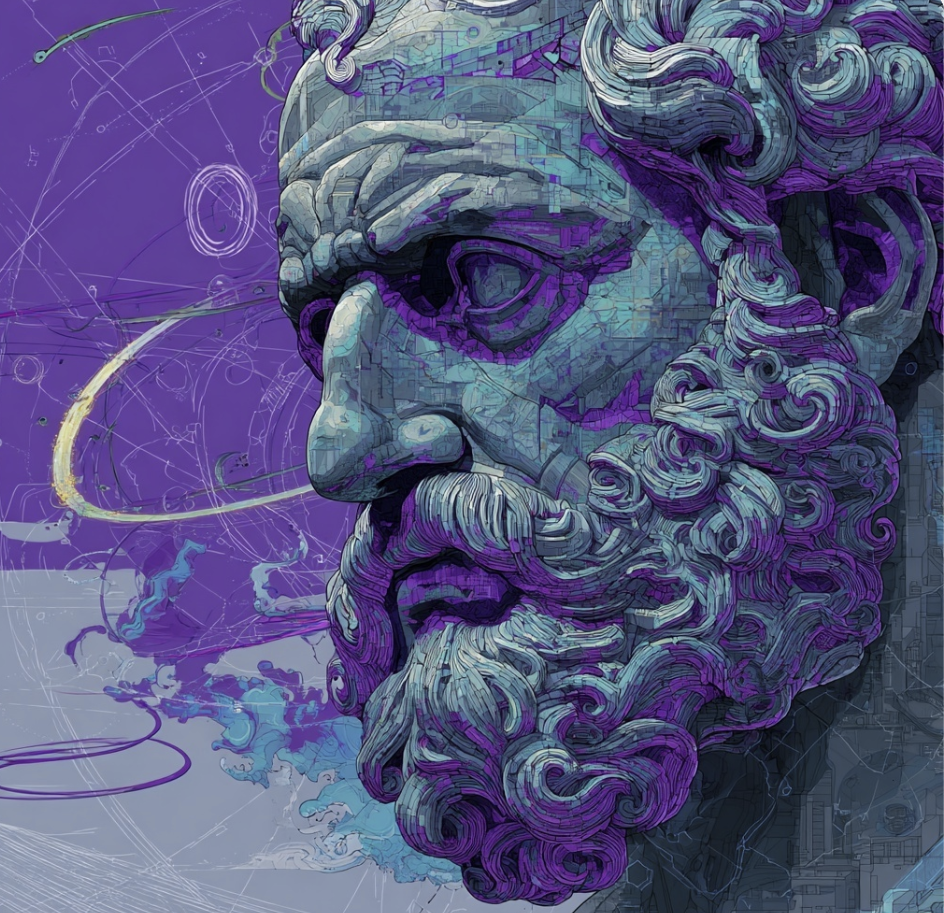
War is the father and king of all: some he has made gods, and some men; some slaves and some free.
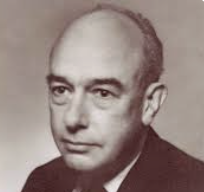
Nonbeing must in some sense be, otherwise what is it that there is not? This tangled doctrine might be nicknamed Plato's beard; historically it has proved tough, frequently dulling the edge of Occam's razor.
Today we experience, in reverse, what pre-literate man faced with the advent of writing.

Fools learn wisdom through misfortune.
Language is a part of our organism and no less complicated than it.
With Gutenberg Europe enters the technological phase of progress, when change itself becomes the archetypal norm of social life.
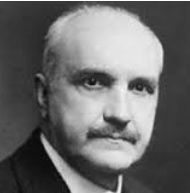
On fact, the whole machinery of our intelligence, our general ideas and laws, fixed and external objects, principles, persons, and gods, are so many symbolic, algebraic expressions. They stand for experience; experience which we are incapable of retaining and surveying in its multitudinous immediacy. We should flounder hopelessly, like the animals, did we not keep ourselves afloat and direct our course by these intellectual devices.

You contain a trillion copies of a large, textual document written in a highly accurate, digital code, each copy as voluminous as a substantial book. I'm talking, of course, of the DNA in your cells.

If we allow them any influence in our conscience, they become the cloak of evil, heresies and blasphemies.
Why have women passion, intellect, moral activity - these three - and a place in society where no one of the three can be exercised? Men say that God punishes for complaining. No, but men are angry with misery. They are irritated with women for not being happy. They take it as a personal offence. To God alone may women complain without insulting Him!

O woman, great is thy faith: be it unto thee even as thou wilt.
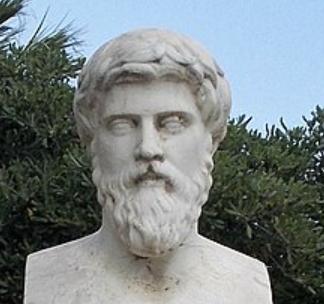
There were two brothers called Both and Either; perceiving Either was a good, understanding, busy fellow, and Both a silly fellow and good for little, Philip said, "Either is both, and Both is neither."
The fact that all Mathematics is Symbolic Logic is one of the greatest discoveries of our age; and when this fact has been established, the remainder of the principles of mathematics consists in the analysis of Symbolic Logic itself.

To animals not only human virtues but even human vices are forbidden: their whole constitution, mental and bodily, is unlike that of human beings...they possess intellect, the greatest attribute of all, but in a rough and inexact condition. It is, consequently, able to grasp those visions and semblances which rouse it to action, but only in a cloudy and indistinct fashion. Their impulses and outbreaks are violent, and that they do not feel fear, anxieties, grief, or anger, but some semblances of these feelings: wherefore they quickly drop them and adopt the converse of them: they graze after showing the most vehement rage and terror, and after frantic bellowing and plunging they straightaway sink into quiet sleep.

Yes, I know well that others before me have felt what I feel and express; that many others feel it today, although they keep silence about it. ...And I do not keep silence about it because it is for many the thing which must not be spoken, the abomination of abominations - infandum - and I believe that it is necessary now and again to speak the thing which must not be spoken. ...Even if it should lead only to irritating the devotees of progress, those who believe that truth is consolation, it would lead to not a little. To irritating them and making them say: "Poor fellow! if he would only use his intelligence to better purpose!... Someone perhaps will add that I do not know what I say, to which I shall reply that perhaps he may be right - and being right is such a little thing! - but that I feel what I say and I know what I feel and that suffices me. And that it is better to be lacking in reason than to have too much of it.
The development of the human mind has practically extinguished all feelings, except a few sporadic kinds, like sound, colors, smells, warmth, etc., which now appear to be disconnected and separate.
O world, thou choosest not the better part! It is not wisdom to be only wise, And on the inward vision close the eyes, But it is wisdom to believe the heart. Columbus found a world, and had no chart, Save one that faith deciphered in the skies; To trust the soul's invincible surmise Was all his science and his only art.
To all my friends without distinction I am ready to display my opulence: come one, come all; and whosoever likes to take a share is welcome to the wealth that lies within my soul.
Jean Paul calls the most important night of his life the one when he discovered there was no difference between dying the next day or in thirty years. A revelation as significant as it is futile; if we occasionally manage to grasp its cogency, we resist on the other hand drawing its consequences, in immediacy the difference in question seeming to each of us somehow irreducible, even absolute: to exist is to prove that we have not understood to what point it is all one and the same thing to die now or no matter when.
"The real saint", Baudelaire pretends to think, "is he who flogs and kills people for their own good." His argument will be heard. A race of real saints is beginning to spread over the earth for the purposes of confirming these curious conclusions about rebellion.

If the material world rests upon a similar ideal world, this ideal world must rest upon some other; and so on, without end. It were better, therefore, never to look beyond the present material world. By supposing it to contain the principle of its order within itself, we really assert it to be God; and the sooner we arrive at that Divine Being, so much the better. When you go one step beyond the mundane system, you only excite an inquisitive humour which it is impossible ever to satisfy.
Heaven knows what seeming nonsense may not to-morrow be demonstrated truth.
Do you ask me whom I have conquered? Neither the Persians, nor the far-off Medes, nor any warlike race that lies beyond the Dahae; not these, but greed, ambition, and the fear of death that has conquered the conquerors of the world.
To call war the soil of courage and virtue is like calling debauchery the soil of love.
If we study the history of science we see happen two inverse phenomena... Sometimes simplicity hides under complex appearances; sometimes it is the simplicity which is apparent, and which disguises extremely complicated realities....No doubt, if our means of investigation should become more and more penetrating, we should discover the simple under the complex, then the complex under the simple, then again the simple under the complex, and so on, without our being able to foresee what will be the last term. We must stop somewhere, and that science may be possible, we must stop when we have found simplicity. This is the only ground on which we can rear the edifice of our generalizations.

Even the best things are not equal to their fame.
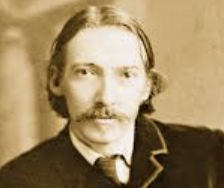
To be what we are, and to become what we are capable of becoming, is the only end of life.
The hopes which inspire communism are, in the main, as admirable as those instilled by the Sermon on the Mount, but they are held as fanatically and are as likely to do as much harm.
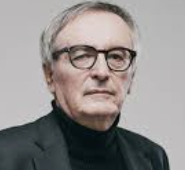
In thinking of history in this [progressive & eschatological] way Islam shares common ground with Christianity and with the secular creeds of the modern West. It is misleading to represent Islam and 'the West' as forming civilisations that have nothing in common. Christianity and Islam are integral parts of western monotheism, and as such they share a view of history that marks them off from the rest of the world. Both are militant faiths that seek to convert all humankind. Other religions have been implicated in twentieth-century violence-the state cult of Shintō in Japan during the militarist period and Hindu nationalism in contemporary India, for example. But only Christianity and Islam have engendered movements that are committed to the systematic use of force to achieve universal goals.
CivilSimian.com created by AxiomaticPanic, CivilSimian, Kalokagathia
