

1 month 1 week ago
Practice is the best of all instructors.
▼
Source
source
Maxim 439

3 months 2 weeks ago
It cannot be very difficult to determine who have been the contrivers of this whole mercantile system; not the consumers, we may believe, whose interest has been entirely neglected; but the producers, whose interests has been so carefully attended to; and among this later class our merchants and manufactures have been by far the principal architects. In the mercantile regulations, which have been taken notice of in this chapter, the interest of our manufacturers has been most peculiarly attended to;and the interest, not so much of the consumers, as that of some other sets of producers, has been sacrificed to it.
▼
Source
source
Chapter VIII, p. 721.

2 months 1 week ago
Every act of courage is the work of an unbalanced man. Animals, normal by definition, are always cowardly except when they know themselves to be stronger, which is cowardice itself.
1 month 4 weeks ago
It seems that thought itself has a power for which it has never been given credit.
▼
Source
source
p. 16
4 months ago
If it is my interest to have a farm, it is my interest to take it away from my neighbour; if it is my interest to have a cloak, it is my interest also to steal it from a bath. This is the source of wars, seditions, tyrannies, plots.
▼
Source
source
Book I, ch. 22, 14.
2 months 1 week ago
What I know at sixty, I knew as well at twenty. Forty years of a long, a superfluous, labor of verification.

2 months 3 weeks ago
It is almost never when a state of things is the most detestable that it is smashed, but when, beginning to improve, it permits men to breathe, to reflect, to communicate their thoughts with each other, and to gauge by what they already have the extent of their rights and their grievances. The weight, although less heavy, seems then all the more unbearable.
▼
Source
source
Letter to Pierre Freslon, 23 September 1853 Selected Letters, p. 296 as cited in Toqueville's Road Map p. 103
1 month 4 weeks ago
Immature love says: "I love you because I need you." Mature love says: "I need you because I love you."
▼
Source
source
Ch. 2

2 months 2 weeks ago
Good order is the foundation of all good things.
2 months 1 week ago
There is always someone above you: beyond God Himself rises Nothingness.
1 month 2 days ago
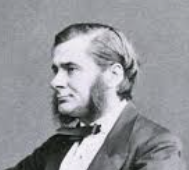
I neither deny nor affirm the immortality of man. I see no reason for believing in it, but, on the other hand, I have no means of disproving it.

1 month 2 weeks ago
After childhood, the senses specialize via the channels of dominant technologies and social weaponries.
▼
Source
source
Letter to The Listener October 1971, Letters of Marshall McLuhan (1987), p. 443
2 weeks 6 days ago
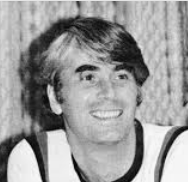
Some anarchists have claimed not merely that we would be better off without a state, but that any state necessarily violates people's moral rights and hence is intrinsically immoral. Our starting point then, though nonpolitical, is by intention far from nonmoral. Moral philosophy sets the background for, and boundaries of, political philosophy. What persons may and may not do to one another limits what they may do through the apparatus of a state, or do to establish such an apparatus.
▼
Source
source
Ch. 1 : Why State of Nature Theory?; Political Philosophy, p. 6
2 months ago
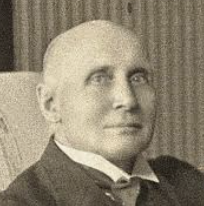
The study of mathematics is apt to commence in disappointment... We are told that by its aid the stars are weighed and the billions of molecules in a drop of water are counted. Yet, like the ghost of Hamlet's father, this great science eludes the efforts of our mental weapons to grasp it.
▼
Source
source
ch. 1.

3 months 2 weeks ago
The conviction that it is important to believe this or that, even if a free inquiry would not support the belief, is one which is common to almost all religions and which inspires all systems of state education. The consequence is that the minds of the young are stunted and are filled with fanatical hostility both to those who have other fanaticisms, and, even more virulently, to those who object to all fanaticisms.
▼
Source
source
preface xxiii
2 months 3 days ago
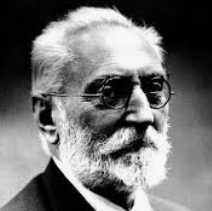
Not by way of reason, but only by way of love and suffering, do we come to the living God, the human God. Reason rather separates us from Him. We cannot first know Him in order that afterward we may love Him; we must begin by loving Him, longing for Him, hungering after Him, before knowing Him. The knowledge of God proceeds from the love of God, and this love has little or nothing of the rational in it. For God is indefinable. To seek to define Him is to seek to confine Him within the limits of our mind - that is to say, to kill Him. In so far as we attempt to define Him, there rises up before us - Nothingness.
1 month 1 week ago
The bow too tensely strung is easily broken.
▼
Source
source
Maxim 388
1 month 2 weeks ago
Radical changes of identity, happening suddenly and in very brief intervals of time, have proved more deadly and destructive of human values than wars fought with hardware weapons.
▼
Source
source
p. 97

3 months 2 weeks ago
Clever tyrants are never punished.
▼
Source
source
Mérope, act V, scene V, 1743
3 months 2 weeks ago
So much of modern mathematical work is obviously on the border-line of logic, so much of modern logic is symbolic and formal, that the very close relationship of logic and mathematics has become obvious to every instructed student. The proof of their identity is, of course, a matter of detail: starting with premisses which would be universally admitted to belong to logic, and arriving by deduction at results which as obviously belong to mathematics, we find that there is no point at which a sharp line can be drawn, with logic to the left and mathematics to the right. If there are still those who do not admit the identity of logic and mathematics, we may challenge them to indicate at what point, in the successive definitions and deductions of Principia Mathematica, they consider that logic ends and mathematics begins. It will then be obvious that any answer must be quite arbitrary.
▼
Source
source
Ch. 18: Mathematics and Logic

3 months 2 weeks ago
All that the conscious ego can do is to formulate wishes, which are then carried out by forces which it controls very little and understands not at all.

3 months 2 weeks ago
We live, in fact, in a world starved for solitude, silence, and privacy: and therefore starved for meditation and true friendship.

1 week ago
Yet with every allowance, one feels it difficult to see how any mortal ever could consider this Koran as a Book written in Heaven, too good for the Earth; as a well-written book, or indeed as a book at all; and not a bewildered rhapsody; written, so far as writing goes, as badly as almost any book ever was!
3 months 2 weeks ago
The concept of space, therefore, is a pure intuition, being a singular concept, not made up by sensations, but itself the fundamental form of all external sensation.
3 months 4 weeks ago
She is the sum of nature's universe.To her perfection all of beauty tends.
▼
Source
source
Chapter XIV, lines 49-50 (tr. Barbara Reynolds)

3 months 2 weeks ago
The imitator dooms himself to hopeless mediocrity. The inventor did it because it was natural to him, and so in him it has a charm. In the imitator something else is natural, and he bereaves himself of his own beauty, to come short of another man's.
▼
Source
source
p. 26
4 months ago
Whatever you would make habitual, practice it; and if you would not make a thing habitual, do not practice it, but accustom yourself to something else.
▼
Source
source
Book II, ch. 18, 4.

3 months 3 weeks ago
We must learn how to imitate Cicero from Cicero himself. Let us imitate him as he imitated others.
▼
Source
source
in The Erasmus Reader (1990), p. 130.
3 months 2 weeks ago
Man is a rational animal - so at least I have been told. Throughout a long life, I have looked diligently for evidence in favor of this statement, but so far I have not had the good fortune to come across it, though I have searched in many countries spread over three continents. Often paraphrased as "It has been said that man is a rational animal. All my life I have been searching for evidence which could support this."

3 months 2 weeks ago
We may well be ashamed to tell what things we have read or heard in our day. I do not know why my news should be so trivial, - considering what one's dreams and expectations are, why the developments should be so paltry. The news we hear, for the most part, is not news to our genius. It is the stalest repetition.
▼
Source
source
p. 491
2 months 1 week ago
One would have to be as unenlightened as an angel or an idiot to imagine that the human escapade could turn out well.

1 day ago
If you set a high value on liberty, you must set a low value on everything else.
1 month 1 week ago
The cruelest lies are often told in silence. A man may have sat in a room for hours and not opened his teeth, and yet come out of that room a disloyal friend or a vile calumniator. And how many loves have perished because, from pride, or spite, or diffidence, or that unmanly shame which withholds a man from daring to betray emotion, a lover, at the critical point of the relation, has but hung his head and held his tongue?
▼
Source
source
Truth of Intercourse.

3 months 2 weeks ago
I have no faith in precision: ...simplicity and clarity are values in themselves, but not... [of] precision or exactness...
3 months 2 weeks ago
The language of excitement is at best but picturesque merely. You must be calm before you can utter oracles.
▼
Source
source
Pearls of Thought (1881) p. 80

4 months 2 weeks ago
Indeed, it may well be argued that one reason for the decline in science, art, and literature was the increasing absorption of the better minds into a new sort of intellectual pursuit, theology.
2 months 2 weeks ago
Supreme power rests in the will of all or of the majority.
2 months 1 week ago
We can never legitimately cut loose from our archetypal foundations unless we are prepared to pay the price of a neurosis, any more than we can rid ourselves of our body and its organs without committing suicide.
▼
Source
source
J.B. Priestley, Times Literary Supplement, London
3 months 2 weeks ago
Happiness is not achieved by the conscious pursuit of happiness; it is generally the by-product of other activities.
▼
Source
source
Essay "Religion and Time" in Vedanta for the Western World (1945) edited by Christopher Isherwood
4 months ago
For what is it that everyone is seeking? To live securely, to be happy, to do everything as they wish to do, not to be hindered, not to be subject to compulsion.
▼
Source
source
Book IV, ch. 1, 46.
3 months 2 weeks ago
Is there any knowledge in the world which is so certain that no reasonable man could doubt it?

3 months 2 weeks ago
The circulation of commodities is the original precondition of the circulation of money.
▼
Source
source
Notebook I, The Chapter on Money, p. 107.

4 months 2 weeks ago
Such was the vast power which the god settled in the lost island of Atlantis; and this he afterwards directed against our land for the following reasons, as tradition tells: For many generations, as long as the divine nature lasted in them, they were obedient to the laws, and well-affectioned towards the god, whose seed they were; for they possessed true and in every way great spirits, uniting gentleness with wisdom in the various chances of life, and in their intercourse with one another.
1 month 1 week ago
Human beings can lose their lives in libraries. They ought to be warned.
▼
Source
source
Him with His Foot in His Mouth, from Him with His Foot in His Mouth and Other Stories (1984) [Penguin Classics, 1998, ISBN 0-141-18023-4], p. 11
3 months 2 weeks ago
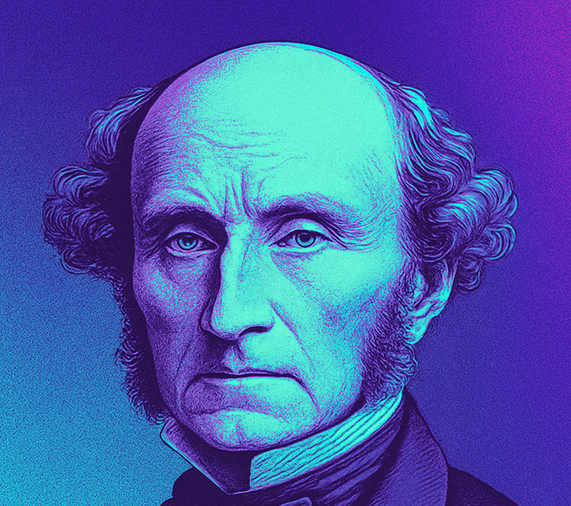
The notion that truths external to the mind may be known by intuition or consciousness, independently of observation and experience, is, I am persuaded, in these times, the great intellectual support of false doctrines and bad institutions. By the aid of this theory, every inveterate belief and every intense feeling, of which the origin is not remembered, is enabled to dispense with the obligation of justifying itself by reason, and is erected into its own all-sufficient voucher and justification. There never was such an instrument devised for consecrating all deep-seated prejudices.
▼
Source
source
(pp. 225-226)

3 months 1 week ago
It is understandable then that tragic heroes, unlike the baroque characters who had preceded them, could never be mad, and that inversely madness could never take on the tragic value we have known since Nietzsche and Artaud. In the classical epoch, tragic characters and the mad face each other without any possible dialogue or common language, for the one can only pronounce the decisive language of being, where the truth of light and the depths of night meet in a flash, and the other repeats endlessly an indifferent murmur where the empty chatter of the day is cancelled out by the deceptive lies of the shadows.
▼
Source
source
Part Two: 2. The Transcendence of Delirium
1 month 3 weeks ago
I might try to save the view that 'future contingents' have no truth value by saying that even present-tense statements have no truth value if they refer to the outcome of events that are so far away that a causal signal informing me of the outcome could not have reached me-now without traveling faster than light. In other words, I might attempt saying that statements about events that are in neither the upper half nor the lower half of my light-cone have no truth value. In addition, statements about events in the upper half of my light-cone have no truth value, since they are in my future according to every coordinate system. So only statements about events in the lower half of my light-cone have a truth value; only events that are in 'my past* according to all observers are determined.
▼
Source
source
Time and physical geometry
3 months 2 weeks ago
The hopes which inspire communism are, in the main, as admirable as those instilled by the Sermon on the Mount, but they are held as fanatically and are as likely to do as much harm.
▼
Source
source
Part I, The Present Condition of Russia, Ch. 1: What Is Hoped From Bolshevism
2 months 1 week ago
My interests drew me in different directions. On the one hand I was powerfully attracted by science, with its truths based on facts; on the other hand I was fascinated by everything to do with comparative religion. [...] In science I missed the factor of meaning; and in religion, that of empiricism.
▼
Source
source
p. 72
CivilSimian.com created by AxiomaticPanic, CivilSimian, Kalokagathia