



2 months 1 day ago
Our argument is not flatly circular, but something like it. It has the form, figuratively speaking, of a closed curve in space.
▼
Source
source
"Two Dogmas of Empiricism", p. 26

3 months 3 weeks ago
I say that man without the grace of God nonetheless remains the general omnipotence of God who effects, and moves and impels all things in a necessary, infallible course; but the effect of man's being carried along is nothing--that is, avails nothing in God's sight, nor is reckoned to be anything but sin.
▼
Source
source
p. 265

2 months 2 weeks ago
Furthermore, when citizens are all almost equal, it becomes difficult for them to defend their independence against the aggressions of power.
▼
Source
source
Chapter III.

Just now
"You will have less money." Yes, and less trouble. "Less influence." Yes, and less envy.

3 months 2 weeks ago
The teaching of my philosophy... that our whole existence is something which had better not have been, and that to disown and disclaim it is the highest wisdom.
▼
Source
source
Ch 1
3 months 6 days ago
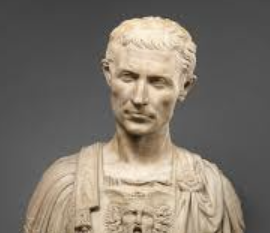
It is worth observing, how we feel ourselves affected in reading the characters of Cæsar, and Cato, as they are so finely drawn and contrasted in Salust. In one, the ignoscendo, largiundo; in the other, nil largiundo. In one, the miseris perfugium; in the other, malis perniciem. In the latter we have much to admire, much to reverence, and perhaps something to fear; we respect him, but we respect him at a distance. The former makes us familiar with him; we love him, and he leads us whither he pleases.
▼
Source
source
Edmund Burke, A Philosophical Enquiry into the Origin of Our Ideas of the Sublime and Beautiful (2nd ed. 1759), pp. 206-207

3 months 2 weeks ago
To require that a so-called layman should not use his own reason in religious matters, particularly since religion is to be appreciated as moral, but instead follow the appointed clergyman and thus someone else's reason, is an unjust demand because as to morals every man must account for all his doings. The clergyman will not and even cannot assume such a responsibility.
▼
Source
source
Kant, Immanuel (1996), pages 94-95
2 months 1 week ago
Since the management of industry by individuals necessarily implies private property, and since competition is in reality merely the manner and form in which the control of industry by private property owners expresses itself, it follows that private property cannot be separated from competition and the individual management of industry. Private property must, therefore, be abolished and in its place must come the common utilization of all instruments of production and the distribution of all products according to common agreement - in a word, what is called the communal ownership of goods.
1 month 3 weeks ago
It was Rudolf Carnap's dream for the last three decades of his life to show that science proceeds by a formal syntactic method; today no one to my knowledge holds out any hope for that project.
▼
Source
source
Hilary Putnam, in: James Conant, Urszula M. Zeglen (2012) Hilary Putnam: Pragmatism and Realism. p. 14

3 months 2 weeks ago
I believe that the abolition of private ownership of land and capital is a necessary step toward any world in which the nations are to live at peace with one another.
▼
Source
source
Ch. VI: International relations, p. 99

3 months 2 weeks ago
The For-itself, in fact, is nothing but the pure nihilation of the In-itself; it is like a hole of being at the heart of Being.
2 months 6 days ago
In the life of the mass-order, the culture of the generality tends to conform to the demands of the average human being. Spirituality decays through being diffused among the masses when knowledge is impoverished in every possible way by rationalisation until it becomes accessible to the crude understanding of all.
1 week 1 day ago
If I work incessantly to the last, nature owes me another form of existence when the present one collapses.
▼
Source
source
Letter to Eckermann

4 months 2 weeks ago
It seems to be my destiny to discourse on truth, insofar as I discover it, in such a way that all possible authority is simultaneously demolished. Since I am incompetent and extremely undependable in men's eyes, I speak the truth and thereby place them in the contradiction from which they can be extricated only by appropriating the truth themselves. A man's personality is matured only when he appropriates the truth, whether it is spoken by Balaam's ass or a sniggering wag or an apostle or an angel.
2 months 6 days ago
The complexity of the connection between the world of perception and the world of physics does not preclude that such a connection can be shown to exist at any time.
▼
Source
source
p. 133.

1 month 3 weeks ago
There are people who possess not so much genius as a certain talent for perceiving the desires of the century, or even of the decade, before it has done so itself.
▼
Source
source
D 70


3 months 2 weeks ago
What is commonly called friendship even is only a little more honor among rogues.
▼
Source
source
Pearls of Thought (1881) p. 95

4 months 1 day ago
Nobody should ever doubt that in the washing of rebirth (Titus 3:5) absolutely all sins, from the least to the greatest, are altogether forgiven.
▼
Source
source
229E:2
2 months 6 days ago
The disparagement of empirical evidence in favor of a metaphysical world of illusion has its origin in the conflict between the emancipated individual of bourgeois society and his fate within that society.
▼
Source
source
p. 138.
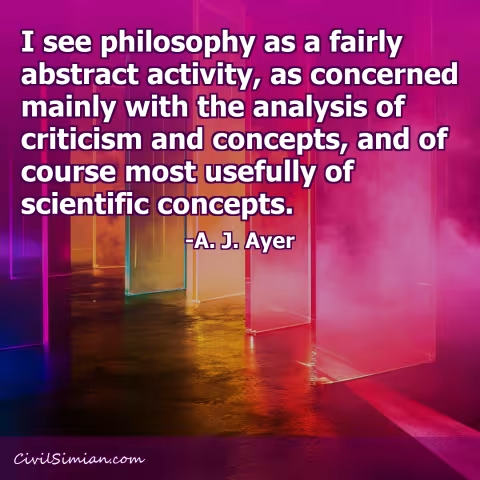

2 months 2 weeks ago
The African [slave] trade was, in his opinion, an absolute robbery. It therefore could not be a doubt with the House, whether it was proper to abolish it.
▼
Source
source
Speech in the House of Commons (12 May 1789), quoted in The Parliamentary History of England, From the Earliest Period to the Year 1803, Vol. XXVIII (1816), column 96

3 months 2 weeks ago
The worker's existence is thus brought under the same condition as the existence of every other commodity. The worker has become a commodity, and it is a bit of luck for him if he can find a buyer, And the demand on which the life of the worker depends, depends on the whim of the rich and the capitalists.
▼
Source
source
Wages of Labor, p. 20.

2 months 1 week ago
We live in the false as long as we have not suffered. But when we begin to suffer, we enter the truth only to regret the false.

1 month 1 week ago
All media exists to invest our lives with artificial perception and arbitrary values.
▼
Source
source
(p. 199)
3 months 2 weeks ago
...an intellectual concept abstracts from everything sensuous, it is not abstracted from sensuous things, and perhaps would be more correctly called abstracting than abstract. Intellectual concepts it is more cautious, therefore, to call pure ideas, and concepts given only empirically, abstract ideas.
1 week 5 days ago
The man who says that the world is a machine has really advanced no further than to say that he is so well satisfied with the analogy that he is through with searching any further.
▼
Source
source
Ch. VI: "The Drama of Destiny", §5, p. 130.
4 months 2 weeks ago
To stand on one leg and prove God's existence is a very different thing from going on one's knees and thanking Him.

1 week ago
"By what method or methods can the able men from every rank of life be gathered, as diamond-grains from the general mass of sand: the able men, not the sham-able;-and set to do the work of governing, contriving, administering and guiding for us!" It is the question of questions. All that Democracy ever meant lies there: the attainment of a truer and truer Aristocracy, or Government again by the Best.
3 months 2 weeks ago
I am as desirous of being a good neighbor as I am of being a bad subject.
3 months 2 weeks ago
The use of the intellect in the sciences whose primitive concepts as well as axioms are given by sensuous intuition is only logical, that is, by it we only subordinate cognitions to one another according to their relative universality conformably to the principle of contradiction, phenomena to more general phenomena, and consequences of pure intuition to intuitive axioms. But in pure philosophy, such as metaphysics, in which the use of the intellect in respect to principles is real, that is to say, where the primary concept of things and relations and the very axioms are given originally by the pure intellect itself, and not being intuitions do not enjoy immunity from error, the method precedes the whole science, and whatever is attempted before its precepts are thoroughly discussed and firmly established is looked upon as rashly conceived and to be rejected among vain instances of mental playfulness.

3 months 2 weeks ago
There must be something solemn, serious, and tender about any attitude which we denominate religious. If glad, it must not grin or snicker; if sad, it must not scream or curse. It is precisely as being solemn experiences that I wish to interest you in religious experiences. ... The divine shall mean for us only such a primal reality as the individual feels impelled to respond to solemnly and gravely, and neither by a curse nor a jest.
▼
Source
source
Lecture II, "Circumscription of the Topic"


1 month 1 week ago
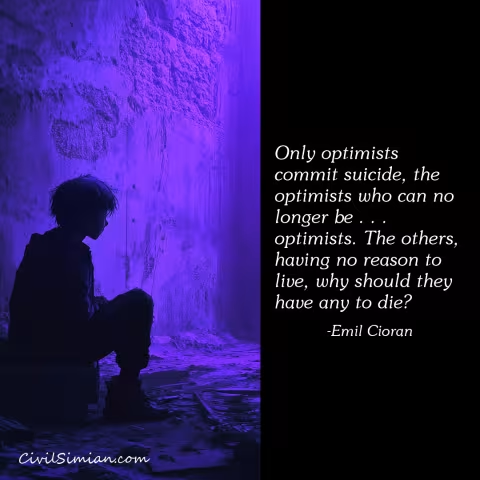
Apparently the rise of consciousness is linked to certain kinds of privation. It is the bitterness of self-consciousness that we knowers know best. Critical of the illusions that sustained mankind in earlier times, this self-consciousness of ours does little to sustain us now. The question is: which is disenchanted, the world itself or the consciousness we have of it?
▼
Source
source
A Matter of the Soul (1975), pp. 75-76
3 months 6 days ago
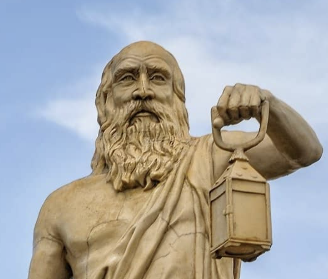
To the question what wine he found pleasant to drink, he replied, "That for which other people pay."
▼
Source
source
Diogenes Laërtius, vi. 54
3 months 2 weeks ago
Political ideals must be based upon ideals for the individual life. The aim of politics should be to make the lives of individuals as good as possible.

3 months 2 weeks ago
Genius is always sufficiently the enemy of genius by over influence.
▼
Source
source
par. 19
1 month 1 week ago
Any new technology is an evolutionary and biological mutation opening doors of perception and new spheres of action to mankind.
▼
Source
source
(p. 67)
3 months 2 weeks ago
A good indignation brings out all one's powers.
▼
Source
source
1841

3 weeks 1 day ago
There are not two kinds of human being, savage and civilized. There is only the human animal, forever at war with itself.
▼
Source
source
An Old Chaos: Frozen Horses and Deserts of Brick (p. 25)

2 months 1 week ago
I am a strange compound of weakness and resolution! However, if I must suffer, I will endeavour to suffer in silence. There is certainly a great defect in my mind - my wayward heart creates its own misery - Why I am made thus I cannot tell; and, till I can form some idea of the whole of my existence, I must be content to weep and dance like a child - long for a toy, and be tired of it as soon as I get it.
▼
Source
source
Undated letter to Joseph Johnson (October? 1792), published in The Collected Letters of Mary Wollstonecraft (2004), edited by Janet Todd, p. 206.
3 months 2 weeks ago
The person who screams, or uses the superlative degree, or converses with heat, puts whole drawing-rooms to flight. If you wish to be loved, love measure. You must have genius or a prodigious usefulness if you will hide the want of measure.
▼
Source
source
p. 167

1 month 1 week ago
Avarice is as destitute of what it has, as what it has not.
▼
Source
source
Maxim 927
1 month 3 weeks ago
To sum up: we have seen that of the three notions of 'partial interpretation' discussed, each is either unsuitable for Carnap's purposes (starting with observation terms), or incompatible with a rather minimal scientific realism; and, in addition, the second notion depends upon gross and misleading changes in our use of language. Thus in none of these senses is 'a partially interpreted calculus in which only the observation terms are directly interpreted' an acceptable model for a scientific theory.
▼
Source
source
"What theories are not"
Just now
For we are mistaken when we look forward to death; the major portion of death has already passed. Whatever years be behind us are in death's hands.

4 months 5 days ago
Sincerity is that whereby self-completion is effected, and its way is that by which man must direct himself.

3 months 2 weeks ago
A pupil from whom nothing is ever demanded which he cannot do never does all he can.
▼
Source
source
(p. 32)
3 months 2 weeks ago
I like mathematics because it is not human and has nothing particular to do with this planet or with the whole accidental universe - because, like Spinoza's God, it won't love us in return.
▼
Source
source
Letter to Lady Ottoline Morrell, March, 1912, as quoted in Gaither's Dictionary of Scientific Quotations (2012), p. 1318
CivilSimian.com created by AxiomaticPanic, CivilSimian, Kalokagathia