

3 months 2 weeks ago
There has been an inversion in the hierarchy of the two principles of antiquity, "Take care of yourself" and "Know yourself." In Greco-Roman culture, knowledge of oneself appeared as the consequence of the care of the self. In the modern world, knowledge of oneself constitutes the fundamental principle.
▼
Source
source
"Technologies of the Self," Ethics, Subjectivity and Truth (1994), p. 228

2 months 1 week ago
It may seem to be a long way from Blake's innocent talk of love and copulation to De Sade's need to inflict pain. And yet both are the outcome of a sexual mysticism that strives to transcend the everyday world. Simone de Beauvoir said penetratingly of De Sade's work that 'he is trying to communicate an experience whose distinguishing characteristic is, nevertheless its will to remain incommunicable'. De Sade's perversion may have sprung from his dislike of his mother or of other women, but its basis is a kind of distorted religious emotion.
▼
Source
source
p. 90

4 months 3 days ago
It happens as with cages: the birds without despair to get in, and those within despair of getting out.
▼
Source
source
Book III, Ch. 5. Upon some Verses of Virgil

3 months 2 weeks ago
The political triumph of Donald Trump is a symbol and symptom-not cause or origin-of our imperial meltdown. Trump is neither alien nor extraneous to American culture and history. In fact, he is as American as apple pie. Yet he is a sign of our spiritual bankruptcy-all spectacle and no substance, all narcissism and no empathy, all appetite and greed and no wisdom and maturity. Yet his triumph flows from the implosion of a Republican Party establishment beholden to big money, big military, and big scapegoating of vulnerable peoples of color, LGBTQ peoples, immigrants, Muslims, and women; from a Democratic Party establishment beholden to big money, big military, and the clever deployment of peoples of color, LGBTQ peoples, immigrants, Muslims, and women to hide and conceal the lies and crimes of neoliberal policies here and abroad; and from a corporate media establishment that aided and abetted Trump owing to high profits and revenues.
▼
Source
source
2017 introduction
4 months 3 days ago
You must not murder. (Exodus 20:13) Q. What does this mean? A. We should fear and love God so that we may not hurt or harm our neighbor in his body, but help and befriend him in every bodily need [in every need and danger of life and body].
1 week 3 days ago
He has spent all his life in letting down empty buckets into empty wells; and he is frittering away his age in trying to draw them up again.
▼
Source
source
Vol. I, ch. 9, p. 310
1 week 3 days ago
Correspondences are like small clothes before the invention of suspenders; it is impossible to keep them up.
▼
Source
source
Vol. II, letter to Catherine Crowe (31 January 1841), pp. 441-442
3 months 3 weeks ago
In the Hindoo scripture the idea of man is quite illimitable and sublime. There is nowhere a loftier conception of his destiny. He is at length lost in Brahma himself 'the divine male.' ... there is no grandeur conception of creation anywhere .... The very indistinctness of its theogeny implies a sublime truth.
▼
Source
source
A Tribute to Hinduism, 2008
1 month 4 days ago
If we want eternal life, then we'll need to rewrite our bug-ridden genetic code and become god-like. "May all that have life be delivered from suffering", said Gautama Buddha. It's a wonderful sentiment. Sadly, only hi-tech solutions can ever eradicate suffering from the living world. Compassion alone is not enough.
▼
Source
source
Interview with Nick Bostrom and David Pearce, Dec. 2007
1 month 3 weeks ago
It takes intellectual courage to kick yourself out of your emotional incredulity and persuade yourself that there is no other rational choice.
▼
Source
source
The Intellectual and Moral Courage of Atheism
4 days ago
Self-respect is the cornerstone of all virtue.
▼
Source
source
As quoted in A Toolbox for Humanity : More Than 9000 Years of Thought (2004) by Lloyd Albert Johnson, p. 147

2 months 3 weeks ago
By virtue of depression, we recall those misdeeds we buried in the depths of our memory. Depression exhumes our shames.

2 months 1 week ago
Ninety percent of our lives is governed by emotion. Our brains merely register and act upon what is telegraphed to them by our bodily experience. Intellect is to emotion as our clothes are to our bodies; we could not very well have civilized life without clothes, but we would be in a poor way if we had only clothes without bodies.
▼
Source
source
Ch. 29, June 10, 1943.
3 months 3 weeks ago
Essentially the fault lies in the fact that the democratic political process is at best regulated rivalry; it does not even in theory have the desirable properties that price theory ascribes to truly competitive markets.
▼
Source
source
Chapter IV, Section 36, p. 226

2 months 1 week ago
Concern for the symbol has completely disappeared from our science. And yet, if one were to give oneself the trouble, one could easily find, in certain parts at least of contemporary mathematics... symbols as clear, as beautiful, and as full of spiritual meaning as that of the circle and mediation. From modern thought to ancient wisdom the path would be short and direct, if one cared to take it.
▼
Source
source
The Need for Roots (1949), p. 292
2 months 3 weeks ago
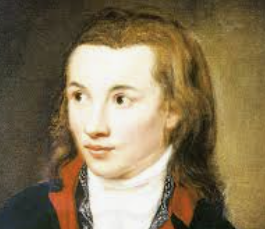
The seat of the soul is where the inner world and the outer world meet. Where they overlap, it is in every point of the overlap.
3 months 3 weeks ago
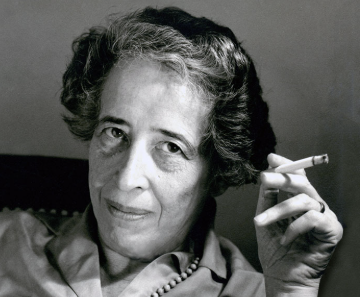
Kant was also quite aware that "the urgent need" of reason is both different from and "more than mere quest and desire for knowledge." Hence, the distinguishing of the two faculties, reason and intellect, coincides with a distinction between two altogether different mental activities, thinking and knowing.
▼
Source
source
p. 14
1 month 4 days ago
My own sense of how to behave in a simulation has more traditional roots in the theory of perception. I've long believed that each of us lives in an egocentric simulation of the world run by the mind/brain. Since the zombies of each (waking) simulation have sentient real world counterparts, one should treat them as though they were real. Nonetheless as an angst-ridden teenager, my dawning acceptance of an inferential realist theory of perception made me feel as if I'd been condemned to solitary confinement for life. The sense of loneliness was indescribable. Naïve realism is better for one's mental health.
▼
Source
source
Origins and Theory of the World Transhumanist Association, Institute for Ethics and Emerging Technologies, 26 Dec. 2007

4 months 3 weeks ago
A robot may not injure a human being, or, through inaction, allow a human being to come to harm.
3 months 3 weeks ago
As to the having and possessing of things, teach them to part with what they have, easily and freely to their friends, and let them find by experience that the most liberal has always the most plenty, with esteem and commendation to boot, and they will quickly learn to practise it.
▼
Source
source
Sec. 110
2 months 1 week ago
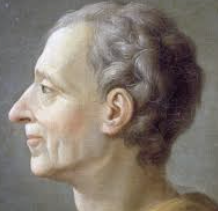
There are only two cases in which war is just: first, in order to resist the aggression of an enemy, and second, in order to help an ally who has been attacked.
▼
Source
source
No. 95. (Usbek writing to Rhedi)
4 months 3 days ago
Women . . . have . . . small and narrow chests, and broad hips, to the end they should remain at home, sit still, keep house, and bear and bring up children. . . . A woman is, or at least should be, a friendly, courteous, and a merry companion in life . . . the honor and ornament of the house, and inclined to tenderness, for thereunto are they chiefly created, to bear children, and to be the pleasure, joy and solace of their husbands.
▼
Source
source
-- Table Talk, quoted in Luther On "Woman"

1 month 3 weeks ago
It is always the psychic and social grounds, brought into play by each medium or technology, that readjust the balance of the hemispheres and of human sensibilities into equilibrium with those grounds.
▼
Source
source
p. 82
2 months 1 week ago
On the whole, the scientist is better off if he collects his facts by accident, little by little, so he can study them before he tries to fit them into a jigsaw puzzle, This is how the late Tom Lethbridge came to arrive at his theories about other dimensions of reality. It is also how Guy Lyon Playfair came to develop his own theories about the nature of the poltergeist.
▼
Source
source
p. 196

1 week 3 days ago
A thatched roof once covered free men; under marble and gold dwells slavery.

2 weeks 2 days ago
Blessed is he who has found his work; let him ask no other blessedness.
▼
Source
source
Bk. III, ch. 11.
3 months 2 weeks ago
This dysfunction of power was related to a central excess: what might be called the monarchical 'super-power', which identified the right to punish with the personal power of the sovereign.
▼
Source
source
Chapter Two, pp.80
3 months 3 weeks ago
The violence of love is as much to be dreaded as that of hate. When it is durable, it is serene and equable. Even its famous pains begin only with the ebb of love, for few are indeed lovers, though all would fain be.
▼
Source
source
Pearls of Thought (1881) p. 158
8 months 1 day ago
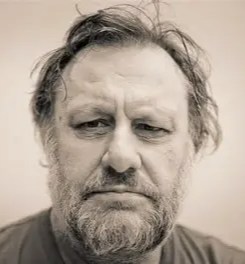
In his seminar on The Ethic of Psychoanalysis, Lacan speaks of the role of the Chorus in classical tragedy: we, the spectators, came to the theatre worried, full of everyday problems, unable to adjust without reserve to the problems of the play, that is to feel the required fears and compassions - but not problem, there is a chorus, who feels the sorrow and the compassion instead of us - or, more precisely, we feel the required emotions through the medium of the chorus: 'You are then relieved of all worries, even if you do not feel anything, the Chorus will do so in your place.'


1 week 3 days ago
Meanwhile, hold fast to this thought, and grip it close: yield not to adversity; trust not to prosperity; keep before your eyes the full scope of Fortune's power, as if she would surely do whatever is in her power to do.
1 month 2 days ago
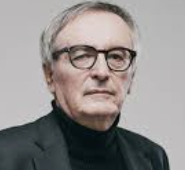
As the Genesis story teaches, knowledge cannot save us from ourselves. If we know more than before, it means only that we have greater scope to enact our fantasies. But - as the Genesis myth also teaches - there is no way we can rid ourselves of what we know. If we try to regain a state of innocence, the result can only be a worse madness. The message of Genesis is that in the most vital areas of human life there can be no progress, only an unending struggle with our own nature.
▼
Source
source
An Old Chaos: Humanism and Flying Saucers (pp. 79-80)
4 months 3 weeks ago
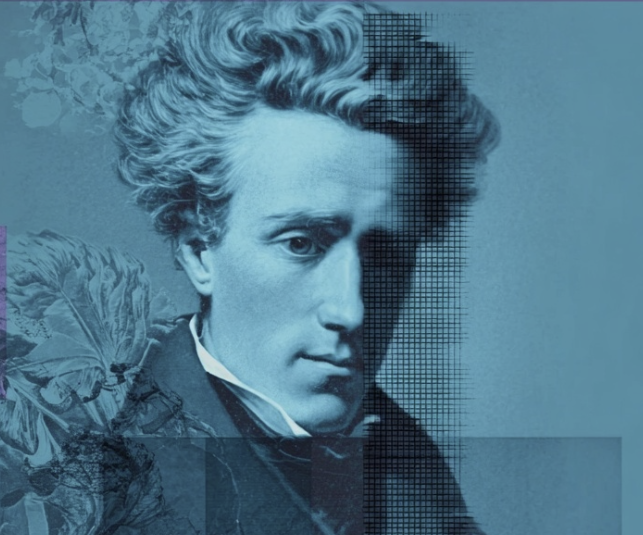
A son is a mirror in which the father sees himself reflected, and the father is a mirror in which the son sees himself as he will be in the future.
2 months 3 weeks ago
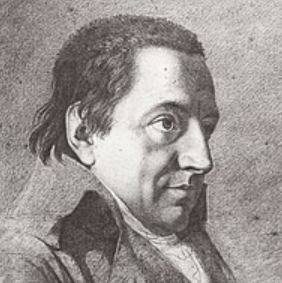
All law relations are determined by this principle: each one must restrict his freedom by the possibility of the freedom of the other. ... My freedom is limited by the freedom of the other only on condition that he limits his freedom by the conception of mine. Otherwise he is lawless. Hence, if a law-relation is to result from my cognition of the other, the cognition and the consequent limitation of freedom must have been mutual. All law-relation between persons is, therefore, conditioned by their mutual cognition of each other, and is, at the same time, completely determined thereby.
▼
Source
source
P. 173-175
1 month 5 days ago
All urgent calls he shall hear at once, but never put off; for when postponed, they will prove too hard or impossible to accomplish.
▼
Source
source
Book I : "Concerning Discipline" Chapter 19

4 months 1 week ago
The highest manifestation of life consists in this: that a being governs its own actions. A being that is always subject to the direction of another is somewhat of a dead thing. Variant translation: Now slavery has a certain likeness to death, hence it is also called civil death. For life is most evident in a thing's moving itself, while what can only be moved by another, seems to be as if dead. But it is manifest that a slave is not moved by himself, but only at his master's command.
▼
Source
source
Chapter 14
1 month 1 week ago
The students of physical science are not unfrequently told that their pursuits unfit them for the estimation of moral probability. And it may be so, for I am afraid that to those who are accustomed to severe reasoning, either in the province of Science or in that of Law, reasoning from 'moral probability' is apt to be regarded as a process of accumulating inconclusive arguments, in the hope that a great heap of them may, at least, look as firm as one good demonstration.
▼
Source
source
The Evidence of the Miracle of the Resurrection
6 days ago
We await the Indian thinker who will expound to us the mysticism of spiritual union with infinite Being as it is in itself, not as it is set down in the ancient texts or according to the meaning read into them by their interpreters. It belongs to the nature of mysticism that it is timeless and appeals to no other authority than that of the truth which it carries within it. The pathway from imperfect to perfect recognised truth leads through the valley of reality.
▼
Source
source
Ch. XVI : Looking Backward and Forward, p. 256
2 months 3 weeks ago
The obsession with suicide is characteristic of the man who can neither live nor die, and whose attention never swerves from this double impossibility.
1 month 2 weeks ago
Democracies owe their existence to national loyalties - the loyalties that are supposedly shared by government and opposition, by all political parties, and by the electorate as a whole. Wherever the experience of nationality is weak or non-existent, democracy has failed to take root. For without national loyalty, opposition is a threat to government, and political disagreements create no common ground.
3 months ago
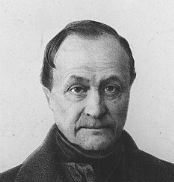
The first condition of unity is a subjective principle; and this principle in the Positive system is the subordination of the intellect to the heart: Without this the unity that we seek can never be placed on a permanent basis, whether individually or collectively. It is essential to have some influence sufficiently powerful to produce convergence amid the heterogeneous and often antagonistic tendencies of so complex an organism as ours.
▼
Source
source
p. 24
3 months 3 weeks ago
It would be worthy of the age to print together the collected Scriptures or Sacred Writings of the several nations, the Chinese, the Hindus, the Persians, the Hebrews, and others, as the Scripture of mankind. The New Testament is still, perhaps, too much on the lips and in the hearts of men to be called a Scripture in this sense. Such a juxtaposition and comparison might help to liberalize the faith of men. This is a work which Time will surely edit, reserved to crown the labors of the printing-press. This would be the Bible, or Book of Books, which let the missionaries carry to the uttermost parts of the earth.

3 months 3 weeks ago
Whatever we may think or affect to think of the present age, we cannot get out of it; we must suffer with its sufferings, and enjoy with its enjoyments; we must share in its lot, and, to be either useful or at ease, we must even partake its character.
▼
Source
source
"The Spirit of the Age, I", Examiner (9 January 1831), p. 20 Full text online

3 months 3 weeks ago
The world is full of conflicts; and, overshadowing all minor conflicts, the titanic struggle between Communism and anti-Communism. Almost everybody who is politically conscious has strong feelings about one or more of these issues; but we want you, if you can, to set aside such feelings and consider yourselves only as members of a biological species which has had a remarkable history, and whose disappearance none of us can desire. We shall try to say no single word which should appeal to one group rather than to another. All, equally, are in peril, and, if the peril is understood, there is hope that they may collectively avert it.

3 months 3 weeks ago
I fancy I need more than another to speak (rather than write), with such a formidable tendency to the lapidary style. I build my house of boulders.
▼
Source
source
Letter to Thomas Carlyle, 30 October 1841
3 months 2 weeks ago
There can be no brotherhood when some nations indulge in previously unheard of luxuries, while others struggle to stave off famine.
▼
Source
source
Chapter 4, Reason, p. 119
1 month 1 week ago
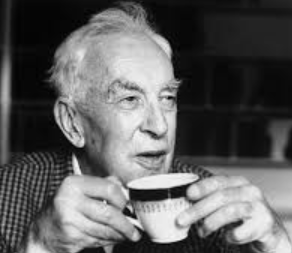
Every oasis is an island that has water inside it but not round it.
▼
Source
source
Between Niger and Nile (London: Oxford UP, 1965) 20. Cyrenaïca's Green Mountain

3 months 4 weeks ago
Ignorance is the mother of Devotion: A maxim that is proverbial, and confirmed by general experience. Look out for a people, entirely destitute of religion: If you find them at all, be assured, that they are but few degrees removed from brutes. What so pure as some of the morals, included in some theological system? What so corrupt as some of the practices, to which these systems give rise?
▼
Source
source
Part XV - General corollary
2 months 3 weeks ago
Born in a prison, with burdens on our shoulders and our thoughts, we could not reach the end of a single day if the possibilities of ending it all did not incite us to begin the next day all over again.

2 months 5 days ago
One might call habit a moral friction: something that prevents the mind from gliding over things but connects it with them and makes it hard for it to free itself from them.
▼
Source
source
A 10
CivilSimian.com created by AxiomaticPanic, CivilSimian, Kalokagathia