

2 months 2 weeks ago
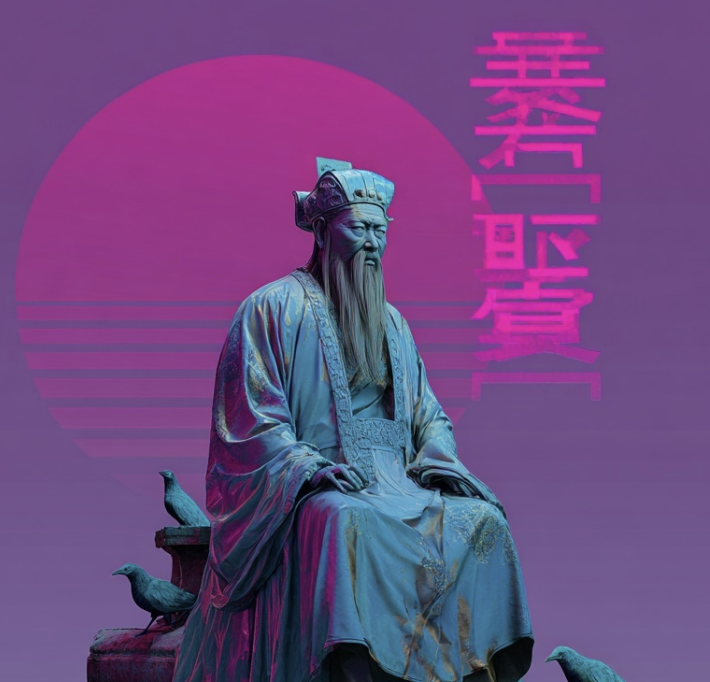
What the great learning teaches, is to illustrate illustrious virtue; to renovate the people; and to rest in the highest excellence. The point where to rest being known, the object of pursuit is then determined; and, that being determined, a calm unperturbedness may be attained to. To that calmness there will succeed a tranquil repose. In that repose there may be careful deliberation, and that deliberation will be followed by the attainment of the desired end.



1 month 3 weeks ago
If a man makes the press utter atrocious things he becomes as answerable for them as if he had uttered them by word of mouth. Mr. Jefferson has said in his inaugural speech, that "error of opinion might be tolerated, when reason was left free to combat it." This is sound philosophy in cases of error. But there is a difference between error and licentiousness.
▼
Source
source
Liberty of the Press, 1806

1 month 3 weeks ago
I am writing to you to tell you of my decision to return to your Government the Carl von Ossietzsky medal for peace. I do so reluctantly and after two years of private approaches on behalf of Heinz Brandt, whose continued imprisonment is a barrier to coexistence, relaxation of tension and understanding between East and West... I regret not to have heard from you on this subject. I hope that you will yet find it possible to release Brandt through an amnesty which would be a boon to the cause of peace and to your country.
▼
Source
source
Letter to Walter Ulbricht, January 7, 1964.

2 months 3 weeks ago
In order to cease being a doubtful case, one has to cease being, that's all.
1 month 3 weeks ago
All exact science is dominated by the idea of approximation. When a man tells you that he knows the exact truth about anything, you are safe in inferring that he is an inexact man.
▼
Source
source
The Scientific Outlook (1931), Part I, chapter II, "Characteristics of the Scientific Method"

2 months 1 week ago
Incomprehensible and immutable is the love wherewith God loves. He did not begin to love us only on the day we were reconciled to Him by the blood of His Son; He loved us before the world was made, that we too might become His sons together with His Only-begotten Son, long before we had any existence.
▼
Source
source
p.435

1 week 1 day ago
While it is in no way racist for any author to write a book exclusively about white women, it is fundamentally racist for books to be published that focus solely on the American white woman's experience in which that experience is assumed to be the American woman's experience.

1 month 2 weeks ago
It's time for me to go back to the great Union Theological Seminary. That's my institutional home, my brother. I can stretch out and try to be a truth teller and bear witness, still learn and listen, but also be in the middle of the Big Apple. Nothing like it... Union Theological Seminary means so much to me, because in that context I can be the full, free Black man, the Jesus-loving, free Black man, fundamentally committed to focusing on the oppressed around the world. Speaking in Too Radical for Harvard?
▼
Source
source
Cornl West on Failed Fight for Tenure, Biden's First 50 Days & More, Democracy Now!,
2 months 1 week ago
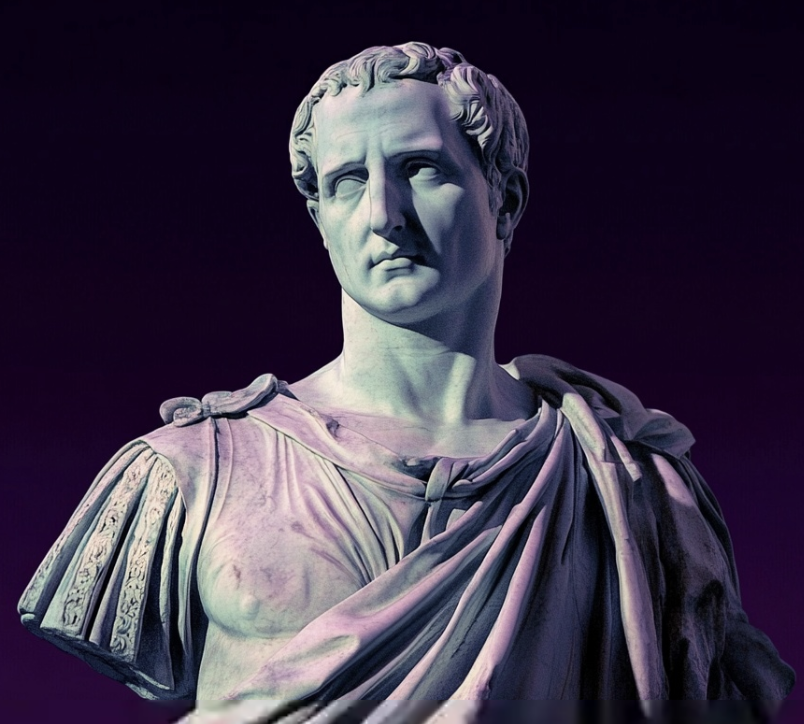
After death the sensation is either pleasant or there is none at all. But this should be thought on from our youth up, so that we may be indifferent to death, and without this thought no one can be in a tranquil state of mind. For it is certain that we must die, and, for aught we know, this very day. Therefore, since death threatens every hour, how can he who fears it have any steadfastness of soul?
▼
Source
source
section 74

1 week 4 days ago
I acknowledge that history is full of religious wars: but we must distinguish; it is not the multiplicity of religions which has produced wars; it is the intolerant spirit animating that which believed itself in the ascendant.
▼
Source
source
No. 86. (Usbek writing to Mirza)

2 months 3 weeks ago
One could construe the life of man as a great discourse in which the various people represent different parts of speech (the same might apply to states). How many people are just adjectives, interjections, conjunctions, adverbs? How few are substantives, active verbs, how many are copulas? Human relations are like the irregular verbs in a number of languages where nearly all verbs are irregular.

1 month 3 weeks ago
How significant is the enormous heightening, under mescalin, of the perception of color! ... Man's highly developed color sense is a biological luxury-inestimably precious to him as an intellectual and spiritual being, but unnecessary to his survival as an animal. ... Mescalin raises all colors to a higher power and makes the percipient aware of innumerable fine shades of difference, to which, at ordinary times, he is completely blind. It would seem that, for Mind at Large, the so-called secondary characters of things are primary.
▼
Source
source
describing his experiment with mescaline, pp. 26-27

2 months 3 weeks ago
There is no version of primeval history, preceding the discoveries of modern science, that is as rational and as inspiring as that of the first eleven chapters of the Book of Genesis.

1 week 4 days ago
Apart from the fact there is no normal standard of health, nobody has proved that man is necessarily cheerful by nature. And further, man, by the very fact of being man, of possessing consciousness, is, in comparison with the ass or the crab, a diseased animal. Consciousness is a disease.

1 month 6 days ago
No one entrusts a secret to a drunken man; but one will entrust a secret to a good man; therefore, the good man will not get drunk.
▼
Source
source
As quoted in Epistulae morales ad Lucilium by Seneca, Epistle LXXXIII (trans. R. M. Gummere)

1 month 3 weeks ago
All our knowledge falls with the bounds of experience.
▼
Source
source
A 146, B 185

1 month 3 weeks ago
Patriotism, when it wants to make itself felt in the domain of learning, is a dirty fellow who should be thrown out of doors.
▼
Source
source
Vol. 2, Ch. 21, § 255
1 week 4 days ago
The vanity of the passing world and love are the two fundamental and heart-penetrating notes of true poetry. And they are two notes of which neither can be sounded without causing the other to vibrate. The feeling of the vanity of the passing world kindles love in us, the only thing that triumphs over the vain and transitory, the only thing that fills life again and eternalizes it.
1 week 3 days ago
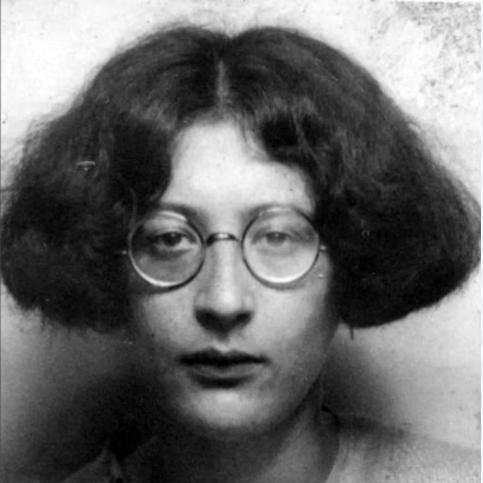
Whenever one tries to suppress doubt, there is tyranny.
▼
Source
source
Lectures in philosophy [Leçons de philosophie] (1959) as translated by Hugh Price p. 103
1 month 2 weeks ago
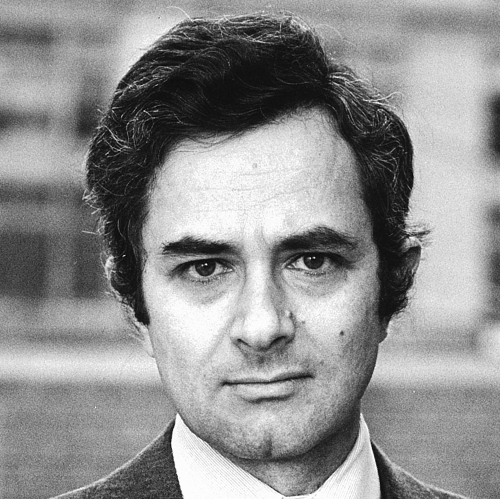
I am not adverting here to the alleged privacy of experience to its possessor. The point of view in question is not one accessible only to a single individual. Rather it is a type. It is often possible to take up a point of view other than one's own, so the comprehension of such facts is not limited to one's own case. There is a sense in which phenomenological facts are perfectly objective: one person can know or say of another what the quality of the other's experience is. They are subjective, however, in the sense that even this objective ascription of experience is possible only for someone sufficiently similar to the object of ascription to be able to adopt his point of view - to understand the ascription in the first person as well as in the third, so to speak. The more different from oneself the other experiencer is, the less success one can expect with this enterprise.
▼
Source
source
pp. 171-172

3 weeks 3 days ago
Strong as it looks at the outset, State-agency perpetually disappoints every one. Puny as are its first stages, private efforts daily achieve results that astound the world.
▼
Source
source
Vol. 3, Ch. VII, Over-Legislation
1 month 3 weeks ago
You will have seen that my brother died suddenly in Marseilles. I inherit from him a title, but not a penny of money, as he was bankrupt. A title is a great nuisance to me, and I am at a loss what to do, but at any rate I do not wish it employed in connection with any of my literary work. There is, so far as I know, only one method of getting rid of it, which is to be attainted of high treason, and this would involve my head being cut off on Tower Hill. This method seems to me perhaps somewhat extreme...
▼
Source
source
Letter to W. W. Norton, 11 March, 1931
2 months 3 weeks ago
It will be easy for us once we receive the ball of yarn from Ariadne (love) and then go through all the mazes of the labyrinth (life) and kill the monster. But how many are there who plunge into life (the labyrinth) without taking that precaution?

1 month 3 weeks ago
Beauty is the mark God sets upon virtue.
▼
Source
source
Beauty

1 month 4 weeks ago
Human infirmity in moderating and checking the emotions I name bondage: for, when a man is a prey to his emotions, he is not his own master, but lies at the mercy of fortune: so much so, that he is often compelled, while seeing that which is better for him, to follow that which is worse.
▼
Source
source
Part IV, Preface; translation by R. H. M. Elwes

1 month 3 weeks ago
Inferiority is always with us, and merciless scorn of it is the keynote of the military temper.
1 month 3 weeks ago
The evil effect of science upon men is principally this, that by far the greatest number of those who wish to display a knowledge of it accomplish no improvement at all of the understanding, but only a perversity of it, not to mention that it serves most of them as a tool of vanity.
▼
Source
source
Part III : Selection on Education from Kant's other Writings, Ch. I Pedagogical Fragments, # 52

2 months 1 week ago
It must be said that charity can, in no way, exist along with mortal sin.
▼
Source
source
Disputed Questions: On Charity, c. 1270
1 week 1 day ago
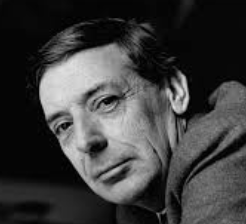
Those who say that all historical accounts are ideological constructs (which is one version of the idea that there is really no historical truth) rely on some story which must itself claim historical truth. They show that supposedly "objective" historians have tendentiously told their stories from some particular perspective; they describe, for example, the biasses that have gone into constructing various histories of the United States. Such an account, as a particular piece of history, may very well be true, but truth is a virtue that is embarrassingly unhelpful to a critic who wants not just to unmask past historians of America but to tell us that at the end of the line there is no historical truth. It is remarkable how complacent some "deconstructive" histories are about the status of the history that they deploy themselves.
▼
Source
source
p. 2

1 week 2 days ago
The essence of education is that it be religious. Pray, what is religious education? A religious education is an education which inculcates duty and reverence. Duty arises from our potential control over the course of events. Where attainable knowledge could have changed the issue, ignorance has the guilt of vice. And the foundation of reverence is this perception, that the present holds within itself the complete sum of existence, backwards and forwards, that whole amplitude of time, which is eternity.

1 month 3 weeks ago
"Everything is both a trap and a display; the secret reality of the object is what the Other makes of it."

1 month 3 weeks ago
Children should from the beginning be bred up in an abhorrence of killing or tormenting any living creature; and be taught not to spoil or destroy any thing, unless it be for the preservation or advantage of some other that is nobler.
▼
Source
source
Sec. 116
3 days ago
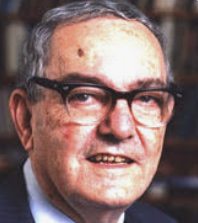
The true line is not between "hard" natural science and "soft" social sciences, but between precise science limited to highly abstract and simple phenomena in the laboratory and inexact science and technology dealing with complex problems in the real world.
▼
Source
source
p. 302.
1 month 3 weeks ago
Moral Teleology supplies the deficiency in physical Teleology, and first establishes a Theology; because the latter, if it did not borrow from the former without being observed, but were to proceed consistently, could only found a Demonology, which is incapable of any definite concept.
▼
Source
source
Immanuel Kant, Kant's Critique of Judgment (1892) Tr. J.H. Bernard

1 month 4 weeks ago
When the profits of trade happen to be greater than ordinary, over-trading becomes a general error both among great and small dealers.
▼
Source
source
Chapter I, p. 469.
1 month 3 weeks ago
Suicide may also be regarded as an experiment - a question which man puts to Nature, trying to force her to answer. The question is this: What change will death produce in a man's existence and in his insight into the nature of things? It is a clumsy experiment to make; for it involves the destruction of the very consciousness which puts the question and awaits the answer.
▼
Source
source
Vol. 2, Ch. 13, § 160

1 month 2 weeks ago
The disciple must break the glass, or better the mirror, the reflection, his infinite speculation on the master. And start to speak.
▼
Source
source
Cogito and The History of Madness, p.37 (Routledge classics edition)

2 weeks 6 days ago
Were the ends of a person already explicit, there would be no room for development, for growth, for life; and consequently there would be no personality. The mere carrying out of predetermined purposes is mechanical. This remark has an application to the philosophy of religion. It is that genuine evolutionary philosophy, that is, one that makes the principle of growth a primordial element of the universe, is so far from being antagonistic to the idea of a personal creator, that it is really inseparable from that idea; while a necessitarian religion is in an altogether false position and is destined to become disintegrated. But a pseudo-evolutionism which enthrones mechanical law above the principle of growth is at once scientifically unsatisfactory, as giving no possible hint of how the universe has come about, and hostile to all hopes of personal relations to God.

4 weeks 1 day ago
The general interest of the masses might take the place of the insight of genius if it were allowed freedom of action.

1 month 3 weeks ago
The king Frederic has sent me some of his dirty linen to wash; I will wash yours another time.
▼
Source
source
Reply to General Manstein. Voltaire writes to his niece Dennis, July 24, 1752, "Voilà le roi qui m'envoie son linge à blanchir"; reported in Bartlett's Familiar Quotations, 10th ed.,1919
1 month 2 weeks ago
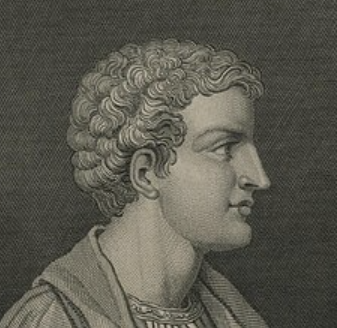
Tis not sufficient to combine well-chosen words in a well-ordered line.
▼
Source
source
Book I, satire iv, line 54 (translated by John Conington)
1 month 3 weeks ago
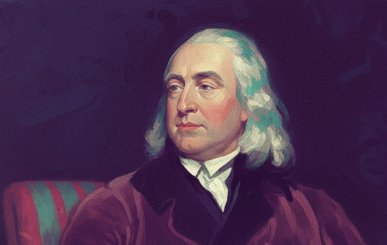
Intense, long, certain, speedy, fruitful, pure-Such marks in pleasures and in pains endure.Such pleasures seek if private be thy end:If it be public, wide let them extend.Such pains avoid, whichever be thy view:If pains must come, let them extend to few.
▼
Source
source
Ch. 4: Value of a Lot of Pleasure or Pain, How to be Measured
1 month 3 weeks ago
What we really need the poet's and orator's help to keep alive in us is not, then, the common and gregarious courage which Robert Shaw showed when he marched with you, men of the Seventh Regiment. It is that more lonely courage which he showed when he dropped his warm commission in the glorious Second to head your dubious fortunes, negroes of the Fifty-fourth. That lonely kind of courage (civic courage as we call it in times of peace) is the kind of valor to which the monuments of nations should most of all be reared.
▼
Source
source
Robert Gould Shaw: Oration upon the Unveiling of the Shaw Monument, 31 May 1897
2 weeks 1 day ago
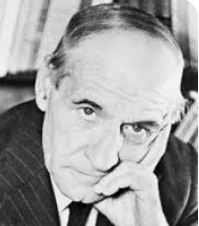
Strictly speaking, the mass, as a psychological fact, can be defined without waiting for individuals to appear in mass formation. In the presence of one individual we can decide whether he is "mass" or not. The mass is all that which sets no value on itself - good or ill - based on specific grounds, but which feels itself "just like everybody," and nevertheless is not concerned about it; is, in fact, quite happy to feel itself as one with everybody else.
▼
Source
source
Chap.I: The Coming Of The Masses
3 weeks ago
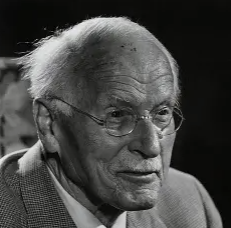
A more or less superficial layer of the unconscious is undoubtedly personal. I call it the "personal unconscious". But this personal layer rests upon a deeper layer, which does not derive from personal experience and is not a personal acquisition but is inborn. This deeper layer I call the "collective unconscious". I have chosen the term "collective" because this part of the unconscious is not individual but universal; in contrast to the personal psyche, it has contents and modes of behaviour that are more or less the same everywhere and in all individuals.
▼
Source
source
p. 3-4
1 week 2 days ago
The main importance of Francis Bacon's influence does not lie in any peculiar theory of inductive reasoning which he happened to express, but in the revolt against second-hand information of which he was a leader.

1 week ago
If space in infinite, how about the space inside man? Blake said that eternity opens from the center of an atom. My former terror vanished. Now I saw that I was mistaken in thinking of myself as an object in a dead landscape. I had been assuming that man is limited because his brain is limited, that only so much can be packed into the portmanteau. But the spaces of the mind are a new dimension. The body is a mere wall between two infinities. Space extends to infinity outwards; the mind stretches to infinity inwards.
▼
Source
source
p. 38
3 weeks ago
The bigger the crowd, the more negligible the individual.
▼
Source
source
p 14

2 months 1 week ago
The double meaning has been given to suit people's diverse intelligence. The apparent contradictions are meant to stimulate the learned to deeper study.
CivilSimian.com created by AxiomaticPanic, CivilSimian, Kalokagathia