


4 months 3 weeks ago
Who then to frail mortality shall trust But limns the water, or but writes in dust.
4 months 2 days ago
Rest gives relish to labour.
▼
Source
source
Of the Training of Children, 9 (Tr. Babbitt)

4 months 4 days ago
Brave men were living before Agamemnon.
▼
Source
source
Book IV, ode ix, line 25

4 months 3 weeks ago
He who would teach men to die would teach them to live.
▼
Source
source
Ch. 20. Of the Force of Imagination (tr. Donald M. Frame)

4 months 2 weeks ago
Arithmetic must be discovered in just the same sense in which Columbus discovered the West Indies, and we no more create numbers than he created the Indians.
▼
Source
source
Principles of Mathematics (1903), p. 451

1 month 3 weeks ago
Humanists today, who claim to take a wholly secular view of things, scoff at mysticism and religion. But the unique status of humans is hard to defend, and even to understand, when it is cut off from any idea of transcendence. In a strictly naturalistic view - one in which the world is taken on its own terms, without reference to a creator or any spiritual realm - there is no hierarchy of value with humans at the top. There are simply multifarious animals, each with their own needs. Human uniqueness is a myth inherited from religion, which humanists have recycled into science.
▼
Source
source
An Old Chaos: Humanism and Flying Saucers (p. 77)
2 months 4 weeks ago
Intelligence is quickness to apprehend as distinct from ability, which is capacity to act wisely on the thing apprehended.
▼
Source
source
p. 135; Ch. 17, December 15, 1939.
3 months ago
When I read the catechism of the Council of Trent, it seems as though I had nothing in common with the religion there set forth.
3 weeks 5 days ago
Reverence for life, veneratio vitæ, is the most direct and at the same time the profoundest achievement of my will-to-live. In reverence for life my knowledge passes into experience. The simple world- and life-affirmation which is within me just because I am will-to-live has, therefore, no need to enter into controversy with itself, if my will-to-live learns to think and yet does not understand the meaning of the world. In spite of the negative results of knowledge, I have to hold fast to world- and life-affirmation and deepen it. My life carries its own meaning in itself. This meaning lies in my living out the highest idea which shows itself in my will-to-live, the idea of reverence for life. With that for a starting-point I give value to my own life and to all the will-to-live which surrounds me, I persevere in activity, and I produce values.
4 months 3 weeks ago
He who fears he shall suffer, already suffers what he fears.
▼
Source
source
Book III, Ch. 13
3 months 1 day ago
A real reconciliation of East and West is impossible and inconceivable on the basis of a materialistic Communism, or of a materialistic Capitalism, or indeed of a materialistic Socialism. The third way will neither be "anti-Communist" nor "anti-Capitalist". It will recognize the truth in liberal democracy, and it will equally recognize the truth in Communism. A critique of Communism and Marxism does not entail an enmity towards Soviet Russia, just as a critique of liberal democracy is not entail enmity towards the west. ... But the final and most important justification of a "third way" is that there must be a place from which we may boldly testify to, and proclaim, truth, love and justice. No one today likes truth: utility and self interest have long ago been substituted for truth.
▼
Source
source
p. 80

3 months 1 week ago
Friendship and domestic happiness are continually praised; yet how little is there of either in the world, because it requires more cultivation of mind to keep awake affection, even in our own hearts, than the common run of people suppose. Besides, few like to be seen as they really are; and a degree of simplicity, and of undisguised confidence, which, to uninterested observers, would almost border on weakness, is the charm, nay the essence of love or friendship, all the bewitching graces of childhood again appearing.
▼
Source
source
Letter 12
4 months 3 weeks ago
Let all the 'free-will' in the world do all it can with all its strength; it will never give rise to a single instance of ability to avoid being hardened if God does not give the Spirit, or of meriting mercy if it is left to its own strength.
▼
Source
source
p. 202
1 month 4 days ago
It is a mistake to think that the past is dead. Nothing that has ever happened is quite without influence at this moment. The present is merely the past rolled up and concentrated in this second of time. You, too, are your past; often your face is your autobiography; you are what you are because of what you have been; because of your heredity stretching back into forgotten generations; because of every element of environment that has affected you, every man or woman that has met you, every book that you have read, every experience that you have had; all these are accumulated in your memory, your body, your character, your soul. So with a city, a country, and a race; it is its past, and cannot be understood without it.
▼
Source
source
As quoted in "The Gentle Philosopher" (2006) by John Little at the Will Durant Foundation

1 week 5 days ago
If Providence erases, it is no doubt in order to write.
▼
Source
source
Chapter II, p. 20

4 months 4 days ago
So live, my boys, as brave men; and if fortune is adverse, front its blows with brave hearts.
▼
Source
source
Book II, Satire II, Line 135-136 (trans. E. C. Wickham)
1 week 5 days ago
Man is an enigma whose knot has not ceased to occupy observers. The contradictions that he contains astonish reason and impose silence on it. So what is this inconceivable being who carries within him powers that clash and who is obliged to hate himself in order to esteem himself?
2 months 2 weeks ago
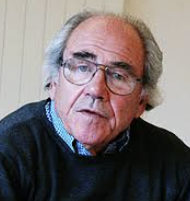
Such would be the successive phases of the image:it is the reflection of a profound reality;it masks and denatures a profound reality;it masks the absence of a profound reality;it has no relation to any reality whatsoever: it is its own pure simulacrum.In the first case, the image is a good appearance-representation is of the sacramental order. In the second, it is an evil appearance-it is of the order of maleficence. In the third, it plays at being an appearance-it is of the order of sorcery. In the fourth, it is no longer of the order of appearances, but of simulation.

3 months 1 week ago
Even when he turns from religion, man remains subject to it; depleting himself to create false gods, he then feverishly adopts them; his need for fiction, for mythology triumphs over evidence and absurdity alike.

3 months 2 weeks ago
[France is] a Country where the people, along with their political servitude, have thrown off the Yoke of Laws and morals.
▼
Source
source
Letter to William Windham (27 September 1789), quoted in Alfred Cobban and Robert A. Smith (eds.), The Correspondence of Edmund Burke, Volume VI: July 1789-December 1791 (1967), p. 25
4 months 2 weeks ago
A European who goes to New York and Chicago sees the future... when he goes to Asia he sees the past.
▼
Source
source
Ch. 8: Eastern and Western Ideals of Happiness
4 months 2 weeks ago
Man is a credulous animal, and must believe something; in the absence of good grounds for belief, he will be satisfied with bad ones.

3 months 2 weeks ago
The French want no-one to be their superior. The English want inferiors. The Frenchman constantly raises his eyes above him with anxiety. The Englishman lowers his beneath him with satisfaction.
▼
Source
source
Journeys to England and Ireland (1835).
2 months ago
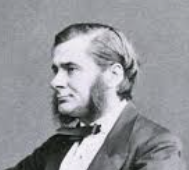
Scientific men get an awkward habit - no, I won't call it that, for it is a valuable habit - of believing nothing unless there is evidence for it; and they have a way of looking upon belief which is not based upon evidence, not only as illogical, but as immoral.
▼
Source
source
Thomas Henry Huxley. "Lectures on Evolution Title: This is Essay# 3 from" Science and Hebrew Tradition." (1882); as cited in: William Trufant Foster, (1908) Argumentation and debating, p. 55

3 months 3 weeks ago
The Divine light is always in man, presenting itself to the senses and to the comprehension, but man rejects it.
▼
Source
source
As quoted in Life and Teachings of Giordano Bruno : Philosopher, Martyr, Mystic 1548 - 1600 (1913) by Coulson Turnbull
4 months 2 weeks ago
If the Communists conquered the world, it would be very unpleasant for a while, but not forever. But if the human race is wiped out, that is the end.
▼
Source
source
Television interview on March 24, 1958, as quoted in The United States in World Affairs (1959), p. 12

4 months 2 weeks ago
Love is of all the passions the strongest, for it attacks simultaneously the head, the heart, and the body.
▼
Source
source
Le Dernier Volume Des Œuvres De Voltaire: Contes - Comédie - Pensées - Poésies - Lettres, 1862
5 months 1 week ago
I do see one large and grievous kind of ignorance, separate from the rest, and as weighty as all the other parts put together. Thinking that one knows a thing when one does not know it. Through this, I believe, all the mistakes of the mind are caused in all of us.

2 months 3 weeks ago
Every daring attempt to make a great change in existing conditions, every lofty vision of new possibilities for the human race, has been labelled Utopian.
▼
Source
source
"Socialism: Caught in the Political Trap", a lecture (c. 1912), published in Red Emma Speaks, Part 1 (1972) edited by Alix Kates Shulman
2 weeks 1 day ago
My entire soul is a cry, and all my work the commentary on that cry.
▼
Source
source
Author's Introduction, p. 15
5 months 1 week ago
And the true order of going, or being led by another, to the things of love, is to begin from the beauties of earth and mount upwards for the sake of that other beauty, using these steps only, and from one going on to two, and from two to all fair forms to fair practices, and from fair practices to fair notions, until from fair notions he arrives at the notion of absolute beauty, and at last knows what the essence of beauty is.
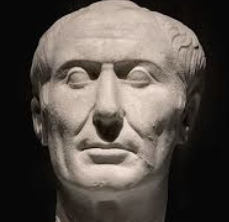
2 months 1 week ago
Amid a multitude of projects, no plan is devised.
▼
Source
source
Maxim 319
3 months 1 day ago
I do not think discursively. It is not so much that I arrive at truth as that I take my start from it.
▼
Source
source
Introduction
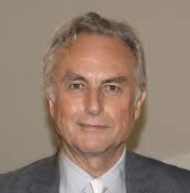
2 months 1 week ago
What worries me about religion is that it teaches people to be satisfied with not understanding the world they live in.
▼
Source
source
Heart Of The Matter: God Under The Microscope | BBC
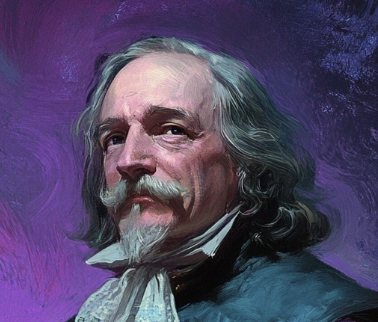
3 months 1 week ago
Hereby it is manifest, that during the time men live without a common Power to keep them all in awe, they are in that conditions called Warre; and such a warre, as is of every man, against every man.
▼
Source
source
The First Part, Chapter 13, p. 62
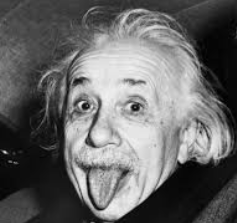
5 days ago
The whole of science is nothing more than a refinement of every day thinking.
▼
Source
source
"[https://www.sciencedirect.com/science/article/abs/pii/S0016003236910475 Physics and Reality]" (as translated by Jean Piccard) in the Journal of the Franklin Institute Vol. 221, Issue 3 (March 1936), at p. 349
1 month 3 weeks ago
Language steps in where the angels of experience fear to tread.
▼
Source
source
Chapter 1, The Faces of Silence, p. 5

4 months 1 week ago
But ordinary language is all right.
▼
Source
source
p. 28
3 weeks 3 days ago
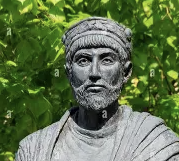
I think he who knows himself will know accurately, not the opinion of others about him, but what he is in reality... he ought to discover within himself what is right for him to do and not learn it from without...
▼
Source
source
Oration to the Cynic Heracleios

4 weeks 1 day ago
And what is freedom, you ask? It means not being a slave to any circumstance, to any constraint, to any chance; it means compelling Fortune to enter the lists on equal terms.

2 months 4 weeks ago
It seemed perfectly possible that, in spite of my certainty of my own genius, I might die of some illness, or perhaps even in a street accident, before I had ever glimpsed the meaning of life. My moods of happiness and self-confidence convinced me that I had a "destiny" to become a famous writer, and to be remembered as one of the most important thinkers of the century.
▼
Source
source
p. 67
4 months 2 weeks ago
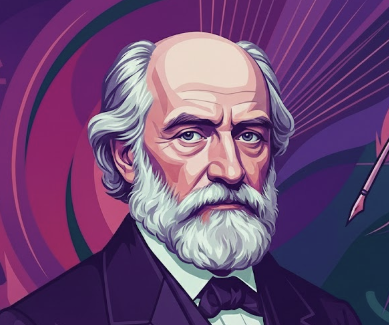
Christianity taught only what the whole of Asia knew already long before and even better.
▼
Source
source
quoted in Londhe, S. (2008). A tribute to Hinduism: Thoughts and wisdom spanning continents and time about India and her culture. New Delhi: Pragun Publication.
3 months 2 weeks ago
The debates of that great assembly are frequently vague and perplexed, seeming to be dragged rather than to march, to the intended goal. Something of this sort must, I think, always happen in public democratic assemblies.
▼
Source
source
Book One, Chapter XXI.

2 weeks 1 day ago
This enterprise is for the young; for those who can follow it up, and bear it through to its consummation. It shall have all my prayers, & these are the only weapons of an old man.

2 months 2 weeks ago
When the Indians complain that the English have enslaved them it is as if drunkards complained that the spirit-dealers who have settled among them have enslaved them. You tell them that they might give up drinking, but they reply that they are so accustomed to it that they cannot abstain, and that they must have alcohol to keep up their energy. Is it not the same thing with the millions of people who submit to thousands or even to hundreds, of others - of their own or other nations? If the people of India are enslaved by violence it is only because they themselves live and have lived by violence, and do not recognize the eternal law of love inherent in humanity.
▼
Source
source
V
2 months 4 weeks ago
Eros and depression are opposites.
4 months 2 weeks ago
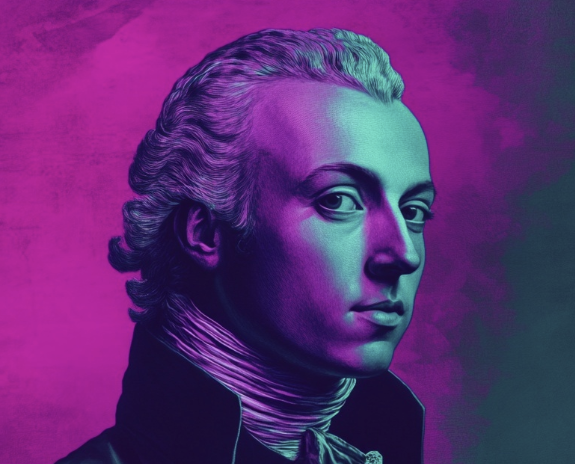
Since men in their endeavors behave, on the whole, not just instinctively, like the brutes, nor yet like rational citizens of the world according to some agreed-on plan, no history of man conceived according to a plan seems to be possible, as it might be possible to have such a history of bees or beavers. One cannot suppress a certain indignation when one sees men's actions on the great world-stage and finds, beside the wisdom that appears here and there among individuals, everything in the large woven together from folly, childish vanity, even from childish malice and destructiveness. In the end, one does not know what to think of the human race, so conceited in its gifts.
▼
Source
source
Introduction
2 months 2 weeks ago
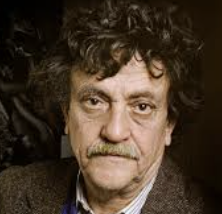
If you are going to be a writer, you must be paranoid. The thing is, in the arts if you don't overreact, you fall asleep.
2 months 1 week ago
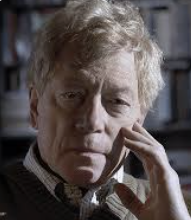
The core of common culture is religion. Tribes survive and flourish because they have gods, who fuse many wills into a single will, and demand and reward the sacrifices on which social life depends.
▼
Source
source
"Culture and Cult" (p. 5)
CivilSimian.com created by AxiomaticPanic, CivilSimian, Kalokagathia