
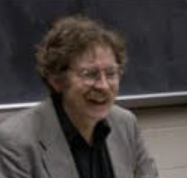
David Wood — The Philosopher of Deconstruction, Ethics, and the Question of Responsibility (1946– )
David Wood is a philosopher of responsibility in an unstable world — a thinker who explores what it means to act, decide, and judge when certainty is impossible. Drawing deeply from continental philosophy, he examines how ethics, language, and interpretation intertwine, arguing that moral life begins precisely where rules run out.
A Thinker Formed by Continental Philosophy
Educated in Britain and influenced by European thought, Wood became a major interpreter of phenomenology and deconstruction, especially the work of Heidegger and Derrida. Rather than treating philosophy as abstract system-building, he approaches it as a reflective practice — one that interrogates how we understand meaning, truth, and obligation.
His work bridges traditions, bringing continental insights into dialogue with Anglo-American philosophical concerns.
“Responsibility begins where calculation ends.”
Ethics Without Guarantees
One of Wood’s central claims is that genuine ethical decisions cannot be reduced to formulas. If a rule determines an action completely, then no real decision has occurred — only compliance.
Real responsibility arises in situations of uncertainty, where competing values cannot be perfectly reconciled. Moral life, therefore, is inseparable from risk.
Ethics is not a system that eliminates ambiguity; it is the practice of navigating it.
“To decide is to act without the safety of certainty.”
Time, Finitude, and the Human Condition
Like many thinkers influenced by existential philosophy, Wood emphasizes finitude — the fact that human beings are temporal, limited, and mortal.
Our decisions matter precisely because they are irreversible. The future is open, but the past cannot be undone. Ethical seriousness grows from this asymmetry.
Time is not merely a backdrop to action; it is the condition that gives action significance.
“Finitude is not a defect of existence — it is what makes meaning possible.”
Deconstruction as Ethical Practice
Wood interprets deconstruction not as destruction, but as attentive reading — a method for uncovering hidden assumptions in texts, institutions, and moral claims.
By exposing tensions within our concepts, deconstruction does not paralyze action; it deepens responsibility. It reminds us that every decision excludes alternatives, and that this exclusion demands reflection.
Critical thought, in this sense, is itself an ethical discipline.
“Thinking carefully is already a moral act.”
Philosophy and the World to Come
Wood has also explored environmental philosophy and the ethics of future generations. He argues that responsibility extends beyond present individuals to those who do not yet exist.
To act ethically today is to take into account consequences that outlive us. Moral imagination must therefore stretch across time, recognizing that the future is shaped by decisions made in the present.
Ethics becomes intergenerational stewardship.
Legacy — The Courage to Decide
David Wood’s philosophy does not promise certainty, comfort, or final answers. Instead, it calls for intellectual honesty about the fragility of our judgments.
His work reminds us that responsibility is not the possession of perfect knowledge, but the willingness to act thoughtfully without it.
In a world that often demands simple answers, Wood defends the harder virtue: reflective decision in the face of complexity.
“We become responsible not when doubt disappears, but when we choose despite it.”
CivilSimian.com created by AxiomaticPanic, CivilSimian, Kalokagathia