
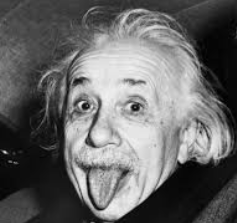
Albert Einstein
Member for
4 months 1 weekAlbert Einstein — Relativity, Spinoza's God, and the Moral Weight of the Atomic Age (1879–1955)
Albert Einstein was a German-born theoretical physicist — born in Ulm in 1879 to a non-observant Jewish family, educated in Switzerland after failing the entrance exam to Zurich's Federal Polytechnic School on his first attempt, employed as a patent clerk in Bern when he produced, in his "miracle year" of 1905, four papers that transformed the foundations of physics — who became the most famous scientist of the twentieth century, a refugee from Nazi Germany, an American citizen, a lifelong philosophical thinker whose views on God, determinism, ethics, and politics were as seriously developed as they were widely misunderstood, and the man whose name was most associated with the atomic bomb despite having played no role in building it.
He spent half his life's energy on physics and the other half — by his own account — on the struggle for peace. He was a pacifist who signed the letter that initiated the Manhattan Project, a determinist who insisted on moral responsibility, a Zionist who never stopped advocating for Palestinian Arab rights, a democratic socialist who detested both authoritarianism and what he considered the predatory phase of capitalist development, and a deeply religious unbeliever who worshipped "Spinoza's God" — the lawful harmony of the universe — while finding traditional religious claims about personal providence philosophically untenable.
His central concern, stated simply: "Without 'ethical culture' there is no salvation for humanity."
The Physics — What He Actually Did
Einstein's scientific achievement was extraordinary by any measure. In 1905, working as a patent clerk with no academic position, he published four papers in a single year: one explaining Brownian motion and thereby providing the first direct evidence for the existence of atoms; one explaining the photoelectric effect in terms of light quanta — the work for which he actually received his Nobel Prize in 1921; one establishing special relativity, dissolving the concepts of absolute space and time that had structured physics since Newton; and one deriving E=mc² — the relationship between energy and mass that would ultimately underlie both nuclear power and nuclear weapons.
In 1915 he published the general theory of relativity — a new theory of gravitation that replaced Newton's by treating gravity not as a force acting across space but as the curvature of spacetime itself, caused by the presence of mass and energy. The 1919 observation of light bending around the sun during a solar eclipse, confirming a prediction of general relativity, made him an overnight celebrity of a kind that no scientist had experienced before. "Pope of physics," newspapers declared. Crowds mobbed him wherever he appeared. For the rest of his life, his face was the face of science itself in the popular imagination.
"Imagination is more important than knowledge. Knowledge is limited. Imagination encircles the world."
Spinoza's God — The Religious Philosophy
Einstein's religious views were the subject of constant misrepresentation and he spent considerable energy clarifying them. He was not an atheist — he criticized "fanatical atheists" for missing the profound mystery and beauty of the universe. He was not an orthodox believer in any conventional sense. He was a Spinozist: he believed in "Spinoza's God, who reveals Himself in the lawful harmony of the world, not in a God who concerns Himself with the fate and doings of mankind."
For Einstein, the universe's rational structure — the fact that mathematical equations written on paper described the behavior of distant galaxies — produced in him a form of religious feeling he called "cosmic religiosity": awe at the intelligibility of the universe, reverence for the order it contained, and the conviction that this order was worth a lifetime of investigation. The universe did not need a personal God to be sacred — its lawfulness was itself the proper object of something like worship.
He rejected personal immortality, divine reward and punishment, and religious claims about cosmic purpose. He accepted determinism fully: all events, including human thoughts and actions, were determined by prior causes. This created a philosophical tension with moral responsibility that he acknowledged but did not resolve to everyone's satisfaction — including his own, as his response to Nazi atrocities showed. When he declared that "the Germans as an entire people are responsible for these mass murders," he was applying the language of moral responsibility in a way that sat uneasily with his philosophical determinism.
"A knowledge of the existence of something we cannot penetrate, of the manifestations of the profoundest reason and the most radiant beauty — it is this knowledge and this emotion that constitute the truly religious attitude; in this sense, and in this alone, I am a deeply religious man."
The Ethics — Sympathy, Education, and Social Ties
Einstein's ethical position was secular and humanist. He insisted that ethics was "an exclusively human concern with no superhuman authority behind it" — that moral behavior should be grounded in "sympathy, education, and social ties," not in fear of divine punishment or hope of divine reward. A person who needed the threat of hell or the promise of heaven to behave decently was, in his view, in a poor way indeed.
His ethics connected to his politics in consistent ways. The "exaggerated sense of self-importance" — of individuals, classes, or nations — was in his view the main source of human disharmony. The corrective was not more religion but more genuine understanding of human interdependence: the recognition that the boundaries between self and other, between one nation and another, were less real than they appeared. His commitment to civil rights, to refugees, to Palestinian Arabs, to McCarthyism's victims — all reflected a consistent application of this principle.
"A man's ethical behaviour should be based effectually on sympathy, education, and social ties; no religious basis is necessary. Man would indeed be in a poor way if he had to be restrained by fear and punishment and hope of reward after death."
The Pacifism and the Letter — The Central Contradiction
The most philosophically significant episode of Einstein's life was not a scientific discovery but a political decision: his signing of the 1939 letter to President Roosevelt, co-written with physicist Leo Szilard, warning that Germany might develop an atomic bomb and urging the United States to initiate its own nuclear program.
Einstein had been a committed pacifist for decades — "I am an absolute pacifist," he had declared in the 1920s. His position evolved under the pressure of events: he had proposed in 1933 that the victorious powers occupy Germany to prevent Hitler's consolidation — a proposal ignored at the time but acknowledged by Goebbels as the one intervention that could have stopped Nazi rearmament. By 1939, with evidence of German nuclear research, he concluded that a pacifism that left the less aggressive nations defenseless against the more aggressive was not principled but suicidal.
He signed the letter. The Manhattan Project that followed — which he did not work on, being excluded by the Army on the grounds that his pacifism made him a security risk — produced the bombs that destroyed Hiroshima and Nagasaki. Einstein was devastated. He spent the rest of his life insisting that his participation had consisted of "a single act" — signing the letter — and arguing that the existence of nuclear weapons made world government not an idealism but a necessity.
His last act was the Russell-Einstein Manifesto, signed a week before his death in 1955, calling on the world's scientists to renounce work on weapons of mass destruction — and which directly led to the Pugwash Conferences on Science and World Affairs.
"My participation in the production of the atom bomb consisted in a single act: I signed a letter to President Roosevelt. I did not see any other way out, although I always was a convinced pacifist. To kill in wartime, it seems to me, is in no ways better than common murder."
Why Socialism? — The Political Philosophy
Einstein's 1949 Monthly Review essay "Why Socialism?" — written for a Marxist publication by a man who was emphatically not a Marxist — was his most sustained political-philosophical statement. He described capitalism as "the predatory phase of human development," characterized by the concentration of economic power, the deliberate crippling of working people's critical faculties by an educational system designed to serve economic interests, and a structural tendency toward militarism and war.
His socialism was not Soviet-style state ownership but a democratic socialism organized to prevent the predatory concentration of private power while preserving political liberty. He was as hostile to Soviet authoritarianism as to McCarthyism — both represented, in his analysis, the subordination of human beings to non-human forces: military, economic, ideological. The FBI kept a file on him of several thousand pages.
"It is characteristic of the military mentality that non-human factors — atom bombs, strategic bases, weapons of all sorts, the possession of raw materials — are held essential, while the human being, his desires and thoughts — in short, the psychological factors — are considered as unimportant and secondary."
Legacy — The Face of Science, the Weight of the Bomb
Einstein died in Princeton in 1955 at seventy-six, having declined surgery for an aortic aneurysm with the remark that it was "tasteless to prolong life artificially" and that he had "done his share" and was "ready to go." The New Humanist magazine — the periodical of the British Rationalist Press — was at the top of his reading pile.
His scientific legacy is secure and enormous. His philosophical legacy is more contested — claimed by humanists for his secular ethics, by religious believers for his cosmic religiosity, by socialists for "Why Socialism?", by Zionists and their critics for his complex positions on Israel and Palestine. What is harder to claim away is the biographical fact: that the most famous scientist in history spent as much of himself on the question of how human beings should live together as on the question of how the universe was structured, and that the two questions, for him, were never entirely separate.
On CivSim he belongs alongside Bertrand Russell, Niels Bohr, and John Tyndall — scientists whose physics made demands on their philosophy and whose philosophy demanded engagement with the politics of their time. His challenge to Universal Humanism is the challenge of the atomic age: that scientific knowledge can outrun ethical culture, that the capacity to destroy civilization can be created before the institutions capable of governing it are built, and that without those institutions — world governance adequate to the scale of the weapons available — "ethical culture" remains insufficient to prevent catastrophe.
"Without 'ethical culture' there is no salvation for humanity. The most important human endeavor is the striving for morality in our actions. Our inner balance and even our very existence depends on it. Only morality in our actions can give beauty and dignity to life."
CivilSimian.com created by AxiomaticPanic, CivilSimian, Kalokagathia