


4 months 2 weeks ago
A multitude is irreducible multiplicity; the singular social differences that constitute the multitude must always be expressed and can never be flattened into sameness, unity, identity, or indifference. ... the compact identities of factory workers in the dominant countries have been undermined with the rise of short-term contracts and forced mobility of new forms of work; how migration has challenged traditional notions of national identity; how family identity has changed and so forth.
▼
Source
source
105

7 months ago
I understand Being in all and over all, as there is nothing without participation in Being, and there is no being without Essence. Thus nothing can be free of the Divine Presence.
▼
Source
source
As quoted in "Giordano Bruno" - Theosophy Vol. 26, No. 8

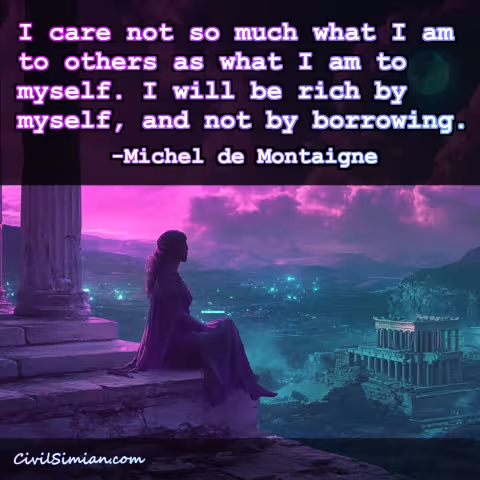

8 months 1 day ago
Furthermore, how will you endure the Romanists' terrible idolatries? It was not enough that they venerated the saints and praised God in them, but they actually made them into gods. They put that noble child, the mother Mary, right into the place of Christ. They fashioned Christ into a judge and thus devised a tyrant for anguished consciences, so that all comfort and confidence was transferred from Christ to Mary, and then everyone turned from Christ to his particular saint. Can anyone deny this? Is it not true?
▼
Source
source
Luther's Works, 47:45; cf. also Anderson, Stafford & Burgess (1992), p. 29

8 months 3 weeks ago
Probably, the most-often-repeated lesson in history is that foreigners who are called in to help one side in a civil war take over for themselves. It is a lesson that seems never to be learned despite endless repetition.

6 months 1 week ago
If things are deprived of memory, they become information or commodities. They are pushed into a time-free, ahistorical place.
4 months 3 days ago
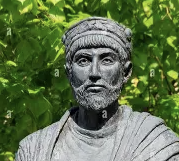
No wild beasts are such enemies to mankind as are most of the Christians in their deadly hatred of one another.
▼
Source
source
Reported in Ammianus, Res gestae, bk. 22, ch. 5, sec. 4

4 months 2 weeks ago
The Left's identity politics poses a threat to free speech and to the kind of rational discourse needed to sustain a democracy... The focus on lived experience by identity groups prioritizes the emotional world of the inner self over the rational examination of issues in the outside world and privileges sincerely held opinions over a process of reasoned deliberation that may force one to abandon prior opinions.
▼
Source
source
Against Identity Politics (14 August 2018), Foreign Affairs
3 months 3 weeks ago
In order to be transmuted into knowledge, every perception is and must be ordered and organized into categories. The extent, however, to which we can organize and express our experience in such conceptual forms is, in turn, dependent upon the frames of reference which happen to be available at a given historical moment. The concepts which we have and the universe of discourse in which we move, together with the directions in which they tend to elaborate themselves, are dependent largely upon the historical-social situation of the intellectually active and responsible members of the group.

6 months 3 weeks ago
We have, indeed, in the part taken by many scientific men in this controversy of "Law versus Miracle," a good illustration of the tenacious vitality of superstitions. Ask one of our leading geologists or physiologists whether he believes in the Mosaic account of the creation, and he will take the question as next to an insult. Either he rejects the narrative entirely, or understands it in some vague non-natural sense. ...Whence ...this notion of "special creations"...Why, after rejecting all the rest of the story, he should strenuously defend this last remnant of it, as though he had received it on valid authority, he would be puzzled to say.
6 months 1 week ago
Happiness is the proof that time can accommodate eternity.
7 months 3 weeks ago
Mr. Sensible learned only catchwords from them. He could talk like Epicurus of spare diet, but he was a glutton. He had from Montaigne the language of friendship, but no friend.
▼
Source
source
Pilgrim's Regress 176
6 months 1 week ago
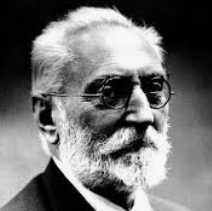
The only way to give finality to the world is to give it consciousness. For where there is no consciousness there is no finality, finality presupposing a purpose. And... faith in God is based simply upon the vital need of giving finality to existence, of making it answer to a purpose. We need God, not in order to understand the why, but in order to feel and sustain the ultimate wherefore, to give a meaning to the Universe.
3 months 3 weeks ago
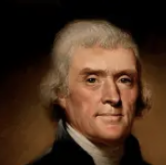
It is literally true that the toleration of banks of paper discount costs the United States one-half their war taxes; or, in other words, doubles the expenses of every war. Now think but for a moment, what a change of condition that would be, which should save half our war expenses, require but half the taxes, and enthral us in debt but half the time.
▼
Source
source
ME 13:364

5 months ago
The repression of liberty that took place in the countries in which Communist regimes were established cannot be adequately explained as a product of backwardness, or of errors in the application of Marxian theory. It was the result of a resolute attempt to realize an Enlightenment utopia - a condition of society in which no serious form of conflict any longer exists.
▼
Source
source
'Isaiah Berlin: The Value of Decency' (p.99)

6 months 3 weeks ago
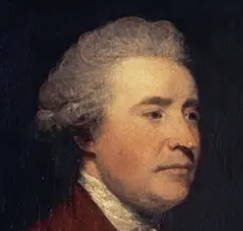
They made and recorded a sort of institute and digest of anarchy, called the rights of man, in such a pedantic abuse of elementary principles as would have disgraced boys at school; but this declaration of rights was worse than trifling and pedantic in them; as by their name and authority they systematically destroyed every hold of authority by opinion, religious or civil, on the minds of the people. By this mad declaration they subverted the state; and brought on such calamities as no country, without a long war, has ever been known to suffer, and which may in the end produce such a war, and perhaps, many such.
▼
Source
source
Speech in the House of Commons (9 February 1790), quoted in The Parliamentary History of England, From the Earliest Period to the Year 1803, Vol. XXVIII (1816), column 358

7 months 1 week ago
Strength of body is nobility in beasts of burden, strength of character is nobility in men.

7 months 3 weeks ago
The measure of action is the sentiment from which it proceeds. The greatest action may easily be one of the most private circumstance.
▼
Source
source
Goethe; or, The Writer

3 months 2 weeks ago
Understand however that every man is worth just so much as the things are worth about which he busies himself.
▼
Source
source
VII, 3

6 months 2 weeks ago
Illusion begets and sustains the world; we do not destroy one without destroying the other. Which is what I do every day. An apparently ineffectual operation, since I must begin all over again the next day.

6 months 6 days ago
What is patriotism? Is it love of one's birthplace, the place of childhood's recollections and hopes, dreams and aspirations? Is it the place where, in childlike naïveté, we would watch the passing clouds, and wonder why we, too, could not float so swiftly? The place where we would count the milliard glittering stars, terror-stricken lest each one "an eye should be," piercing the very depths of our little souls?
8 months 1 day ago
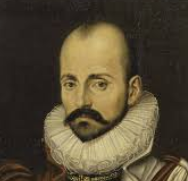
No wind serves him who addresses his voyage to no certain port.
▼
Source
source
Book II, Ch. 1
8 months 1 day ago
A person must take care to exercise moderate discipline over the body and subject it to the Spirit by means of fasting, vigils, and labor. The goal is to have the body obey and conform - and not hinder - the inner person and faith. Unless it is held in check, we know it is the nature of the body to undermine faith and the inner person.
▼
Source
source
pp. 71-72

4 months 2 weeks ago
Alas! the fearful Unbelief is unbelief in yourself.
▼
Source
source
Bk. II, ch. 7.
4 months 4 days ago
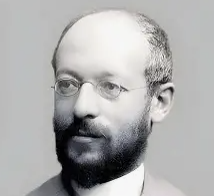
The most profound reason... why the metropolis conduces to the urge for the most individual personal existence... appears to me to be the following: the development of modern culture is characterized by the preponderance of what one may call the "objective spirit" over the "subjective spirit."
▼
Source
source
p. 421 as cited in: Kenneth Allan (2009) Explorations in Classical Sociological Theory: Seeing the Social World. p. 212
4 months 4 days ago
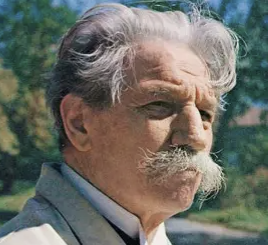
We came to a tree which was still bare, and on which the birds were singing out gaily in the morning, without any fear of us. Then stooping over like an Indian on the hunt, my companion placed a pebble in the leather of his sling and stretched it. Obeying his peremptory glance I did the same, with frightful twinges of conscience, vowing firmly that I would shoot when he did. At that very moment the church bells began to sound, mingling with the song of the birds in the sunshine. It was the warning bell that came a half-hour before the main bell. For me it was a voice from heaven. I threw the sling down, scaring the birds away, so that they were safe from my companion's sling, and fled home. And ever afterwards when the bells of Holy Week ring out amidst the leafless trees in the sunshine I remember with moving gratitude how they rang into my heart at that time the commandment: Thou shalt not kill.

6 months 3 weeks ago
They showed me their trees, and I could not understand the intense love with which they looked at them; it was as though they were talking with creatures like themselves. And perhaps I shall not be mistaken if I say that they conversed with them. Yes, they had found their language, and I am convinced that the trees understood them. They looked at all Nature like that - at the animals who lived in peace with them and did not attack them, but loved them, conquered by their love. They pointed to the stars and told me something about them which I could not understand, but I am convinced that they were somehow in touch with the stars, not only in thought, but by some living channel.

5 months 3 weeks ago
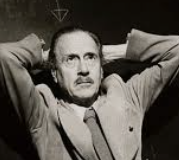
All media work us over completely. They are so pervasive in their personal, political, economic, aesthetic, psychological, moral, ethical, and social consequences that they leave no part of us untouched, unaffected, unaltered. The medium is the massage. Any understanding of social and cultural change is impossible without a knowledge of the way media work as environments. All media are extensions of some human faculty - psychic or physical.
▼
Source
source
(p. 26)
6 months 6 days ago
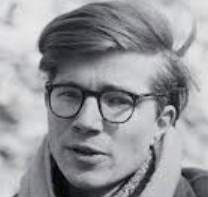
Cézanne's painting is strictly painting, and its value is immense; but Van Gogh's painting has the Outsider's characteristic: it is a laboratory refuse of a man who treated his own life as an experiment in living; it faithfully records moods and developments of vision on the manner of a Bildungsroman.
▼
Source
source
p. 103
7 months 3 weeks ago
Try to exclude the possibility of suffering which the order of nature and the existence of free-wills involve, and you find that you have excluded life itself.
7 months 3 weeks ago
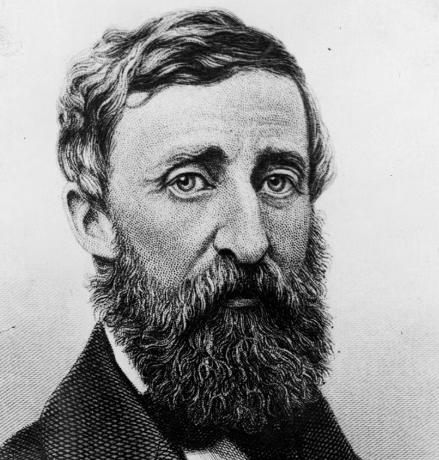
I heartily accept the motto, "That government is best which governs least"; and I should like to see it acted up to more rapidly and systematically. Carried out, it finally amounts to this, which also I believe - "That government is best which governs not at all"; and when men are prepared for it, that will be the kind of government which they will have.
4 months 2 weeks ago
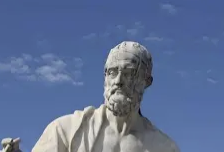
How highly should we honor the Macedonians, who for the greater part of their lives never cease from fighting with the barbarians for the sake of the security of Greece? For who is not aware that Greece would have constantly stood in the greater danger, had we not been fenced by the Macedonians and the honorable ambition of their kings?
▼
Source
source
Histories, IX, 35:2 (Loeb)
3 months 3 weeks ago
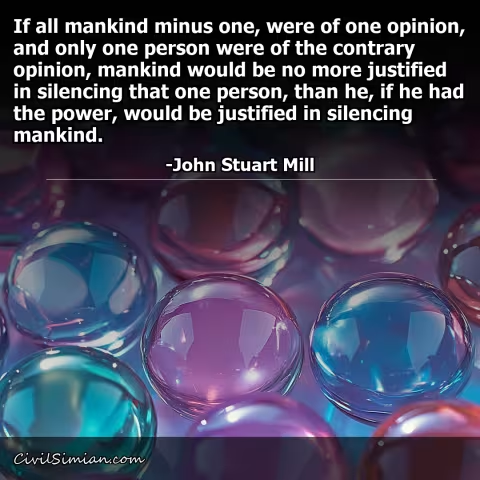
If there be any among us who would wish to dissolve this Union or to change its republican form, let them stand undisturbed as monuments of the safety with which error of opinion may be tolerated where reason is left free to combat it.
6 months 3 weeks ago
...what was done in France was a wild attempt to methodize anarchy; to perpetuate and fix disorder. That it was a foul, impious, monstrous thing, wholly out of the course of moral nature. He undertook to prove, that it was generated in treachery, fraud, falsehood, hypocrisy, and unprovoked murder. ... That by the terror of assassination they had driven away a very great number of the members, so as to produce a false appearance of a majority.-That this fictitious majority had fabricated a constitution, which as now it stands, is a tyranny far beyond any example that can be found in the civilized European world of our age.
▼
Source
source
p. 376
6 months 2 weeks ago
To confuse our own constructions and inventions with eternal laws or divine decrees is one of the most fatal delusions of men.
▼
Source
source
Essays in Honour of E. H. Carr (1974) edited by Chimen Abramsky, p. 9

3 months 3 weeks ago
One cannot reduce terror by holding over the world the threat of what it most fears.

7 months 2 weeks ago
Oh. Marx's love for Shakespeare! It is well known. Chris Hani shared the same passion. I have just learned this and I like the idea. Even though Marx more often quotes Timon of Athens, the Manifesto seems to evoke or convoke, right from the start, the first coming of the silent ghost, the apparition of the spirit that does not answer, on those ramparts of Elsinore which is then the old Europe.
▼
Source
source
Injunctions of Marx
7 months 2 weeks ago
Subjects who reciprocally recognize each other as such, must consider each other as identical, insofar as they both take up the position of subject; they must at all times subsume themselves and the other under the same category. At the same time, the relation of reciprocity of recognition demands the non-identity of one and the other, both must also maintain their absolute difference, for to be a subject implies the claim of individuation.
▼
Source
source
Habermas (1972) "Sprachspiel, intention und Bedeutung. Zu Motiven bei Sellars und Wittgenstein". In R.W. Wiggerhaus (Ed.) Sprachanalyse and Soziologie. Frankfurt: Suhrkamp). p. 334 This is called the paradoxical achievement of intersubjectivity

6 months 4 weeks ago
But how shall we expect charity towards others, when we are uncharitable to ourselves? Charity begins at home, is the voice of the world, yet is every man his greatest enemy, and as it were, his own executioner.
▼
Source
source
Section 4
5 months 2 weeks ago
Let us try to teach generosity and altruism, because we are born selfish. Let us understand what our own selfish genes are up to, because we may then at least have a chance to upset their designs, something that no other species has ever aspired to do.
▼
Source
source
Ch. 1. Why Are People?

8 months 6 days ago
As to the objection that these rules are common in the world, that it is necessary to define every thing and to prove every thing, and that logicians themselves have placed them among their art, I would that the thing were true and that it were so well known... But so little is this the case, that, geometricians alone excepted, who are so few in number that they are a single in a whole nation and long periods of time, we see no others that know it.
6 months 1 week ago
Elements of empirical language are manipulated in their rigidity, as if they were elements of a true and revealed language. The empirical usability of the sacred ceremonial words makes both the speaker and listener believe in their corporeal presence.
▼
Source
source
p. 7
5 months 3 weeks ago
Privacy invasion is now one of biggest knowledge industries.
▼
Source
source
(p. 24)
CivilSimian.com created by AxiomaticPanic, CivilSimian, Kalokagathia