


2 months 1 week ago
There can be little question that good composition is far less dependent upon acquaintance with its laws, than upon practice and natural aptitude. A clear head, a quick imagination, and a sensitive ear, will go far towards making all rhetorical precepts needless.
▼
Source
source
Pt. I, sec. 1, "The Principle of Economy"
1 month 3 weeks ago
Morally, it is wrong to suppose the source of evil is outside oneself, that one is a vessel of holiness running over with virtue. Such a disposition is the best soil for a hateful and cruel fanaticism. It is as wrong to impute every wickedness to Jews, Freemasons, "intellectuals," as it is to blame all crimes on the bourgeoisie, the nobility, and the powers that were. No; the root of evil is in me as well, and I must take my share of the responsibility and the blame. That was true before the revolution and it is true still.
▼
Source
source
p. 128

4 months 1 week ago
It is an odd fact that anyone who wishes to start a war must always make it appear that he is fighting in a just cause even if the real motive is naked aggression. Fortunately for the would-be aggressor, a "just cause" is very easy to find.

3 months 2 weeks ago
If the whole of natural theology, as some people seem to maintain, resolves itself into one simple, though somewhat ambiguous, at least undefined proposition, that the cause or causes of order in the universe probably bear some remote analogy to human intelligence: If this proposition be not capable of extension, variation, or more particular explication: If it affords no inference that affects human life, or can be the source of any action or forbearance: And if the analogy, imperfect as it is, can be carried no farther than to the human intelligence, and cannot be transferred, with any appearance of probability, to the other qualities of the mind; if this really be the case, what can the most inquisitive, contemplative, and religious man do more than give a plain, philosophical assent to the proposition, as often as it occurs, and believe that the arguments on which it is established exceed the objections which lie against it?
▼
Source
source
Philo to Cleanthes, Part XII
1 week ago
In a free society the state does not administer the affairs of men. It administers justice among men who conduct their own affairs.
▼
Source
source
Ch. XII: "The Political Principles of Liberalism", §6, p. 267
3 months 1 day ago
To protest about bullfighting in Spain, the eating of dogs in South Korea, or the slaughter of baby seals in Canada while continuing to eat eggs from hens who have spent their lives crammed into cages, or veal from calves who have been deprived of their mothers, their proper diet, and the freedom to lie down with their legs extended, is like denouncing apartheid in South Africa while asking your neighbors not to sell their houses to blacks.
▼
Source
source
Ch. 4: Becoming a Vegetarian

1 month 3 weeks ago
I feel sure that the police are helping us more than I could do in ten years. They are making more anarchists than the most prominent people connected with the anarchist cause could make in ten years. If they will only continue I shall be very grateful; they will save me lots of work.
▼
Source
source
As quoted in "Arrest in Chicago of Emma Goldman, Preacher of Anarchy", The San Francisco Call

3 months 1 week ago
Where is the prince sufficiently educated to know that for seventeen hundred years the Christian sect has done nothing but harm?
▼
Source
source
Letters of Voltaire and Frederick the Great (New York: Brentano's, 1927), transl. Richard Aldington, letter 160 from Voltaire to Frederick II of Prussia, 6 April 1767
2 months 1 day ago
Strictly speaking, the mass, as a psychological fact, can be defined without waiting for individuals to appear in mass formation. In the presence of one individual we can decide whether he is "mass" or not. The mass is all that which sets no value on itself - good or ill - based on specific grounds, but which feels itself "just like everybody," and nevertheless is not concerned about it; is, in fact, quite happy to feel itself as one with everybody else.
▼
Source
source
Chap.I: The Coming Of The Masses
3 months 6 days ago
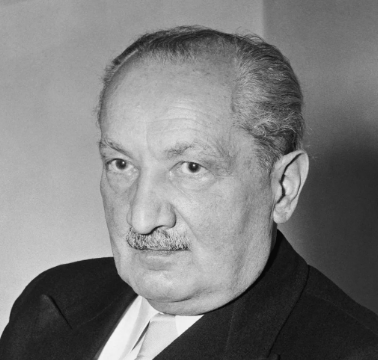
If in Nietzsche's thinking the prior tradition of Western thought is gathered and completed in a decisive respect, then the confrontation with Nietzsche becomes one with all Western thought hitherto.
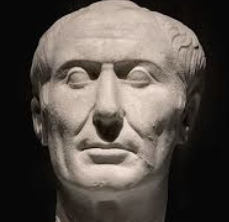
1 month 1 week ago
Practice is the best of all instructors.
▼
Source
source
Maxim 439

2 months 1 week ago
Applaud us when we run, console us when we fall, cheer us when we recover.
▼
Source
source
Speech at Bristol Previous to the Election (6 September 1780), quoted in The Works of the Right Honourable Edmund Burke, Vol. II (1855), p. 129
3 months 5 days ago
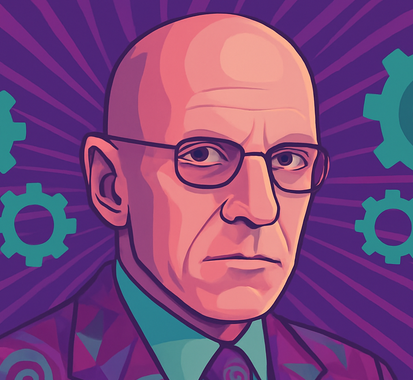
In... "The Education of Children"... Plutarch gives an anecdote of Theocritus, a sophist, as an example of athuroglossos... he is... "a giant in impudence"... strong not because of his reason, or his rhetorical ability... or his ability to pronounce the truth, but only because he is arrogant. ...His fourth trait is... "putting his confidence in bluster." He is confident in thorubos... the noise made by a strong voice, by a scream, a clamor, or uproar. ...The final characteristic ...his confidence in ..."ignorant outspokenness..." ... it lacks mathesis ...-learning or wisdom.
▼
Source
source
Ref: Plutarch, "The Education of Children", Moralia (1927) Vol. 1, Tr. Frank Cole Babbit, p. 4, The Loeb Classical Library, Harvard University Press.
3 months 1 day ago
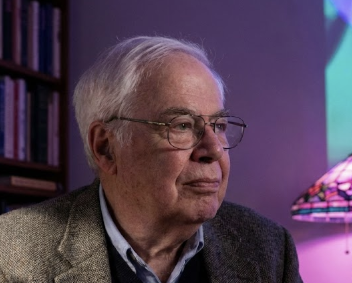
If I had to lay bets, my bet would be that everything is going to go to hell, but, you know, what else have we got except hope?
▼
Source
source
"Richard Rorty Interviewed by Gideon Lewis-Kraus." The Believer, June 2003.
2 months 1 day ago
Socrates reminds us that it is not the same thing, but almost the opposite, to understand religion and to accept it.
▼
Source
source
p. 45
1 month 2 weeks ago
The first task of administrative theory is to develop a set of concepts that will permit the description, in terms relevant to the theory, of administrative situations. These concepts, to be scientifically useful, must be operational; that is, their meanings must correspond to empirically observable facts or situations.
▼
Source
source
p. 43.
2 months 1 week ago
We Shall Naturally look round in vain the macrophysical world for acausal events, for the simple reason that we cannot imagine events that are connected non-causally and are capable of a non-causal explanation. But that does not mean that such events do not exist... The so-called "scientific view of the world" based on this can hardly be anything more than a psychologically biased partial view which misses out all those by no means unimportant aspects that cannot be grasped statistically.
▼
Source
source
p. 5

1 month 3 weeks ago
The reason that people take selfies is not narcissism. Rather, it is inner emptiness. There is no meaning to stabilize the ego. Faced with its inner emptiness, the ego constantly produces itself.
3 months 1 week ago
I asked my guide how it was possible the judicious part of them could suffer such incoherent prating? "We are obliged," said he, "to suffer it, because no one knows, when a brother rises up to hold forth, whether he will be moved by the spirit or by folly. In this uncertainty, we listen patiently to every one. We even allow our women to speak in public; two or three of them are often inspired at the same time, and then a most charming noise is heard in the Lord's house." "You have no priests, then?" said I. "No, no, friend," replied the Quaker; "heaven make us thankful!" Then opening one of the books of their sect, he read the following words in an emphatic tone: "'God forbid we should presume to ordain any one to receive the Holy Spirit on the Lord's day, in exclusion to the rest of the faithful!'
▼
Source
source
Further account of his conversations with Andrew Pit
3 months 1 week ago
One always speaks badly when one has nothing to say.
▼
Source
source
1827
3 months 4 weeks ago
There is no city that is truly one other than this city that we are involved in bringing forth.
3 months 5 days ago
Navigation brought man face to face with the uncertainty of destiny, where each is left to himself and every departure might always be the last. The madman on his crazy boat sets sail for the other world, and it is from the other world that he comes when he disembarks. This enforced navigation is both rigorous division and absolute Passage, serving to underline in real and imaginary terms the liminal situation of the mad in medieval society. It was a highly symbolic role, made clear by the mental geography involved, where the madman was confined at the gates of the cities. His exclusion was his confinement, and if he had no prison other than the threshold itself he was still detained at this place of passage. In a highly symbolic position he is placed on the inside of the outside, or vice versa. A posture that is still his today, if we admit that what was once the visible fortress of social order is now the castle of our own consciousness.
▼
Source
source
Part One: 1. Stultifera Navis
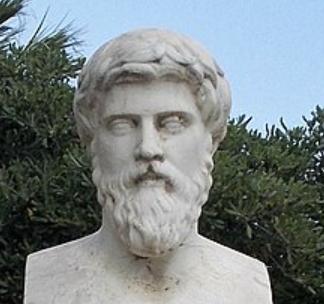
2 months 4 weeks ago
Pyrrhus said, "If I should overcome the Romans in another fight, I were undone."
▼
Source
source
47 Pyrrhus

3 months 1 week ago
My argument against God was that the universe seemed so cruel and unjust. But how had I got this idea of just and unjust? A man does not call a line crooked unless he has some idea of a straight line. What was I comparing this universe with when I called it unjust?
▼
Source
source
Book II, Chapter 1, "The Rival Conceptions of God"
1 month 3 weeks ago
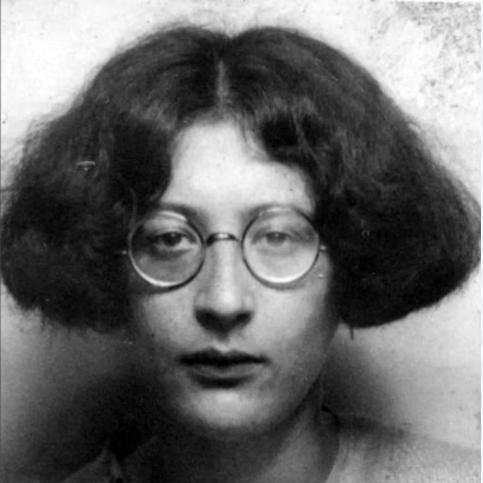
Those who keep the masses of men in subjection by exercising force and cruelty deprive them at once of two vital foods, liberty and obedience; for it is no longer within the power of such masses to accord their inner consent to the authority to which they are subjected. Those who encourage a state of things in which the hope of gain is the principal motive take away from men their obedience, for consent which is its essence is not something which can be sold.
▼
Source
source
p. 97

2 months 6 days ago
If I were asked to summarize as briefly as possible my vision of things, to reduce it to its most succinct expression, I should replace words with an exclamation point, a definitive !

2 months 3 days ago
And that servant, which knew his lord's will, and prepared not himself, neither did according to his will, shall be beaten with many stripes.
▼
Source
source
Luke 12:47 (KJV)
2 months 2 weeks ago
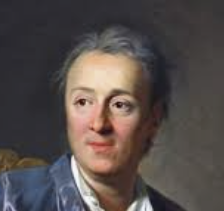
People praise virtue, but they hate it, they run away from it. It freezes you to death, and in this world you've got to keep your feet warm.
2 months 1 day ago
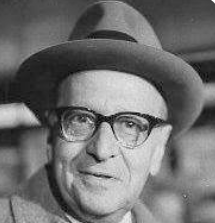
The idea that an aim can be reasonable for its own sake-on the basis of virtues that insight reveals it to have in itself-without reference to some kind of subjective gain or advantage, is utterly alien to subjective reason, even where it rises above the consideration of immediate utilitarian values and devotes itself to reflection about the social order as a whole.
▼
Source
source
p. 4.
1 month 1 week ago
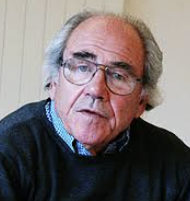
The discourse of truth is quite simply impossible. It eludes itself. Everything eludes itself, everything scoffs at its own truth, seduction renders everything elusive. The fury to unveil the truth, to get at the naked truth, the one which haunts all discourses of interpretation, the obscene rage to uncover the secret, is proportionate to the impossibility of ever achieving this. ...But this rage, this fury, only bears witness to the eternity of seduction and to the impossibility of mastering it.
▼
Source
source
(p. 73)
2 months 3 days ago
Every moment celebrates obsequies over the virtues of its predecessor.
▼
Source
source
Ch. XIV

1 month 1 week ago
When a person is haughty, he distances himself from other people and thereby deprives himself of one of life's biggest pleasures-open, joyful communication with everyone.
▼
Source
source
p. 108
3 months 1 day ago
Philosophy is not politics, and we do our best, within our all-too-human limitations, to seek the truth, not to score points against opponents. There is little satisfaction in gaining an easy triumph over a weak opponent while ignoring better arguments against your views.
▼
Source
source
'Last Generation': A Response, The New York Times, June 16, 2010.
3 months 1 week ago
On the stage on which we are observing it, - Universal History - Spirit displays itself in its most concrete reality.

1 month 3 weeks ago
Now, obviously, the human race is on the point of an extremely interesting evolutionary development. The first step towards escape from this vicious circle is to recognize that the apparent "ordinariness" of the world is a delusion. If we could become deeply and permanently convinced that the world "out there" is endlessly exciting, we would never again allow ourselves to become trapped in the swamp of "taken-for-grantedness". And we would become practically unkillable. Shaw says of his "Ancients" in Back to Methuselah "Even in the moment of death, their life does not fail them". "Life failure" is that feeling that there is nothing new under the sun, and that we all have to accept defeat in the end. If we could learn the mental trick of causing the dynamo to accelerate, this illusion would never again be able to exert its power over us.
▼
Source
source
p. 14

3 months 2 weeks ago
To found a great empire for the sole purpose of raising up a people of customers, may at first appear a project fit only for a nation of shopkeepers. It is however, a project altogether unfit for a nation of shopkeepers; but extremely fit for a nation whose government is influenced by shopkeepers.
▼
Source
source
Chapter VII, Part Third, p. 667.
3 months 1 week ago
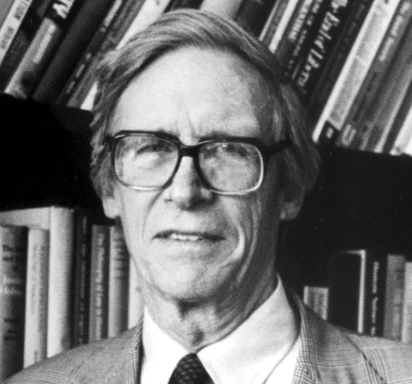
Justice does not require that men must stand idly by while others destroy the basis of their existence.
▼
Source
source
Chapter IV, Section 35, p. 218
1 month 3 weeks ago
The vitality of the ordinary members of society is dependent on its Outsiders.
▼
Source
source
Chapter Three, The Romantic Outsider

3 months 1 week ago
Classics which at home are drowsily read have a strange charm in a country inn, or in the transom of a merchant brig.
▼
Source
source
Voyage to England
3 months 1 week ago
The universal and lasting establishment of peace constitutes not merely a part, but the whole final purpose and end of the science of right as viewed within the limits of reason.
2 months 1 week ago
But as to our country and our race, as long as the well compacted structure of our church and state, the sanctuary, the holy of holies of that ancient law, defended by reverence, defended by power, a fortress at once and a temple, shall stand inviolate on the brow of the British Sion-as long as the British Monarchy, not more limited than fenced by the orders of the State, shall, like the proud Keep of Windsor, rising in the majesty of proportion, and girt with the double belt of its kindred and coeval towers, as long as this awful structure shall oversee and guard the subjected land-so long as the mounds and dykes of the low, fat, Bedford level will have nothing to fear from all the pickaxes of all the levellers of France.
▼
Source
source
pp. 52-53
2 months 1 week ago
Religious persecution may shield itself under the guise of a mistaken and over-zealous piety.
▼
Source
source
Speech in opening the impeachment of Warren Hastings (18 February 1788), quoted in The Works of the Right Honourable Edmund Burke, Volume the Tenth (1899), pp. 7-8

3 months 6 days ago
Nothing is so difficult as not deceiving oneself.
▼
Source
source
p. 34e
4 days ago
To apply oneself to great inventions, starting from the smallest beginnings, is no task for ordinary minds; to divine that wonderful arts lie hid behind trivial and childish things is a conception for superhuman talents.
2 weeks 6 days ago
Don't judge the future of a person based on his present conditions, because time has the power to change black coal to shiny diamond.
3 months 4 weeks ago
The double meaning has been given to suit people's diverse intelligence. The apparent contradictions are meant to stimulate the learned to deeper study.
3 months 1 week ago
Great minds are related to the brief span of time during which they live as great buildings are to a little square in which they stand: you cannot see them in all their magnitude because you are standing too close to them.
▼
Source
source
Vol. 2, Ch. 20, § 242
3 months 1 week ago
All religions promise a reward for excellences of the will or heart, but none for excellences of the head or understanding.
▼
Source
source
E. Payne, trans., vol. 2, p. 230

3 months 1 week ago
Hence money may be dirt, although dirt is not money.
▼
Source
source
Vol. I, Ch. 3, Section 2, pg. 123.

4 months 1 week ago
May I really say it! All truths are bloody truths to me, take a look at my previous writings.
CivilSimian.com created by AxiomaticPanic, CivilSimian, Kalokagathia