

1 month 1 day ago
There is no need to make an inventory of the times. It is demoralizing to describe ourselves to ourselves yet again. It is especially hard on us since we believe (as we have been educated to believe) that history has formed us and that we are all mini-summaries of the present age.
▼
Source
source
Mozart: An Overture (1992), pp. 13-14

3 months 1 week ago
For what avail the plough or sail, Or land or life, if freedom fail?
▼
Source
source
Boston

3 months 1 week ago
Social and economic inequalities, for example inequalities of wealth and authority, are just only if they result in compensating benefits for everyone, and in particular for the least advantaged members of society.
▼
Source
source
p. 14.

3 months 1 week ago
Nothing but the most exemplary morals can give dignity to a man of small fortune.
▼
Source
source
Chapter I, Part III, Article III, p. 874.

3 months 3 weeks ago
Nothing is in the intellect that was not first in the senses.
▼
Source
source
q. 2, art. 3, arg. 19 This is known as the Peripatetic axiom.

3 months 1 week ago
The trouble with fiction... is that it makes too much sense. Reality never makes sense.
▼
Source
source
"John Rivers" in The Genius and the Goddess, 1955
4 months 6 days ago
It is very likely that there are many, many planets carrying life, even intelligent life, throughout the universe, because there are so many stars. By sheer chance, even if those chances are small, a great many life forms and a great many intelligences may exist.
3 months 3 weeks ago
What is the first business of one who practices philosophy? To get rid of self-conceit. For it is impossible for anyone to begin to learn that which he thinks he already knows.
▼
Source
source
Book II, ch. 17, 1.
2 months 1 week ago
The Present Age, according to my view of it, stands in that Epoch which in my former lecture I named the THIRD, and which I characterized as the Epoch of Liberation-directly from the external ruling Authority, indirectly from the power of Reason as Instinct, and generally from Reason in any form; the Age of absolute indifference towards all truth, and of entire and unrestrained licentiousness:-the state of completed sinfulness.
▼
Source
source
p. 16
3 months 1 week ago
Though the principles of the banking trade may appear somewhat abstruse, the practice is capable of being reduced to strict rules. To depart upon any occasion from these rules, in consequence of some flattering speculation of extraordinary gain, is almost always extremely dangerous, and frequently fatal to the banking company which attempts it.
▼
Source
source
Chapter I, Part III, p. 820.

3 months 1 week ago
The infliction of cruelty with a good conscience is a delight to moralists. That is why they invented Hell.
▼
Source
source
Ch. 1: The Value of Scepticism

2 months 1 week ago
The use of force alone is but temporary. It may subdue for a moment; but it does not remove the necessity of subduing again: and a nation is not governed, which is perpetually to be conquered.
3 months 1 week ago
The last peculiarity of consciousness to which attention is to be drawn in this first rough description of its stream is that it is always interested more in one part of its object than in another, and welcomes and rejects, or chooses, all the while it thinks.
▼
Source
source
Ch. 9

4 months 5 days ago
Of course, I had to own that he was right; I didn't feel much regret for what I'd done. Still, to my mind, he overdid it, and I'd have liked to have a chance of explaining to him, in a quite friendly, almost affectionate way, that I have never been able to really regret anything in all my life. I've always been far too much absorbed in the present moment, or the immediate future, to think back.
3 months 1 week ago
The individual, so far as he suffers from his wrongness and criticizes it, is to that extent consciously beyond it, and in at least possible touch with something higher, if anything higher exist. Along with the wrong part there is thus a better part of him, even though it may be but a most helpless germ. With which part he should identify his real being is by no means obvious at this stage; but when stage 2 (the stage of solution or salvation) arrives, the man identifies his real being with the germinal higher part of himself; and does so in the following way. He becomes conscious that this higher part is coterminous and continuous with a more of the same quality, which is operative in the universe outside of him, and which he can keep in working touch with, and in a fashion get on board of and save himself when all his lower being has gone to pieces in the wreck.
▼
Source
source
Lecture XX, "Conclusions"
1 month 4 weeks ago
In the presence of God himself man stands always like a solitary tree in the wilderness.
▼
Source
source
p. 95

1 month 3 weeks ago
Capitalism has brought about the emancipation of collective humanity with respect to nature. But this collective humanity has itself taken on with respect to the individual the oppressive function formerly exercised by nature.
▼
Source
source
p. 140
1 month 4 weeks ago
The Thou encounters me by grace - it cannot be found by seeking. But that I speak the basic word to it is a deed of my whole being, is my essential deed.
1 month 2 weeks ago
Delight at having understood a very abstract and obscure system leads most people to believe in the truth of what it demonstrates.
▼
Source
source
J 77
3 months 1 week ago
Life is a task to be done. It is a fine thing to say defunctus est; it means that the man has done his task.
▼
Source
source
"On the Sufferings of the World"

3 months 1 week ago
But though there be naturally a wide difference in point of delicacy between one person and another, nothing tends further to encrease and improve this talent, than practice in a particular art, and the frequent survey or contemplation of a particular species of beauty.

1 month 6 days ago
Radio comes to us ostensibly with person to person directness that is private and intimate, while in more urgent fact, it is really a subliminal echo chamber of magic power to touch remote and forgotten chords.
▼
Source
source
(p. 302).

1 month 3 weeks ago
And above all, we must feel and act as if an endless continuation of our earthly life awaited us after death; and if it be that nothingness is the fate that awaits us we must not, in the words of Obermann, so act that it shall be a just fate.

3 months 2 weeks ago
I think these things [firearms] were invented by Satan himself, for they can't be defended against with (ordinary) weapons and fists. All human strength vanishes when confronted with firearms. A man is dead before he sees what's coming.
▼
Source
source
3552
1 month 2 weeks ago
From any vocabulary of ideas we can build other ideas by formal combinations of signs. But not any set of ideas will be instructive. One must have the right ideas.
▼
Source
source
Chapter 15, Inductive Logic, p. 139.
4 months 6 days ago
It is my own experience ... that commentators are far more ingenious at finding meaning than authors are at inserting it.

3 months 1 week ago
The offender never forgives.
▼
Source
source
Émile et Sophie, ou Les Solitaires, "Lettre Première", 1781
1 month 4 weeks ago
The physical change in the thickness of walls since the Middle Ages could be shown in a diagram. In the fourteenth century each house was a fortress. Man spent the major portion of his day in them, in secret and well-defended solitude. That solitude, working on the soul hour after hour, forged it, like a transcendent blacksmith, into a compact and forceful character. Under its treatment, man consolidated his individual destiny and sallied forth with impunity, never yielding to the contamination from the public. It is only in isolation that we gain, almost automatically, a certain discrimination in ideas, desires, longings, that we learn which are ours, and which are anonymous, floating in the air, falling on us like dust in the street.
▼
Source
source
p. 168
3 months 1 week ago
The state of society is one in which the members have suffered amputation from the trunk, and strut about so many walking monsters,-a good finger, a neck, a stomach, an elbow, but never a man.
▼
Source
source
par. 5

3 months 1 week ago
In our science and philosophy, even, there is commonly no true and absolute account of things. The spirit of sect and bigotry has planted its hoof amid the stars. You have only to discuss the problem, whether the stars are inhabited or not, in order to discover it.
▼
Source
source
p. 490
2 months ago
Art is not the possession of the few who are recognized writers, painters, musicians; it is the authentic expression of any and all individuality. Those who have the gift of creative expression in unusually large measure disclose the meaning of the individuality of others to those others. In participating in the work of art, they become artists in their activity. They learn to know and honor individuality in whatever form it appears. The fountains of creative activity are discovered and released. The free individuality which is the source of art is also the final source of creative development in time.
3 months 1 week ago
Why in any case, this glorification of man? How about lions and tigers? They destroy fewer animals or human lives than we do, and they are much more beautiful than we are. How about ants? They manage the Corporate State much better than any Fascist. Would not a world of nightingales and larks and deer be better than our human world of cruelty and injustice and war? The believers in Cosmic Purpose make much of our supposed intelligence, but their writings make one doubt it. If I were granted omnipotence, and millions of years to experiment in, I should not think Man much to boast of as the final result of all my efforts.
▼
Source
source
Religion and Science, 1935
3 months 1 week ago
Human reason is by nature architectonic.
▼
Source
source
B 502
1 month 4 weeks ago
In the world of action, we know that it is disastrous to treat animals or human beings as though they were stocks and stones. Why should we suppose this treatment to be any less mistaken in the world of ideas?
▼
Source
source
p. 21.
2 months 5 days ago
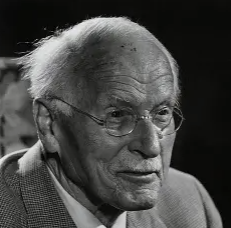
Without consciousness there would, practically speaking, be no world, for the world exists as such only in so far as it is consciously reflected and considered by a psyche. Consciousness is a precondition of being.
▼
Source
source
p 48
3 months 1 week ago
I have been quoted as saying captious things about travel; but I mean to do justice. I think, there is a restlessness in our people, which argues want of character. All educated Americans, first or last, go to Europe; - perhaps, because it is their mental home, as the invalid habits of this country might suggest. An eminent teacher of girls said, "the idea of a girl's education, is, whatever qualifies them for going to Europe." Can we never extract this tape-worm of Europe from the brain of our countrymen?
▼
Source
source
Culture
1 month 2 days ago
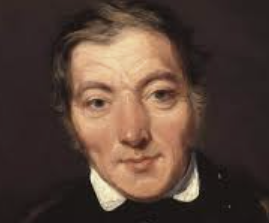
Train any population rationally, and they will be rational. Furnish honest and useful employments to those so trained, and such employments they will greatly prefer to dishonest or injurious occupations. It is beyond all calculation the interest of every government to provide that training and that employment; and to provide both is easily practicable.
1 month 1 week ago
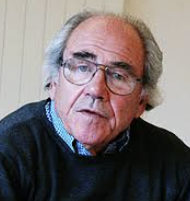
It is the real, and not the map, whose vestiges persist here and there in the deserts that are no longer those of the Empire, but ours: The desert of the real itself.
▼
Source
source
"The Precession of Simulacra," p. 1
3 months 4 days ago
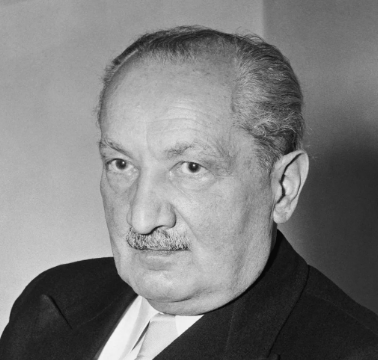
Technology is in its essence something that human beings cannot master of their own accord.

2 months 1 day ago
He that is not on my side is against me, and he that does not gather with me scatters.
▼
Source
source
12:30, New World Translation
2 months 4 weeks ago
The capacity to reason is a special sort of capacity because it can lead us to places that we did not expect to go.
▼
Source
source
Chapter 4, Reason, p. 88
3 months 1 week ago
If everything must have a cause, then God must have a cause. If there can be anything without a cause, it may just as well be the world as God, so that there cannot be any validity in that argument. It is exactly of the same nature as the Hindu's view, that the world rested upon an elephant and the elephant rested upon a tortoise; and when they said, "How about the tortoise?" the Indian said, "Suppose we change the subject." The argument is really no better than that.
▼
Source
source
"The First-cause Argument"

3 months 1 week ago
You can't get a cup of tea large enough or a book long enough to suit me.
▼
Source
source
As quoted in Of This and Other Worlds (1982) by Walter Hooper, Preface, p. 9
1 month 2 weeks ago
The "second sight" possessed by the Highlanders in Scotland is actually a foreknowledge of future events. I believe they possess this gift because they don't wear trousers... That is also why in all countries women are more prone to utter prophecies.
▼
Source
source
L 26
1 month 1 week ago
There are plenty of good reasons for fighting," I said, "but no good reason ever to hate without reservation, to imagine that God Almighty Himself hates with you, too. Where's evil? It's that large part of every man that wants to hate without limit, that wants to hate with God on its side. It's that part of every man that finds all kinds of ugliness so attractive.
3 months 1 week ago
I hope, said the third, that your wanderings in lonely places do not mean that you have any of the romantic virus still in your blood. His name was Mr. Humanist.
▼
Source
source
Pilgrim's Regress 90
1 month 1 week ago
Aesthetic theories arose one hundred fifty years ago among the wealthy classes of the Christian European world. ...And notwithstanding its obvious insolidity, nobody else's theory so pleased the cultured crowd or was accepted so readily and with such absence of criticism. It so suited the people of the upper classes that to this day, notwithstanding its entirely fantastic character and the arbitrary nature of its assertions, it is repeated by the educated and uneducated as though it were something indubitable and self-evident.
2 months 1 day ago
Verily I say unto you, All sins shall be forgiven unto the sons of men, and blasphemies wherewith soever they shall blaspheme: But he that shall blaspheme against the Holy Ghost hath never forgiveness, but is in danger of eternal damnation.
▼
Source
source
Mark 3:28-29 (KJV)
CivilSimian.com created by AxiomaticPanic, CivilSimian, Kalokagathia