



2 months 3 weeks ago
Pay attention to your enemies, for they are the first to discover your mistakes.
▼
Source
source
§ 12
2 months 4 days ago
Naturally, every age thinks that all ages before it were prejudiced, and today we think this more than ever and are just as wrong as all previous ages that thought so. How often have we not seen the truth condemned! It is sad but unfortunately true that man learns nothing from history.
▼
Source
source
p. 33

3 months 1 week ago
Philosophy seems to me on the whole a rather hopeless business.
▼
Source
source
Letter to Gilbert Murray, December 28, 1902

4 months 1 week ago
That a woman is presented as a teacher, as a prototype of piety, cannot amaze anyone who knows that piety or godliness is fundamentally womanliness. ... from a woman you learn concern for the one thing needful, from Mary, sister of Lazarus, who sat silent at Christ's feet with her heart's choice: the one thing needful.

2 months 3 days ago
If someone incessantly drops the word "life," you know he's a sick man.
1 month 3 weeks ago
Necessity resides in the way we talk about things, not in the things we talk about.
▼
Source
source
Ways of Paradox and Other Essays (1976), p. 174

3 months 1 week ago
You come from attending the funeral of mankind to attend to a natural phenomenon. A little thought is sexton to all the world.
▼
Source
source
p. 490
2 months 3 days ago
The true hero fights and dies in the name of his destiny, and not in the name of a belief.

3 months 1 week ago
The real point at issue always is Turkey in Europe - the great peninsula to the south of the Save and Danube. This splendid territory [the Balkans] has the misfortune to be inhabited by a conglomerate of different races and nationalities, of which it is hard to say which is the least fit for progress and civilization. Slavonians, Greeks, Wallachians, Arnauts, twelve millions of men, are all held in submission by one million of Turks, and up to a recent period, it appeared doubtful whether, of all these different races, the Turks were not the most competent to hold the supremacy which, in such a mixed population, could not but accrue to one of these nationalities.
▼
Source
source
The Russian Menace to Europe, From Karl Marx and Frederick Engels, edited by Paul Blackstock and Bert Hoselitz, and published by George Allen and Unwin, London, 1953

3 months 1 week ago
Every natural fact is a symbol of some spiritual fact.
▼
Source
source
Language
4 months 1 week ago
A genius and an Apostle are qualitatively different, they are definitions which each belong in their own spheres: the sphere of immanence, and the sphere of transcendence.
2 months 4 days ago
People will do anything, no matter how absurd, in order to avoid facing their own souls. They will practice Indian yoga and all its exercises, observe a strict regimen of diet, learn the literature of the whole world-all because they cannot get on with themselves and have not the slightest faith that anything useful could ever come out of their own souls. Thus the soul has gradually been turned into a Nazareth from which nothing good can come.
▼
Source
source
CW 12, par. 126 (p 99)

3 months 6 days ago
The hardness of God is kinder than the softness of men, and His compulsion is our liberation.

1 month 5 days ago
We now live in a technologically prepared environment that blankets the earth itself. The humanly contrived environment of electric information and power has begun to take precedence over the old environment of "nature." Nature, as it were, begins to be the content of our technology.
▼
Source
source
p. 276


2 months ago
Ideas, aspirations, and objectives that, by their content, transcend the established universe of discourse and action are either repelled or reduced to terms of this universe.
▼
Source
source
p. 12
2 months 5 days ago
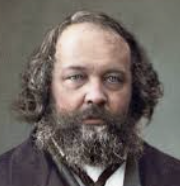
We exhort the compromisers to open their hearts to truth, to free themselves of their wretched and blind circumspection, of their intellectual arrogance, and of the servile fear which dries up their souls and paralyzes their movements. Let us therefore trust the eternal Spirit which destroys and annihilates only because it is the unfathomable and eternal source of all life. The passion for destruction is a creative passion, too!
▼
Source
source
"The Reaction in Germany" (1842) Often paraphrased as, "The urge to destroy is also a creative urge"

2 months 1 week ago
Young man, there is America - which at this day serves for little more than to amuse you with stories of savage men and uncouth manners; yet shall, before you taste of death, show itself equal to the whole of that commerce which now attracts the envy of the world.

4 months 1 week ago
There are ages in which the rational man and the intuitive man stand side by side, the one in fear of intuition, the other with scorn for abstraction. The latter is just as irrational as the former is inartistic. They both desire to rule over life: the former, by knowing how to meet his principle needs by means of foresight, prudence, and regularity; the latter, by disregarding these needs and, as an "overjoyed hero," counting as real only that life which has been disguised as illusion and beauty.
1 month 3 days ago
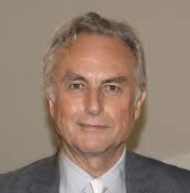
Contrary to earlier prejudices, there is nothing inherently progressive about evolution.
▼
Source
source
Chapter 7 "Constructive Evolution" (p. 178)

3 months 6 days ago
The best work is not what is most difficult for you; it is what you do best.
▼
Source
source
Act 6, sc. 2
1 month ago
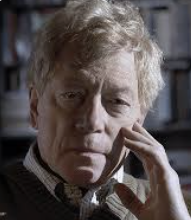
Faith exalts the human heart, by removing it from the market-place, making it sacred and unexchangeable. Under the jurisdiction of religion our deeper feelings are sacralized, so as to become raw material for the ethical life: the life lived in judgement.
▼
Source
source
"Avant-garde and Kitsch" (p. 91)
3 months 3 weeks ago
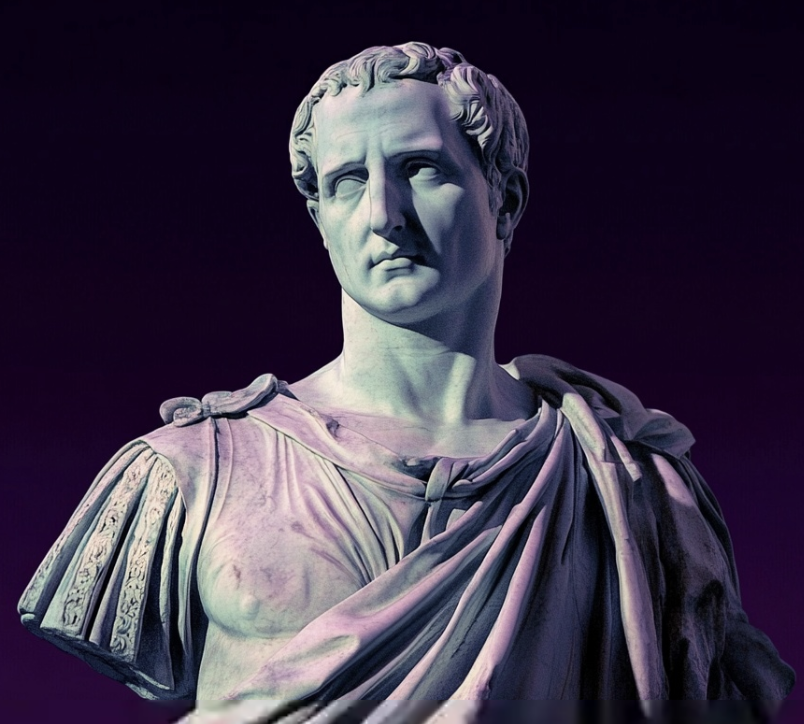
I have always been of the opinion that infamy earned by doing what is right is not infamy at all, but glory.
▼
Source
source
Speech I
2 months 5 days ago
The first authentic record on this subject (alchemy) is an edict of Diocletian, about 300 years after Christ, ordering a diligent search to be made in Egypt for all the ancient books which treated of the art of making gold and silver, that they might be consigned to the flames. This edict necessarily presumes a certain antiquity to the pursuit; and fabulous history has recorded Solomon, Pythagoras, and Hermes among its distinguished votaries.
▼
Source
source
Quoted by H.P. Blavatsky, in Isis Unveiled: A Master-Key to the Mysteries of Ancient and Modern Science and Theology, Vol. I, (1877) (p. 504)

2 months 1 week ago
Laws are always unstable unless they are founded on the manners of a nation; and manners are the only durable and resisting power in a people.
▼
Source
source
Chapter XVI.

3 months 3 weeks ago
The order of authority derives from God, as the Apostle says [in Romans 13:1-7]. For this reason, the duty of obedience is, for the Christian, a consequence of this derivation of authority from God, and ceases when that ceases. But, as we have already said, authority may fail to derive from God for two reasons: either because of the way in which authority has been obtained, or in consequence of the use which is made of it. There are two ways in which the first may occur. Either because of a defect in the person, if he is unworthy; or because of some defect in the way itself by which power was acquired, if, for example, through violence, or simony or some other illegal method.
▼
Source
source
in Aquinas: Selected Political Writings (Basil Blackwell: 1974), p. 183

1 month 3 weeks ago
Ether is, in effect, a merely hypothetical entity, valuable only in so far as it explains that which by means of it we endeavor to explain - light, electricity, or universal gravitation - and only so far as these facts cannot be explained in any other way. In like manner the idea of God is also an hypothesis, valuable only in so far as it enables us to explain that which by means of it we endeavor to explain - the essence and existence of the Universe - and only so long as these cannot be explained in any other way. And since in reality we explain the Universe neither better nor worse with this idea than without it, the idea of God, the supreme petitio principii, is valueless.
2 months 3 days ago
A regret understood by no one: the regret to be a pessimist. It's not easy to be on the wrong foot with life
3 weeks 2 days ago
In an ideal University, as I conceive it, a man should be able to obtain instruction in all forms of knowledge, and discipline in the use of all the methods by which knowledge is obtained. In such a University, the force of living example should fire the student with a noble ambition to emulate the learning of learned men, and to follow in the footsteps of the explorers of new fields of knowledge. And the very air he breathes should be charged with that enthusiasm for truth, that fanaticism of veracity, which is a greater possession than much learning; a nobler gift than the power of increasing knowledge; by so much greater and nobler than these, as the moral nature of man is greater than the intellectual; for veracity is the heart of morality.
▼
Source
source
Universities, Actual and Ideal
3 months 1 week ago
The instinctive foundation of the intellectual life is curiosity, which is found among animals in its elementary forms. Intelligence demands an alert curiosity, but it must be of a certain kind. The sort that leads village neighbours to try to peer through curtains after dark has no very high value. The widespread interest in gossip is inspired, not by a love of knowledge but by malice: no one gossips about other people's secret virtues, but only about their secret vices. Accordingly most gossip is untrue, but care is taken not to verify it. Our neighbour's sins, like the consolations of religion, are so agreeable that we do not stop to scrutinise the evidence closely.
▼
Source
source
On Education, Especially in Early Childhood (1926), Ch. 2: The Aims of Education, p. 50
3 months 1 week ago
Freedom is the alone unoriginated birthright of man, and belongs to him by force of his humanity; and is independence on the will and co-action of every other in so far as this consists with every other person's freedom.
▼
Source
source
Immanuel Kant, The Metaphysics of Ethics by Immanuel Kant, trans. J.W. Semple, ed. with Iintroduction by Rev. Henry Calderwood (Edinburgh: T. & T. Clark, 1886) (3rd edition). Chapter: GENERAL DIVISION OF JURISPRUDENCE.
2 months 5 days ago
The normal present connects the past and the future through limitation. Contiguity results, crystallization by means of solidification. There also exists, however, a spiritual present that identifies past and future through dissolution, and this mixture is the element, the atmosphere of the poet.
▼
Source
source
Fragment No. 109

3 months 1 week ago
The slaving Poor are incapable of any Principles: Gentlemen may be converted to true Principles, by Time and Experience. The middling Rank of Men have Curiosity and Knowledge enough to form Principles, but not enough to form true ones, or correct any Prejudices that they may have imbib'd: And 'tis among the middling Rank, that Tory Principles do at present prevail most in England.
▼
Source
source
Part I, Essay 9: Of The Parties of Great Britain; final lines of this essay in the 1741 and 1742 editions of Essays, Moral and Political, they were not included in later editions.

2 weeks ago
The irony of the post-Cold War period is that the fall of communism was followed by the rise of another utopian ideology. In American and Britain, and to a lesser extent other Western countries, a type of market fundamentalism became the guiding philosophy. The collapse of American power that is underway is the predictable upshot.
2 months ago
Persons who feel themselves to be exiles in this world-and what noble mind, from Empedocles down, has not had that feeling?-are mightily inclined to believe themselves citizens of another.
▼
Source
source
pp. 39-40
2 months 3 weeks ago
There were two brothers called Both and Either; perceiving Either was a good, understanding, busy fellow, and Both a silly fellow and good for little, Philip said, "Either is both, and Both is neither."
▼
Source
source
35 Philip
3 months 6 days ago
If you are not already dead, forgive. Rancor is heavy, it is worldly; leave it on earth: die light.
▼
Source
source
Act 1
2 months 4 days ago
It is only natural that I should constantly have revolved in my mind the question of the relationship of the symbolism of the unconscious to Christianity as well as to other religions. Not only do I leave the door open for the Christian message, but I consider it of central importance for Western man. It needs, however, to be seen in a new light, in accordance with the changes wrought by the contemporary spirit.

2 months ago
For it is easier for a camel to go through a needle's eye, than for a rich man to enter into the kingdom of God.
▼
Source
source
18:25 (KJV)
4 months 1 week ago
Irony is a qualification of subjectivity.
3 months 6 days ago
A young man who wishes to remain a sound Atheist cannot be too careful of his reading. There are traps everywhere... God is, if I may say it, very unscrupulous.
▼
Source
source
p. 191

1 month 2 weeks ago
And the central assertion of his philosophy is that this inner realm is the 'spiritual world' and that once man has learned to enter this realm, he realizes that it is not a mere imaginative reflection of the external world, but a world that possesses its own independent reality.
▼
Source
source
p. 161
2 months ago
The sabbath was made for man, and not man for the sabbath.
▼
Source
source
Mark 2:27 (KJV)

3 months 2 weeks ago
Ambition is not a vice of little people.
▼
Source
source
Book III, Ch. 10
1 month 2 weeks ago
Even truth needs to be clad in new garments if it is to appeal to a new age.
▼
Source
source
C 33
CivilSimian.com created by AxiomaticPanic, CivilSimian, Kalokagathia