

2 months 1 week ago
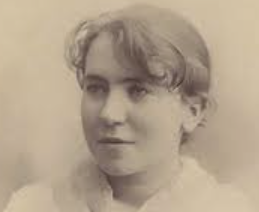
A young delicate tree, that is being clipped and cut by the gardener in order to give it an artificial form, will never reach the majestic height and the beauty as when allowed to grow in nature and freedom.
2 months 1 week ago
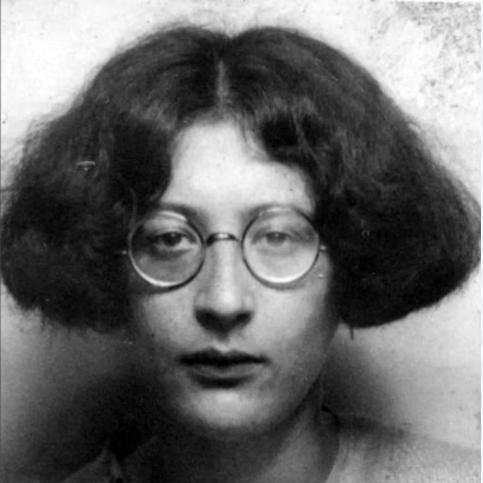
Conscience is deceived by the social. Our supplementary energy (imaginative) is to a great extent taken up with the social. It has to be detached from it. That is the most difficult of detachments.
▼
Source
source
p. 123

1 month 3 weeks ago
In this book we turn to the study of new patterns of energy arising from man's physical and psychic artifacts and social organizations. The only method for perceiving process and pattern is by inventory of effects obtained by the comparison and contrast of developing situations.
▼
Source
source
(p. 8)
3 months 3 weeks ago
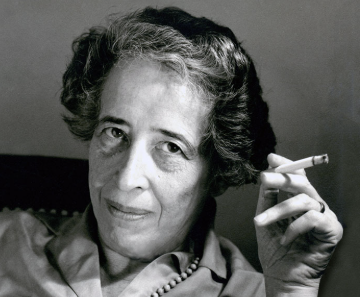
It was mathematics, the non-empirical science par excellence, wherein the mind appears to play only with itself, that turned out to be the science of sciences, delivering the key to those laws of nature and the universe that are concealed by appearances.
▼
Source
source
p. 7
3 months 3 weeks ago
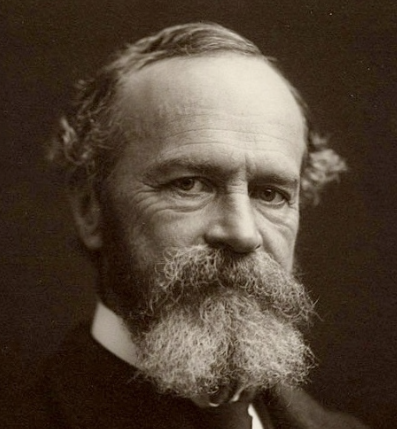
Be not afraid of life. Believe that life is worth living, and your belief will help create the fact.
▼
Source
source
"Is Life Worth Living?"
2 months 2 weeks ago
It is questionable whether there does not exist in man an obscure and blind will to make war; an impulse towards change, towards emergence from the familiarities of everyday life and from the stabilities of well-known conditions - something like a will to death as a will to annihilation and self-sacrifice, a vague enthusiasm for the upbuilding of a new world.

2 weeks 3 days ago
The rudest heathen that worshipped Canopus, or the Caabah Black-Stone, he, as we saw, was superior to the horse that worshipped nothing at all! Nay there was a kind of lasting merit in that poor act of his; analogous to what is still meritorious in Poets: recognition of a certain endless divine beauty and significance in stars and all natural objects whatsoever.

2 months 3 weeks ago
Compared to the refined culture of sclerotic forms and frames, which mask everything, the lyrical mode is utterly barbarian in its expression. Its value resides precisely in its savage quality: it is only blood, sincerity, and fire.
4 months 3 weeks ago
A tragedy, then, is the imitation of an action that is serious and also, as having magnitude, complete in itself; in language ... not in a narrative form; with incidents arousing pity and fear, wherewith to accomplish its catharsis of such emotions.

2 months 3 weeks ago
By the disposition of a stupendous wisdom, moulding together the great mysterious incorporation of the human race, the whole, at one time, is never old, or middle-aged, or young; but, in a condition of unchangeable constancy, moves on through the varied tenor of perpetual decay, fall, renovation, and progression.
2 months 2 weeks ago
In the Gospels, for instance, we sometimes find the kingdom of heaven illustrated by principles drawn from observation of this world rather than from an ideal conception of justice; ... They remind us that the God we are seeking is present and active, that he is the living God; they are doubtless necessary if we are to keep religion from passing into a mere idealism and God into the vanishing point of our thought and endeavour.
▼
Source
source
Interpretations of Poetry and Religion (1900), p. 54
3 months 3 weeks ago
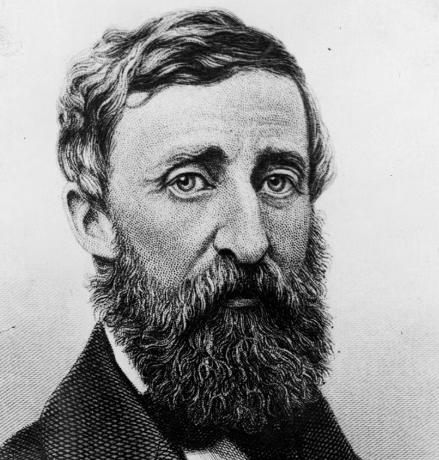
Life consists with wildness. The most alive is the wildest. Not yet subdued to man, its presence refreshes him.
1 month 2 weeks ago
Joe Hume talked to me very earnestly about the necessity of an union of Liberals. He said much about Ballot and the Franchise. I told him that I could easily come to some compromise with him and his friends on these matters, but that there were other questions about which I feared that there was an irreconcileable difference, particularly the vital question of national defence. He seemed quite confounded, and had absolutely nothing to say. I am fully determined to make them eat their words on that point, or to have no political connection with them.
▼
Source
source
Journal entry (November 1852), quoted in George Otto Trevelyan, The Life and Letters of Lord Macaulay, Volume II (1876), p. 368

3 months 3 weeks ago
It is amusing to hear the modern Christian telling you how mild and rationalistic Christianity really is and ignoring the fact that all its mildness and rationalism is due to the teaching of men who in their own day were persecuted by all orthodox Christians.
▼
Source
source
"Sources of Intolerance"

3 months 3 weeks ago
That is precisely what we should have expected, since Genet wants to live simultaneously creation, destruction, the impossibility of destroying and the impossibility of creating, since he wants both to show his rejection of the divine creation and to manifest, in the absolute, human impotence as man's reproval of God and as the testimony of his grandeur.
▼
Source
source
p. 424

3 months 3 weeks ago
In the long run the answer to all those who object to the doctrine of hell, is itself a question: What are you asking God to do? To wipe out their past sins and, at all costs, to give them a fresh start, smoothing every difficulty and offering every miraculous help? But He has done so, on Calvary. To forgive them? They will not be forgiven. To leave them alone? Alas, I am afraid that is what He does.
2 weeks 3 days ago
Misery which, through long ages, had no spokesman, no helper, will now be its own helper and speak for itself.

1 month 3 days ago
As Malaparte saw it, Naples was a pagan city with an ancient sense of time. Christianity taught those who were converted to it to think of history as the unfolding of a single plot - a moral drama of sin and redemption. In the ancient world there was no such plot - only a multitude of stories that were forever being repeated. Inhabiting that ancient world, the Neapolitans did not expect any fundamental alteration in human affairs. Not having accepted the Christian story of redemption, they had not been seduced by the myth of progress. Never having believed civilization to be permanent, they were not surprised when it foundered.
▼
Source
source
An Old Chaos: Frozen Horses and Deserts of Brick (p. 22)
2 months 3 weeks ago
The true Christian knows no Covenant or Mediation with God, but only the Old, Eternal, and Unchangeable Relation, that in Him we live, and move, and have our being; and he asks not who has said this, but only what has been said;-even the book wherein this may be written is nothing to him as a proof, but only as a means of culture; he bears the proof in his own breast. This is my view of the matter...
▼
Source
source
p. 105
3 months 3 weeks ago
In some lyceums they tell me that they have voted to exclude the subject of religion. But how do I know what their religion is, and when I am near to or far from it? I have walked into such an arena and done my best to make a clean breast of what religion I have experienced, and the audience never suspected what I was about.
▼
Source
source
p. 490
4 months 1 week ago
Several particular maxims... are as powerful, although false, in carrying away belief, as those the most true.
2 months 3 weeks ago
The state of health is a state of nonsensation, even of nonreality. As soon as we cease to suffer, we cease to exist.

3 months 2 weeks ago
A sensible man takes pleasure in what he has instead of pining for what he has not.

4 months 1 week ago
By protracting life, we do not deduct one jot from the duration of death.
▼
Source
source
Book III, lines 1087-1088 (tr. Rouse)
1 month 3 weeks ago
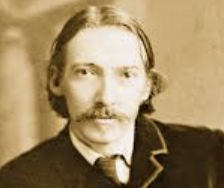
Quiet minds cannot be perplexed or frightened but go on in fortune or misfortune at their own private pace, like a clock during a thunderstorm.
▼
Source
source
'La Fère of Cursed Memory', 15th vignette of An Inland Voyage (1878), in Collected Memoirs, Travel Sketches and Island Literature of Robert Louis Stevenson, Stevenson, e-artnow

1 month 3 weeks ago
Media are means of extending and enlarging our organic sense lives into our environment.
▼
Source
source
"The Care and Feeding of Communication Innovation", Dinner Address to Conference on 8 mm Sound Film and Education, Teachers College, Columbia University, 8 November 1961
2 months 2 weeks ago
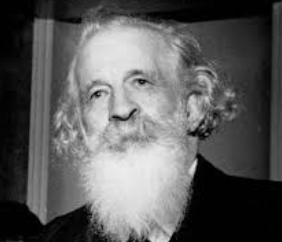
Ideas are invented only as correctives to the past. Through repeated rectifications of this kind one may hope to disengage an idea that is valid.
▼
Source
source
A Retrospective Glance at the Lifework of a Master of Books
2 weeks 5 days ago
A certain degree of blindness as to the absoluteness of one's own values may be indispensable to extract the valuable qualities from the world, the qualities whose value is believed to be the highest. It is possible that in order to realize one's values one must have faith in their exclusive character.
▼
Source
source
Chapter Eight, Logical Empiricism, p. 202-203
4 months 3 weeks ago
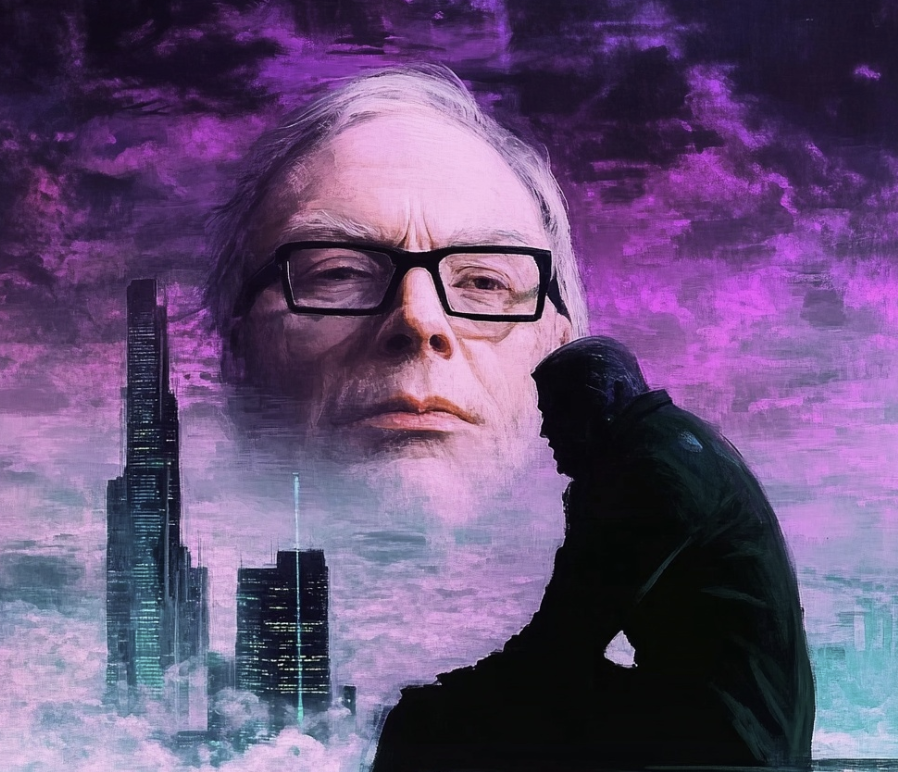
Writing is hard work. The fact that I love doing it doesn't make it less hard work. People who love tennis will sweat themselves to exhaustion playing it, and the love of the game doesn't stop the sweating. The casual assumption that writers are unemployed bums because they don't go to the office and don't have a boss is something every writer has to live with. I have never known a writer who hasn't suffered as a result of this, hasn't resented it, and hasn't dreamed of murdering the next person who says "Boy, you've sure got it made. You just sit there and toss off a story or something whenever you feel like it."
3 months 3 weeks ago
Love is better than hate, because it brings harmony instead of conflict into the desires of the persons concerned. Two people between whom there is love succeed or fail together, but when two people hate each other the success of either is the failure of the other.
1 month 5 days ago
True hedonic engineering, as distinct from mindless hedonism or reckless personal experimentation, can be profoundly good for our character. Character-building technologies can benefit utilitarians and non-utilitarians alike. Potentially, we can use a convergence of biotech, nanorobotics and information technology to gain control over our emotions and become better (post-)human beings, to cultivate the virtues, strength of character, decency, to become kinder, friendlier, more compassionate: to become the type of (post)human beings that we might aspire to be, but aren't, and biologically couldn't be, with the neural machinery of unenriched minds. Given our Darwinian biology, too many forms of admirable behaviour simply aren't rewarding enough for us to practise them consistently: our second-order desires to live better lives as better people are often feeble echoes of our baser passions.
▼
Source
source
Utopian Neuroscience, BLTC Research, 2019

2 months 2 weeks ago
Operational analysis ... cannot raise the decisive question whether the consent itself was not the work of manipulation-a question for which the actual state of affairs provides ample justification. The analysis cannot raise it because it would transcend its terms toward transitive meaning-toward a concept of democracy which would reveal the democratic election as a rather limited democratic process. Precisely such a non-operational concept is the one rejected by the authors as "unrealistic" because it defines democracy on too articulate a level as the clear-cut control of representation by the electorate-popular control as popular sovereignty.
▼
Source
source
p. 116
2 months 3 weeks ago
Poets and priests were one in the beginning, and they only separated in later times. But the real poet is always a priest, just as the real priest always remains a poet.
▼
Source
source
Fragment No. 71

2 months 1 week ago
Considered as a whole, Hesse's achievement can hardly be matched in modern literature; it is the continually rising trajectory of an idea, the fundamentally religious idea of how to 'live more abundantly'. Hesse has little imagination in the sense that Shakespeare or Tolstoy can be said to have imagination, but his ideas have a vitality that more than makes up for it. Before all, he is a novelist who used the novel to explore the problem: What should we do with our lives? The man who is interested to know how he should live instead of merely taking life as it comes, is automatically an Outsider.
▼
Source
source
p. 77
1 month 3 days ago
From a Darwinian point of view, human beliefs are adaptations to our part of the world. No doubt much of what we believe must be roughly accurate, or else we would not have survived. But the beliefs we have evolved might latch on to the world only enough to help us stumble our way through it, and then only for the time being. Human belief-systems could be useful illusions, appearing and disappearing as they prove to be more or less advantageous in the random walk of natural selection. Might not evolution be one of these illusions? Scientific naturalism is the theory that human beliefs are evolutionary adaptations whose survival has nothing to do with their truth. But in that case scientific naturalism is self-defeating, since on its own premises scientific theories cannot be known to be true.
▼
Source
source
Cross-correspondences (p. 69)
2 months 3 weeks ago
Philosophers write for professors; thinkers for writers.

4 months ago
When the profits of trade happen to be greater than ordinary, over-trading becomes a general error both among great and small dealers.
▼
Source
source
Chapter I, p. 469.
3 months 3 weeks ago
Without risks or prizes for the darer, history would be insipid indeed; and there is a type of military character which every one feels that the race should never cease to breed, for everyone is sensitive to its superiority. The duty is incumbent on mankind, of keeping military character in stock - if keeping them, if not for use, then as ends in themselves and as pure pieces of perfection, - so that Roosevelt's weaklings and mollycoddles may not end by making everything else disappear from the face of nature.
1 month 3 weeks ago
Since Sputnik and the satellites, the planet is enclosed in a manmade environment that ends "Nature" and turns the globe into a repertory theater to be programmed.
▼
Source
source
Shakespeare at the Globe mentioning "All the world's a stage, and all the men and women merely players" (As You Like It, Act II, Scene 7)
2 months 3 weeks ago
An anxious man constructs his terrors, then installs himself within them: a stay-at-home in a yawning chasm.
2 months 3 weeks ago
Ah! why do women condescend to receive a degree of attention and respect from strangers different from that reciprocation of civility which the dictates of humanity and the politeness of civilization authorize between man and man? And why do they not discover, when, "in the noon of beauty's power", that they are treated like queens only to be deluded by hollow respect. Confined, then, in cages like the feathered race, they have nothing to do but to plume themselves, and stalk with mock majesty from perch to perch.
▼
Source
source
Ch. 4
3 months 3 weeks ago
Most of what happens actually is forgotten.
▼
Source
source
Ch. 16
4 months 3 weeks ago
Therefore only an utterly senseless person can fail to know that our characters are the result of our conduct.
1 month 4 weeks ago
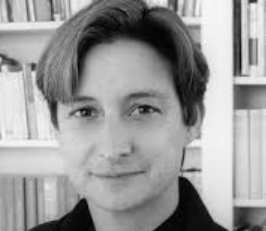
The state monopolizes violence by calling its critics "violent". [...] Hence, we should be wary about those who claim that violence is necessary to curb or check violence; those who praise the forces of law, including the police and the prisons, as the final arbiters. To oppose violence is to understand that violence does not always take the form of the blow.
▼
Source
source
p. 63
2 months 3 weeks ago
It shews the anxiety of the great men who influenced the conduct of affairs at that great event, to make the Revolution a parent of settlement, and not a nursery of future revolutions.
▼
Source
source
Referring to the Glorious Revolution of 1688

1 month 3 weeks ago
The savage recognizes life only in himself and his personal desires. His interest in life is concentrated on himself alone. The highest happiness for him is the fullest satisfaction of his desires. The motive power of his life is personal enjoyment. His religion consists in propitiating his deity and in worshiping his gods, whom he imagines as persons living only for their personal aims.
▼
Source
source
Chapter IV, Christianity Misunderstood by Men of ScienceChapter IV, Christianity Misunderstood by Men of Science
2 weeks 3 days ago
Wonder, indeed, is, on all hands, dying out: it is the sign of uncultivation to wonder.
2 months 3 weeks ago
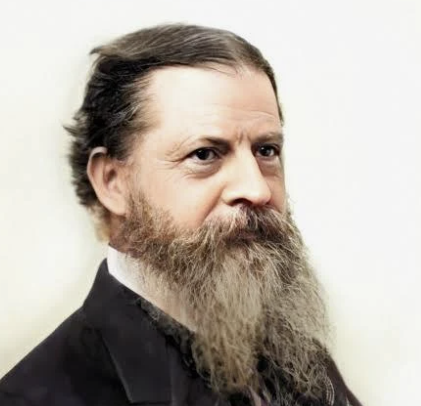
By an object, I mean anything that we can think, i.e. anything we can talk about.
▼
Source
source
"Reflections on Real and Unreal Objects", Undated, MS 966
CivilSimian.com created by AxiomaticPanic, CivilSimian, Kalokagathia