


2 months 1 week ago
Why is it so hard to keep the mind concentrated, and to live up to our good resolutions? The problem is the basically mechanical nature of our left-brain consciousness. We have a kind of robot servant who does things for us: we learn to type or drive a car, painfully and consciously, then our robot takes over, and does it far more quickly and efficiently. Because man is the most complex creature on Earth, he is forced to rely on his robot far more than other animals. The result is that, whenever he gets tired, the robot takes over. For the modern city dweller, most of his everyday living is done by the robot. This is why it takes an emergency to concentrate the mind 'wonderfully', and why we forget so quickly.
▼
Source
source
p. 344

1 month 1 day ago
Hayek's blind spot with regard to politics was clear in the early 1980s when the first Thatcher government, in an attempt to reduce inflation and bring the public finances closer to a balanced budget, was raising interest rates and cutting public spending. As he had done during the 1930s, Hayek attacked these policies as not being severe enough. It would be better, he told me in a conversation we had around this time, if Thatcher imposed a more drastic contraction on the economy so that the wage-setting power of the trade unions could be broken. He appeared unfazed by unemployment, which was already higher (more than three million people) than at any time since the 1930s, and would rise much further if his recommendations were accepted.

2 months 2 weeks ago
Thou sayest that I am a king. To this end was I born, and for this cause came I into the world, that I should bear witness unto the truth. Every one that is of the truth heareth my voice.
▼
Source
source
18:37, (KJV)
2 months 3 days ago
If we want a theory explaining how people play billiards, we do not want a theory of perfect billiard balls; we want a theory of what heuristics a human billiard player uses in order to plan and make a (often not quite accurate) shot. These heuristics and actions do not involve solving the differential equations of the billiard board; they involve rules of thumb and it is these practice guides to action we are trying to discover in order to explain the behavior.
▼
Source
source
An Empirically Based Microeconomics (1997), p. 173

2 months 3 weeks ago
The source of an emotion is very difficult to grasp, but it comes to just that. That holds for all phenomena, for faith, etc. Why did it begin, how did it develop? and so forth-only he who has the gift of divination can perceive where it really comes from. But it is not accessible to reflection.

2 weeks 2 days ago
But oppression by your Mock-Superiors well shaken off, the grand problem yet remains to solve: That of finding government by your Real-Superiors! Alas, how shall we ever learn the solution of that, benighted, bewildered, sniffing, sneering, godforgetting unfortunates as we are? It is a work for centuries; to be taught us by tribulations, confusions, insurrections, obstructions; who knows if not by conflagration and despair! It is a lesson inclusive of all other lessons; the hardest of all lessons to learn.

3 months 3 weeks ago
Our labour preserves us from three great evils -- weariness, vice, and want.

3 months 2 weeks ago
It is true: Man is the microcosm: I am my world.
▼
Source
source
Journal entry (12 October 1916), p. 84e
1 week 3 days ago
Value is not intrinsic, it is not in things. It is within us; it is the way in which man reacts to the conditions of his environment. Neither is value in words and doctrines, it is reflected in human conduct. It is not what a man or groups of men say about value that counts, but how they act.

3 weeks ago
Learning proceeds until death and only then does it stop. ... Its purpose cannot be given up for even a moment. To pursue it is to be human, to give it up to be a beast.
▼
Source
source
Readings in Classical Chinese Philosophy (2001), p. 258

3 months 3 weeks ago
Make yourself necessary to somebody. Do not make life hard to any.
▼
Source
source
Considerations by the Way
3 months 3 weeks ago
Habit is thus the enormous fly-wheel of society, its most precious conservative agent. It alone is what keeps us all within the bounds of ordinance, and saves the children of fortune from the envious uprisings of the poor.
▼
Source
source
Ch. 4

3 months 3 weeks ago
No greater mistake can be made than to imagine that what has been written latest is always the more correct; that what is written later on is an improvement on what was written previously; and that every change means progress. Men who think and have correct judgment, and people who treat their subject earnestly, are all exceptions only. Vermin is the rule everywhere in the world: it is always at hand and busily engaged in trying to improve in its own way upon the mature deliberations of the thinkers.

3 months 3 weeks ago
Too little liberty brings stagnation, and too much brings chaos.
▼
Source
source
Authority and the Individual (1949), p. 37

3 months 3 weeks ago
The circulation of commodities is the original precondition of the circulation of money.
▼
Source
source
Notebook I, The Chapter on Money, p. 107.
1 month 2 weeks ago
One naturally regrets not being an expert or one of those insiders who thoroughly understand. It's hell to be an amateur. A little reflection calms your sorrow, however. The experts in their own little speedboat, the rest of us floating with the rest of mankind in a great barge - that is the picture.
▼
Source
source
The Day They Signed the Treaty (1979), p. 224

4 months 2 weeks ago
To no one but the Son of Heaven does it belong to order ceremonies, to fix the measures, and to determine the written characters.
2 months 1 week ago
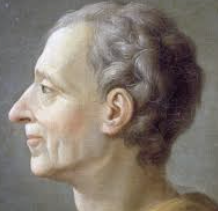
Of all kind of authors there are none I despise more than compilers, who search every where for shreds of other men's works, which they join to their own, like so many pieces of green turf in a garden: they are not at all superior to compositors in a printing house, who range the types, which, collected together, make a book, towards which they contribute nothing but the labours of the hand. I would have original writers respected, and it seems to me a kind of profanation to take those pieces from the sanctuary in which they reside, and to expose them to a contempt they do not deserve. When a man hath nothing new to say, why does not he hold his tongue? What business have we with this double employment?"
▼
Source
source
No. 66.

1 month 3 weeks ago
When the woman showed her love for the children that were not her own, and wept over them, I saw in her the living God, and understood What men live by.
▼
Source
source
Ch. XI
1 month 1 week ago
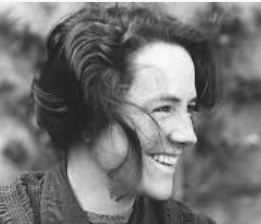
One can never pay in gratitude; one can only pay "in kind" somewhere else in life.
▼
Source
source
North to the Orient (1935) Ch. 19

1 month 4 weeks ago
It is the perfection of God's works that they are all done with the greatest simplicity. He is the God of order and not of confusion. And therefore as they would understand the frame of the world must endeavor to reduce their knowledge to all possible simplicity, so must it be in seeking to understand these visions.
▼
Source
source
Cited in Rules for methodizing the Apocalypse, Rule 9, from a manuscript published in The Religion of Isaac Newton (1974) by Frank E. Manuel

2 months 4 weeks ago
So many of my thoughts and feelings are shared by the English that England has turned into a second native land of the mind for me.
▼
Source
source
Journeys to England and Ireland, 1835.

3 months 3 weeks ago
I do not think the resemblance between the Christian and the merely imaginative experience is accidental. I think that all things, in their own way, reflect heavenly truth, the imagination not least. "Reflect" is the important word. This lower life of the imagination is not a beginning of, nor a step toward, the higher life of the spirit, merely an image.

4 months 3 weeks ago
The fact is that I've never called myself a genius, and I think the term has been cheapened by overuse into meaninglessness. If other people want to call me that, that's their problem.

2 months 1 week ago
There will be no mass-based feminist movement as long as feminist ideas are understood only by a well-educated few.

4 months 1 week ago
Behold a God more powerful than I who comes to rule over me.
▼
Source
source
Chapter I (tr. Barbara Reynolds); of love.

3 months 3 weeks ago
And the final event to himself has been, that, as he rose like a rocket, he fell like the stick.
▼
Source
source
On Edmund Burke's reactions to the American and French revolutions.

4 months 3 weeks ago
While both are dear, Piety requires us to honor truth above our friends.
2 months 1 week ago
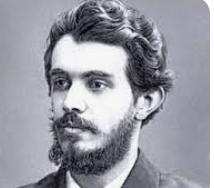
The uniting of Orthodoxy with state absolutism came about on the soil of a non-belief in the Divineness of the earth, in the earthly future of mankind; Orthodoxy gave away the earth into the hands of the state because of its own non-belief in man and mankind, because of its nihilistic attitude towards the world. Orthodoxy does not believe in the religious ordering of human life upon the earth, and it compensates for its own hopeless pessimism by a call for the forceful ordering of it by state authority.
▼
Source
source
Nihilism On A Religious Soil

3 months 4 weeks ago
The man who esteems himself as he ought, and no more than he ought, seldom fails to obtain from other people all the esteem that he himself thinks due. He desires no more than is due to him, and he rests upon it with complete satisfaction.
▼
Source
source
Section III.
3 weeks ago
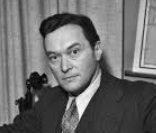
The totalitarian states, whether of the fascist or the communist persuasion, are more than superficially alike as dictatorships, in the suppression of dissent, and in operating planned and directed economies. They are profoundly alike.
▼
Source
source
Ch. V: "The Totalitarian Regimes", §7, p. 89

2 months 3 weeks ago
The pursuit of individual happiness within those limits prescribed by social conditions, is the first requisite to the attainment of the greatest general happiness.
▼
Source
source
Ethics (New York:1915), § 70, pp. 190-191

2 months 3 weeks ago
The rich in all societies may be thrown into two classes. The first is of those who are powerful as well as rich, and conduct the operations of the vast political machine. The other is of those who employ their riches wholly in the acquisition of pleasure. As to the first sort, their continual care and anxiety, their toilsome days and sleepless nights, are next to proverbial. These circumstances are sufficient almost to level their condition to that of the unhappy majority; but there are other circumstances which place them in a far lower condition. Not only their understandings labour continually, which is the severest labour, but their hearts are torn by the worst, most troublesome, and insatiable of all passions, by avarice, by ambition, by fear and jealousy. No part of the mind has rest. Power gradually extirpates from the mind every humane and gentle virtue. Pity, benevolence, friendship, are things almost unknown in high stations.

4 months 1 week ago
The mind must not be forced; artificial and constrained manners fill it with foolish presumption, through unnatural elevation and vain and ridiculous inflation, instead of solid and vigorous nutriment.
4 months 3 weeks ago
If, then, in the sphere of action there is some one end which we desire for its own sake, and for the sake of which we desire every thing else; and if we do not choose every thing for the sake of something else, for this would go on without limit, and our desire would be idle and futile, it is clear that this must be the supreme good, and the best thing of all.

3 months 4 weeks ago
In such a chain, too, or succession of objects, each part is caused by that which preceded it, and causes that which succeeds it. Where then is the difficulty? But the WHOLE, you say, wants a cause. I answer, that the uniting of these parts into a whole, like the uniting of several distinct countries into one kingdom, or several distinct members into one body, is performed merely by an arbitrary act of the mind, and has no influence on the nature of things. Did I show you the particular causes of each individual in a collection of twenty particles of matter, I should think it very unreasonable, should you afterwards ask me, what was the cause of the whole twenty. This is sufficiently explained in explaining the cause of the parts.
▼
Source
source
Cleanthes to Demea, Part IX

4 months 4 days ago
For man seeketh in society comfort, use, and protection: and they be three wisdoms of divers natures, which do often sever: wisdom of the behaviour, wisdom of business, and wisdom of state.
▼
Source
source
Book II, xxiii
3 months 2 weeks ago
Whatever the poverty of our knowledge in this respect, it is certain that the question of the sign is itself more or less, or in any event something other, than a sign of the times. To dream of reducing it to a sign of the times is to dream of violence.
▼
Source
source
Force and Signification
1 month 2 weeks ago
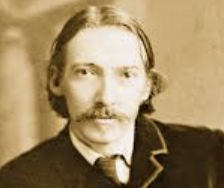
It is the mark of a good action that it appears inevitable in the retrospect. We should have been cut-throats to do otherwise. And there's an end. We ought to know distinctly that we are damned for what we do wrong; but when we have done right, we have only been gentlemen, after all. There is nothing to make a work about.
▼
Source
source
"Reflections and Remarks on Human Life", VI: Right and Wrong, published in Works: Letters and Miscellanies of Robert Louis Stevenson -- Sketches, Criticisms, Etc. (1895), p. 628.
3 months 2 weeks ago
The problem is one of opposition between subjective and objective points of view. There is a tendency to seek an objective account of everything before admitting its reality. But often what appears to a more subjective point of view cannot be accounted for in this way. So either the objective conception of the world is incomplete, or the subjective involves illusions that should be rejected.
▼
Source
source
"Subjective and Objective" (1979), p. 196.

3 months 3 weeks ago
Three o'clock is always too late or too early for anything you want to do.
2 months 2 weeks ago
Get thee behind me, Satan: thou art an offence unto me: for thou savourest not the things that be of God, but those that be of men.
▼
Source
source
16:23 (KJV)
3 months 2 weeks ago
When the objective gaze is turned on human beings and other experiencing creatures, who are undeniably parts of the world, it can reveal only what they are like in themselves. And if the way things are for these subjects is not part of the way things are in themselves, an objective account, whatever it shows, will omit something. So reality is not just objective reality, and the pursuit of objectivity is not an equally effective method of reaching the truth about everything.
▼
Source
source
"Subjective and Objective" (1979), pp. 212-213.
2 months 1 week ago
Myth deprives the object of which it speaks of all history. In it, history evaporates.
▼
Source
source
p. 151

2 months 1 week ago
There are no whole truths; all truths are half-truths. It is trying to treat them as whole truths that plays the devil.
▼
Source
source
Prologue.

3 months 3 weeks ago
Assembled in a crowd, people lose their powers of reasoning and their capacity for moral choice.
▼
Source
source
Chapter 5 (p. 42)
2 months 1 week ago
The Outsider has his proper place in the Order of Society, as the impractical dreamer.
▼
Source
source
Chapter Three, The Romantic Outsider
3 months 3 weeks ago
I must before I die, find some way to say the essential thing that is in me, that I have never said yet - a thing that is not love or hate or pity or scorn, but the very breath of life, fierce and coming from far away, bringing into human life the vastness and fearful passionless force of non-human things...
▼
Source
source
p. 261
2 months 3 weeks ago
If a man has not, by the time he is 30, yielded to the fascination of every form of extremism, I don't know if he is to be admired or scorned - a saint or a corpse.
3 months 3 weeks ago
Solvency is maintained by means of the national debt, on the principle, "If you will not lend me the money, how can I pay you?"
▼
Source
source
Ability
CivilSimian.com created by AxiomaticPanic, CivilSimian, Kalokagathia